
A deep dive into vibe coding
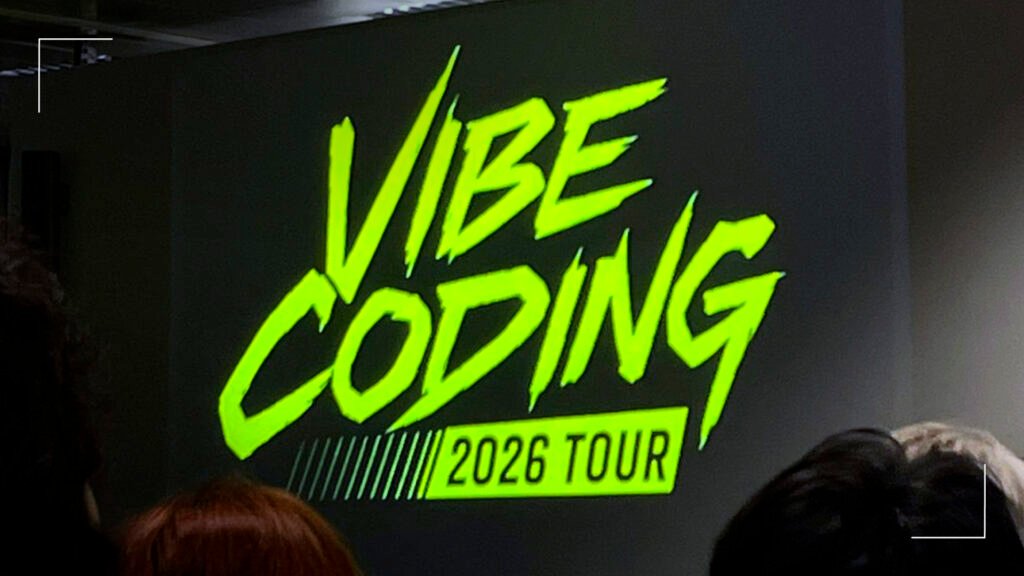
Last week, part of our team – André, Nilofar, Tim, and Lucas – attended a community event hosted by Bayer AG in Berlin to explore this phenomenon. Back in the office, they shared their impressions with our school intern Samira. Samira herself has no background in software development – and that is precisely what made her perspective so interesting: is this just a plaything for professionals, or truly the key for everyone?
Not a room full of hoodies
The first impression was already surprising. André reported that the audience was by no means limited to typical software developers. Instead, our colleagues also met biologists, chemists, medical professionals, and students. People who are domain experts in their fields but have barely built software before.
This is the core of vibe coding: the democratization of development. Domain experts can suddenly solve their own problems and build prototypes without having to wait weeks for the IT department. Or, as André put it in his conversation with Samira: “It is no longer about memorizing syntax. It is about structuring problems clearly. Anyone who can think logically can now also build.”
From coding to composing
Nilofar explains the technical underpinning: “With vibe coding, we no longer write code line by line ourselves. Instead, we formulate requirements, rules, and goals in natural language. AI agents then take over the manual heavy lifting of programming.”
For Nilofar, this was the biggest insight of the evening: “At this event, I did not just learn about new tools – like Cursor, which was new to me – but also understood that I can use vibe coding even more efficiently. There are many complementary helper tools I did not even know about before. On top of that, the exchange with people from different fields was incredibly enriching.”
The tool becomes an extension of your own thoughts. AI acts as a tool, not as a replacement for humans.
But is it also safe?
One question was particularly pressing for Samira: if AI writes the code – do we lose control? Especially in sensitive areas like the pharmaceutical industry, that sounds risky.
The answer from practice is reassuring. Vibe coding does not mean “flying blind.” André reported on presentations at Bayer that showed how you can give AI agents very clear guardrails, safety checks, and tests. Think of it almost like an editorial workflow: there is a review before anything gets published – just automated for software. Bayer even uses this to ensure that internal standards are maintained, even when external parties write the software.
Why we were there: vibe coding in Schaltzeit practice
Why does this interest us at all? As a small team deeply engaged in futures research and innovation, we sense: something fundamental is changing here. We deal with AI trends every day, but for us vibe coding is more than just theory. It offers our agile team completely new levers in software development.
The exchange with like-minded people at the event confirmed that we are on the right track. Currently, we use these new possibilities on different levels: some team members also experiment with it outside of work to test the boundaries of the technology. Others already use it productively at work, for example in developing platforms for client projects. Our formats benefit too: we facilitate promptathons and hackathons where vibe coding is used live to make ideas tangible in record time. This is changing our processes – they are becoming faster, more iterative, and more accessible for the entire team.
Learning as a side effect
For us at Schaltzeit, this topic is a perfect example of “the future as a space of possibility.” It invites experimentation without expecting immediate perfection. Nilofar emphasized how much the event was shaped by learning together – away from lecture-style presentations, toward exchange across departmental boundaries:
Away from rigid role models toward more fluid collaboration. The ability to express a problem in language is becoming more important than mastering a programming language.
💡 An invitation
What if suddenly everyone on your team were able to build small software tools for their own daily work? How would that change your processes?
We are curious about your experiences with AI-assisted development. Feel free to write to us or drop by for a coffee – perhaps we will code (or vibe) a solution together right away.
Event recommendation
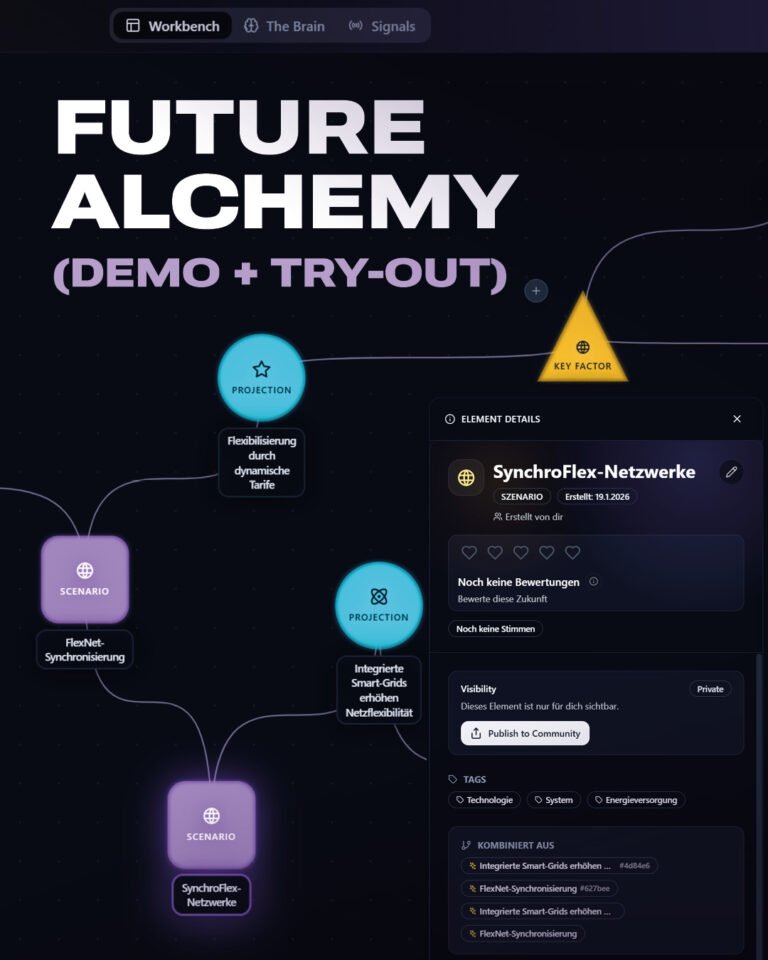
Future Alchemy (demo + try-out)
Lucas (Schaltzeit) takes you on a journey from the sketch in the drawer to the finished app and shows how vibe coding accelerated this process.