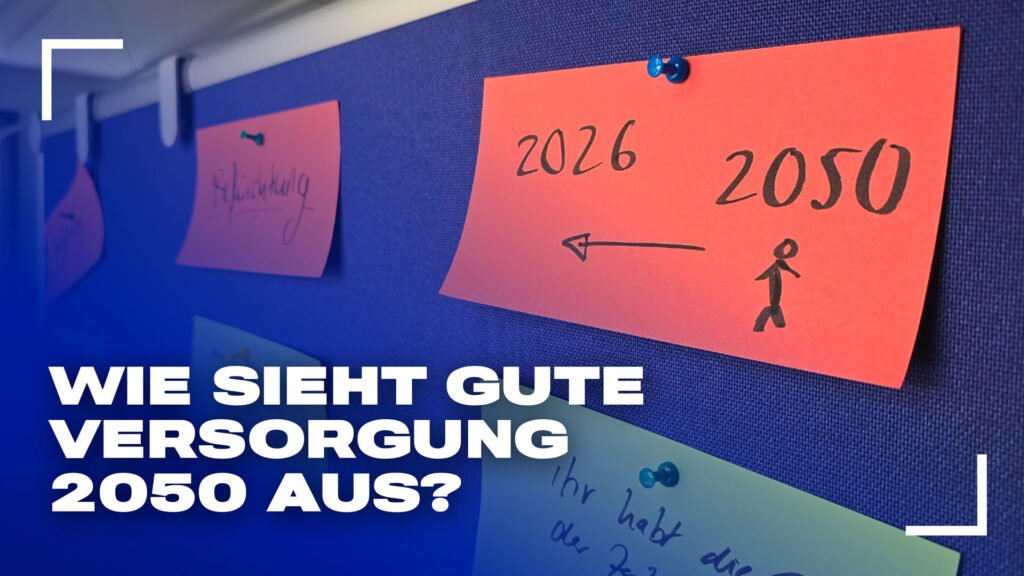


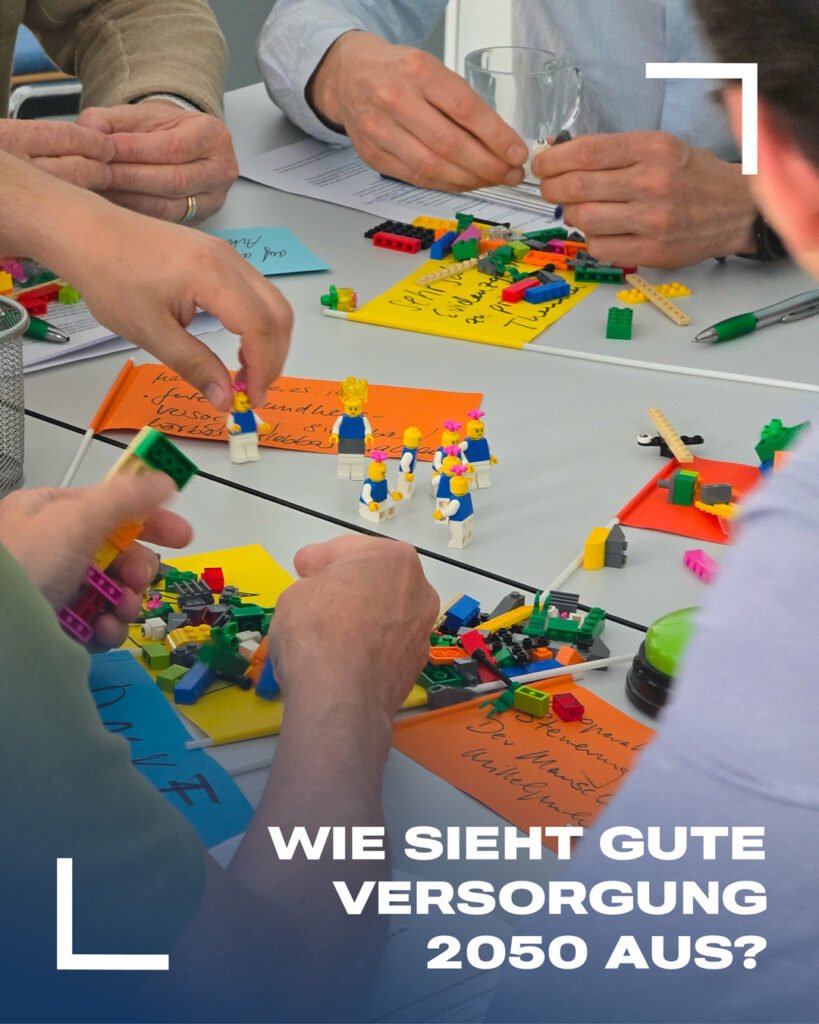
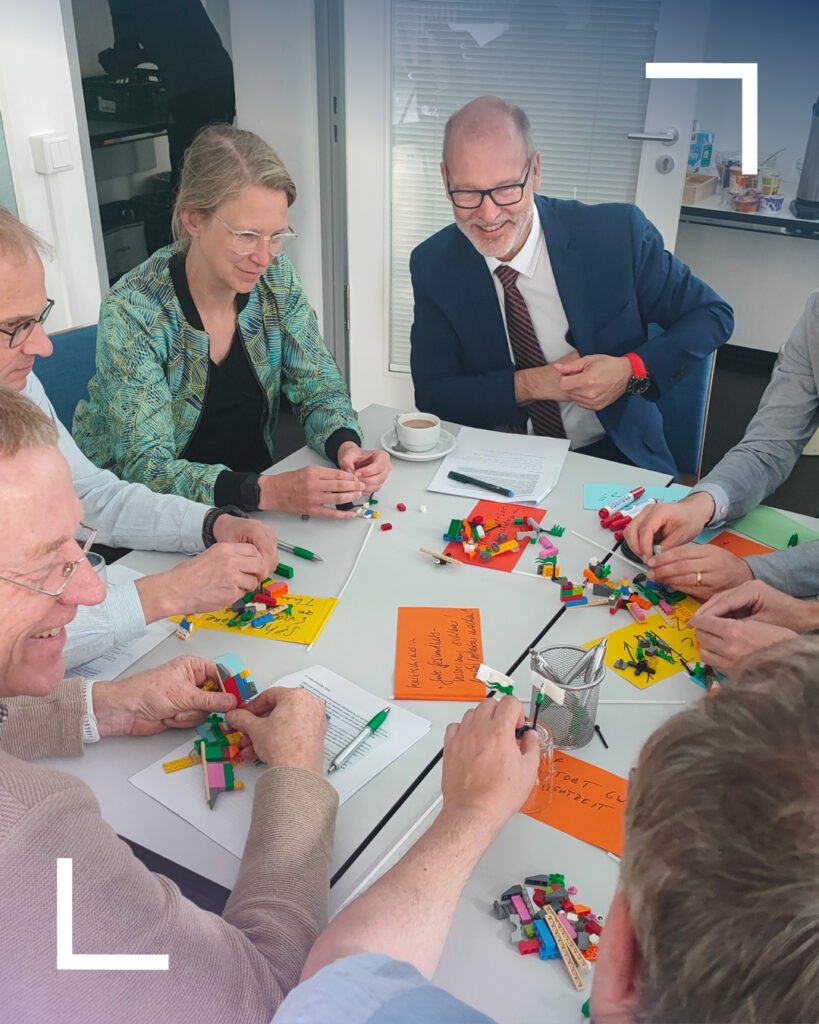
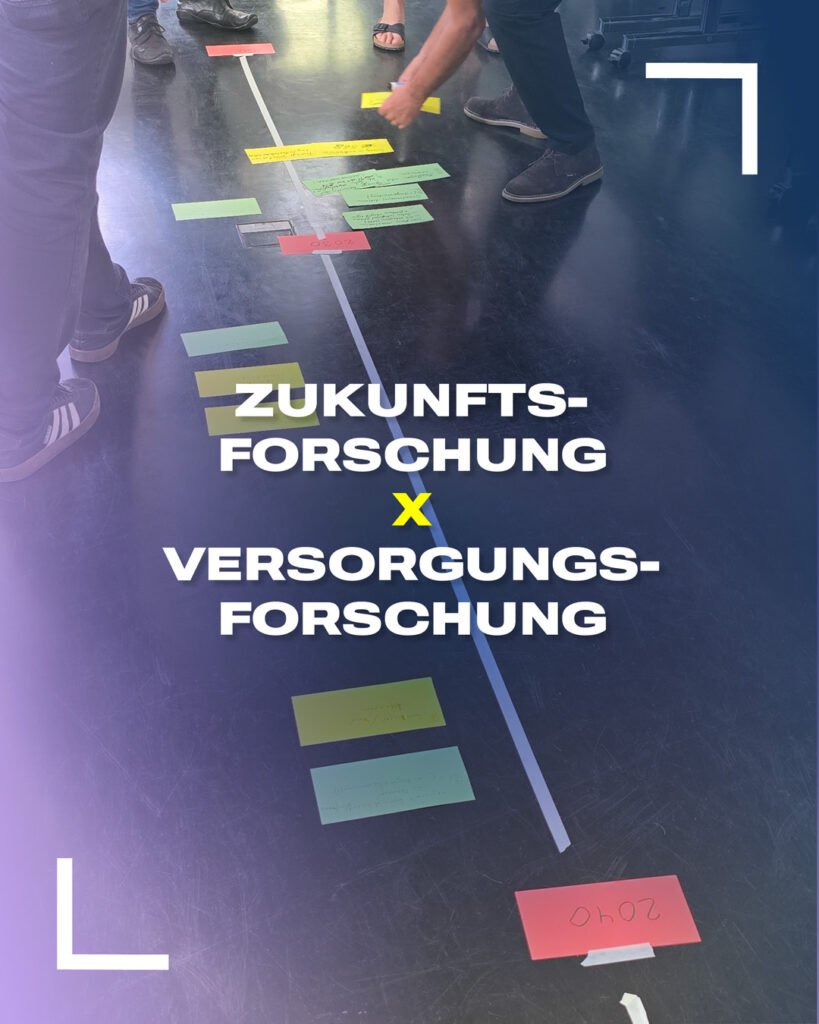
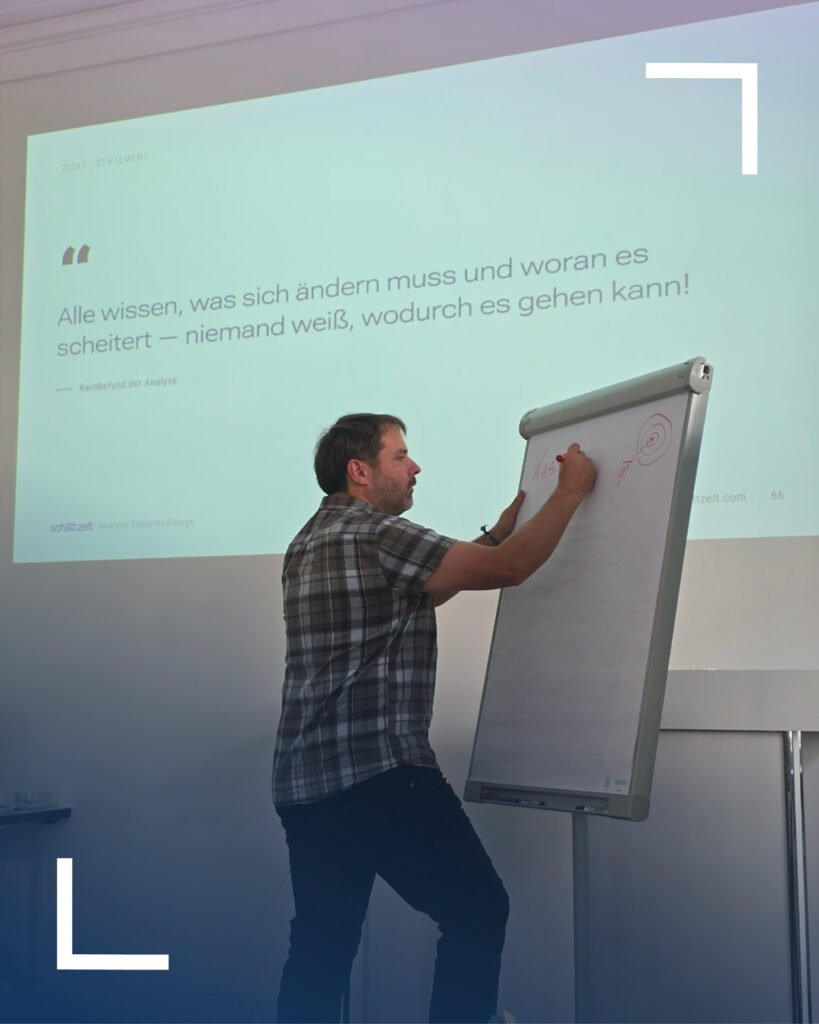
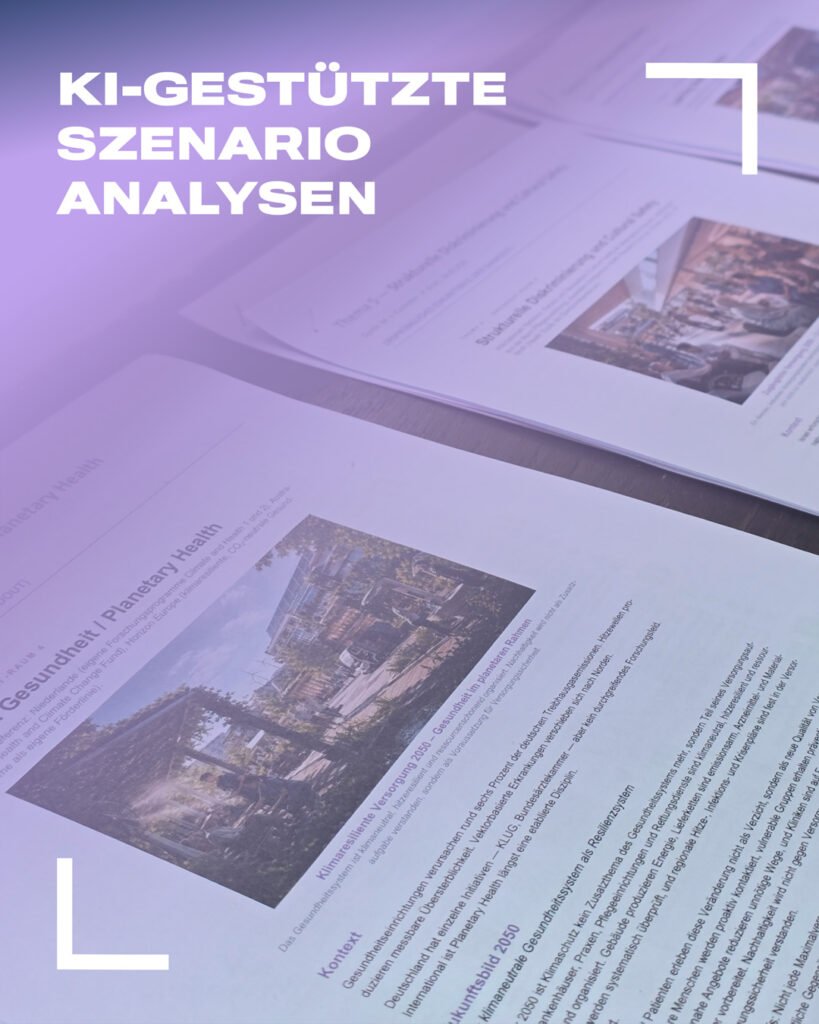
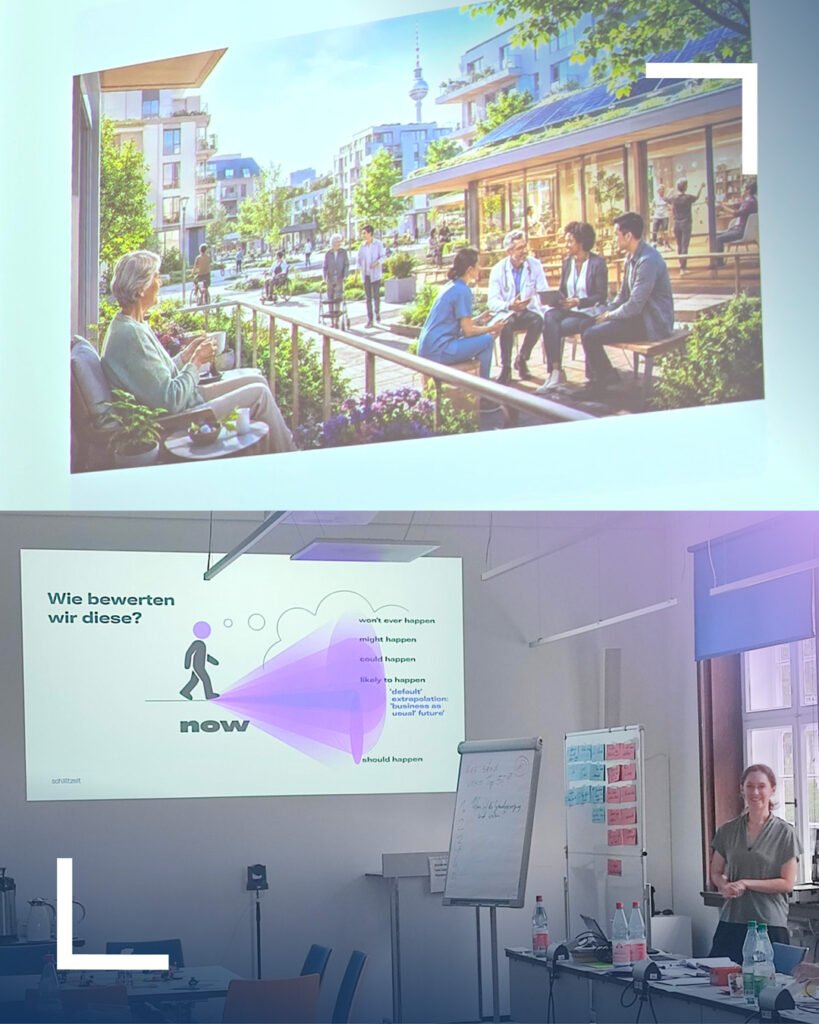
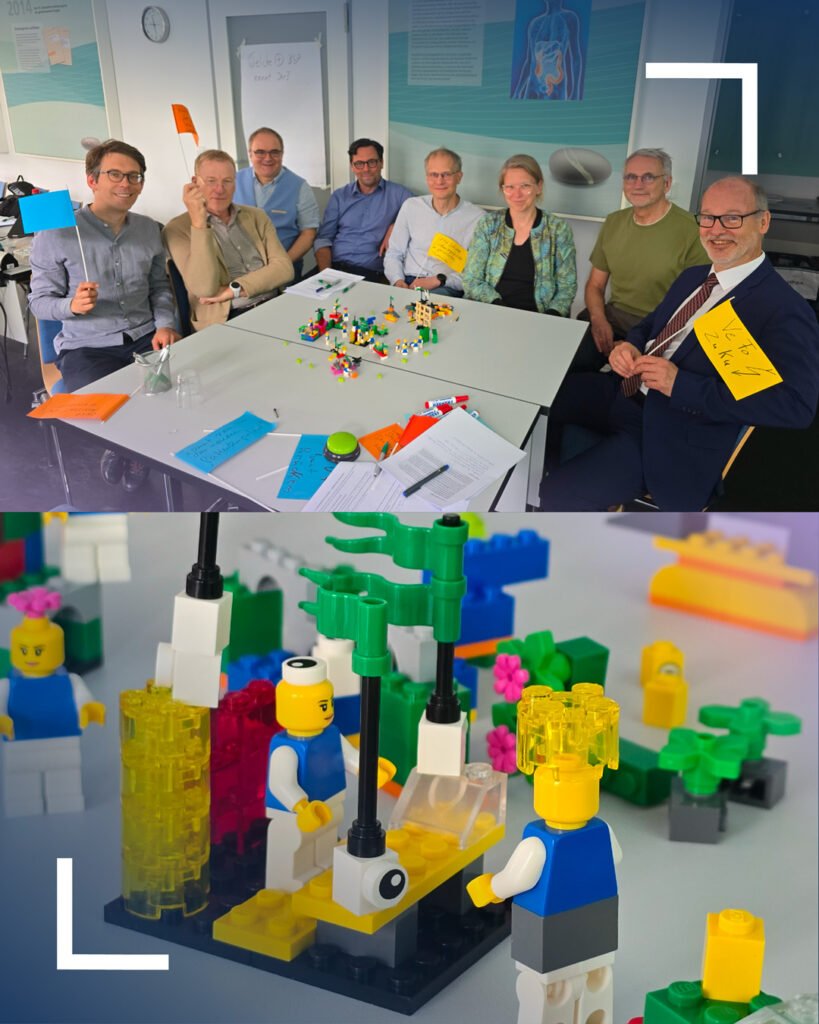
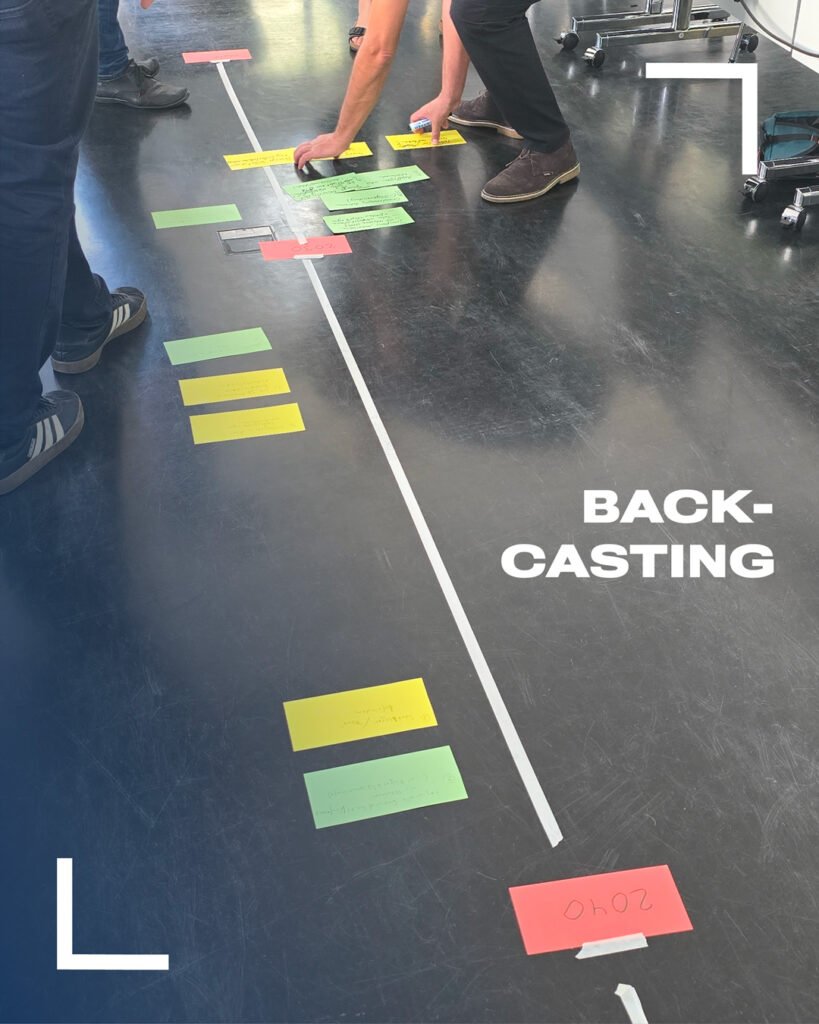
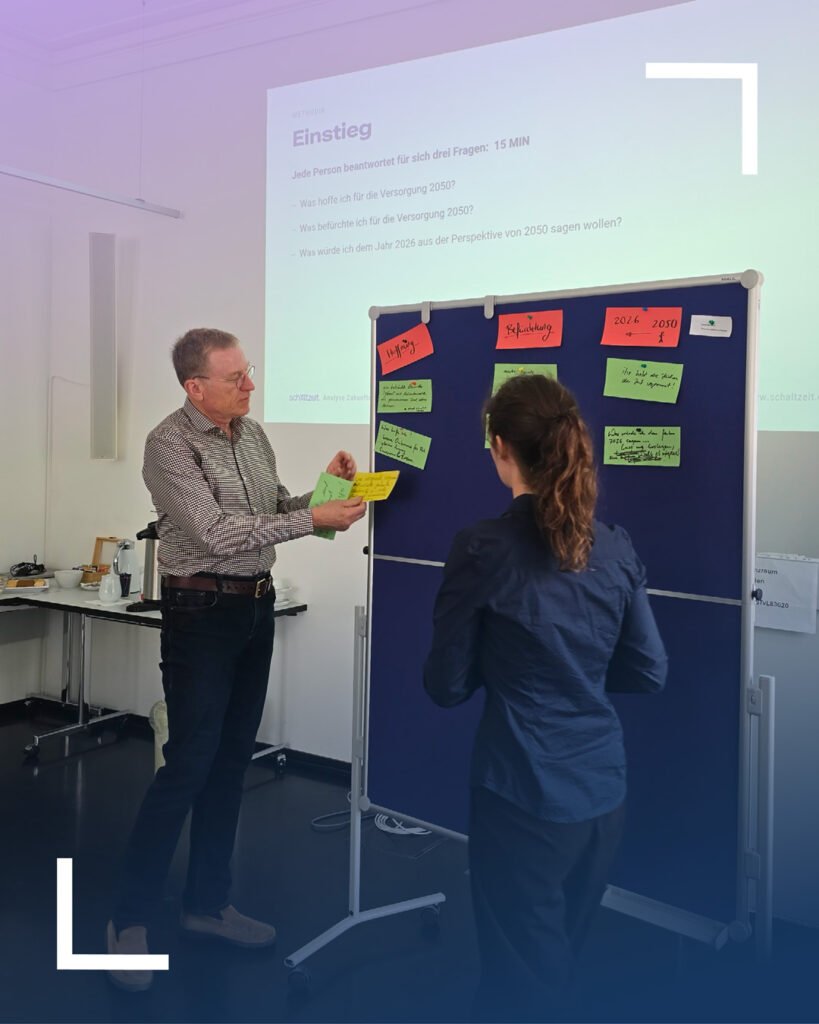
This is precisely the question Schaltzeit explored with the Board of Directors of the Ger-man Network Health Service Research (DNVF). Using AI, we synthesised future scenarios from national and international literature and refined them through dialogue sessions with members of the Board. Over two workshop days, we then developed them further using a Dialogue Walk, backcasting and LEGO® SERIOUS PLAY® - guided by two key questions: Through which structural mechanisms might health care in Germany change - by deliberate design, under pressure, from the bottom up, or not at all? And who holds the power to shape that change?
Why futures studies matters for health services research
Despite what the name may suggest, futures studies does not research the future itself. It addresses questions of the present: the assumptions we generate today about what might lie ahead. The aim is not prediction, but to systematically open up the space of possibilities and generate knowledge that helps orient decisions in the present. For health services research, this matters for three reasons:
Critique alone changes nothing. Knowing what does not work does not tell us where we should be heading. The DNVF can therefore play an important role not only in identifying dysfunctions, but also in developing well-founded proposals for what good health care could look like in the future.
Images of the future are not facts - but neither are they arbitrary. Visions of good health care are constructs of the present, shaped by the perspectives of those who create them. This inevitably makes the question of what constitutes "good" health care normative and political as well: What is good? What is fair? What constitutes a good life? For a scientific professional association that places evidence at its core, that is precisely the challenge: to distinguish rigorously between where evidence can guide us and where values and ne-gotiation come into play. Both have a legitimate place in shaping the future. They should not be conflated. In other words: less gut feeling, more data.
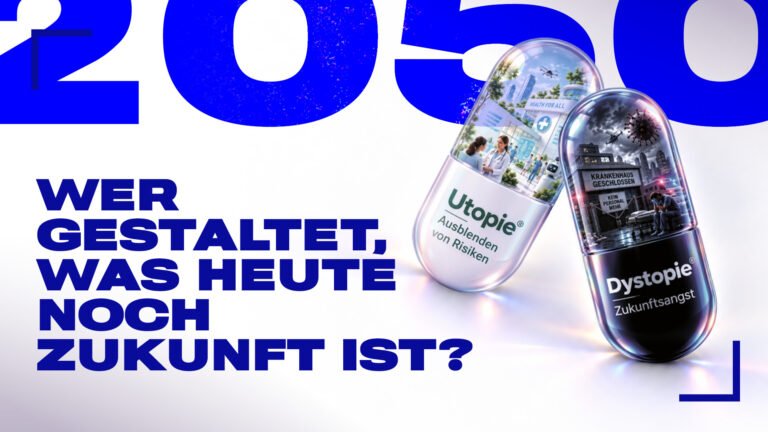
Images of a preferred future need a reality check. Desirable visions of the future can quickly become wishful thinking if they ignore the structural conditions that shape whether change happens in Germany – or fails to happen. Change as a deliberately designed, technocratically managed process. Change as a response to pressure, producing winners and those left behind. Change that simply never arrives. And change that grows from the bottom up and gains legitimacy through participation. What actually makes the system change? Who has the power to shape it? Who loses out, who protects their influence, and what perverse incentives can arise from well-intentioned approaches? This is where it pays to bring in perspectives beyond one's own field – from patients, hospitals, policymakers and health insurers, as well as from economics, political science and law.
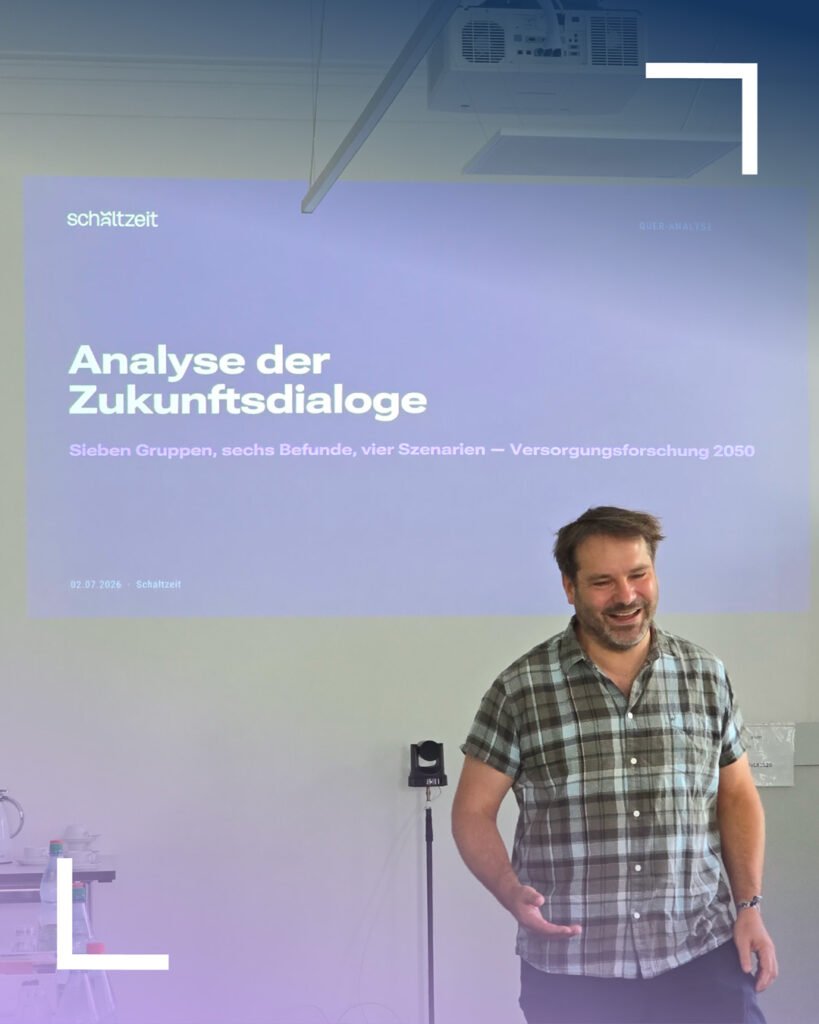
DNVF Congress
In September, the debate about what constitutes good health care in the future will continue at the DNVF Congress – explored in greater depth and enriched by the network’s diverse disciplinary perspectives.
We are curious to see where the discussion leads. Thank you to the DNVF Board of Directors for two open, challenging and productive days together, during which we explored a range of possible futures.
If people cannot imagine a different future, they have little reason to work toward change. That is precisely why, at Schaltzeit, we make futures tangible and experiential.
What is futures studies?
The future is uncertain – which is exactly why futures studies and its application in the form of strategic foresight are so relevant. Futures studies systematically explores possible, probable and desirable futures. It uses scientific methods to provide orientation and enable decisions in the present. Schaltzeit offers a range of approaches and methods for this, tailored to the specific questions about the future to be explored.
What is health services research?
Health services research examines health care under real-world conditions: it asks how the organization, management and financing of care affect access, quality and safety, costs and, ultimately, the health and well-being of the population. The German Network for Health Services Research (DNVF) is an interdisciplinary network that brings together science, health care practice and health policy to advance health services research and improve health care.
What is LEGO® SERIOUS PLAY®?
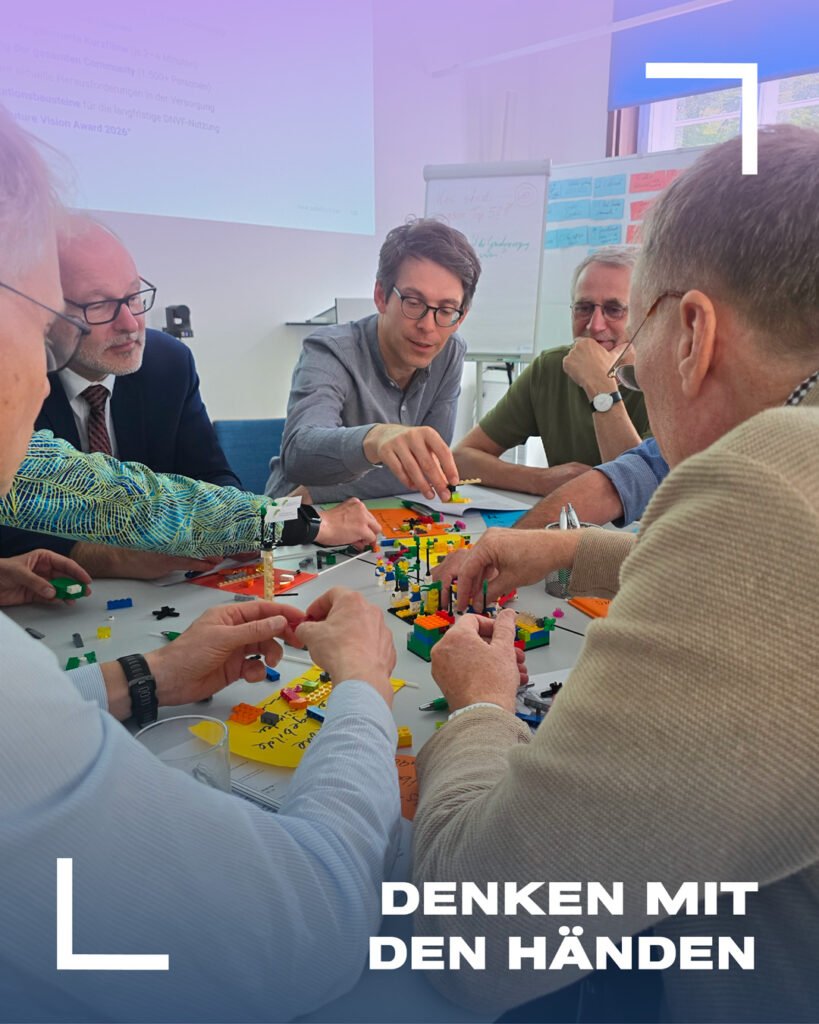
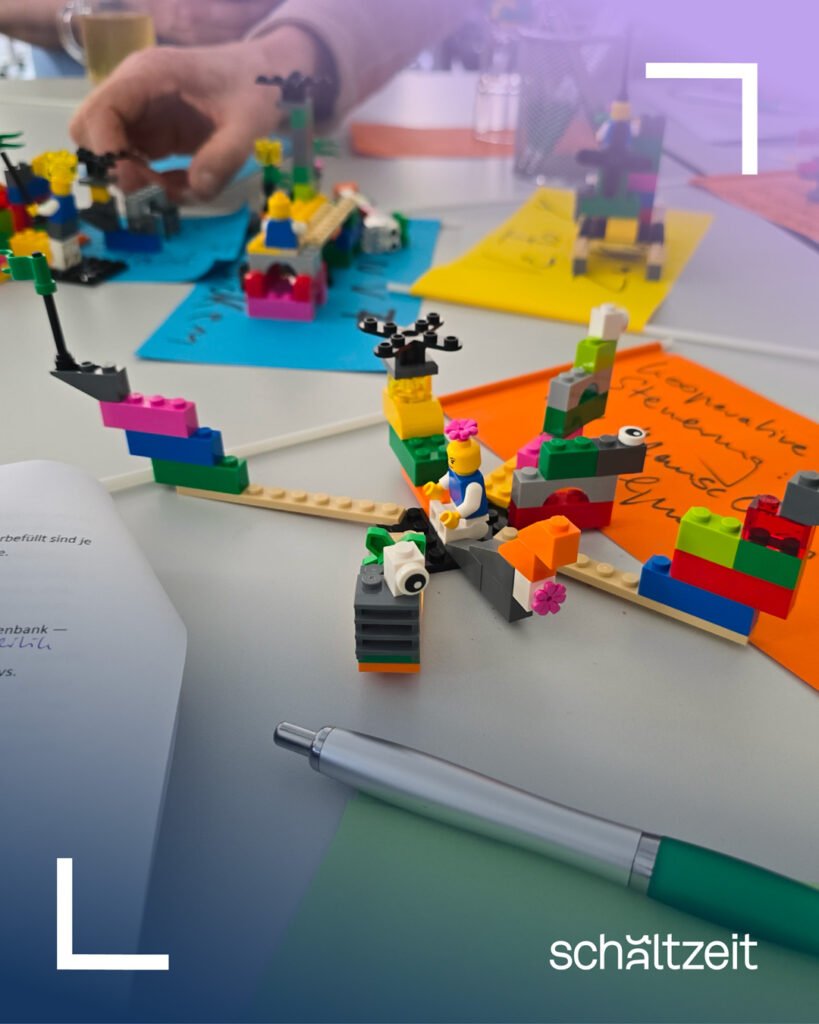
LEGO® Serious Play® (LSP) is a facilitated method in which participants use LEGO bricks to build thoughts, experiences, problems or visions of the future as three-dimensional models, and then tell stories and hold discussions based on these models. The core idea is so-called “thinking with your hands”: instead of discussing a question only in the abstract, participants first build their own answer. This also brings to light implicit ideas, assumptions and perspectives that often remain unspoken in a conventional discussion. LEGO® Serious Play® is a great fit for futures studies because the method makes abstract visions of the future tangible in a playful, intuitive way. “Thinking with your hands” creates concrete images of possible futures that can then be told, shared and reflected on together. The playful approach creates a safe space without predetermined right answers and helps participants leave familiar patterns of thinking and argumentation behind. This makes it possible to explore futures that are uncertain and hard to grasp, yet still open to shaping.
What is a dialogue walk?
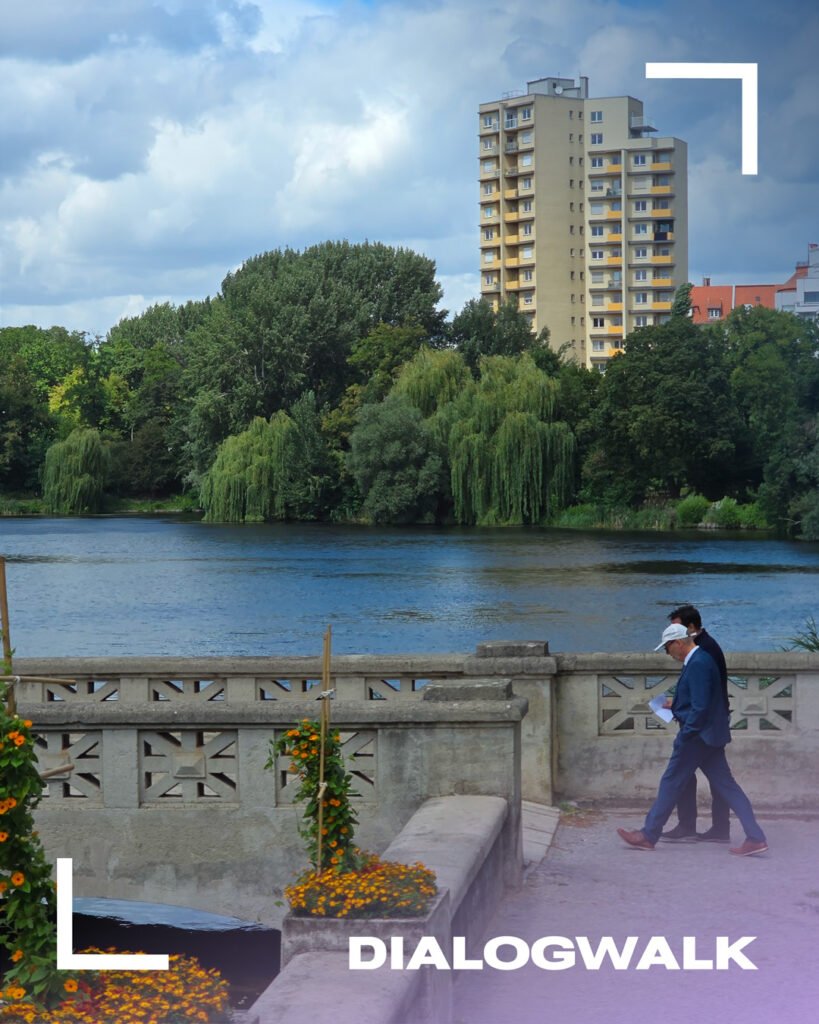
A dialogue walk (also called a walk & talk) is a format in which two or more people have an in-depth conversation about a specific topic while taking a walk outdoors. Specific questions to work on can be provided. The format combines physical exercise in the fresh air with mindful listening and an open, genuine exchange. It is meant to encourage thinking and reflection and reduce distractions – distracting things like laptops, notes or screens stay behind.
What is backcasting?
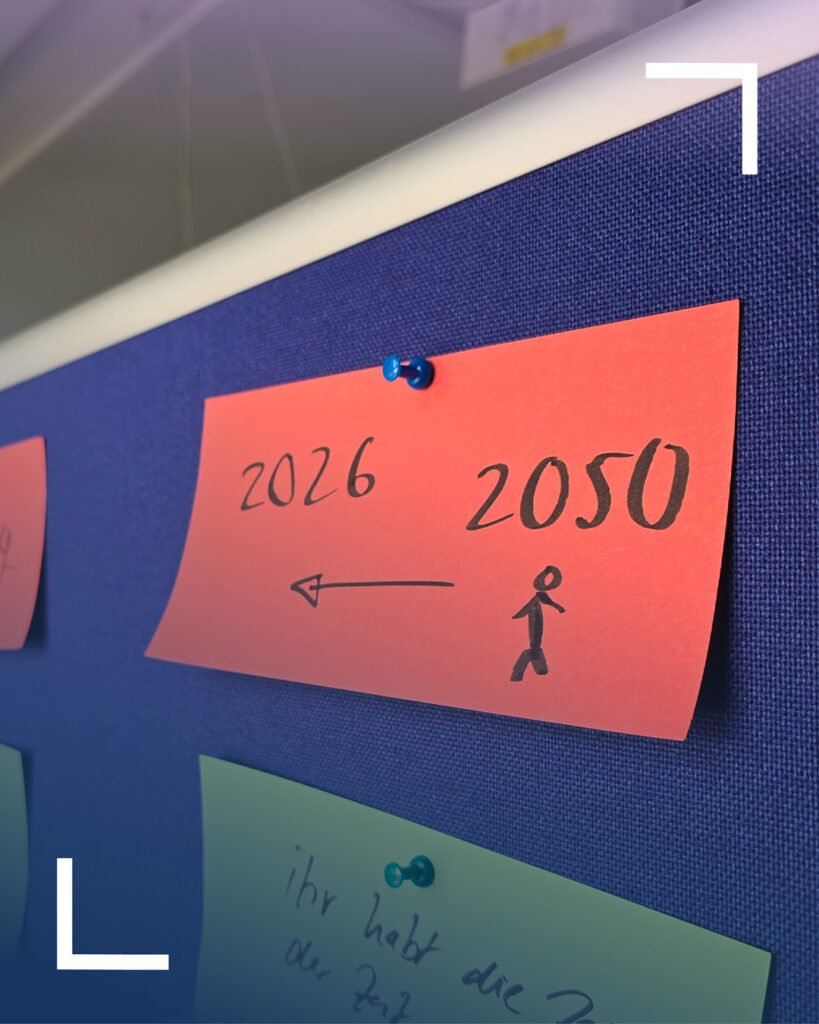
Backcasting doesn’t start from the present to explore the directions in which the future might develop. Instead, it works backward from a defined image of the future: which steps, changes and preconditions would be needed to get there from the present? The method serves to identify possible transformation pathways and derive concrete steps for shaping change toward the desired image of the future.