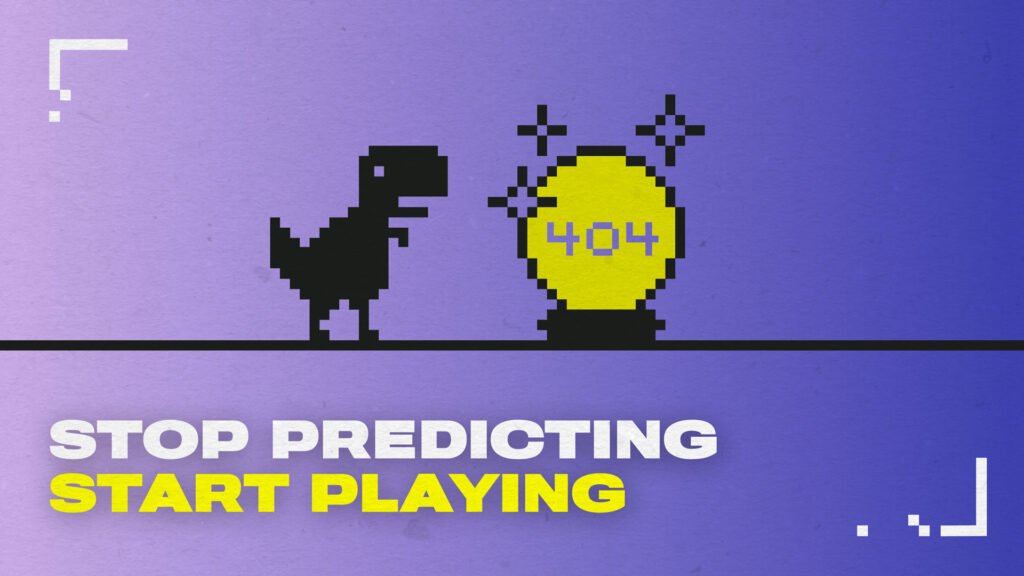

Inspired by the Chrome Dino hopelessly searching for an internet connection, we recently designed a T-shirt print: a small strategy dino chasing after the wish for one clear prediction of the future. A nice reminder that the future stays uncertain, however many methodological contortions we put it through. The print became the motto of our evening: Stop Predicting, Start Playing.
This uncertainty about the future is precisely where foresight and play meet. In policy advice, uncertainty counts as an obstacle to be cleared out of the way before a decision is made. In a game, it is the capital you work with: “within the context of games, uncertainty is an asset” (Bontoux et al. 2016, p. 83).
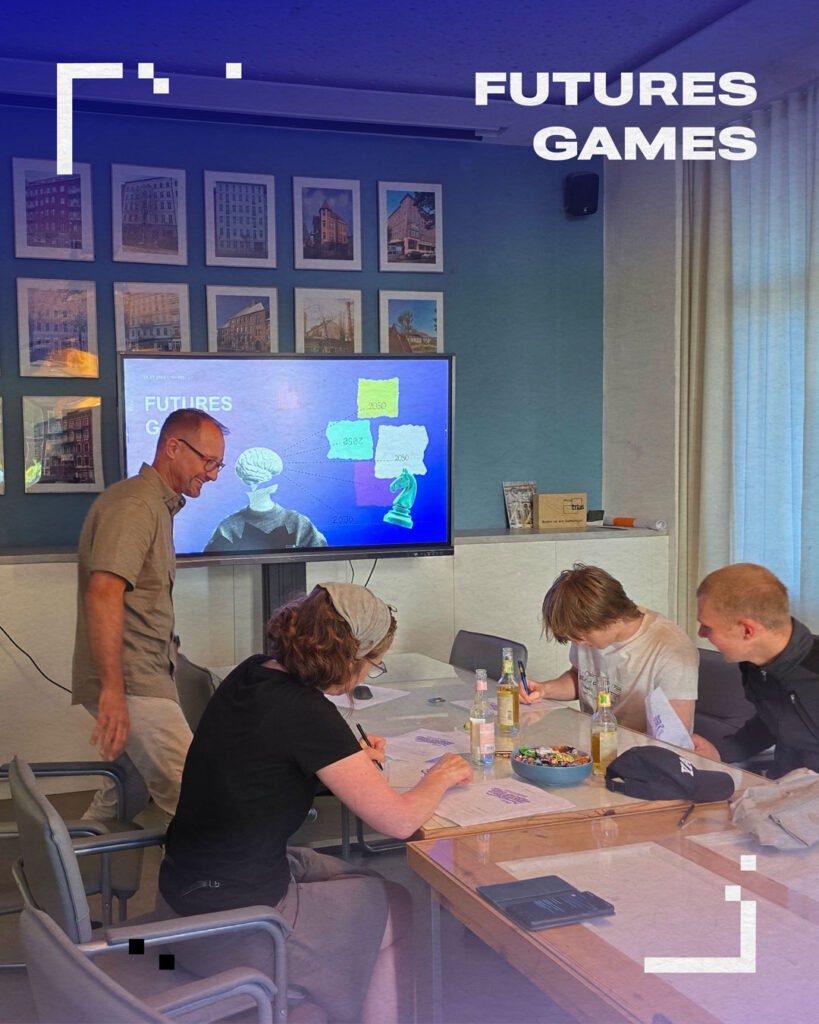
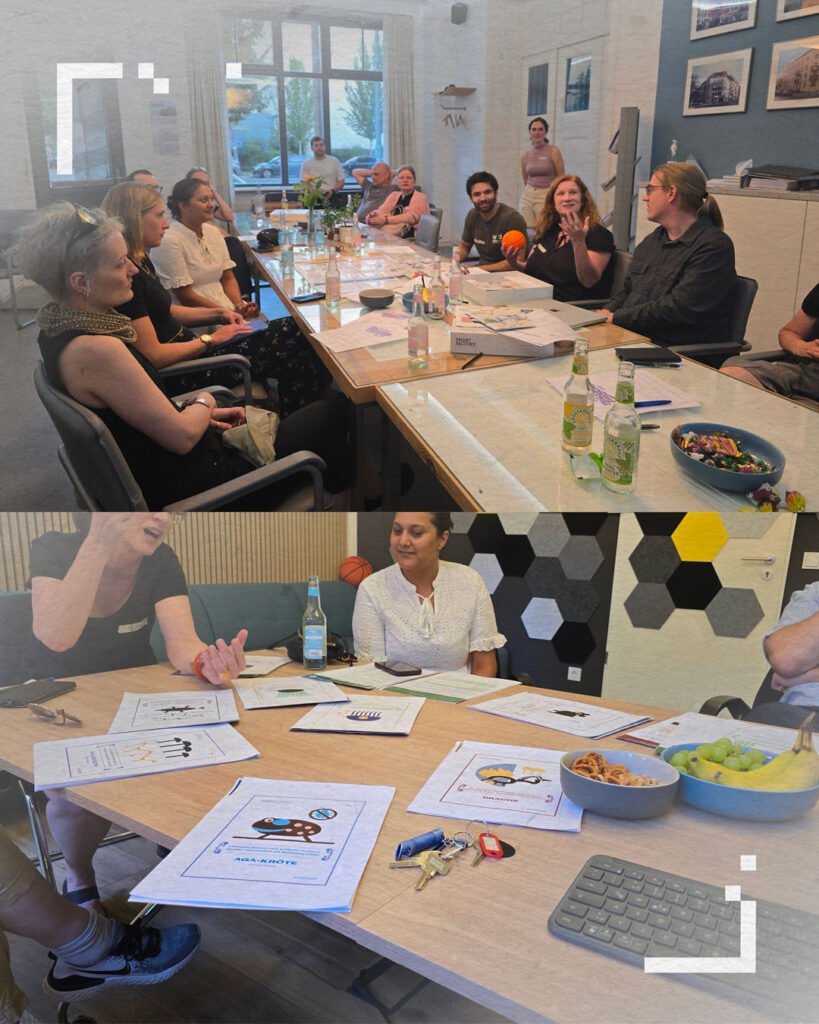
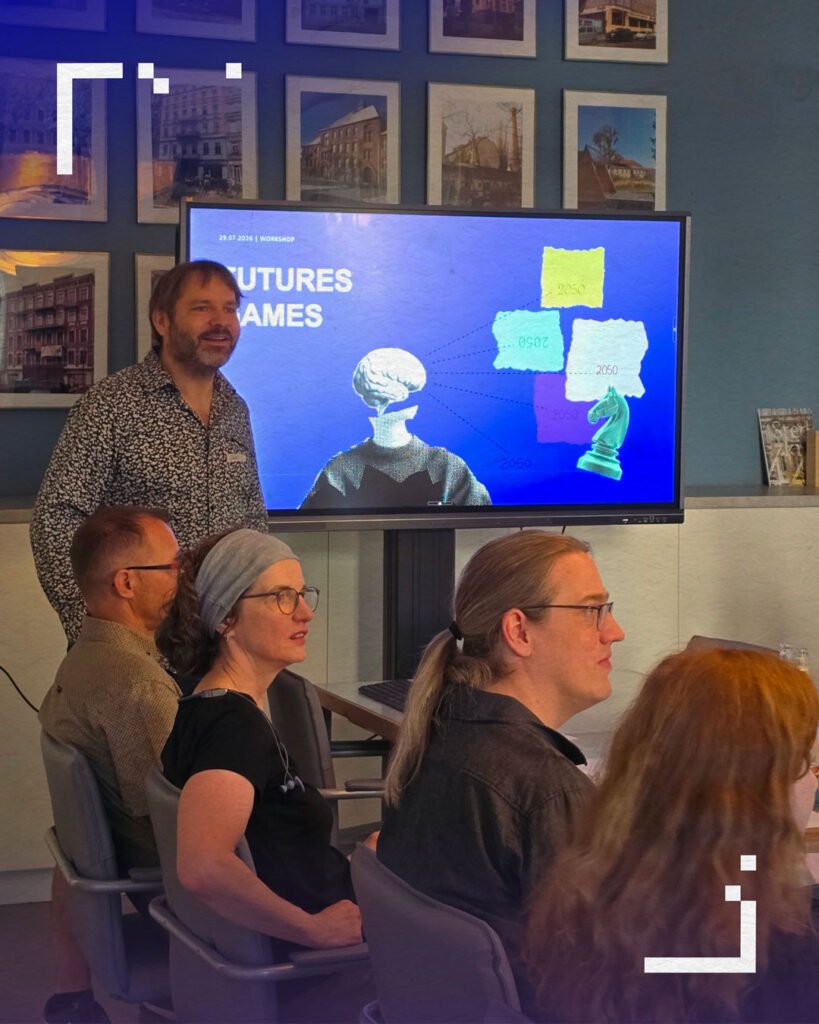
A certain amount of uncertainty came with the workshop itself, too: who has the time and the appetite to talk shop about foresight games during the summer holidays, at 30 degrees? While planning, we had no idea how many participants to expect. Which makes us all the happier that so many found their way to us despite the summer lull! It was the mix of people that made the evening: a board game designer, a LARPer, two illustrators, designers, a few young people with an interest in gaming and no shortage of foresight know-how. People with very different backgrounds, who don’t usually sit around the same table to discuss futures and games.
On the program that evening:
- Dr. Oliver Lauenstein with an input on games in and for futures research
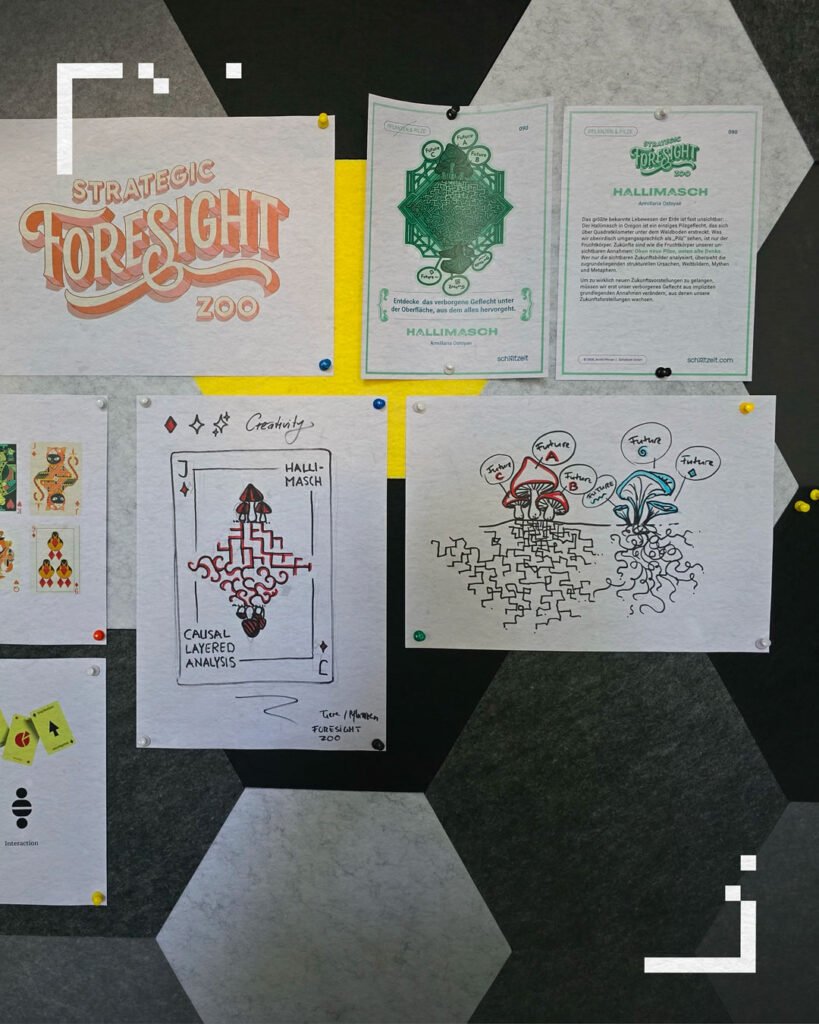
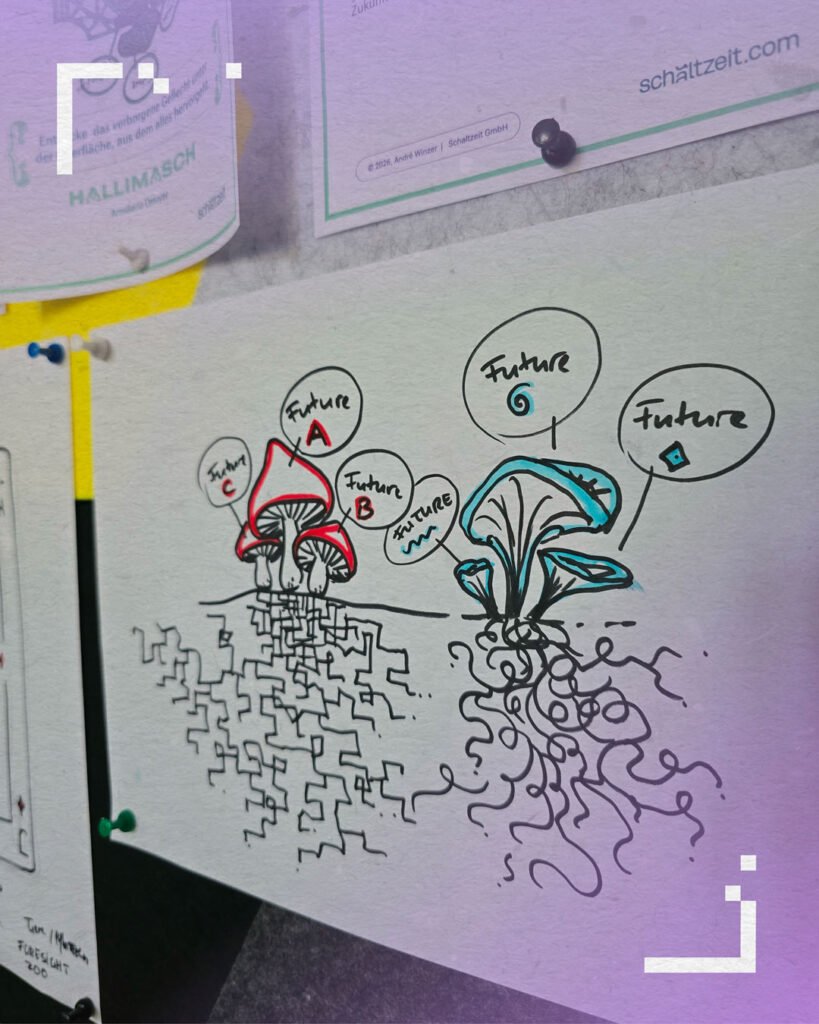
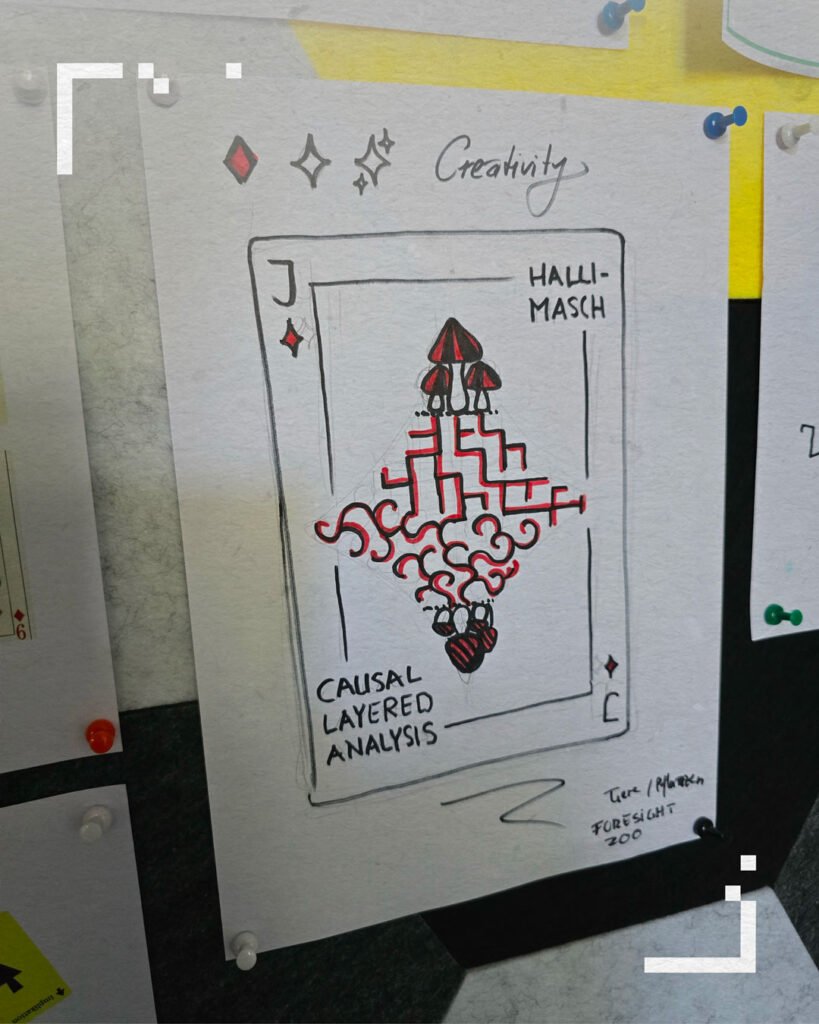
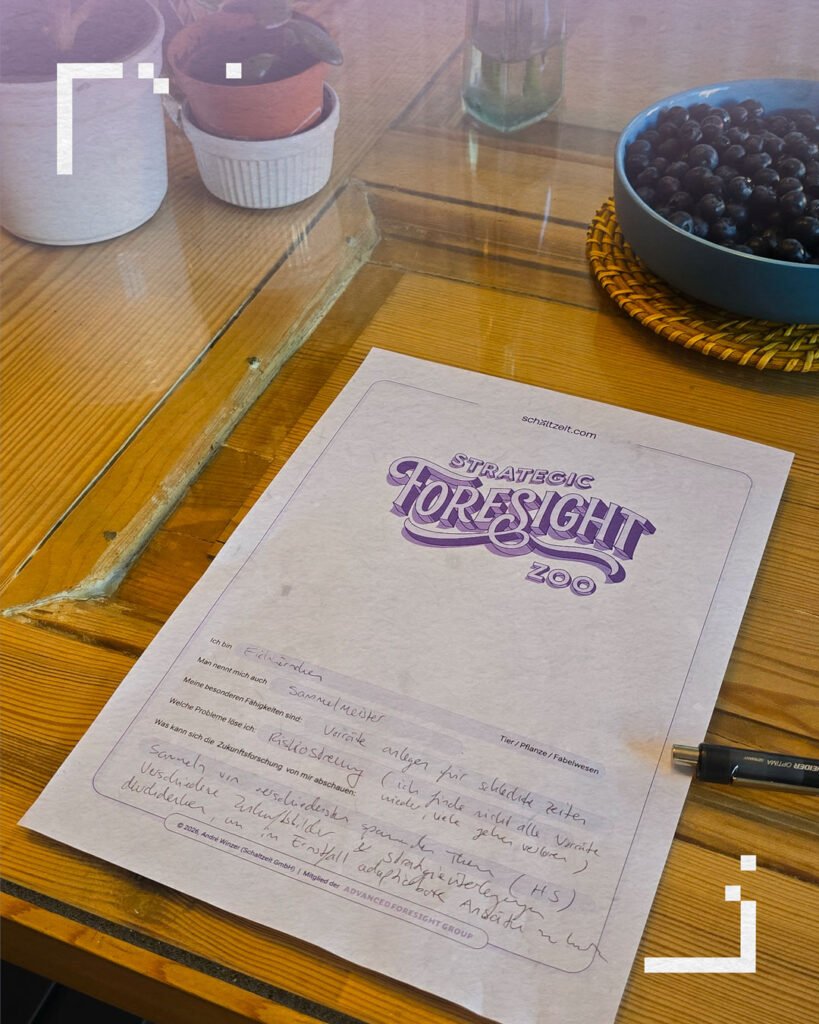
- My own Strategic Foresight Zoo, a game set still in its rough-build stage and still looking for its concrete application – we had tested it earlier at Ellery Studio with the Advanced Foresight Group.
- Lucas Buchauer with Futures Alchemy – the digital game world in which elements such as driving forces, projections and scenarios can be combined to experiment with all sorts of (surprising) images of the future.
- Magdalena Soetebeer with Smart Factory, our serious game on Industry 4.0, developed with Verena Bischoff and Fraunhofer IAO.
- And the Futures Oracle, which has already proved its worth at the Biennale Futura, at a congress on the future of the chemical industry and at a congress on health services research.
The discussions ranged from experiences with selling such formats to the right didactic use and to simply sparking each other’s ideas. This text is an attempt to hold on to what mattered most.
175 games – but how many of them feel like games?
Dr. Oliver Lauenstein has compiled a list of 175 existing futures games. A third of them are card decks, a further 17 percent tabletop games. Narrative games, serious games, wargames and large-scale games are fringe groups of one to two percent each. Most of them serve simulation, idea generation or scenario development.
What was interesting was how he arrived at his findings: he had people play one of the games he had found and afterwards asked just two questions – Did that feel like a game? Was it fun? Rather than argue analytically, he let the players feel for themselves how much play there actually is in these so-called games.
His verdict, tested against Jesper Juul’s criteria: formally, futures games are games. They are rule-based, they have variable outcomes, and those outcomes differ in value. On the three affective criteria he grew more cautious. Do players invest effort? Mostly yes, but how much? Do they feel attached to the outcome? In my experience, it varies. Are the consequences the point? Probably, but are they the point?
– FUTURES GAMES ARE GAMES FORMALLY AND NOT GAMES EMOTIONALLY –
Where roles do appear, they are played “at arm’s length” – as in a war room: You are a merchant, you want to make a profit. A role profile is handed out, but no character is brought to life.

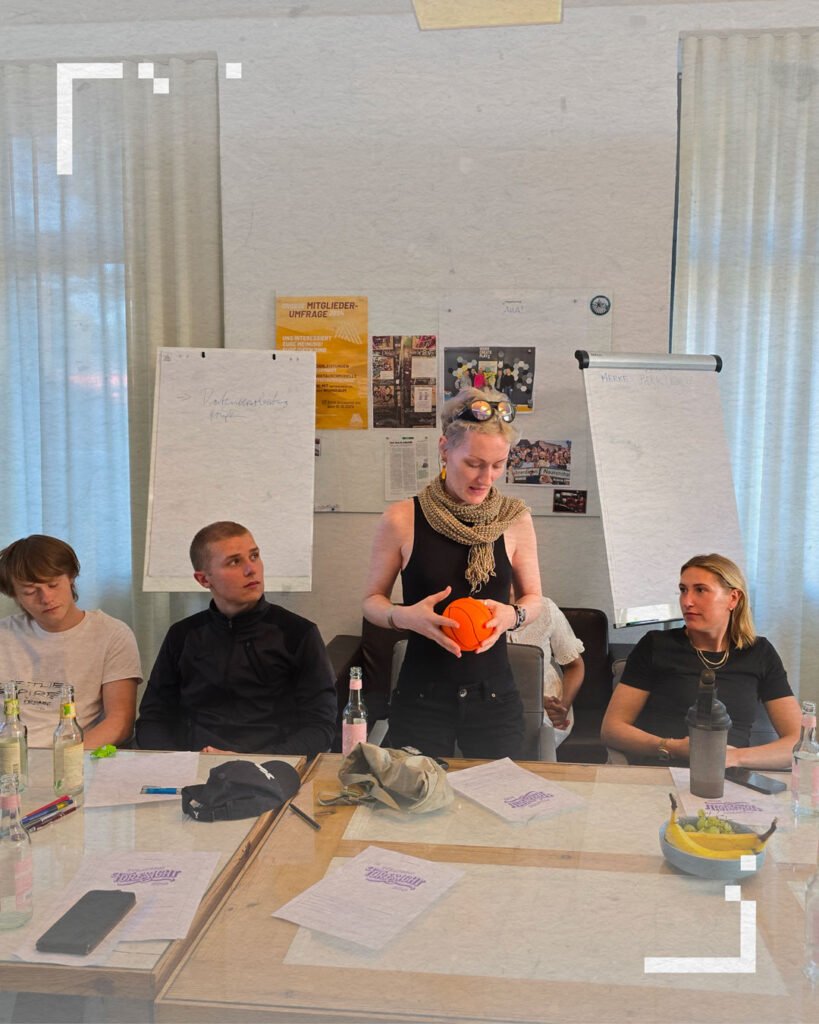
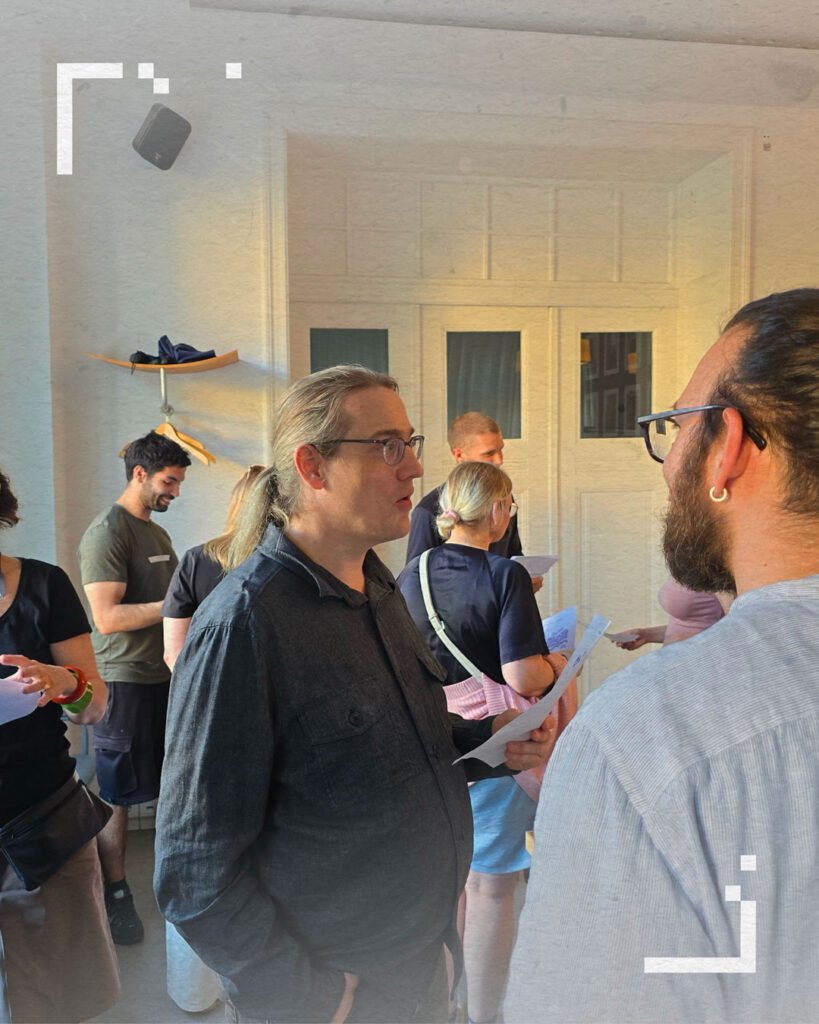
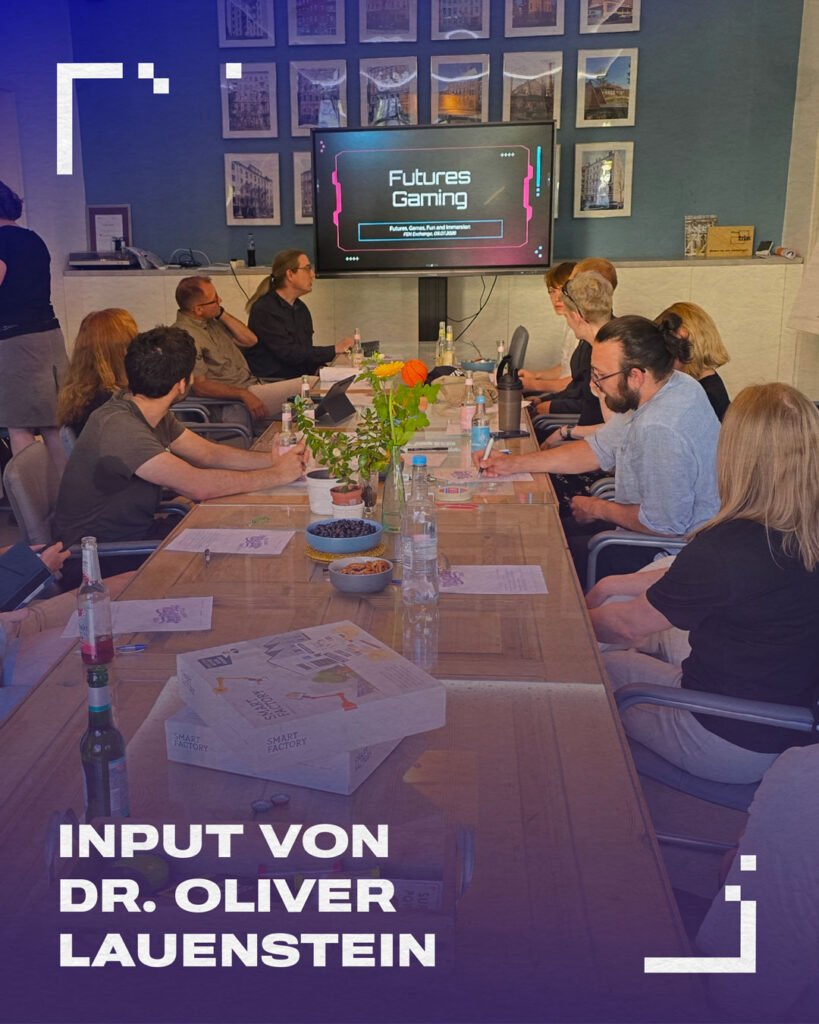
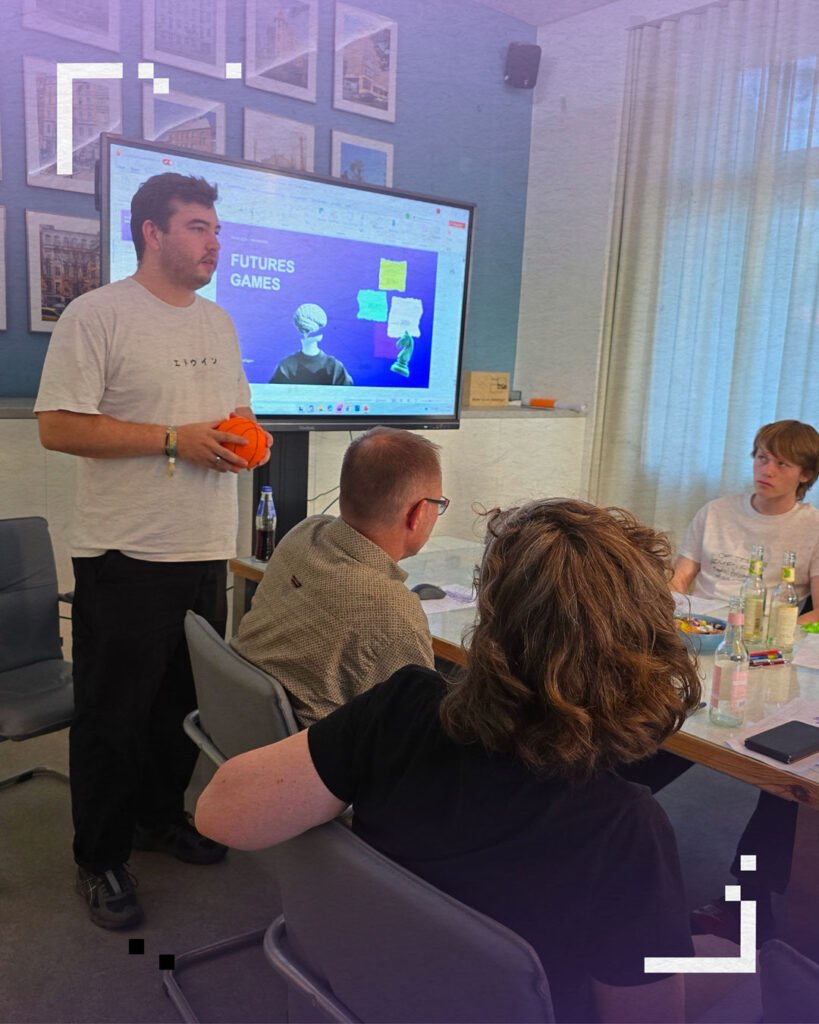
Why there are so many – and why so few are fun
The reason seems rather unromantic. A card deck is designed in a few weeks, sent out as a PDF, easy to carry around and an excellent marketing object for consultancies and institutes. So a third of the field consists of the simplest form available. And a card deck is, first of all, a generator of prompts. Not yet a game.
On top of that: these formats are designed as a method first and only then as a game. They have mechanics, but hardly any dynamics. They produce results, but rarely tension, attachment or the wish for a second round. Autonomy, competence and social relatedness – the three drivers that predict enjoyment and continued play (Ryan, Rigby & Przybylski 2006) – remain systematically undernourished: scenario, role, goal and timeframe are all set by the facilitator.
With more complex games about future scenarios there is also a certain distrust, which I consider justified. Anyone handed an educational game suspects that whoever built it may not be all that keen on discovering new futures and turning them upside down, but rather on conveying an already fixed frame of the future – in a nice format, granted, yet not necessarily as a genuinely creative, open process. The desired insight appears to be settled in advance: share, act sustainably, cooperate. The game only asks how fast we get there. A good touchstone is therefore: can this game produce an outcome its developers did not intend, or did not even want? Where that is impossible, we are not playing, we are working our way through an interactive demonstration. Which brings me to a point that occupied us particularly that evening:
The rules of the game are “frames of thought,” too
How much of the view into the future is already laid down by the game? Reflecting on your own moves is not enough. It is worth reflecting on the rules as well. Which basic assumptions is this game built on? Which worldview is built into its mechanics? Which frames of thought (cf. Fischer 2023) does it thereby set implicitly? Hence the reminder: It is not only futures that can be designed, but also the games we use to think about them.
The finest example of such a shift in a game’s thinking frame is the one everybody knows: Monopoly. Elizabeth Magie Phillips developed “The Landlord’s Game” as an educational game to demonstrate the power dynamics of land monopolies – as a critique. Charles Darrow later picked up another version of the game logic circulating at the time and marketed it as the “Monopoly” we know today – a game in which monopolies are celebrated rather than criticized. Ralph Anspach responded years later with “Anti-Monopoly”. It shows how far the thinking frame of a game can shift – and with it the message people experience while playing.
In practice, that means two things. Familiar game principles lower the barrier to entry: nobody has to learn drawing, trading, collecting, bluffing or negotiating from scratch, and the rules explanation you save is time gained for the actual futures topic. But the imported logic comes along with it. Give Monopoly a new coat of paint and you import accumulation, displacement and zero-sum thinking at the same time. And anyone who knows how Monopoly works also knows how it feels – familiar principles put a cap on how new the experience can be.
Lauenstein’s own demo showed the way out: a familiar principle as the vehicle, one single unfamiliar mechanism as the point of rupture. He described a rule set made up of two dice rolls and three questions – 2d6 twice on tables for traits and roles, then age, gender, name, and: What do you want? Then an atmospheric entry: six in the morning, the neighborhood not quite awake yet, snatches of conversation, the smell of somebody’s breakfast. And then the blackout that hits the neighborhood as if someone had walked into a switch. Closing question: Has something about our initial future scenario changed?
That is fewer rules than in any card deck, and immersion happens all the same. The reason is that the rules do not model the future, they model a character through whom you experience it. And the blackout is not described, it happens to that character. Which is also an argument against the reflex of measuring barriers to entry by the number of rules: what slows us down is not how many rules there are, but how unfamiliar they are.
Does a game have to be fun at all?
When we hear the word game, we quickly think of a format that is meant to be fun. One of the more stimulating points of discussion that evening was that this does not hold for every format. Games about witch burnings, about experiences of discrimination or about dystopian post-climate-catastrophe scenarios make serious subjects brutally tangible. They create productive discomfort, they set off a rethink – and afterwards nobody calls out: Cool, let’s play that again right now. Some would certainly play it a second time, but not for fun. Uncomfortable play experiences, then, are not necessarily a design flaw; they can be the whole point. But there should be clarity about that. It saves you and the participants a lot of disappointment. So it is worth asking before building a game concept: is the format meant to produce ideas, convey knowledge, unsettle a perspective or create a strong play experience? A dystopian game can weigh people down, a utopian one can create hope and connection. Both only become playable once the participants can want, decide and risk something inside that future. Without action, the dystopia stays an illustrated warning and the utopia a pretty backdrop.
When does a game actually begin?
A futures game does not begin with the first move. People do not switch from a working session into a fictional future on command. They bring their usual roles with them – manager, subject expert, critical observer, intern – along with the familiar patterns of who speaks first and whose objection carries weight. That is why a game needs an arrival phase, a chance to get acquainted, a threshold. The 45-minute slot in a workshop programme is rarely enough for that, and then we diagnose that the game doesn’t work. That criticism includes us.
Roles, props, changed seating arrangements and small rituals do not dissolve hierarchies, but they do put them in brackets for a while. Then it is no longer an employee contradicting his manager, it is one character pursuing a different interest from another. Bias does not disappear because of it. But the habitual position we think from shifts, and other thoughts become possible. Which is exactly why attention to detail belongs to the mechanics and not to the decoration: the letter from the future, the role name, the seemingly incidental object all signal that this world may be taken seriously (cf. Candy & Dunagan 2017).
There is another scene that has spent decades developing the craft we lack: live action role-play. Two of its concepts struck me as immediately useful for our work. Alibi – the playfulness that makes it socially permissible to move boundaries (Stenros & Montola 2010) – does not appear by itself, but through character sheets, pre-workshops, social contracts, debriefs. And it can be dosed: a lot of alibi means a lot of freedom inside the game, but less transfer to the outside. In foresight workshops this dosage is practically never made explicit. People are put into a role with no alibi built up around them, and then we wonder why they hold back.
The second is bleed: the crossing over of feelings and behaviour between character and person, in both directions (Bowman 2015). Bleed is exactly what foresight wants – for the experience inside the scenario to change something about the person. And exactly what the arm’s-length role card prevents. Because bleed is the active ingredient and the risk in one, the LARP scene has tools for it – a cut signal that stops play immediately, the X-card for removing a piece of content without having to explain why, deroling at the end. The logic behind it is a little counter-intuitive: only when people feel safe do they take risks in play.
What I found interesting is that LARP practice and simulation research say exactly the same thing on one point: the learning happens in the debriefing (Crookall 2010). Without structured follow-up, you give away half of the experience.
Head, gut and gönül
We shouldn’t always think from the head alone – a remark from the group that sounds softer than it was meant. Some decisions do benefit from experiential knowledge and fast pattern recognition – but only under two conditions: you need an environment with recognisable, stable patterns, and frequent, clear feedback on whether a decision was right (Kahneman & Klein 2009). Which is why the gut feeling of an experienced firefighter at a burning building is worth so much.
For long-term societal futures, that holds only to a limited extent. We do not live through the year 2040 over and over, and we get no quick feedback on our assumptions. What feels plausible may be well-practised competence in judging system dynamics – or merely habit, fear and wishful thinking. And just as in futures research, the point here is not to work out THE future by playing and to be proved right later by a forecast. The point is to grasp and shape present images of the future in all their layers.
Gut feeling is often the perceptible side of an evaluation that started before we can explain it cognitively (Chen et al. 2021). That is precisely what a futures game can trigger and afterwards open up for reflection: when did experience help? When did we simply reproduce what we already knew? Why did we trust one character and not another?
The Turkish gönül widens this perspective. It describes an inner space of knowing in which feeling, intuition, conscience, will, connectedness and understanding come together (İnam 2006, p. 233). It is not about switching off the mind, but about grasping the world not only analytically, but relationally and sensually-intuitively as well. Western game theory mainly names a deficit at this point – in Roger Caillois the form of play is called Ilinx, vertigo and loss of control, and in foresight it is entirely unoccupied. gönül offers a positive term instead. And gönül gözüyle bakmak, to look with the eye of the heart, to see behind what is immediately visible, is a remarkably precise description of what foresight claims to do. Except that the methods literature offers data models at exactly this point.
In Stuart Candy’s words, it is about approaching the future playfully – with good humour, curiosity, and compassion (Candy & Hayward 2017, p. 13). Curiosity and humor are not an ingredient stirred in after the analysis, then. They are what makes uncertainty bearable in the first place.
Four approaches in one evening
We didn’t just talk, we tried plenty of things out. At the centre was our Foresight Zoo: animal metaphors for foresight methods. More than 50 animal profiles have come together by now, from the elephant in the room to the grey rhino to the black swan. The guiding questions are deliberately silly and therefore easy to walk into: which animal fits your question about the future? How do you feed it without getting bitten? Where are the pitfalls of the method?
Honestly, the zoo is still a rough build looking for its application. The ideas and the feedback from the participants – which metaphors and which bridges into practice actually hold – were therefore the real gain of the evening for me. We are still looking for animals. If one is missing: send it our way.
Alongside it ran the Futures Oracle, an interactive station with a deliberately ironic crystal ball, which has worked well at the Biennale Futura and at congresses on the chemical industry and on health services research. The question behind it: when do I actually put my trust in statements about the future, and when are they useful? Magdalena Soetebeer discussed Smart Factory, our analog serious game on Industry 4.0, created in 2018 with Verena Bischoff and Fraunhofer IAO as part of the Akteure 4.0 training program – with the uncomfortable question of what is missing from its topic landscape from today’s perspective. And Lucas Buchauer presented Future Alchemy – now available as a web app: the surprising recombination of key factors, projections and scenarios. Can AI help to build futures literacy?
All four are part of what we work on at Schaltzeit: futures as a space of experience rather than a slide deck.
We want to think further where game theory and futures research touch – with MACTOR, for instance, which analyzes actors, objectives and power relations (Godet 1991): established as an analytical tool, hardly exhausted as a template for a game.
What stays
In the end, what stays is not the result of the game but the thought it sets off. Why didn’t I share? Why did growth feel self-evident? Why did the familiar solution seem safer to me than the resilient one? Out of that, a movement can grow – from consuming a narrative about the future to an awareness of one’s own behaviour, on to attentiveness for consequences and relationships, and finally to acting with foresight.
Because conveying knowledge is not the strength of these formats; the effect sizes in the meta-analyses are modest (Wouters et al. 2013). A futures game has a different job: to create, for the length of an evening, a state in which habit does not apply. That takes alibi, arrival time, flat hierarchies, a character instead of a role card, a body in play and a de-briefing that catches up with the experience.
I consider it the most fitting sentence of the evening: We humans can shape futures. We are simply also very fond of being creatures of habit. Fittingly, we recently had a talk by Susanne Waldow Meier at the Advanced Foresight Group on emotions and on overcoming the discomfort that comes with looking into the future.
The response to the workshop was a clear signal for us: Futures Games will have a sequel. We have already noted down moonshot games, LARP formats and selected survival video games. Above all, though, we are hoping for suggestions from you: which games, principles or unusual formats should we explore together next time? 👉 Write to us – whether you want to play along, build along or simply think along.
And if you want to know where Oliver Lauenstein takes this next: his project runs under roll4future and is, in his words, very much a work in progress.
With that in mind, stop predicting and start playing!
Yours, André
Sources
Bontoux, Laurent et al. (2016): Moving from analysis to experience. Games and foresight. European Commission, JRC, p. 83.
Bowman, Sarah Lynne (2015): Bleed. The Spillover Between Player and Character. nordiclarp.org. https://nordiclarp.org
Candy, Stuart & Dunagan, Jake (2017): Designing an experiential scenario. The People Who Vanished. In: Futures 86, pp. 136–153. https://doi.org/10.1016/j.futures.2016.05.006
Candy, Stuart & Hayward, Peter (2017): Playing with the Future. In: Journal of Futures Studies 22(2), p. 13.
Caillois, Roger (1958/1961): Les jeux et les hommes / Man, Play and Games. Glencoe: Free Press.
Chen, Wen G. et al. (2021): The Emerging Science of Interoception. In: Trends in Neurosciences 44(1), pp. 3–16. https://doi.org/10.1016/j.tins.2020.10.007
Crookall, David (2010): Serious Games, Debriefing, and Simulation/Gaming as a Discipline. In: Simulation & Gaming 41(6), pp. 898–920. https://doi.org/10.1177/1046878110390784
Fischer, Nele (2023): Möglichkeitsräume kontingenter Gegenwarten. Die Reflexion von Denkrahmen als theore-tischer und methodischer Ansatzpunkt für kritische Zukunftsforschung [in German]. Doctoral dissertation, Freie Universität Berlin.
Godet, Michel (1991): Actors’ Moves and Strategies. The MACTOR Method. In: Futures 23(6), pp. 605–622. https://doi.org/10.1016/0016-3287(91)90082-D
İnam, Ahmet (2006): Yaşam Bizi Çağırırken. Ankara: Aşina Kitaplar, p. 233.
Juul, Jesper (2003): The Game, the Player, the World. Looking for a Heart of Gameness. In: Level Up. DiGRA Proceedings, pp. 30–45.
Kahneman, Daniel & Klein, Gary (2009): Conditions for Intuitive Expertise. A Failure to Disagree. In: American Psychologist 64(6), pp. 515–526. https://doi.org/10.1037/a0016755
Lauenstein, Oliver (2026): Futures Gaming. Futures, Games, Fun and Immersion. Talk, Berlin, July 29, 2026. roll4future project.
Ryan, Richard M.; Rigby, C. Scott & Przybylski, Andrew (2006): The Motivational Pull of Video Games. In: Motivation and Emotion 30, pp. 347–363. https://doi.org/10.1007/s11031-006-9051-8
Stenros, Jaakko & Montola, Markus (eds.) (2010): Nordic Larp. Stockholm: Fëa Livia.
Wouters, Pieter et al. (2013): A Meta-Analysis of the Cognitive and Motivational Effects of Serious Games. In: Journal of Educational Psychology 105(2), pp. 249–265. https://doi.org/10.1037/a0031311