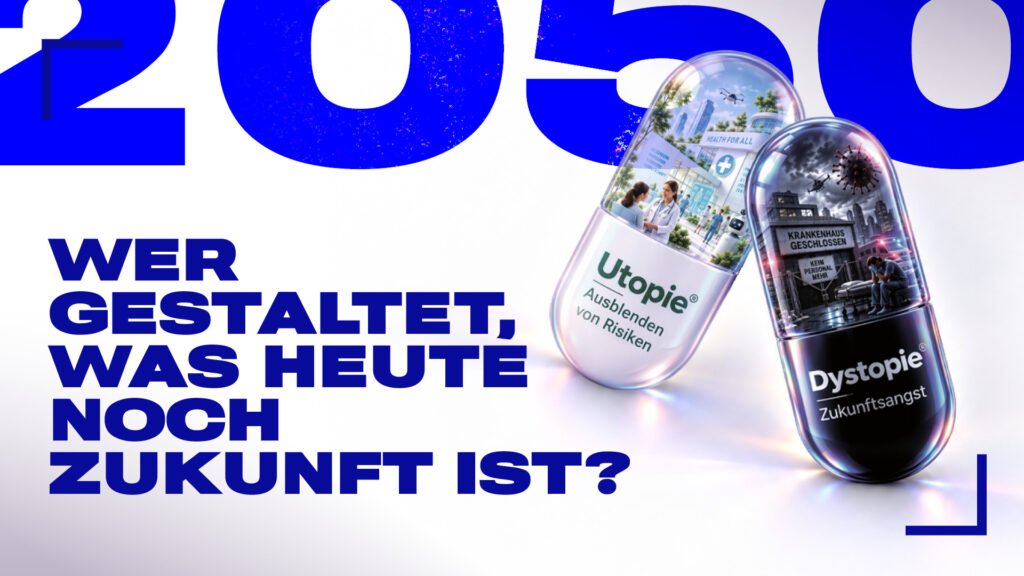

A position paper by Schaltzeit for the 25th German Congress for Health Services Research (DKVF), September 23–25, 2026, University Hospital Cologne
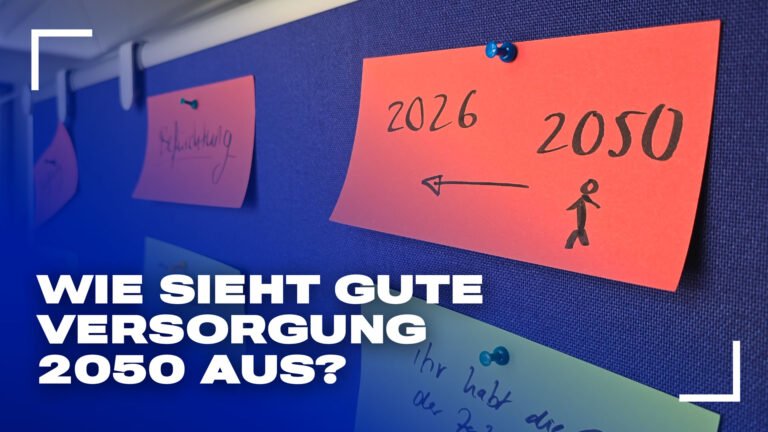
We are futurists, not forecasters. No one can predict health care in 2050, and anyone who tries is selling orientation they don’t have. What is possible: thinking through futures in the plural, disclosing assumptions, making room for action visible – and deriving decisions for today from all of this. The congress motto “People. Relationships. Organizations.” goes right to our core: the future of health care is not a question of technology but of collaboration. Or, as we put it more briefly at Schaltzeit: the future is a team sport.
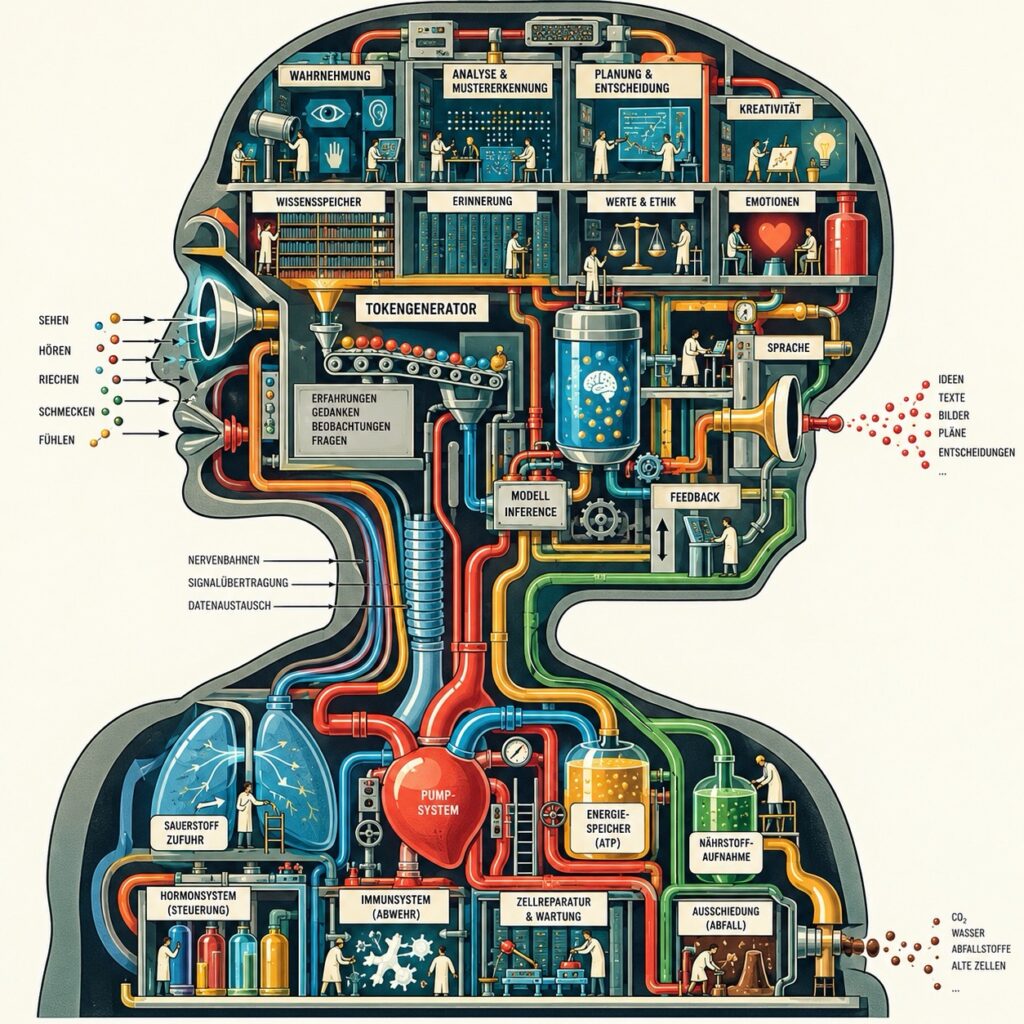
The human being as a machine in need of a future update? The illustration draws on the image of the human being in Dr. Fritz Kahn’s “Der Mensch als Industriepalast” (Man as Industrial Palace, 1926), in which the human body appears as a factory. Anyone who understands the human being as a technical system will logically look for technical solutions to illness, old age and even death when thinking about the future of health. Longevity, the quantified self and smart personalized medicine continue this perspective. But there are also images of the human being that understand health as a complex interplay of physical, psychological and social factors – shaped by emotions and experiences, worldviews and relationships, social norms, interests and power relations that cannot be fully objectified and quantified. These fundamental questions are also relevant to futures studies: Our image of the human being shapes which futures of health care we consider conceivable, desirable or shapeable in the first place.
Five questions we are bringing along
The view toward 2050 becomes concrete as soon as you translate it into questions. We are taking five of them to Cologne:
- Under what conditions do we actually optimize health care – and not just the metric we use to measure it?
- Why is the optimum currently unaffordable? And who decides what we pay for instead?
- How can I become proactive myself – as a patient, as a family member, as a professional?
- How can community make aging and illness easier, beyond benefit catalogs?
- Will health care in 2050 be managed regionally or planned centrally – and how much specialization can local accessibility withstand?
Our position: four theses
The future is not fate but a decision. Treating 2050 as a forecast means delegating responsibility to trends. We work with several futures in parallel – the probable, the desirable and the uncomfortable – and derive from them what needs to be done today.
Futures literacy is infrastructure. A health system that only writes scenarios in times of crisis is too late. Foresight belongs in the day-to-day business of hospitals, health insurers and municipalities – as naturally as controlling.
Participation is not an optional extra but a method. Those who will receive care in 2050 must help write the images of the future – patients, caregivers, family members. Participatory formats don’t just deliver acceptance; they deliver assumptions that are simply missing from the expert discourse.
Technology is a means, not an end. Not everything has to be automated, not everything needs an algorithm. The exciting question is not what technology will be able to do in 2050, but what human care and attention we consciously want to afford.
We deliberately hold back on health policy instruments – whether regional budgets, a primary care physician system or citizens’ insurance, that is a matter of democratic deliberation, not a question for futures studies. Our position concerns the process: anyone deciding about 2050 should first be able to say how they will recognize success and whom they asked.
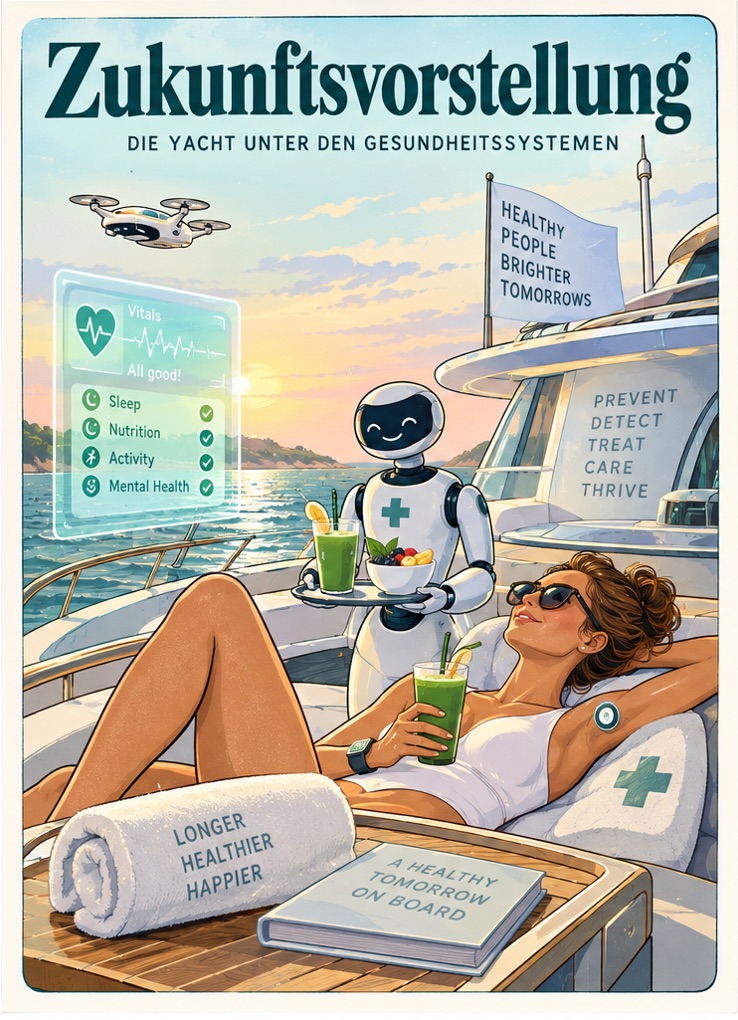
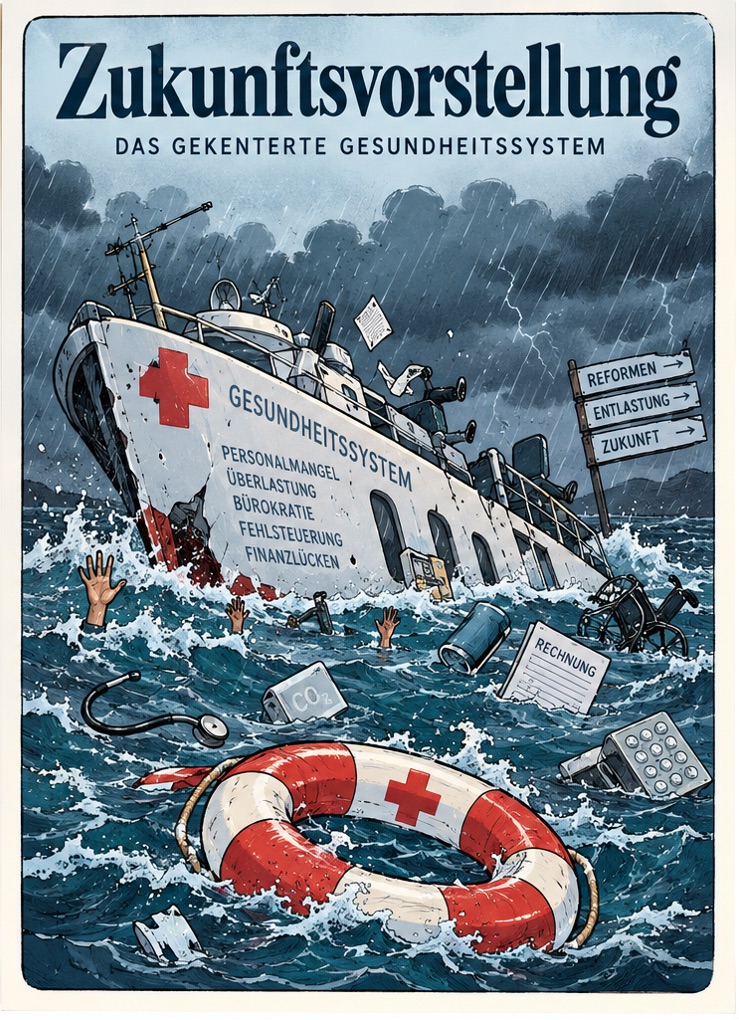
Two visions of the future, one health system: the yacht with a robo-butler and the capsized ship. Both images reveal more about our current assumptions than about 2050.
Demographics: health care becomes a team effort
The order of magnitude is well known: according to the long-term care projection by the Statistisches Bundesamt (Federal Statistical Office), the number of people in need of long-term care will rise by around 36 percent to about 6.8 million by 2055 due to aging alone – and with rising care rates, by 2.6 million more than today. In 2050, a smaller number of professionals will therefore be caring for significantly more people with chronic and multiple illnesses. The consequence is not a tightening of the efficiency screw but a new division of labor: expanded nursing roles, community health nursing, delegated and substituted services, regional care teams. The open research question is not whether this works, but under what organizational conditions it increases both quality and job satisfaction at the same time.
Our expectation: The bottleneck in 2050 is not just the number of hands, but the willingness to redistribute responsibility among professions.
Added to this is a factor often missing from demographic debates: climate. Heat waves hit precisely those groups that will be larger in number in 2050 – very old, multimorbid people in need of care. Heat protection plans, coolable nursing homes, early warning systems and heat-adapted medication regimens are therefore not environmental issues but health care planning. The open question is whether, by 2050, adaptation will be organized as a routine task of hospitals, care facilities and municipalities – or continue to be treated as a summer exception.
Digitalization and AI: from documentation to decision
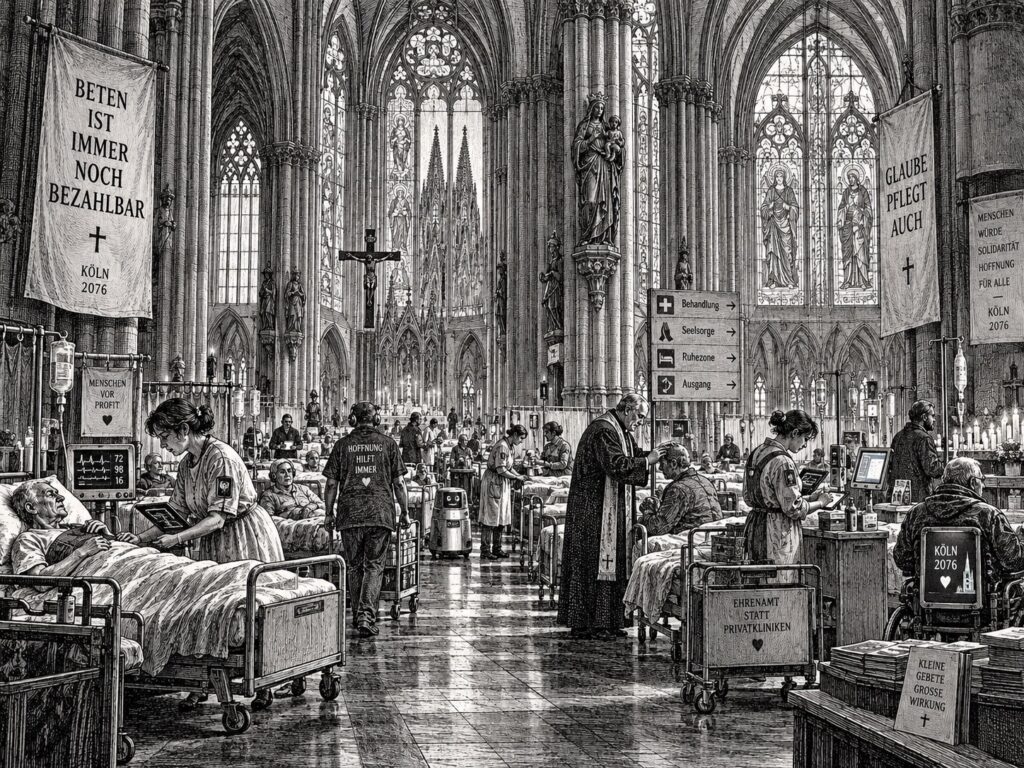
By 2050, electronic patient records, data spaces and AI assistance will shift the boundary between routine and judgment. What is interesting is less the quality of the models than how they are embedded: who bears responsibility for an algorithmically supported decision, how does the conversation between practitioners and patients change, and what standards of evidence do learning systems need when they continue to evolve after approval?
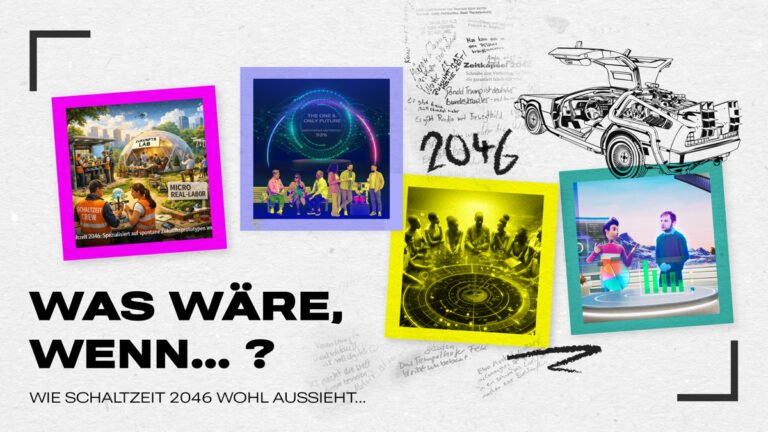
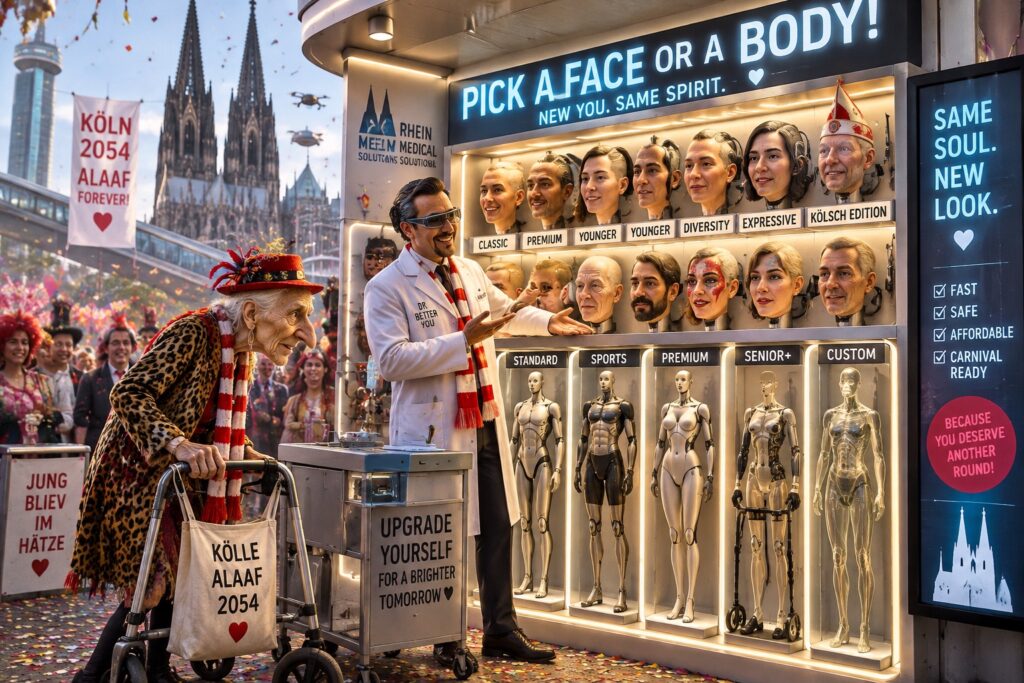
The narratives about this are far apart: while longevity circles proclaim “The End of Death” for 2046, others worry about two-tier medicine in which longer life can be bought and care and attention become scarce. Between these two narratives lie decisions that are being prepared today: xenotransplantation and lab-grown organs not only push medical boundaries, they also raise the question of who gets access, who is a donor and which extension of life we want to finance collectively. We take both images seriously, but consider neither a forecast – they are scenarios that can be calculated against each other. Anyone who treats them merely as a worldview is wasting precisely the preparation time we still have.
Participation: patients as co-producers
By 2050, participation will no longer be asked for at the end of the value chain; it will determine where it begins. PROMs and PREMs move from studies into management, and co-design becomes standard practice in developing health care services. This requires methods from health services research that make experiential knowledge robust without smoothing it over.
This is where we take a clear position: An image of the future that no patients helped write is not an image of the future but a planning assumption.
Structures and financing: incentives for collaboration
Germany spends a lot: 538.2 billion euros in 2024, 6,444 euros per capita, 12.4 percent of gross domestic product – in 1994, it was 175.3 billion euros and 9.5 percent. 48.2 percent went to outpatient facilities, 36.7 percent to inpatient and day-patient facilities, and social long-term care insurance recorded the strongest growth at 11.3 percent. Sector boundaries and fee-for-service remuneration are the most effective brakes on integrated care.
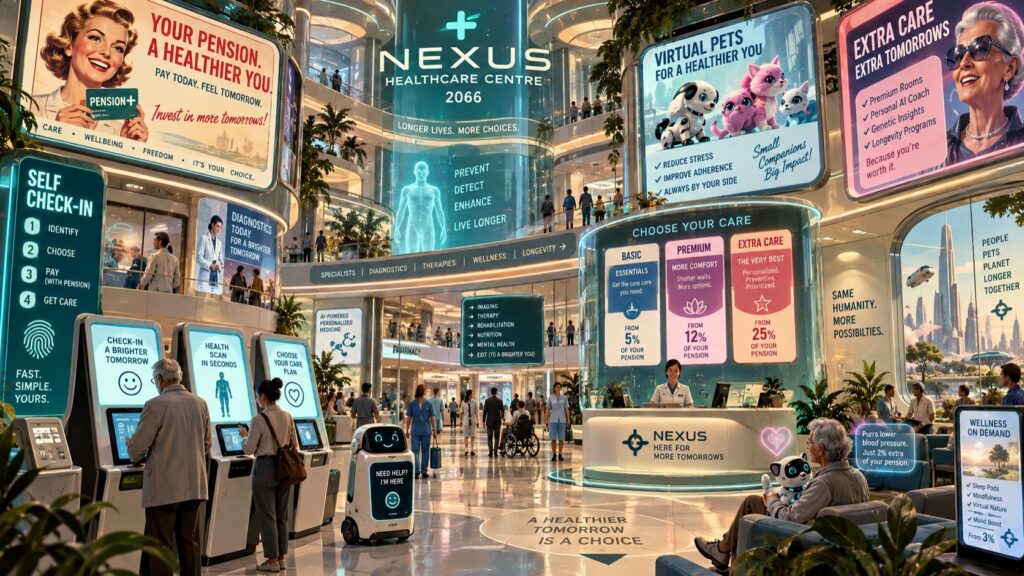
A wide range of instruments is currently under discussion – primary care systems, integrated emergency centers, further shifts to outpatient care, delegation and substitution of medical tasks, regional budgets, outcome-based remuneration and even citizens’ insurance. Which combination will work remains open; what interests us is less the political decision than the question of how its success would be recognized in 2050. Whether quality in 2050 will be decided primarily at the regional level – in care networks with shared responsibility for populations, budgets and outcomes – or in more centrally planned, specialized structures is one of the open questions.
This is also where the answer to the question of affordability lies: The optimum is too expensive today not because good care is expensive, but because our system also pays for duplicate examinations, revolving-door effects and friction at sector boundaries. The research task is demanding: the impact of such systems cannot be demonstrated through randomized designs alone.
Our invitation: keep thinking with us
We were already there in Hamburg in 2025 with the Advanced Foresight Group – you can read about it in the recap “Where Is Health Care Heading? Advanced Foresight at DKVF 2025”. Schaltzeit will once again be at DKVF this year, actively running a workshop – using LEGO® Serious Play. Built models make assumptions visible that remain unspoken in discussion papers: who is at the center? What gets delegated, what remains human? Where does progress tip over into inequality?
Our Futures Oracle is also on board – not an answer machine, but a deliberately playful entry point into scenario thinking. In addition, we invite you to leave your utopian and dystopian thoughts on health care in 2050 at our booth. We will collect the contributions over the three days of the congress, condense them into an image of the future and share the results back with the community.
Contradict us. We are not coming to Cologne with a finished image of the future, but with theses we’d like to see challenged – viable ideas don’t emerge at the lectern, but in the conversations in between. We have described where our drive for this comes from in the post The courage to shape the future on our blog.
Further reading: