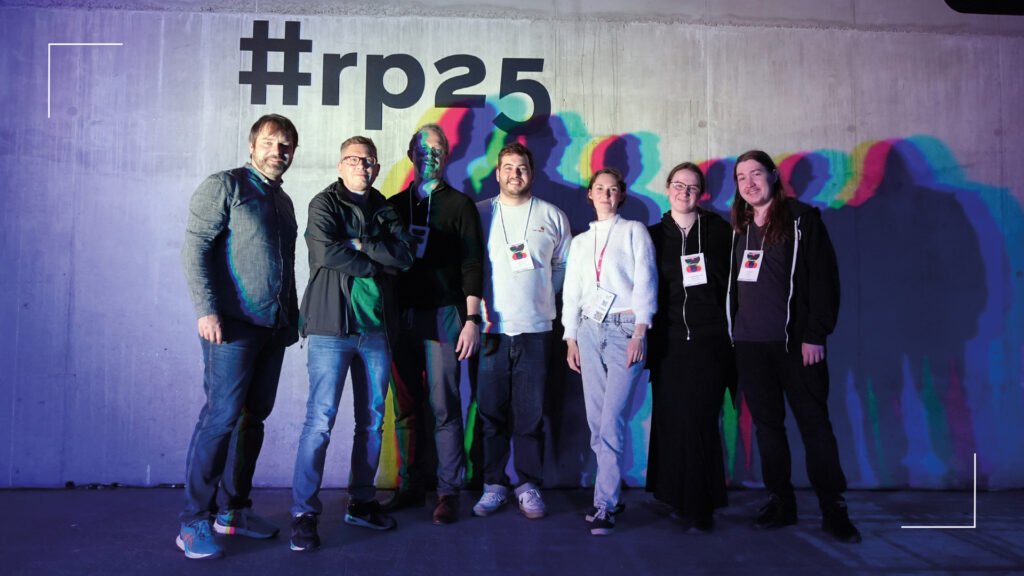

Beyond all the tech, it was about fundamental questions
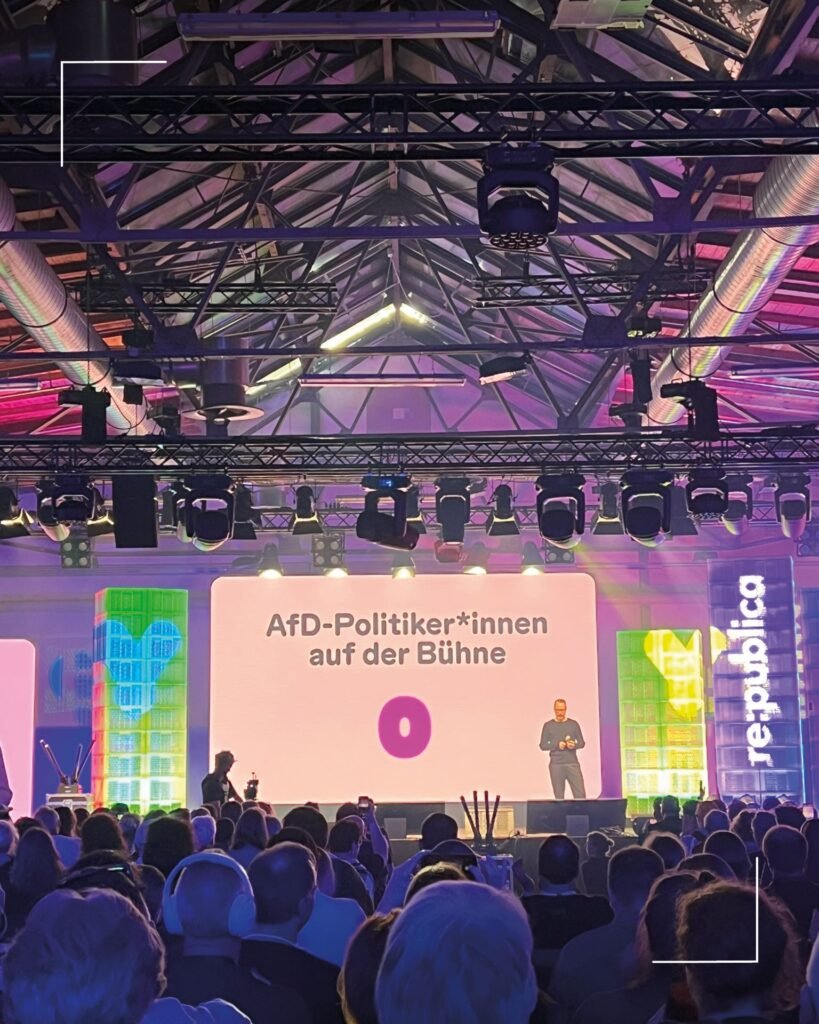
How stable will our democracies remain when polarization is algorithmically amplified by digital platforms? This, in turn, intensifies the actual impact of right-wing movements in Germany and Europe.
How do we protect our mental privacy when neural interfaces can suddenly do more than we thought? And what stories do we still tell ourselves about progress, responsibility and social cohesion? Those who don’t strengthen their own skills will eventually be overtaken by technology. That’s why: strengthen digital skills and set ethical guardrails as a society, so that we stay in control and shape futures together, consciously.
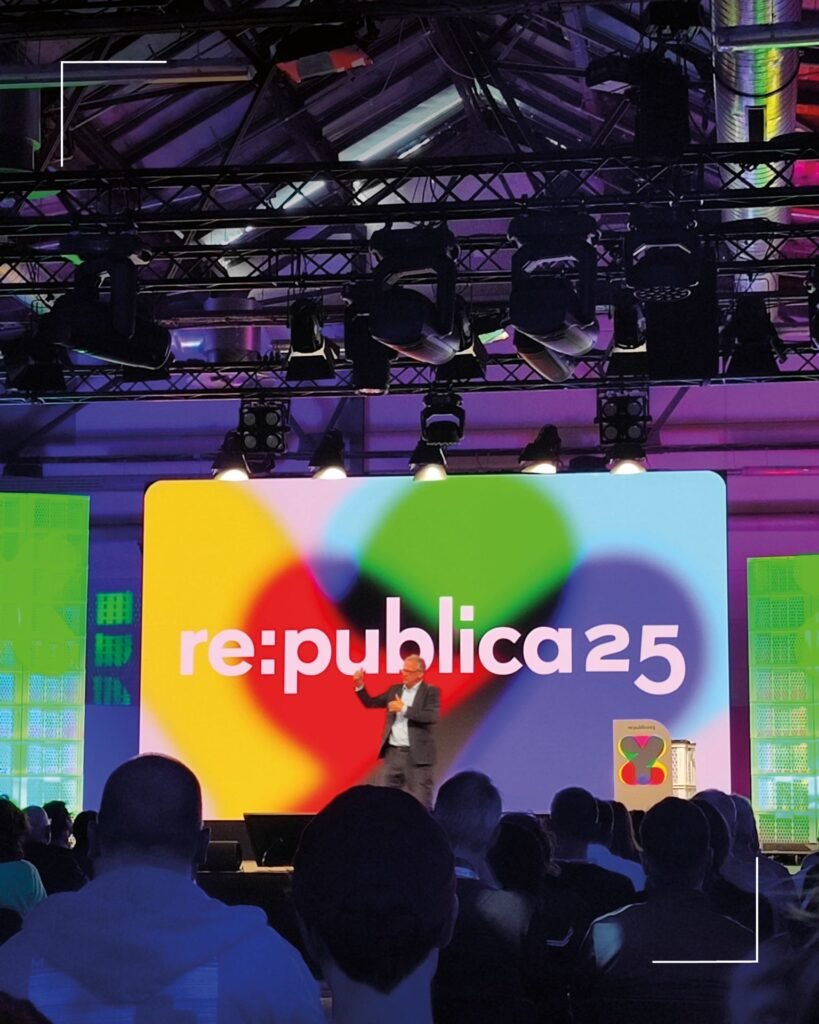
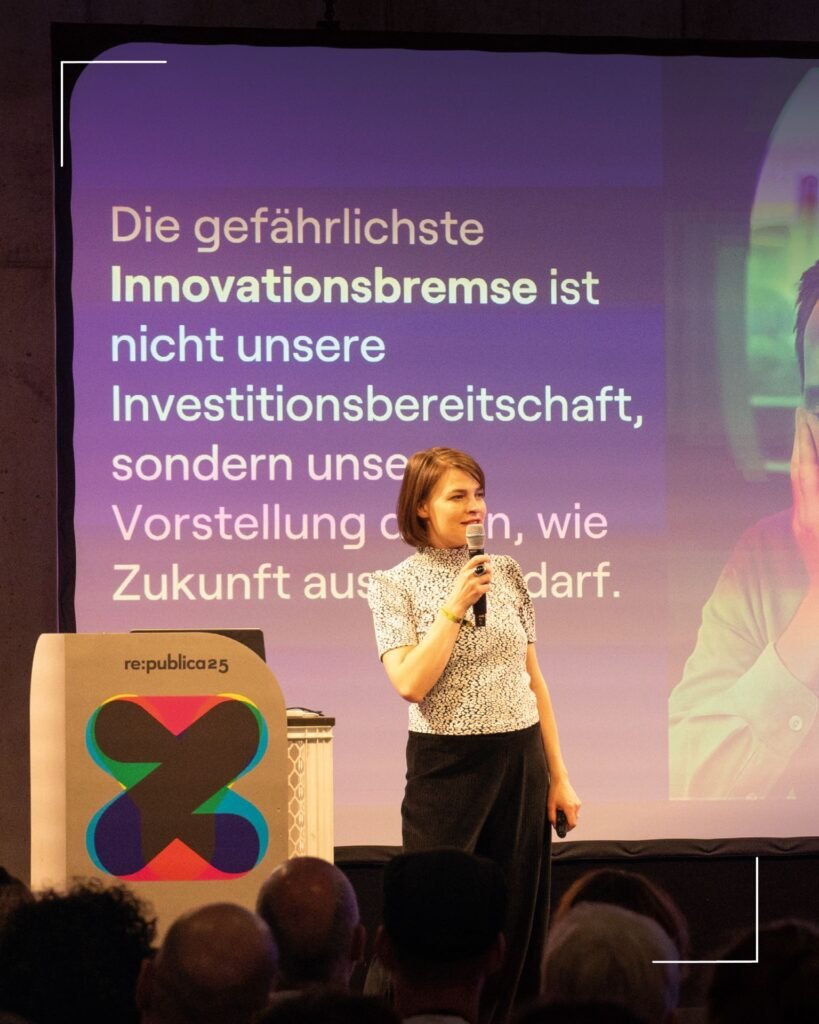
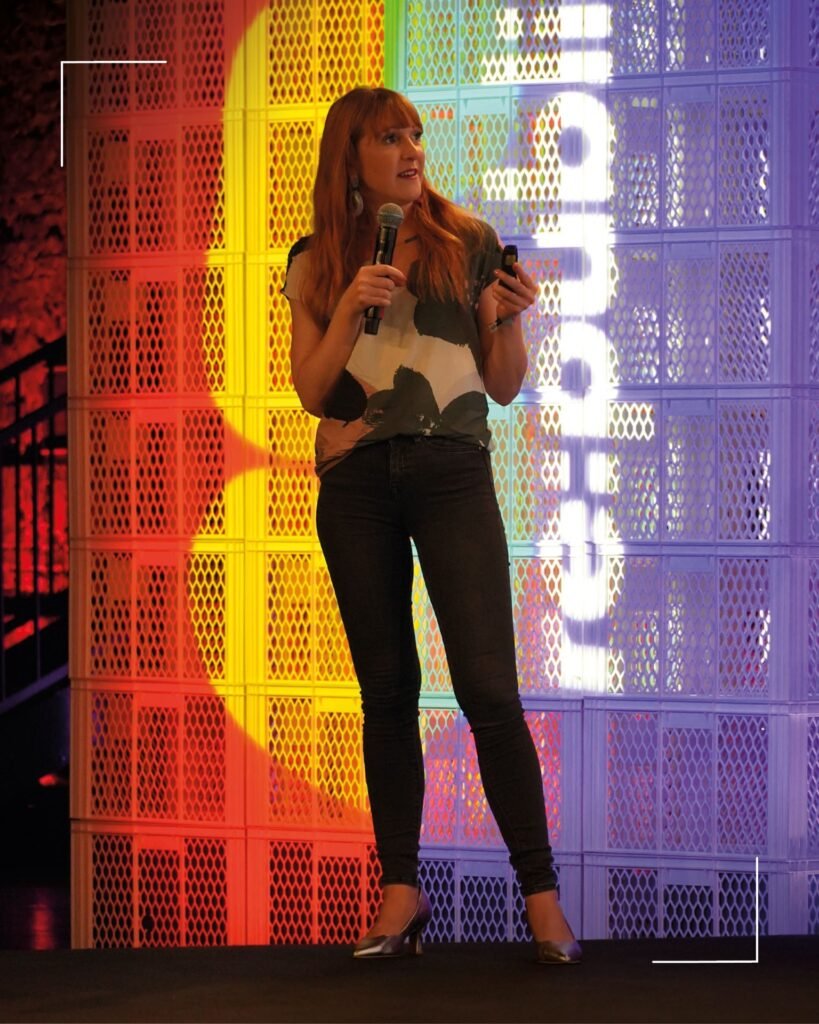
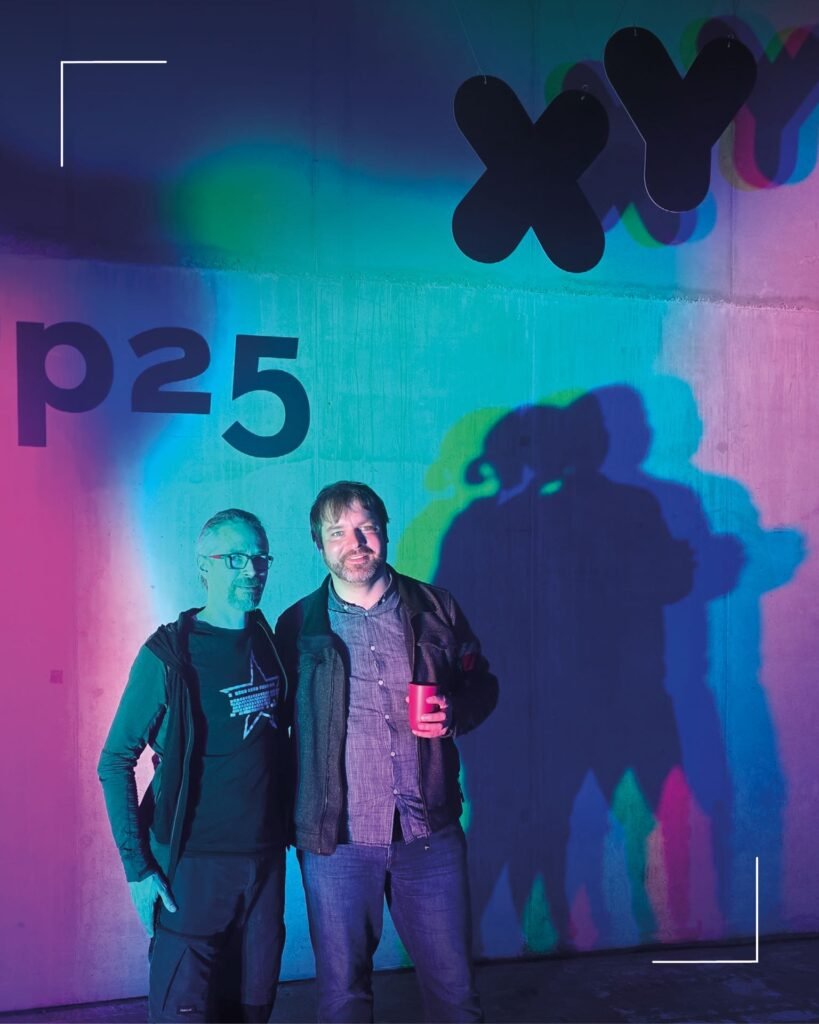
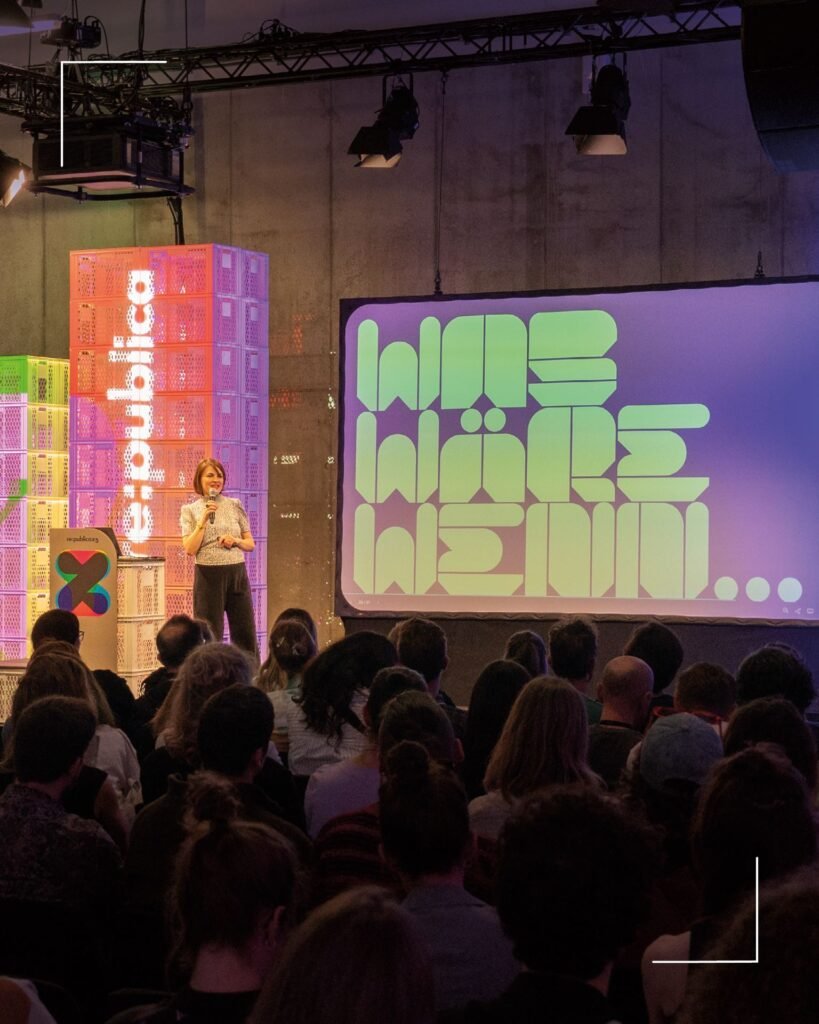
All in all, the contributions at re:publica 25 skillfully reflected the relationship between technological innovation and social responsibility. re:publica remains a place where exactly these conversations happen – sometimes controversial, often inspiring, always a little chaotic. For us at Schaltzeit, it has long been a must-attend event.
What stuck with us most – our highlights
Right-wing networks, digital polarization and counterstrategies
In his talk “Der digitale Kampf um die politische Mitte” (The digital battle for the political center), Maximilian Oehl, co-founder and managing director of the campaign agency Media Force, laid bare – quite unsparingly – how professionally the far right uses social networks to systematically infiltrate the political center. Filter bubbles, data-driven targeting, maximally emotionalized content — and we are often just playing catch-up, while the far right uses data analysis to identify potentially undecided or frustrated people in the center and systematically confronts them with polarizing content.
Social media platforms in particular provide the infrastructure to quickly achieve viral effects through algorithmic amplification. He showed that many of these strategies rely on exploiting filter bubbles and deliberately deploying emotions – fear, anger or frustration are stirred up on purpose to suppress rational counter-speech or even delegitimize it.
In response, Oehl presented the concept of “digital campaigning” as an effective counterstrategy and stressed that it is not enough to act purely reactively. Instead, we need to proactively build our own target-group-specific formats and strong, credible voices that communicate with credibility and authenticity.
His message: instead of just reacting to hate comments, we need to proactively build our own formats and strong, credible voices. Honestly: a thought that stayed with us for quite a while.
AI in companies: cultural roadblocks and a lack of clarity
In “KI zwischen Innovation und praktischen Herausforderungen” (AI between innovation and practical challenges), Florian Kunzke (Global Director AI Strategy at SAP) showed why so many companies are somehow stuck when it comes to AI. It’s rarely the technology – mostly it’s dusty data, a missing strategy, fear and cultural resistance. As an example, Kunzke pointed to the AI newsletter from SAP’s CTO, which is meant to build awareness of and trust in AI technologies. Leaders have to lead the way, governance has to become clearer, data protection has to become more manageable — otherwise AI will never be a real lever for innovation.

AI in war: autonomous systems and shifted responsibility
In “Über Verantwortung bei KI-gestützten Kriegssystemen” (On responsibility in AI-supported warfare systems), Rainer Rehak (Weizenbaum Institute for the Networked Society) left little room for illusions. The Israeli targeting system Lavender shows how far the automation of military decisions can go — and how responsibility gets pushed upward in the process. A disturbing example of how technology effectively undermines the standards of international law.
While the use of AI in military contexts has enabled remarkable technical progress, it also raises a host of unresolved questions: accountability, upholding international law and, not least, the danger of an automated escalation spiral. The challenge lies in striking a balance between the legitimate interests of national security and the demands of a democratic culture of debate in which lives and human rights remain protected, even when new technologies are deployed.
Automated killing that justifies the number of civilian casualties according to its own arithmetic per “target” leads to an escalation spiral that is very hard to stop. Human rights are under massive threat here.
Remembrance work with 3D scans
One of the most powerful moments for me came from Amer Matar: as a journalist, Amer was himself imprisoned and tortured. He told us that in every cell he tried to leave his name behind so that he would be found. After his release, he set out to search for his missing brother, who had been detained.
After the collapse of the Syrian regime, he came up with the idea of visiting the prisons of ISIS and the regime, scanning and documenting them, and making them accessible as a virtual museum with real eyewitness interviews.
In “Crimes as 3D tours” he showed how he documents Syrian ISIS prisons with 3D scans to make crimes visible. The 3D scans of the prisons are helping to make people visible, even now. He has not found his brother yet. When I asked him what comes next, he said he would now turn to the mass graves and continue the search. Always knowing that the chance of finding him is incredibly small.
If you want to see the prisons and the more than 500 interviews, you can do so here: ISIS Prisons Museum. A moving example of how technology makes remembrance work possible.
Neurodiversity instead of averaging out
For André Frank Zimpel, one thing is clear: AI smooths things out. And that is exactly why we need people who think unconventionally. In “Hilfe, wir werden dümmer!” (Help, we’re getting dumber!) he made a strong case for how important neurodivergent perspectives are — autism, ADHD, dyslexia – all of these can be engines of innovation if we finally stop optimizing only for the average and start seeing neurodiversity as creative fuel. Machines should foster different ways of thinking, not smooth them out – otherwise we lose collective intelligence.
Freedom of thought under pressure
Fatma Deniz and Janosch Delcker’s talks “NeuroAI” and “Mind-reading AI” offered a pretty mind-blowing insight: fMRI scans and language models are already scratching at our inner world of thoughts – so AI is moving deeper into the cognitive realm.
Fittingly, in another panel Janosch Delcker warned about the loss of mental privacy through new neural interfaces between brain and technology and presented a “Mental Privacy Toolkit” to protect freedom of thought. Two talks that bring fascination and caution together in a logical way.
Generative AI as infrastructure
Björn Ommer opened with “Generative KI und die Zukunft der Intelligenz” (Generative AI and the future of intelligence) and went straight to the big picture: generative AI could become what electricity or the PC once were – a fundamental base technology, an infrastructure on which new waves of innovation are built. The exciting question for us: will Europe finally create its own public-interest models – or will we just watch from the sidelines again?
We were also impressed by his vision of a European, public-interest AI: transparent, democratic and accessible to all. Instead of technological fatalism, Ommer called for courage, creative drive and sovereignty – exactly the attitude we need in Europe right now.
The question on the table was which abilities truly set us humans apart (the focus of human intelligence could increasingly shift toward intuitive and instinctive aspects). It became clearer how important each individual’s autonomy and critical reflection will be in the future as a good starting point for actively taking on social responsibility.
The digital ministry as a start-up
The new Minister for Digital Affairs sketched out public administration in product mode: biweekly releases, open APIs, user feedback as a mandatory loop. We love the vision, but at the same time we wonder how many sprints our public authorities can really handle. Question marks arose when he talked about German infrastructure and resilience. The Germany Stack: we understand that infrastructure shouldn’t be reinvented for every federal state, but the European idea behind it was missing. He currently has no answer to the question of how secure messaging for public authorities is supposed to work in the near future.
Quote: “A lot currently runs via phone calls and personal exchange!”
If that isn’t a little behind the times…
Source: Digitalminister will offene Standards und Open Source zum Leitprinzip machen | heise online
Dystopian narratives
In the panel discussion “F**k the Dystopia – Reimaging the Future through Serial Storytelling”, the comparison with the series “Cassandra” showed in very practical terms why dystopian narratives can drive processes of change faster and what it takes to give individuals the right incentives to act.
Authenticity beats reach
In “Wahlkampf 2.0” (Election Campaign 2.0) Heidi Reichinnek summed it up quite likably: TikTok reach is good, but real conversations are still won at the front door. Her mantra: virality & reach without relationships remain hollow – sometimes authenticity means deliberately ignoring the algorithm.
Silicon Valley demystified
With “Broligarchy: When Founders Became Kings”, Aya Jaff delivered one of the most personal sessions: she knows the toxic narratives of rapid growth and investor power from her own experience. Her own “no” to a questionable investor deal cost her her job at the time. Using personal anecdotes, she took apart Silicon Valley myths. Her clear message: “Move fast, break things” often breaks people – it’s high time for new success stories.
Between broligarchy and autocracy – playbook: how does civil society fight back?
A high-caliber panel, but Luisa Neubauer put the core message in razor-sharp terms: civil society doesn’t need the perfect blueprint, but courage, alliances and staying power. Watch the recording of the panel here!
Poetry against populism
In “Poesie gegen Populismus” (Poetry against populism), Sarah Bosetti showed how humor can disarm without trivializing. Her thesis: populism endangers democratic discourse more than any specific crisis. A bit of welcome lightness amid all the serious topics.
Digital interventions in the manosphere
The MYKE team took a bold step in “Hacking the Manosphere” and asked: how do you reach men who are stuck in misogynistic echo chambers?
The project combined investigative research and digital interventions. What blew me away was the practical focus: instead of just analyzing the manosphere, MYKE showed ways to reach out to individuals affected and open up new realities of life. In other words, offering individual help and alternative narratives for men stuck in toxic structures.
Pop culture as a crisis vitamin
Shortly before the end, I sat in on Paul Yoshio Steinwachs’s talk “Pop-Kultur als generationsübergreifender Rettungsschirm” (Pop culture as a cross-generational safety net) – Star Trek quotes, Yoda wisdom, and satire as a crisis vitamin. The talk was light-footed, but it left behind the serious question of how much collective confidence pop culture can still offer when news feeds are constantly sounding the alarm.
Virtual influencers: real, fake or who cares?
The speakers showed that some virtual personas now achieve a reach, one that many a human creator can only dream of. The figures on brand loyalty were fascinating: avatars like “Lil Miquela” generate higher engagement rates than traditional influencers in some campaigns. At the same time, a quiet warning rang out: if authenticity can be fully simulated, we need to redefine our criteria for “trust.”
Valuing compromise again
In this year’s talk “Immer nur faule Kompromisse? Wie wir durch eine neue Wertschätzung für Kompromisse gesellschaftlichen Zusammenhalt verbessern können” (Nothing but lazy compromises? How a new appreciation for compromise can strengthen social cohesion), Julia Reuschenbach built on her contribution to #rp24. Back then, the topic was the culture of debate in Germany’s democracy; this time, it was about appreciating the art of compromise. Without the ability to compromise, we humans couldn’t function in everyday life. We practice it every single day, for example when we have to juggle scheduling conflicts or competing goals between leisure, work and family. When we want to practice mindfulness & work-life balance and still expect satisfaction in every sphere.
So why not show more respect in politics, too, for this ability to make change possible? Let’s give compromises between the demands of different democratic parties more appreciation again. It’s not about watering down positions, but about working out solutions together despite different standpoints – solutions that both sides can live with.
If shared solutions become impossible, the only winners in the end are the so-called polarization entrepreneurs (Steffen Mau), gridlock, frustration and political disenchantment, which keeps gaining momentum. Easy answers are simply too tempting.
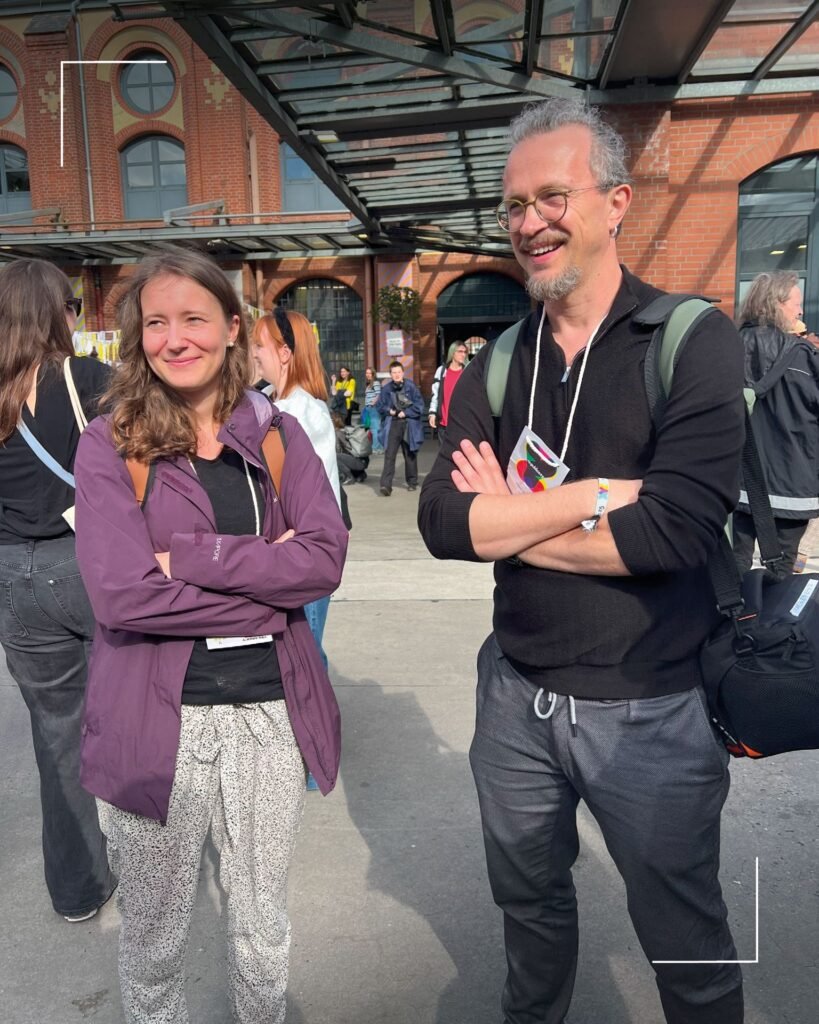

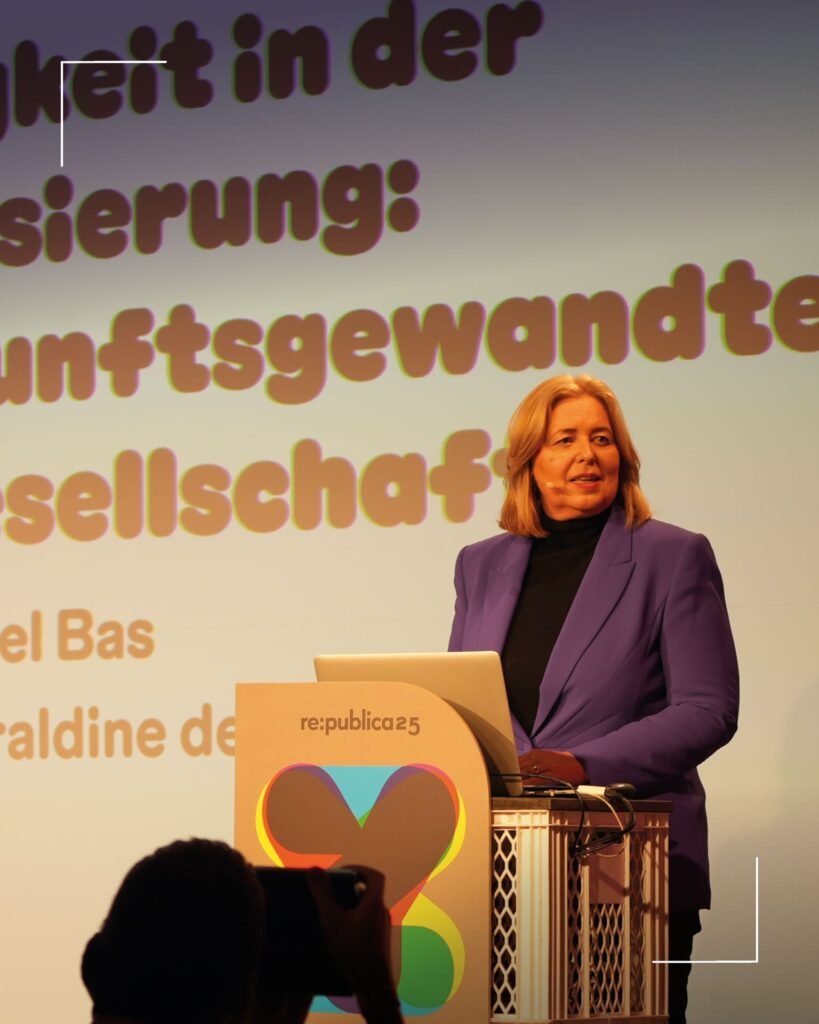
Educational leave, reload and a political downer
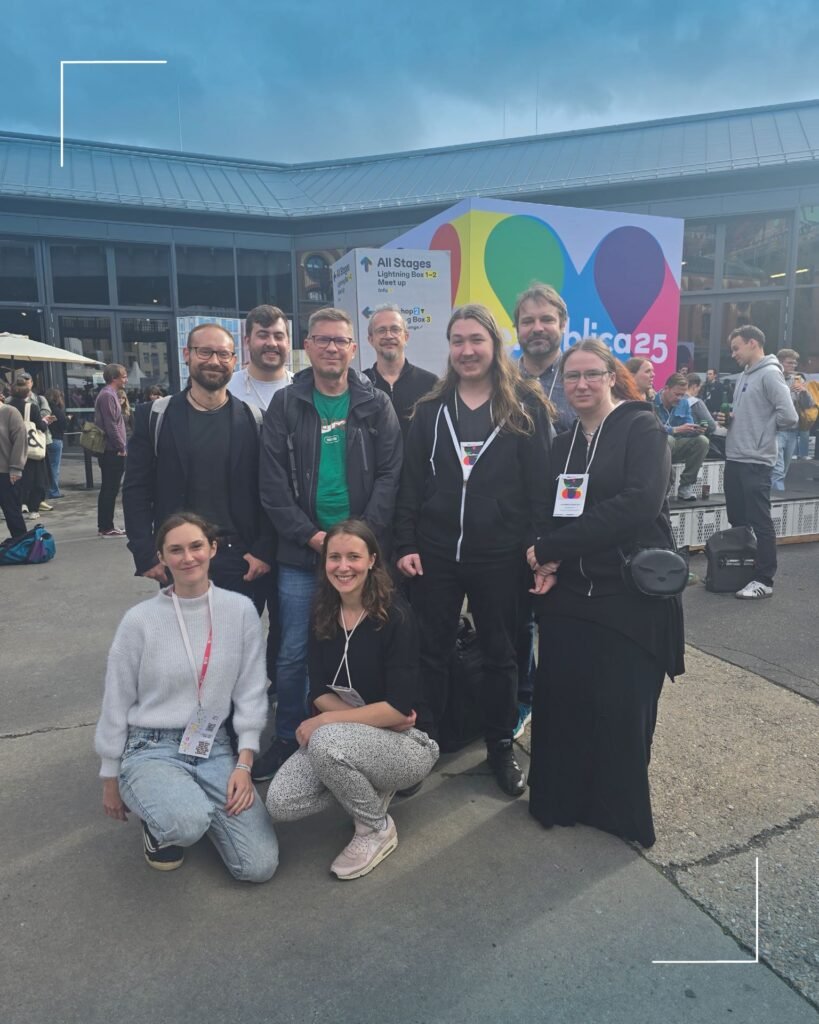
At Schaltzeit, we deliberately do things differently: for years, re:publica has been a fixed part of our conference program. Since 2010, everyone on our team has been given these three days for exchange, professional development and fresh ideas (you can find our 2024 recap here). We cover the participation fees and count the time as working time, because we believe: the future needs curiosity.
All the more absurd for us this year: while our Chancellor is calling for more productivity and longer working hours and the business community is chipping away at public holidays to boost GDP, the federal states are at the same time not making educational leave possible. The state of Berlin – like many other federal states – did not recognize re:publica 2025 as eligible for educational leave. Anyone without an understanding employer had to take vacation days and pay for the ticket out of their own pocket. For one of Europe’s most important digital conferences, that is an extremely backward approach. Perhaps a small appeal on our own behalf: anyone who truly takes digital education seriously should also create the necessary conditions for it.
Our wishes for #rp26: more courage for the future, fewer lines
Of course, we also collected a few wishes for the next re:publica.
- More hands-on future tinkering
It would be great if images of the future could be created directly in the app – spinning ideas together, discussing them and developing them further. - A more European perspective
Away from German federalism, toward a shared European digital vision: we should think about infrastructure, values and rules across borders. - More exchange, not just panels
Even more interactive sessions, labs and small discussion spaces that encourage encounters and networking. And calling on politicians to actively engage in dialogue. - And yes, some practical things too…
Better silent stage technology – yes, the technology is wonderful. But it also has to work. That includes proper Wi-Fi and reducing interference from Bluetooth devices. Fair food prices and a few more food options so that time isn’t spent waiting. Provide more places to sit in between, longer breaks between sessions and, please, finally shorter lines at the entrance. Maybe the ticket alone could be enough to get in. People could then print out their own name badges.
Our takeaway
re:publica 2025 was once again a wild, colorful, sometimes overwhelming but always rewarding space of possibility. But also a place to see familiar faces, such as partners and friends from our network, for example from Ellery Studio. You can find Dodo Vögler’s contribution, aptly titled “Future is not a vibe – it’s a skill,” here.
- Gen X, Y, Z – who gives a damn.
Stereotyped target groups don’t get us anywhere. Defining them helps with marketing services, but it also entrenches dangerous thought patterns that polarize. So let’s get rid of them. - Don’t look away when something matters to you!
The common good comes from taking responsibility. Whether volunteering or political engagement: as human beings, we must not shirk our responsibility. Democracy needs “active” people and “active” organizations that are willing to break open filter bubbles, create spaces for encounter and strengthen the ability to compromise and engage in dialogue. - Closed platforms or common goods?
AI is becoming infrastructure. Ideally, open infrastructure that belongs to everyone and excludes no one. To get there, digital ecosystems must also be forced open through regulation, and interfaces must be established. - Code or climate?
AI models devour electricity on a gigawatt scale. How do we factor ecological costs into our balance sheets of enthusiasm before digital progress turns into a real CO₂ setback? - Freedom of thought 2.0
After “Mind-reading AI,” the mind suddenly seems like the last analog refuge. For now. But the technical barriers are falling. Do we need a constitutionally protected right to mental offline time before neural interfaces become part of everyday life?
Responsibility remains human. So make use of the time and make something of it! Thanks to the great digitization work of the re:PUBLICA crew, the knowledge is available online. Take advantage of it! Our internal to-do list has been fed a little more. At Schaltzeit, too, we are aware that democracy must be actively defended. We will do our part. Promise!
Until #rp26. See you there!