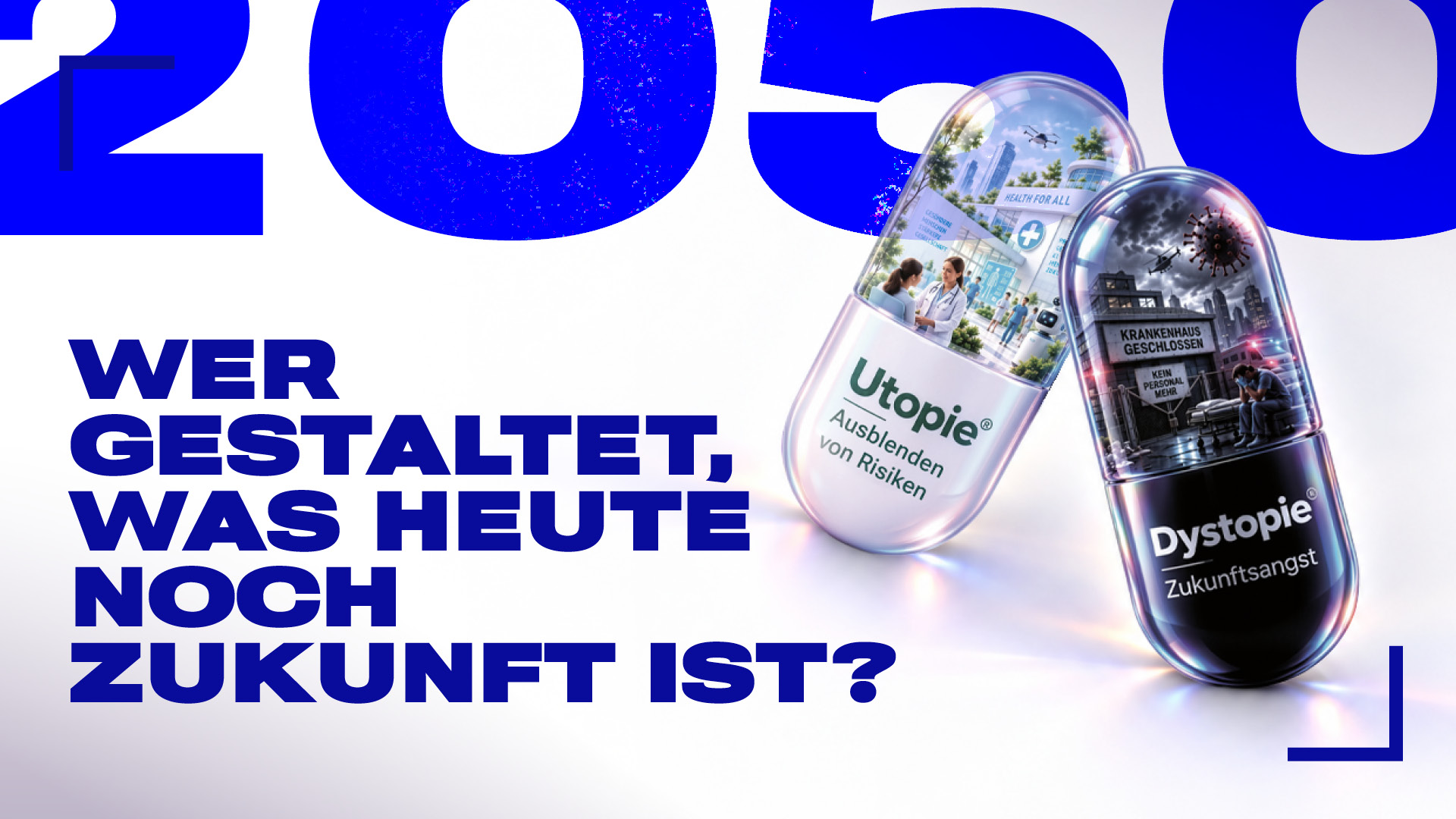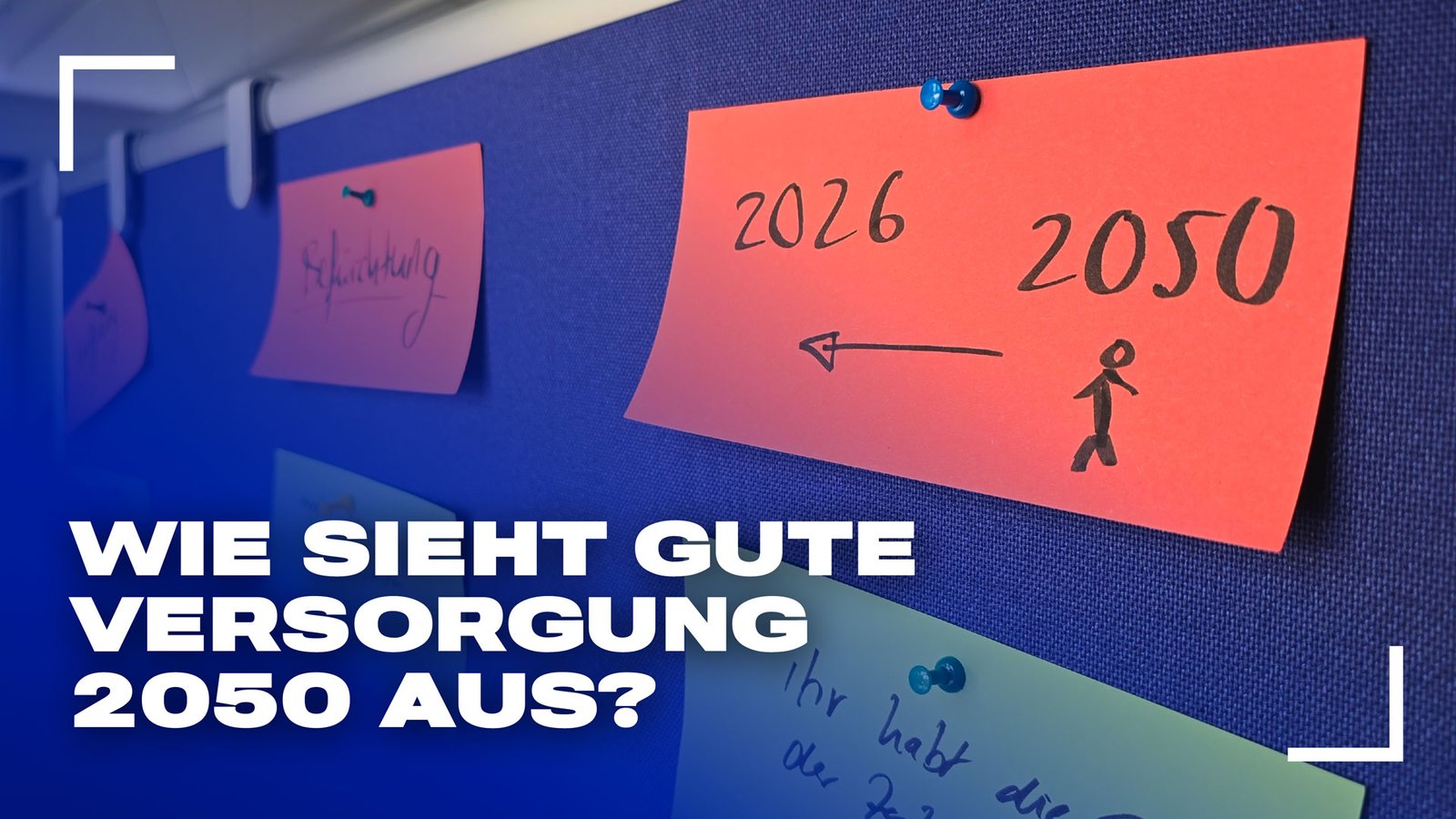


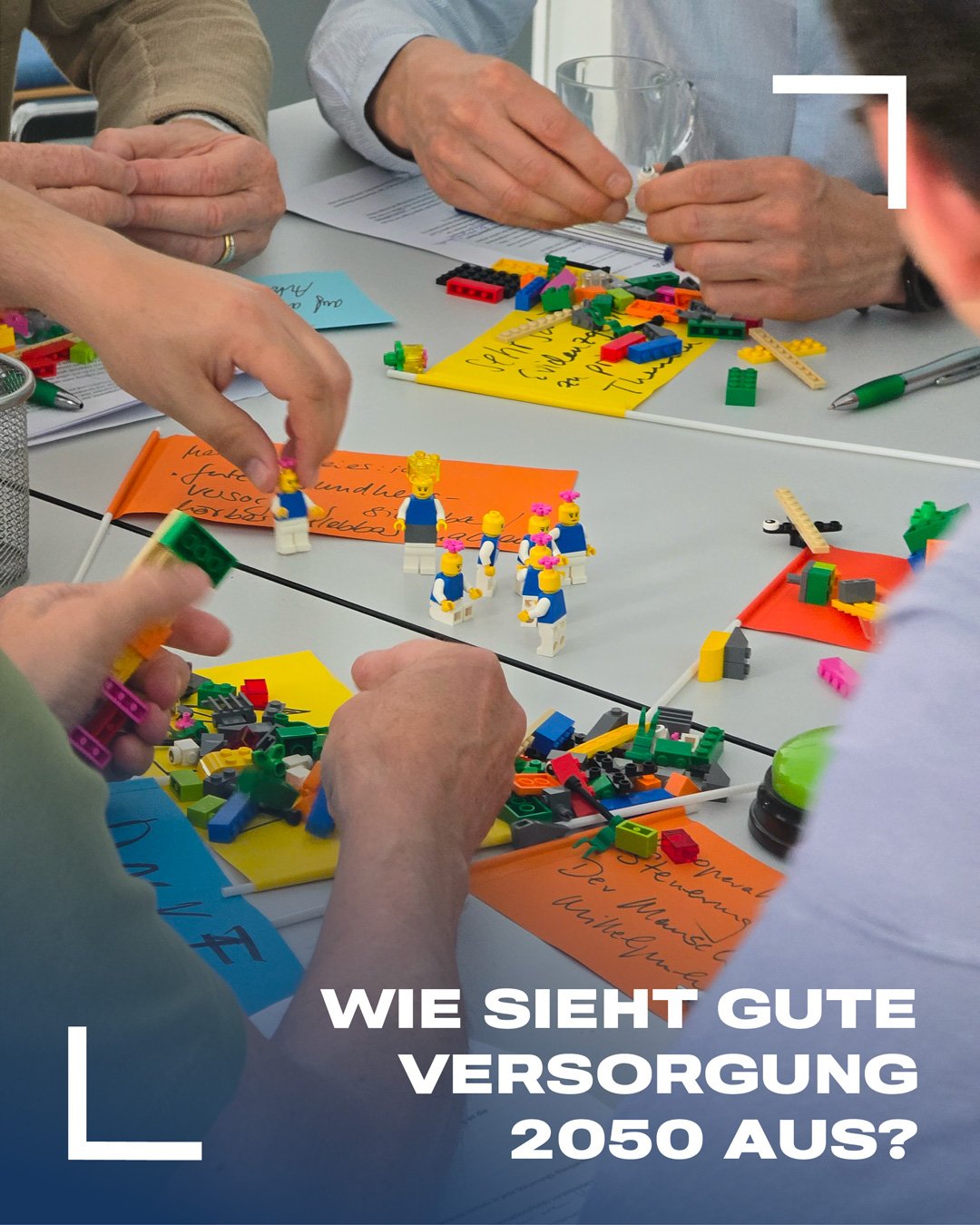
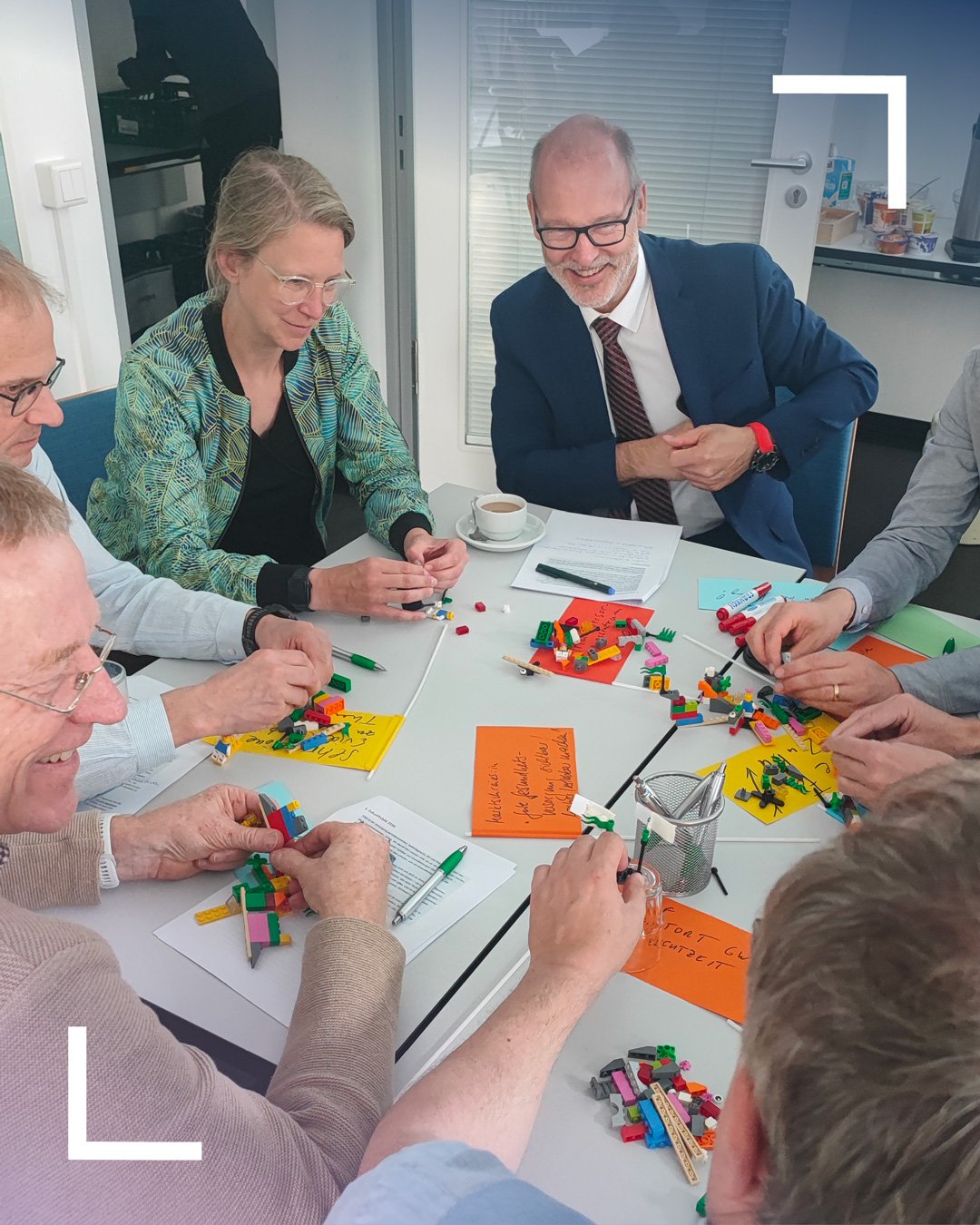
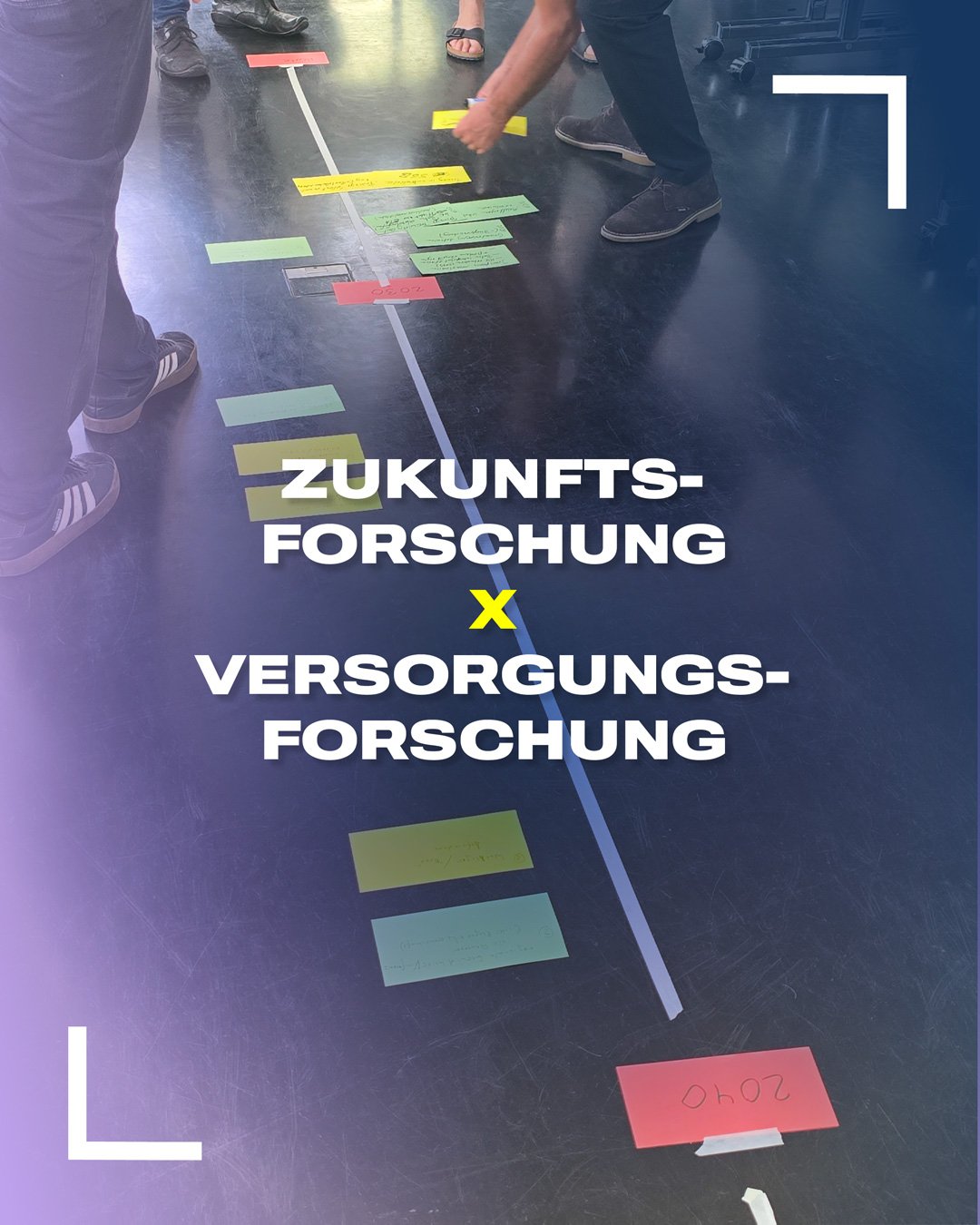
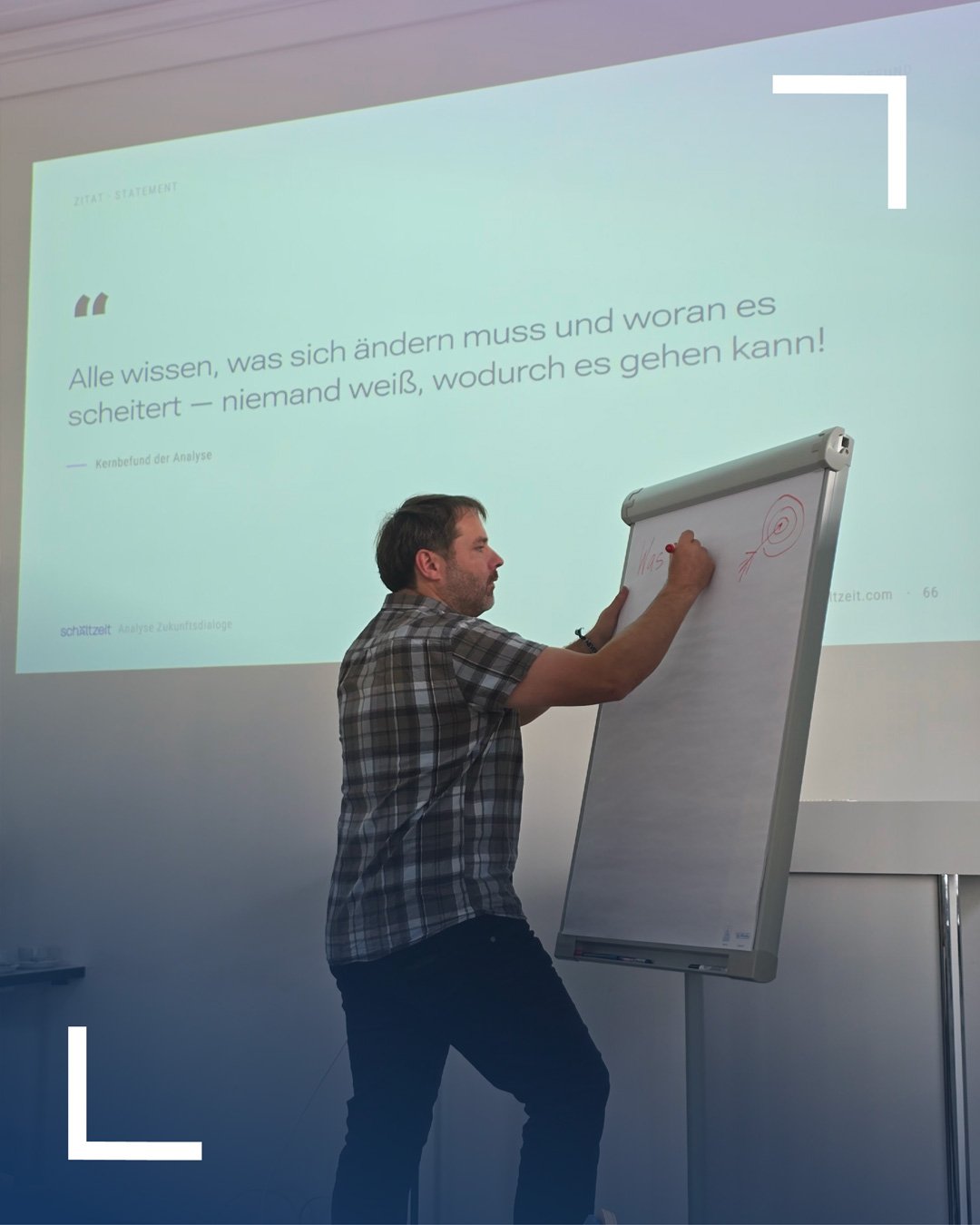
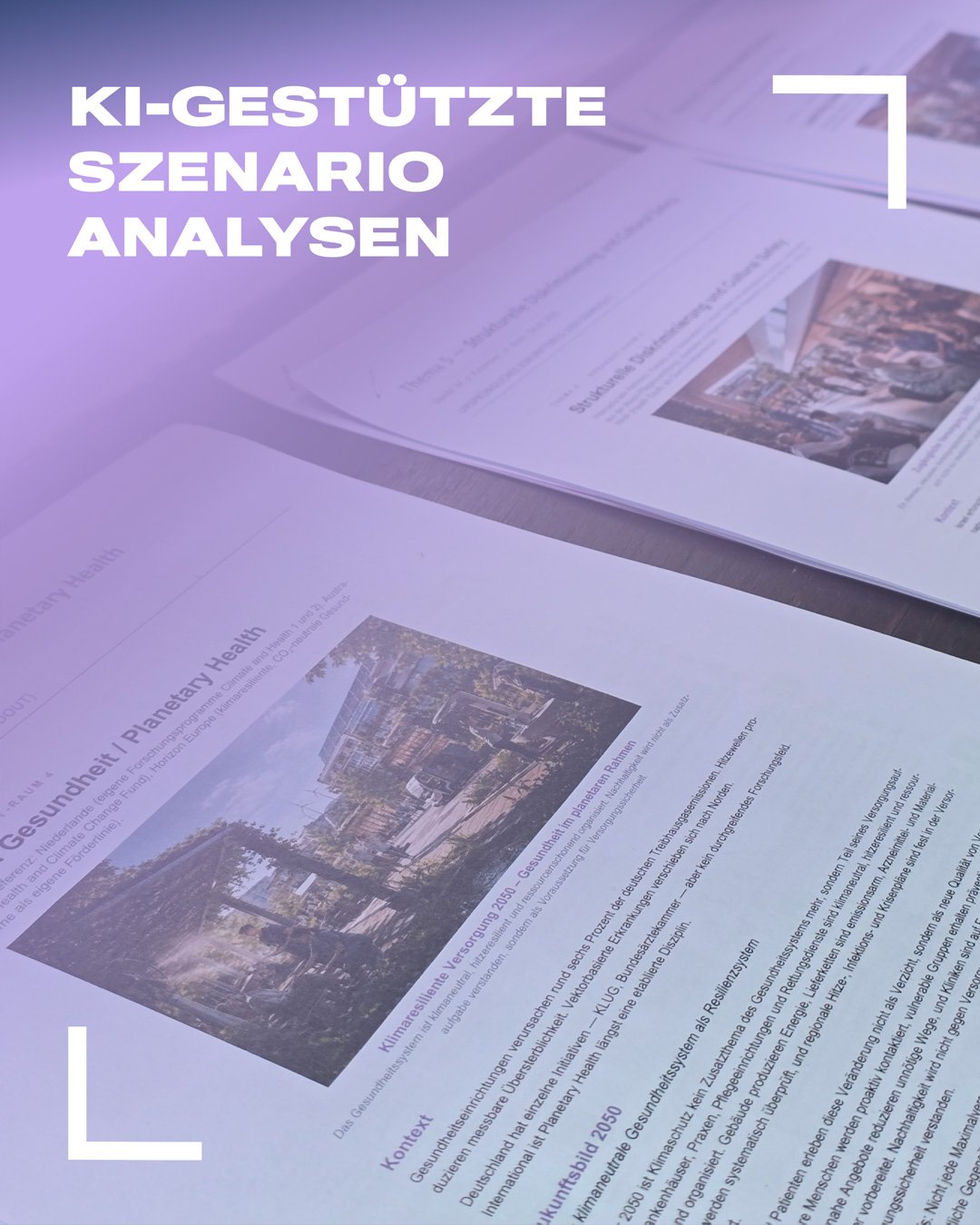
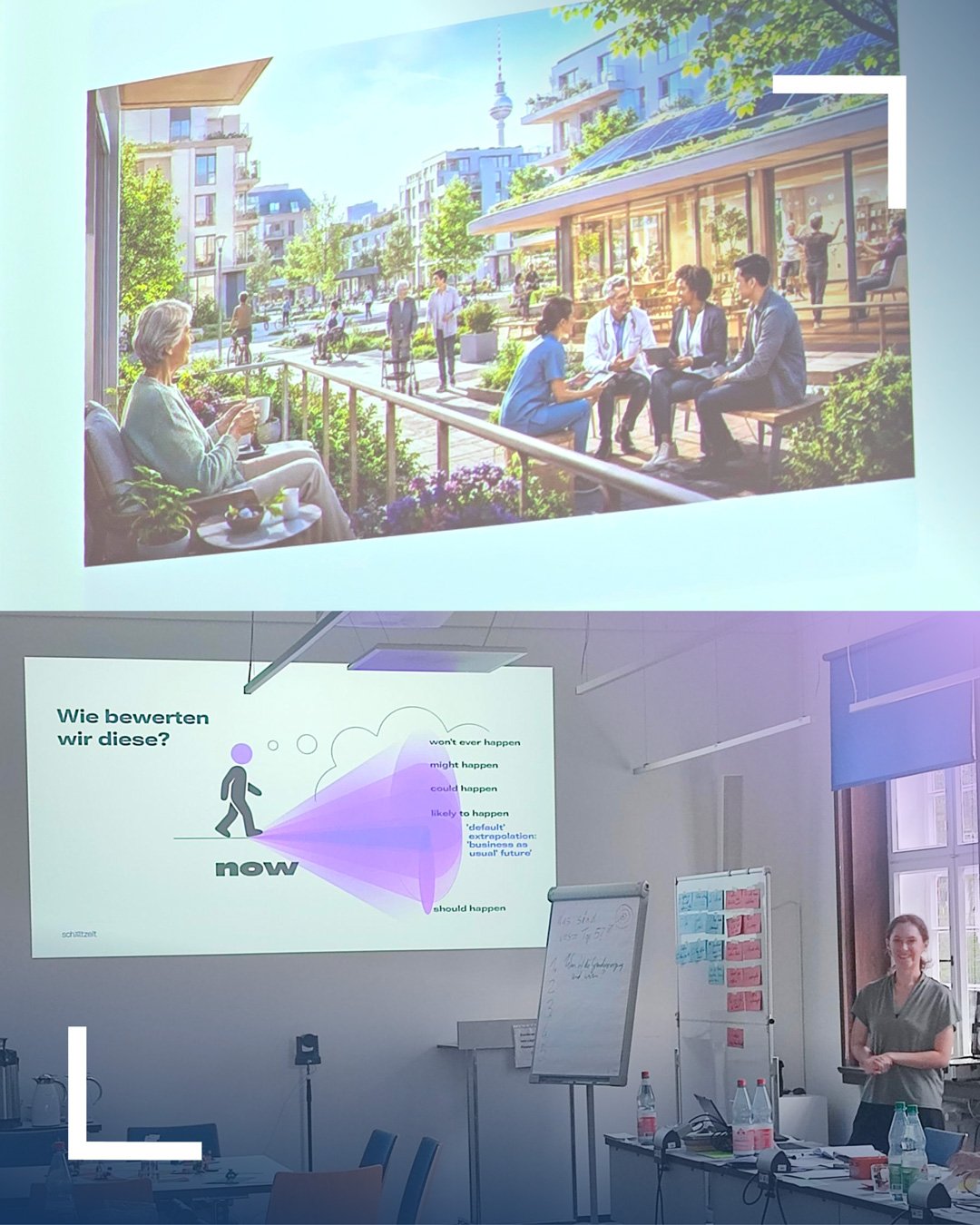
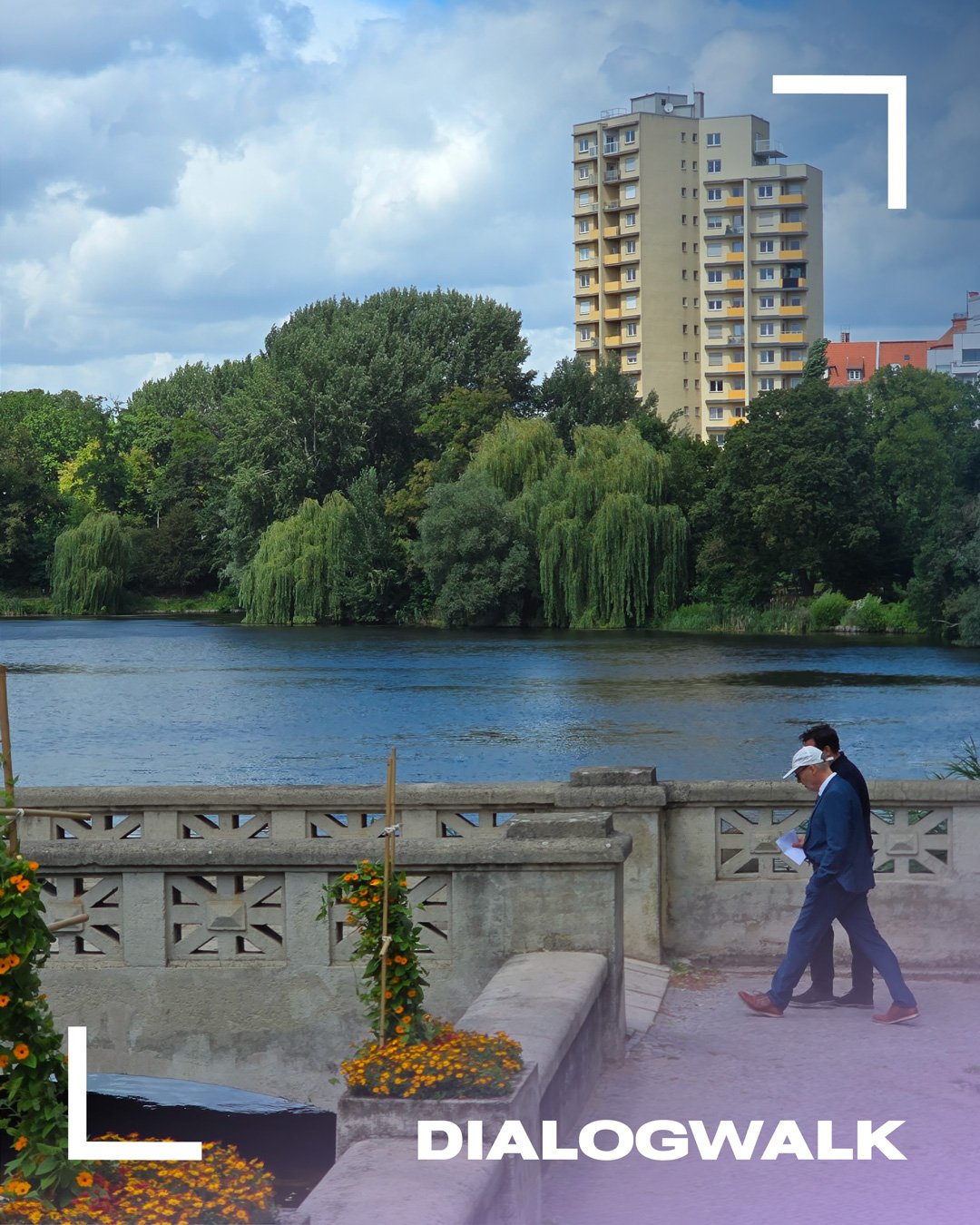
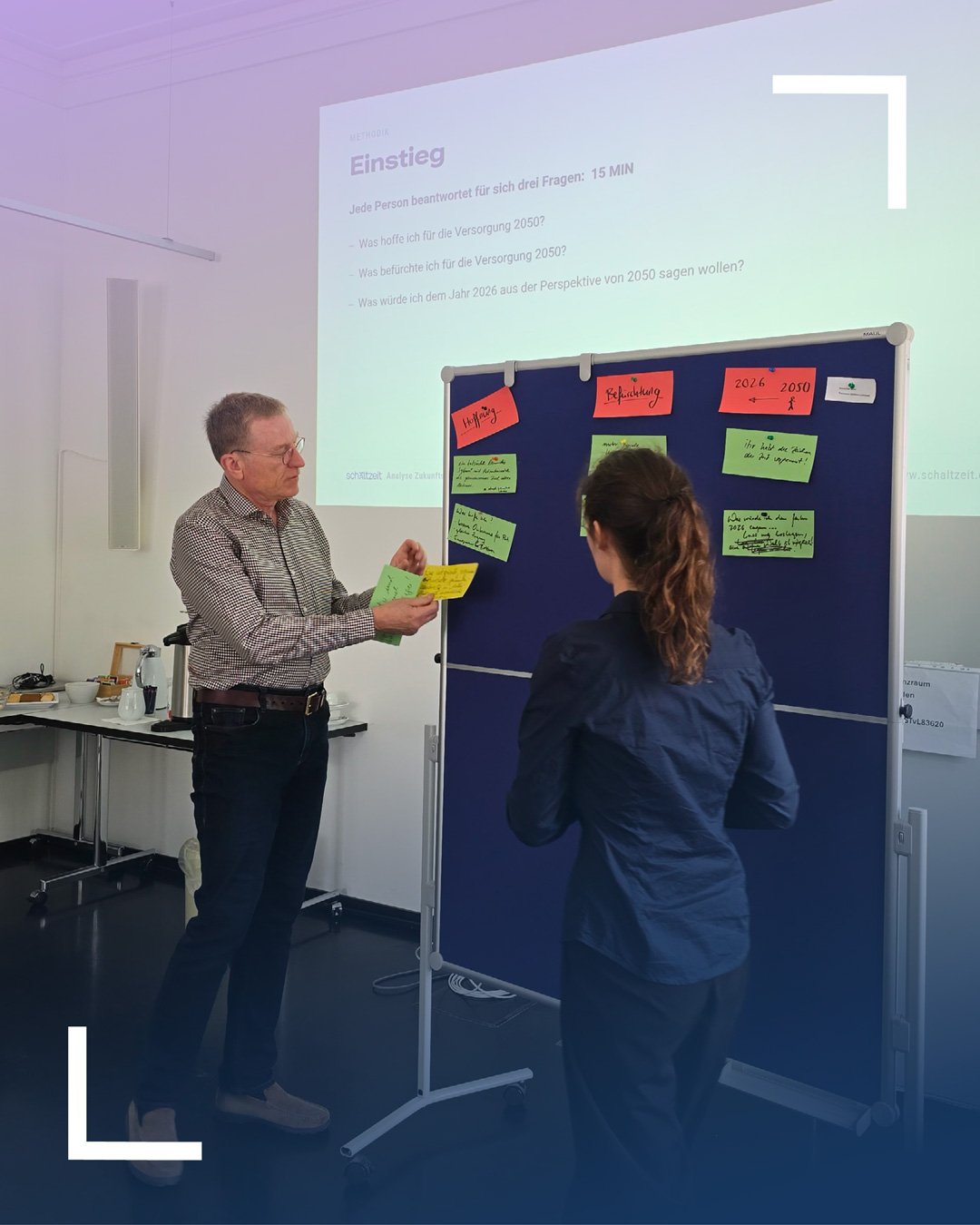
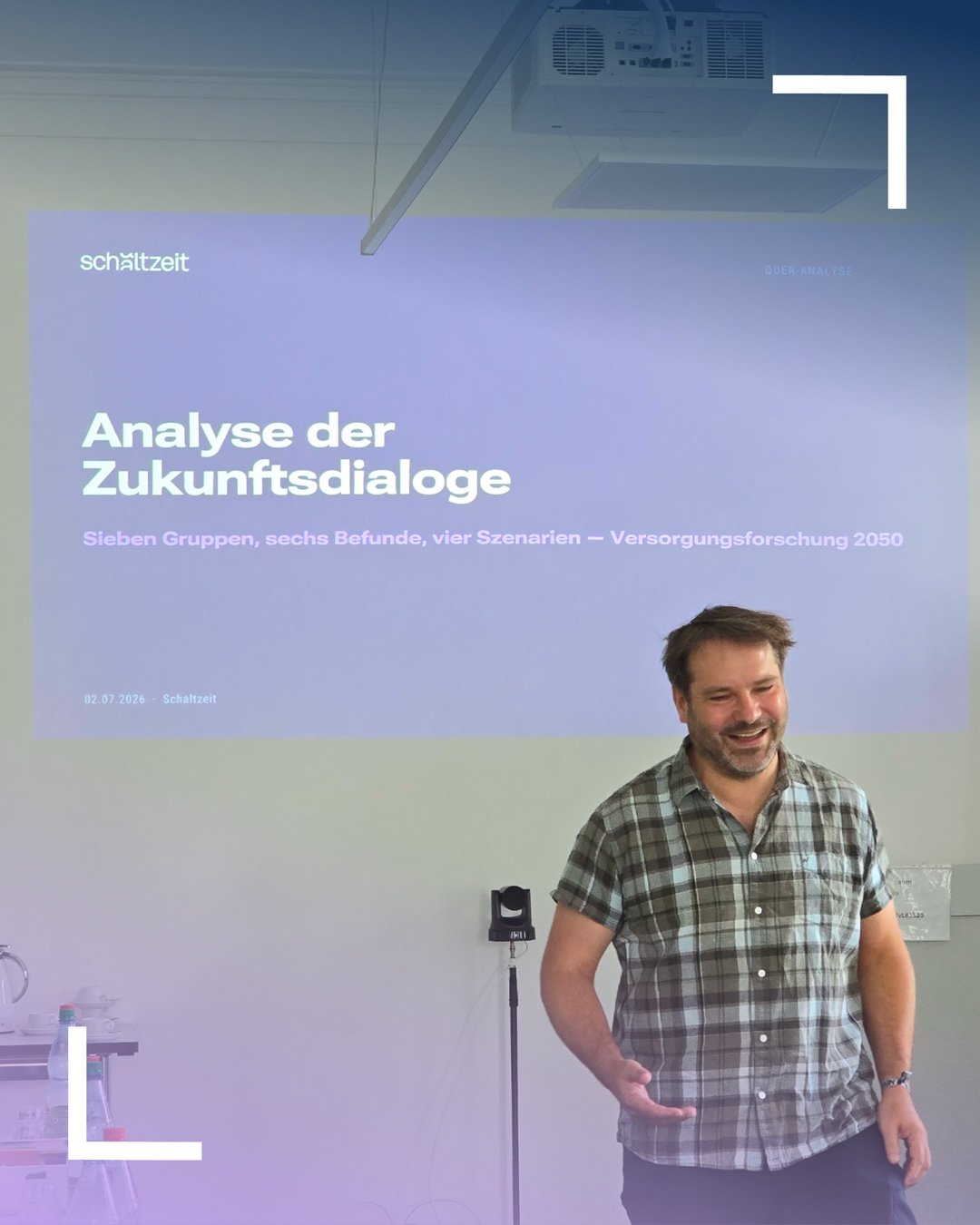
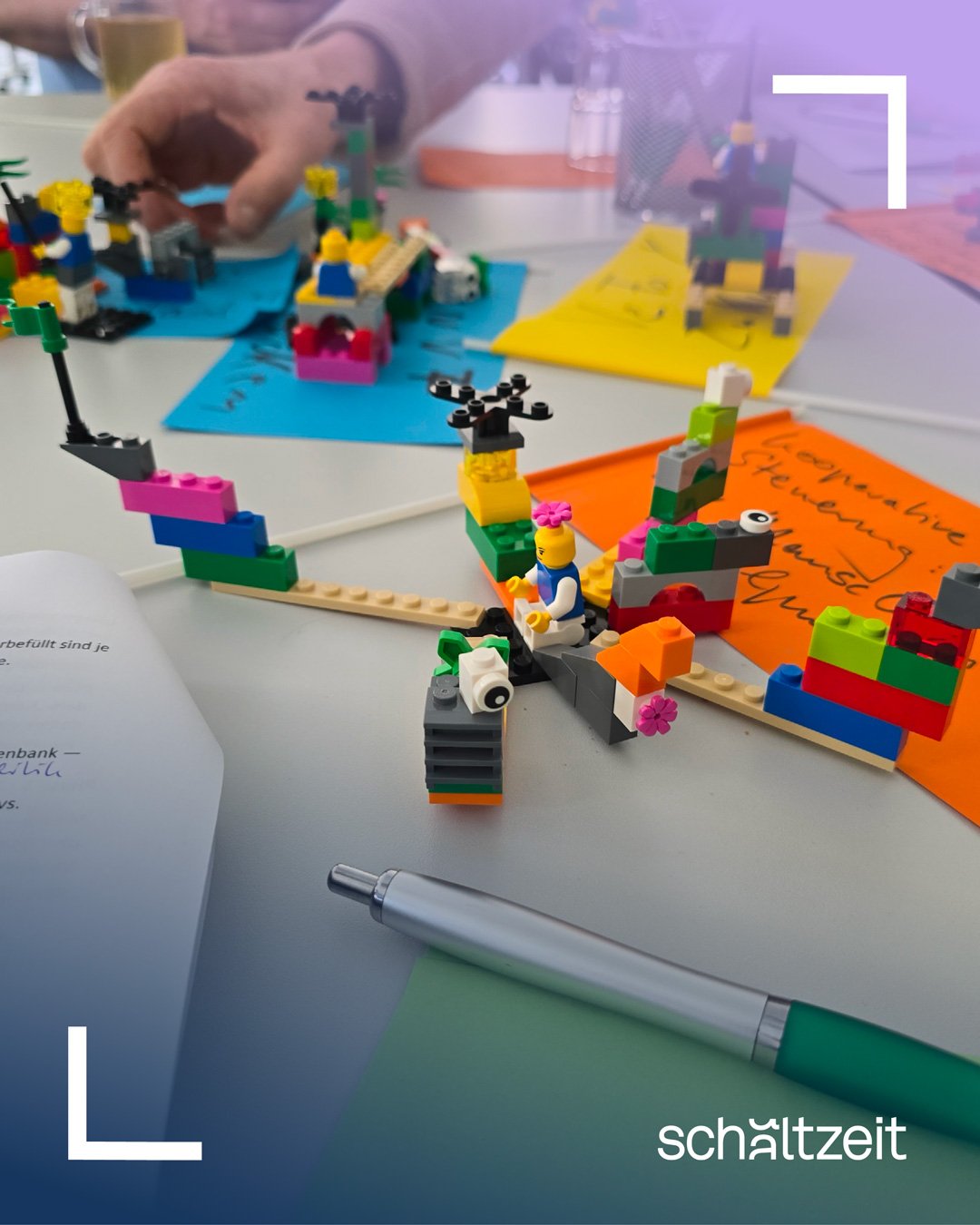
This is precisely the question Schaltzeit explored with the Board of Directors of the Ger-man Network Health Service Research (DNVF). Using AI, we synthesised future scenarios from national and international literature and refined them through dialogue sessions with members of the Board. Over two workshop days, we then developed them further using a Dialogue Walk, backcasting and LEGO® SERIOUS PLAY® - guided by two key questions: Through which structural mechanisms might health care in Germany change - by deliberate design, under pressure, from the bottom up, or not at all? And who holds the power to shape that change?
Why futures studies matters for health services research
Despite what the name may suggest, futures studies does not research the future itself. It addresses questions of the present: the assumptions we generate today about what might lie ahead. The aim is not prediction, but to systematically open up the space of possibilities and generate knowledge that helps orient decisions in the present. For health services research, this matters for three reasons:
Critique alone changes nothing. Knowing what does not work does not tell us where we should be heading. The DNVF can therefore play an important role not only in identifying dysfunctions, but also in developing well-founded proposals for what good health care could look like in the future.
Images of the future are not facts - but neither are they arbitrary. Visions of good health care are constructs of the present, shaped by the perspectives of those who create them. This inevitably makes the question of what constitutes "good" health care normative and political as well: What is good? What is fair? What constitutes a good life? For a scientific professional association that places evidence at its core, that is precisely the challenge: to distinguish rigorously between where evidence can guide us and where values and ne-gotiation come into play. Both have a legitimate place in shaping the future. They should not be conflated. In other words: less gut feeling, more data.
Images of a preferred future need a reality check. Desirable visions of the future can quickly become wishful thinking if they ignore the structural conditions that shape whether change happens in Germany – or fails to happen. Change as a deliberately designed, technocratically managed process. Change as a response to pressure, producing winners and those left behind. Change that simply never arrives. And change that grows from the bottom up and gains legitimacy through participation. What actually makes the system change? Who has the power to shape it? Who loses out, who protects their influence, and what perverse incentives can arise from well-intentioned approaches? This is where it pays to bring in perspectives beyond one's own field – from patients, hospitals, policymakers and health insurers, as well as from economics, political science and law.
DNVF Congress
In September, the debate about what constitutes good health care in the future will continue at the DNVF Congress where it will be explored in greater depth and enriched by the network's diverse disciplinary perspectives.
We are curious to see where the discussion leads. Thank you to the DNVF Board of Directors for two open, challenging and productive days together, during which we explored a range of possible futures.
If people cannot imagine a different future, they have little reason to work towards change. That is precisely why, at Schaltzeit, we make futures tangible and experiential.
Zukunft ist ungewiss – deshalb sind Zukunftsforschung und ihre Anwendung in Form von strategischer Vorausschau bzw Foresight so relevant. Die Zukunftsforschung untersucht systematisch mögliche, wahrscheinliche und wünschbare Zukünfte. Sie nutzt wissenschaftliche Methoden, um Orientierung zu geben und Entscheidungen in der Gegenwart zu ermöglichen. Schaltzeit bietet dafür verschiedene Ansätze und Methoden passend zu den jeweiligen Zukunftsfragen, die untersucht werden sollen.
Versorgungsforschung untersucht die Gesundheitsversorgung unter realen Bedingungen: Sie fragt, wie Organisation, Steuerung und Finanzierung der Versorgung den Zugang, die Qualität und Sicherheit, die Kosten sowie letztlich die Gesundheit und das Wohlbefinden der Bevölkerung beeinflussen. Das Deutsche Netzwerk Versorgungsforschung (DNVF) ist dabei ein interdisziplinäres Netzwerk, das Wissenschaft, Versorgungspraxis und Gesundheitspolitik zusammenbringt, um die Versorgungsforschung weiterzuentwickeln und die Gesundheitsversorgung zu verbessern.
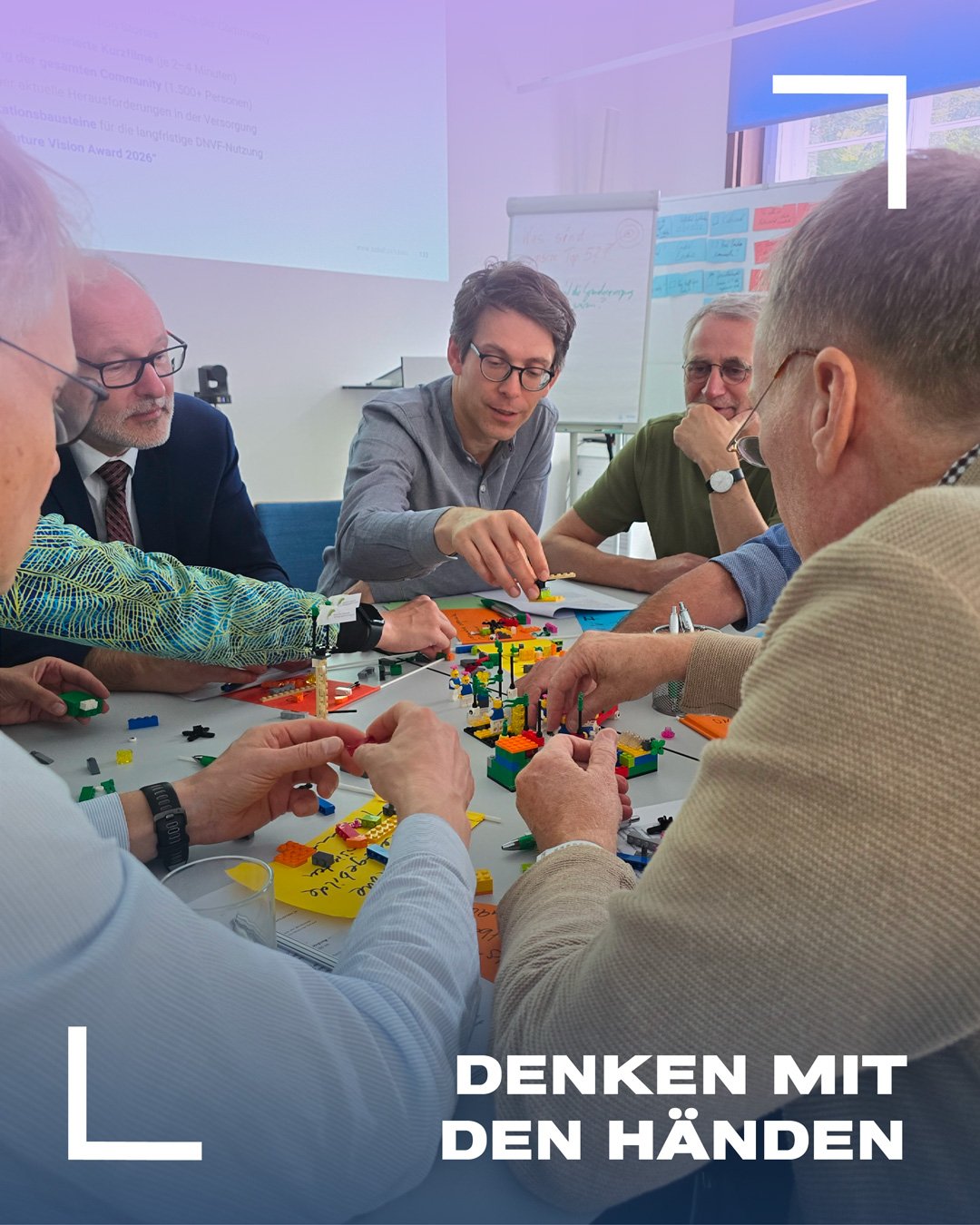
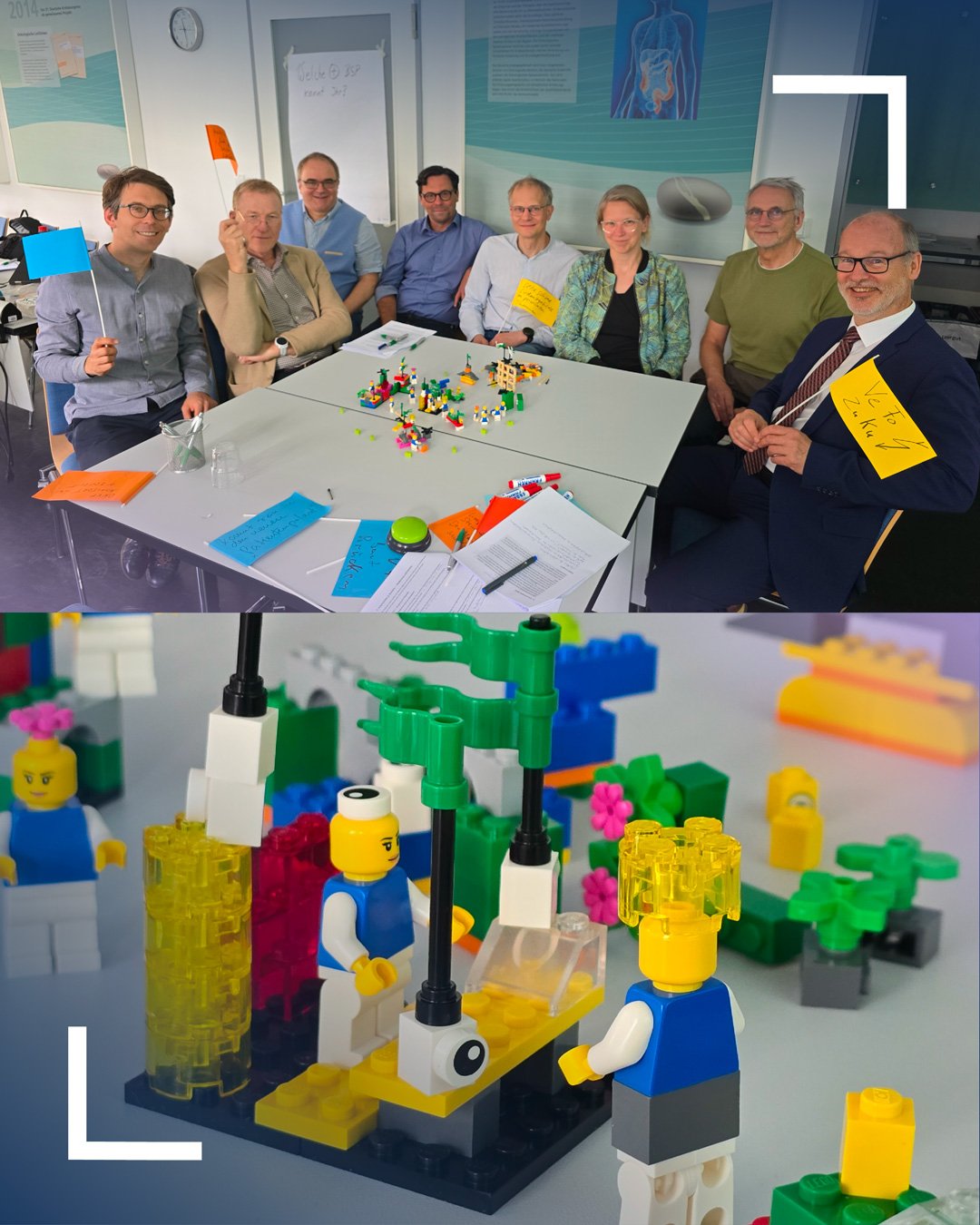
LEGO® Serious Play® (LSP) ist eine moderierte Methode, bei der Teilnehmende mit LEGO-Steinen Gedanken, Erfahrungen, Probleme oder Zukunftsvorstellungen als dreidimensionale Modelle bauen und anschließend anhand dieser Modelle erzählen und diskutieren. Die Grundidee ist das sogenannte „Denken mit den Händen“: Statt eine Frage nur abstrakt zu diskutieren, bauen die Teilnehmenden zunächst ihre eigene Antwort. Dadurch werden auch implizite Vorstellungen, Annahmen und Perspektiven sichtbar, die in einer klassischen Gesprächsrunde oft unausgesprochen bleiben. LEGO® Serious Play® passt gut zur Zukunftsforschung, weil die Methode abstrakte Zukunftsvorstellungen spielerisch und intuitiv greifbar macht. Durch das „Denken mit den Händen“ entstehen konkrete Bilder möglicher Zukünfte, die anschließend erzählt, geteilt und gemeinsam reflektiert werden können. Der spielerische Zugang schafft einen geschützten Raum ohne vorab richtige Antworten und hilft dabei, gewohnte Denk- und Argumentationsmuster zu verlassen. So lassen sich auch unsichere, schwer greifbare und dennoch gestaltbare Zukünfte explorieren.
Ein Dialog Walk (auch Dialogspaziergang oder Walk & Talk genannt) ist ein Format, bei dem zwei oder mehr Personen während eines Spaziergangs im Freien ein tiefgehendes Gespräch über ein bestimmtes Thema führen. Dazu können spezifische zu bearbeitende Fragen mitgegeben werden. Das Format verbindet körperliche Bewegung an der frischen Luft mit achtsamem Zuhören und einem offenen, echten Austausch. Mit dem Format sollen das Denken und Reflektieren gefördert und Ablenkung reduziert werden – ablenkende Dinge wie Laptops, Notizen oder Bildschirme bleiben zurück.
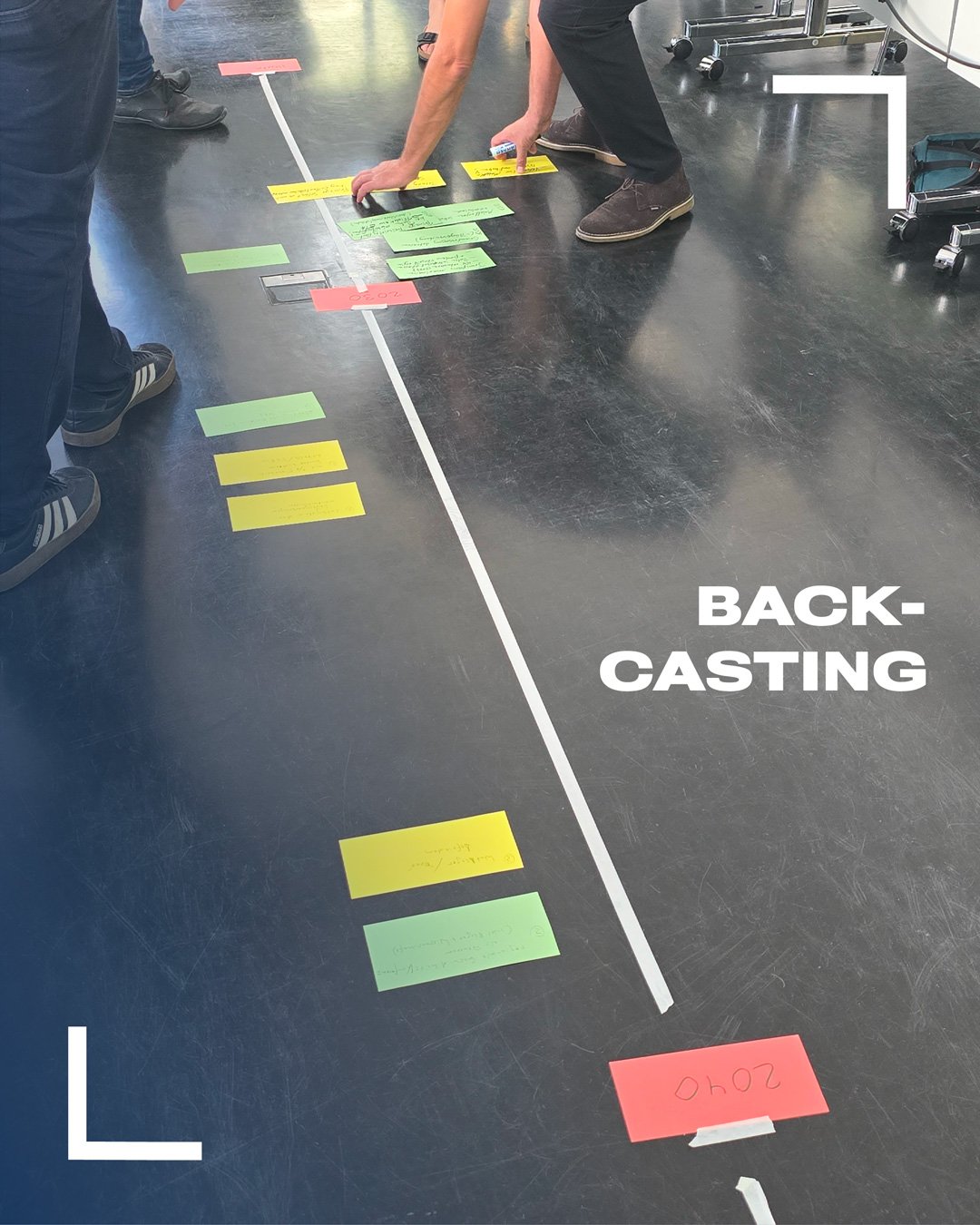
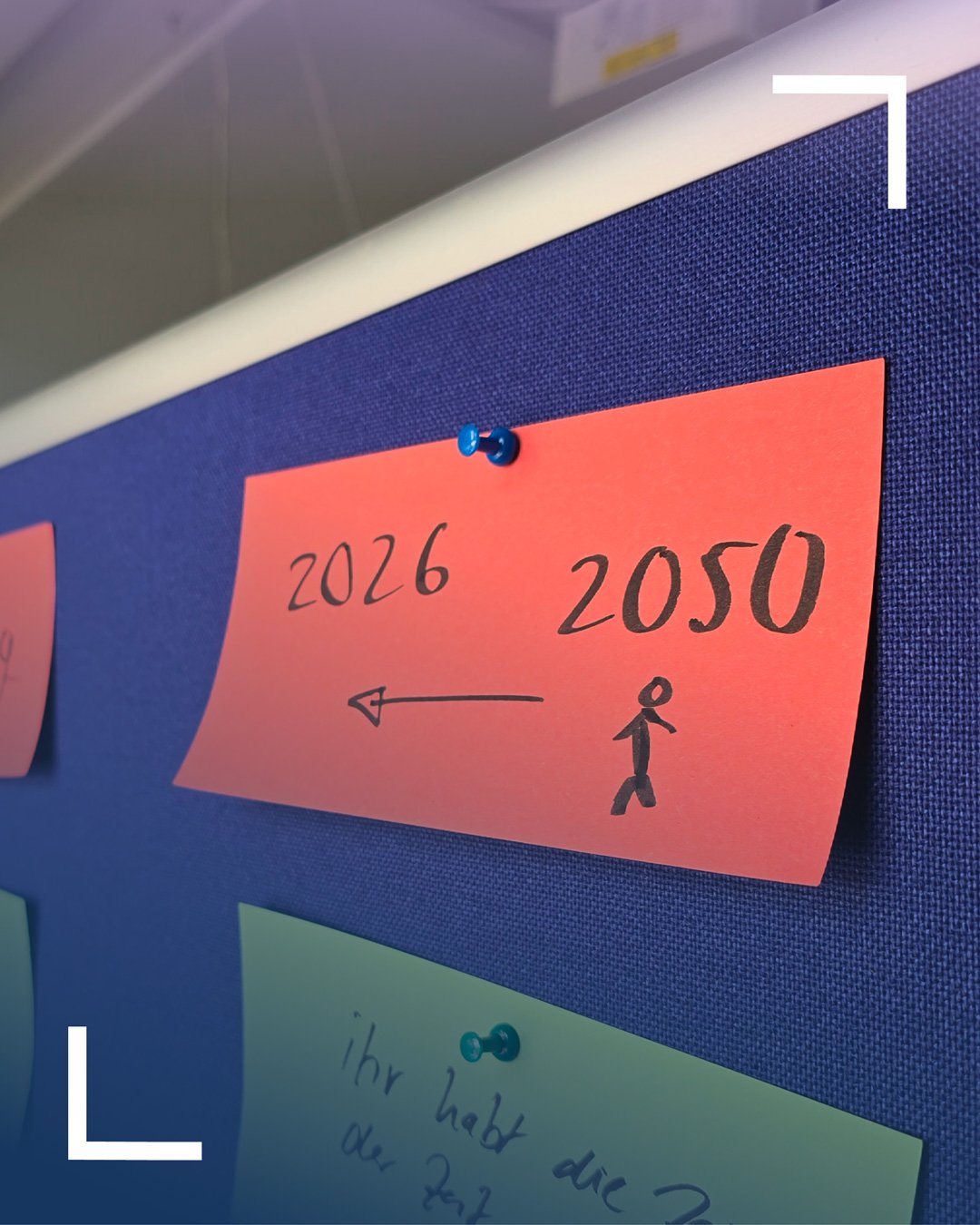
Beim Backcasting wird nicht von der Gegenwart aus exploriert, in welche Richtungen sich die Zukunft entwickeln könnte. Stattdessen wird von einem definierten Zukunftsbild aus rückwärts gedacht: Welche Schritte, Veränderungen und Voraussetzungen wären notwendig, um von der Gegenwart dorthin zu gelangen? Die Methode dient dazu, mögliche Transformationspfade zu identifizieren und konkrete Schritte abzuleiten, mit denen Veränderung in Richtung des angestrebten Zukunftsbildes gestaltet werden kann.