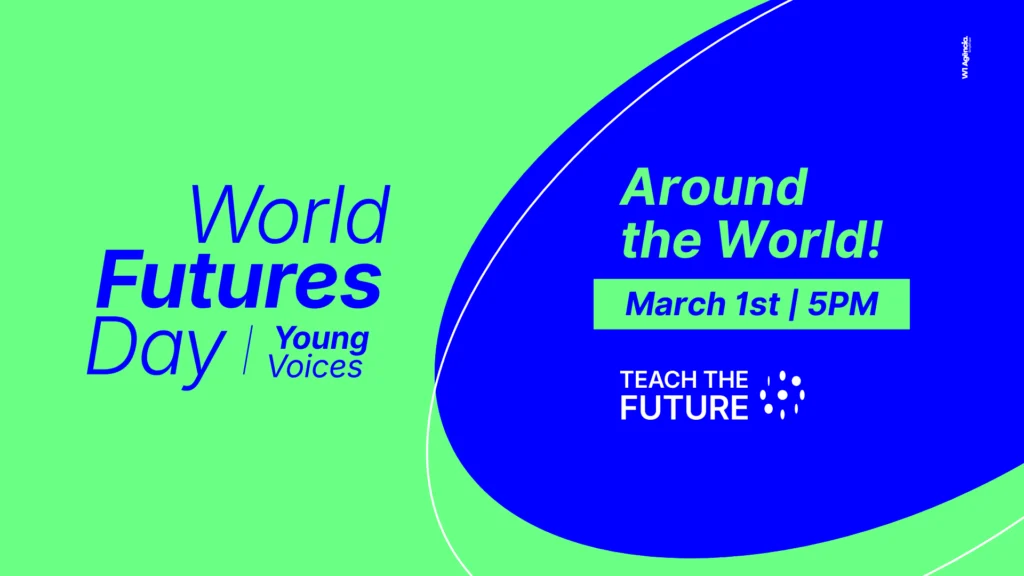

March 1, 2025, is all about global debates on the future: alongside the Millennium Project’s traditional World Futures Day, Teach the Future’s Young Voices Edition is also taking place. Both formats run for 24 hours, so people around the globe can engage in conversation with each other. Here’s an overview of the two events and how you can take part.
1. World Futures Day (Millennium Project)
World Futures Day is a 24-hour event initiated by the Millennium Project and held every year on March 1 since 2014.
- Nonstop discussion: In every time zone, the conversation begins at noon, traveling once around the world.
- Join in and help shape it: Anyone can contribute, ask questions, and present ideas.
- Schaltzeit GmbH: In 2023 and 2024, Schaltzeit GmbH actively moderated and supported World Futures Day. Unfortunately, that isn’t possible in 2025 – but that shouldn’t stop anyone from tuning in and joining the discussions!
Why take part?
- Global perspectives on major questions about the future such as climate change, AI, or social justice.
- Open exchange of ideas with thought leaders, futurists, and interested people worldwide.
- Networking with people from different disciplines and regions.
2. World Futures Day – Young Voices Edition (Teach the Future)
At the same time, Teach the Future’s Young Voices Edition is taking place for the fifth time:
- 24 hours, 24 sessions: A new conversation round starts every hour.
- Young shapers of the future: Young people in particular are invited to contribute their visions and ideas – but all age groups can take part.
- Joint discussion: Teachers, futurists, and visionaries exchange ideas on trends, challenges, and possible futures.
Why a Young Voices Edition?
- A platform for young people: Their voices, ideas, and visions should actively help shape the world to come.
- Learning & networking: The sessions offer insights into international foresight projects, digital learning games, and creative approaches to shaping the future.
- Inspiration for everyone: New perspectives and collaborative solutions emerge from intergenerational exchange.