
A mix of powerlessness and actionism?
Futures that open up room for action: what role do I play in which future?
Futures help us think consciously about our own options for action: they open our eyes to the questions “What if?”, “What different developments can I imagine?” and “What role could I take on in these futures?”
An example: different conceivable futures for “Europe’s capacity for peace”:
🏛️ 🇪🇺 Scenario 1: Europe has turned the corner – a beacon of democratic freedom
Democratic resilience is a top priority. Equal opportunities, innovative forms of participation and peace diplomacy are not empty phrases but European reality. I’m right in the middle of it – as a multiplier and values ambassador who supports educational projects, uses spaces for debate and lives political participation.
Starting today, I can get involved: in schools, initiatives, workshops – wherever our democratic resilience is growing.
🏰 💣 Scenario 2: The fortress of decay, where anything but peace prevails
The global decline of democracy has hit Europe hard. Governments are becoming increasingly authoritarian.Peace work is criminalized, civic engagement is risky. I operate underground as best I can – as a keeper of knowledge, as a creative dissident.
Starting today, I can support networks, strengthen independent media, and protect spaces for free dialogue – before they come under too much fire.
🤝 🗯️ Scenario 3: On the brink – peace hangs in the balance, society under strain
Europe’s capacity for peace has taken a list, but it hasn’t capsized yet. Stable in foreign policy, fragile at home. I’m a bridge builder: I keep local discourse alive, promote solidarity-based forms of economy and carry perspectives from the heart of society upward.
Starting today, I can forge alliances, strengthen cooperatives and take a stand against growing inequality.
How do I arrive at future scenarios?
To imagine futures, all you need is your own mind. It gets even better when you seek exchange with other minds to put the future scenarios to the test with new arguments or enrich them with ideas. A future scenario can be anything from a spontaneous thought about the future to sophisticated foresight studies to pop-culture sci-fi stories (for the latter, we warmly recommend Isabella Herman as an expert).
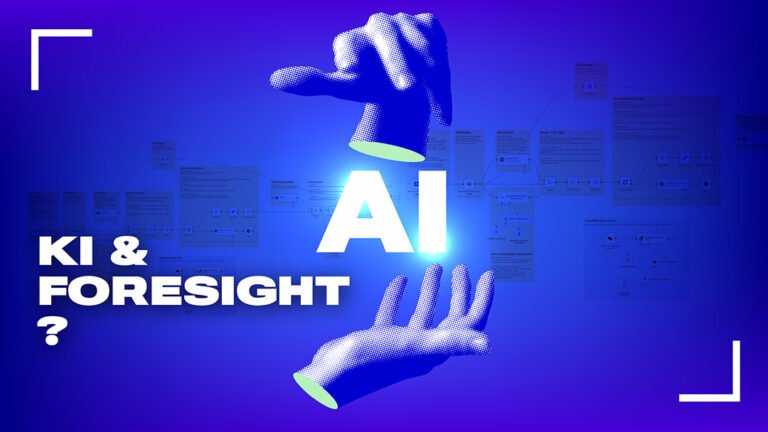
In futures studies, there is the approach of scenario analysis, which develops consistent scenarios in a structured process. Since this method is quite complex and time-consuming, we have made it accessible to you in a simplified form with our Scenario Tool. With it, you can create methodologically sound scenarios on your own future topics step by step. The tool is free for you to use, provided you have a ChatGPT account. It’s our small contribution to bringing futures studies to society at large, because the future concerns us all.
Below, we’ve laid out how the scenarios outlined above were created with the help of this tool – so you can see the process even without ChatGPT. We’ve also gathered a few ideas, organizations and sources that, in our view, promote peace and democracy.
Scenarios for “Europe’s capacity for peace” step by step
Three possible worlds up to 2045 – and different roles we could take on. The Scenario Tool goes through the following steps with you, makes suggestions and asks for your additions.
On 18.11.2025 we are offering a free workshop where everyone can try out the Scenario Tool. Sign up here.
What does this tell me about today? What can I do, and what do I want to do, right now?
As a multiplier & values ambassador
… I can already look around today for initiatives where I can volunteer. For example, as a values ambassador with the nonpartisan education movement GermanDream.
As a keeper of knowledge and press freedom
… I can support initiatives that stand up for independent journalism – for example through donations or subscriptions, e.g., with CORREKTIV in Germany or Reporters Without Borders worldwide.
I can collect creative ideas for passing on information safely, for example through projects like the Uncensored Library, or by supporting cultural figures such as the Iranian filmmaker Mohammad Rasoulof, who conveys in powerful images what it means to live in an undemocratic country. I can also actively take part in debates myself and use tools for exposing disinformation – e.g., Faktenfuchs (BR), the CORRECTIV-Faktencheck or platforms such as Volksverpetzer.
As a bridge builder
… I can get involved in local networks and associations today. To counter the loss of trust in democratic structures, I can advocate for transparency: I can use the Bundestag’s lobby registerto research specifically who is active in the topics that interest me. Artistic formats that build bridges between politics and society – such as the project “I wish – Wunsch an die Politik” – are something I can make a point of supporting, too.
Another recommendation is to engage with the topic of inequality, which has been shown to pose a massive threat to democracy. There are countless books, podcasts, documentaries and talks. One concrete recommendation:
You’ll find beautifully visualized facts on the social media channel ungleichheit.info by Martyna Linartas – and if you have more time, her book “Unverdiente Ungleichheit” [in German] is well worth reading. And a very moving story on the topic by Isabelle Rogge can be found here.
Last but not least, the classics: I can protest nonviolently at peaceful demonstrations, share petitions on causes close to my heart, have difficult conversations, go vote, and be there for my loved ones when they lose confidence in the whirlpool of negative news.
You are a hero of our democracy
Thank you for reading this far. Stories often overlook the fact that it is rarely a single heroic figure who brings about change. It is the collective effort of many. Your contribution counts.
We wish you strength, level-headedness, perseverance – and above all the confidence you need to help build a more peaceful future.
If you have questions about dealing with the future, feel free to get in touch.
On the topic of “Europe’s capacity for peace” there are countless other conceivable scenarios – and just as many ways to take action yourself. We always welcome your feedback, additions or new perspectives.
In that spirit:
Don’t be indifferent.
Ask yourselves what you can do within your means.
Be human 🕊️