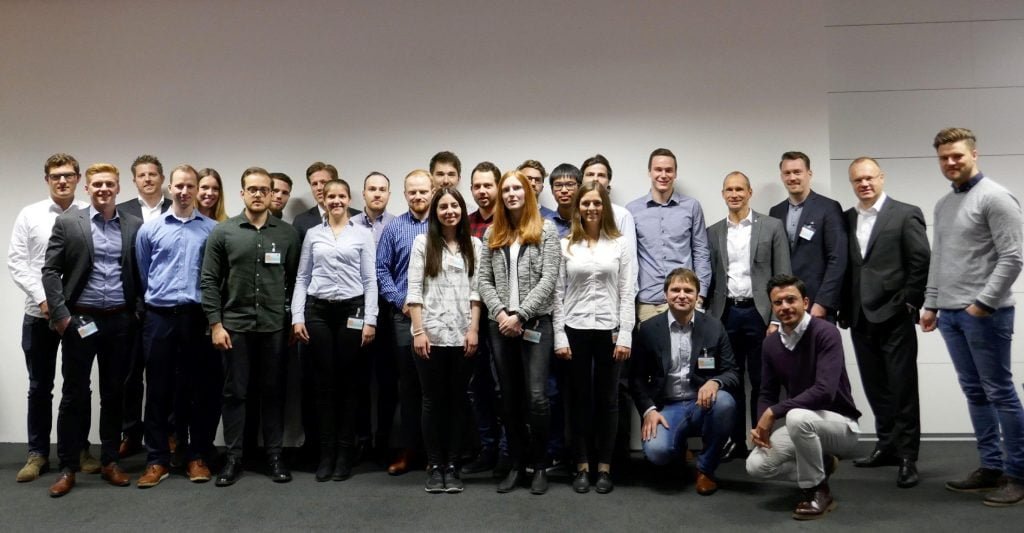

DATEV e.G. invited me as a speaker to the DATEV IT Campus in Nuremberg on May 2, 2017.
Students from Prof. Dr. Kai-Ingo Voigt’s Chair of Industrial Management at Friedrich-Alexander-Universität Nürnberg Erlangen (FAU) want to explore in detail in their master’s seminar how strategic innovation management leads companies to put technology and trend management into practice and adapt to changes in society.
In my one-hour talk on “What Urbanization / Neo-Urbanization Means”, I addressed:
- Which examples of urbanization exist worldwide
- Why the phenomenon exists in the first place
- Which problems have been identified so far
- Which conflicts of interest can arise when these problems are tackled
- What a “future mood” is and how we can work with futures.
- That urbanity as a term refers not only to urbanization as such, but also includes the spread of urban habits and patterns to rural areas.
When lifestyles change in urban areas, this affects current business models. The participating students have the task of identifying trends in the context of urbanization in working groups and deriving implications for business models. Life in the city can change in a wide variety of areas. On this day, the five clusters of retail, mobility, working life, communication, and education were used for groups to explore the effects of urbanity on each cluster.
The goal was first to “sense” the changes in each cluster and then to discuss with DATEV representatives (including CEO Dr. Robert Mayr) what innovation potential these changes might hold for DATEV.
This is particularly challenging, as DATEV’s business model as a cooperative is highly complex. I’m therefore very curious to see which ideas will be generated at the closing event.