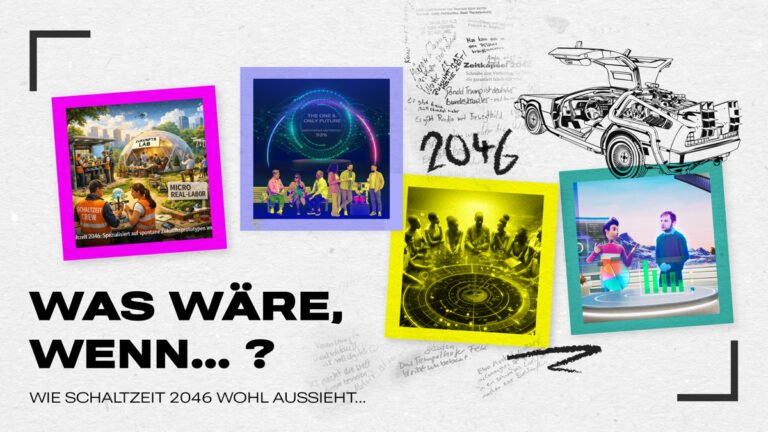

- …digital public administration were rolled out across the board, as in Latvia?1 And what if an AI were given a ministerial post, as in Albania?2
- …we saw animals not only as living beings but also recognized them as legal persons, like whales in New Zealand?3 And what if rivers became legal persons too, like the Magpie River in Canada or the Amazon?4
- …anti-democratic parties moved into the Chancellery? What could we do?5
- …prisons became more comfortable places, as in Norway?6
- …there were no more traffic deaths in Nuremberg in the future, as in Helsinki?7
- …disinformation in election campaigns hardly posed a threat anymore thanks to stronger media literacy and effective platform regulation, as Taiwan has managed to achieve?8,9
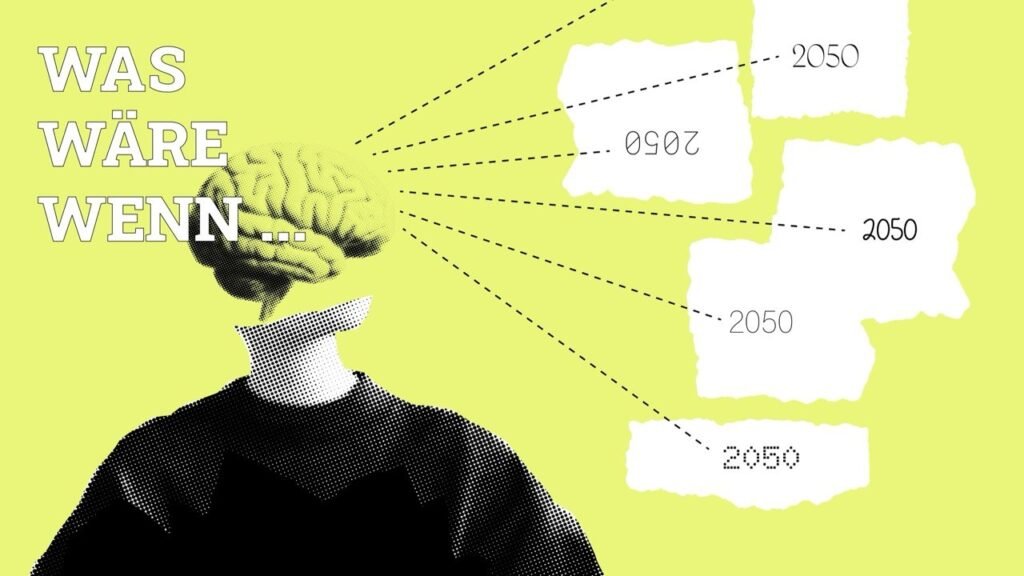
Of course, these examples can’t simply be taken out of context and transferred one-to-one to Germany – but they encourage us to imagine how things could be different. How do you imagine Berlin in 2040? What could Germany look like in 2050? How might the EU develop? Some changes are not only imaginable but also possible – but only, of course, if we look for room to maneuver in order to move things in those directions. And for that, too, there isn’t one single path, but rather a variety of approaches.
That’s exactly why we speak of the future in the plural – of futures. The realization that the future is not predetermined but allows for different developments may be completely banal. Nevertheless, it leads to a series of much more complex questions: What are alternative possible developments? Who or what influences these developments? Which direction of development do I find desirable? And how can I help shape it?
Futures instead of fear of the future
Many headlines paint grim forecasts: pension crisis, collapsing care system, climate change, deepfakes, a global decline in democracies – anyone thinking about the future right now may well end up with a sense of powerlessness rather than the courage to shape things. No wonder, then, that for many people the future is not a rosy topic but an oppressive question they would rather push aside. Given all these crises, talking about creatively shaping the future and about the future as a space of possibility may almost sound contradictory.
Is it just an occupational hazard of futurists to keep making the case for courage about the future and emphasizing that the future is not fate but something we can shape? Or is it an occupational hazard of some media outlets to paint the devil on the wall too quickly, following the motto bad news are good news?
Please don’t get us wrong: The goal of futures studies is by no means to ignore problems and escape into rose-tinted utopias. On the contrary: it’s about taking current situations seriously – but not stopping at describing the problem; instead, analyzing how situations could develop in different directions. It’s about discussing possible influencing factors. Such analyses help make room for action visible, beyond denial or naive optimism.
What matters is whether we manage to design futures in a way that enables us to act with foresight today. We are guided by the simple yet by no means trivial question: What if…? It can be played through both for desirable developments and for potentially threatening ones, in order to develop resilience strategies in good time.
Futures Literacy for shaping the future
Of course, as a Berliner, I don’t have the same power to shape things as a large employer, a member of the Bundestag, the UN or a tech billionaire. Power imbalances in our system can’t simply be undone. Still, we are convinced that it is always worth looking for options for action within your own means. The very fact that you have the time and energy to read this blog post is a privilege. Consciously thinking about possible futures is an important first step. Sharing your thoughts with others is another step you can take. This creates impulses that help us make more conscious decisions in the present.
This ability to think in futures is what UNESCO refers to as Futures Literacy and describes as follows: “Futures Literacy helps people understand why and how we use the future to prepare, plan, and interact with the complexity and novelty of our societies.”
Book your Futures Literacy workshop for your team!
Create future scenarios for your own question about the future in just a few minutes
To foster thinking in futures, we at Schaltzeit put our heart and soul into a range of offerings, from Futures Literacy workshops and playful interventions (such as the Futures Oracle) to comprehensive foresight projects or our Scenario Tool:
A popular method in futures studies is scenario analysis for the systematic construction of future scenarios. Since it is relatively complex, we have packaged it in an accessible GPT so that you can create future scenarios on a topic of your choice step by step. So if you’d like to try thinking in futures in a low-threshold way, we have a free tool for you (provided you have your own ChatGPT account) – a small Futures Literacy contribution from Schaltzeit to our democratic society.
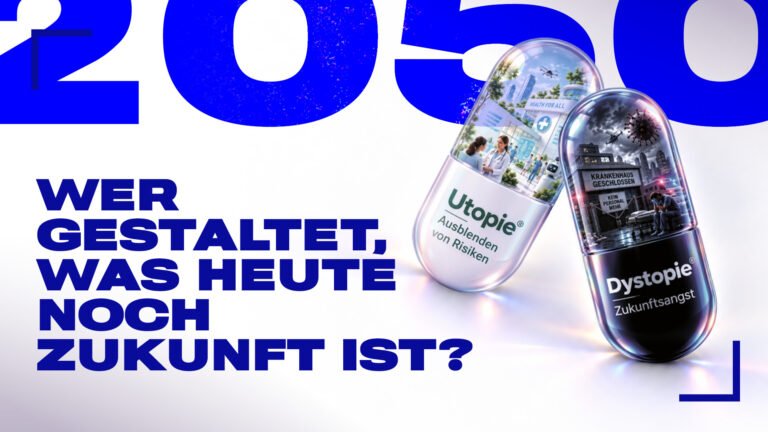
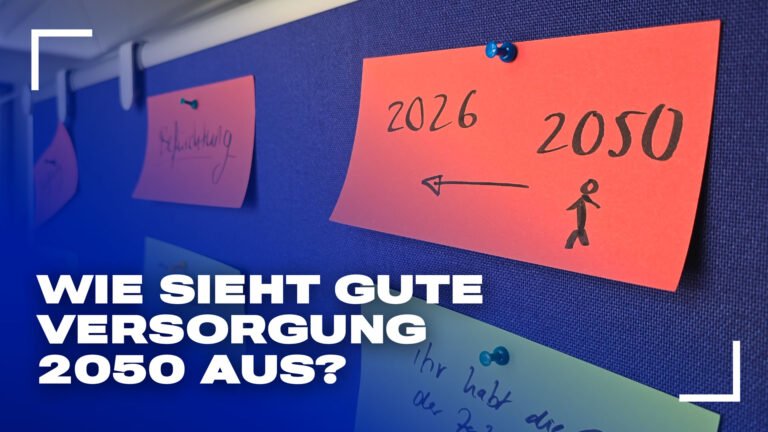
As an example, here are four short future scenarios on care in Germany in 2045:
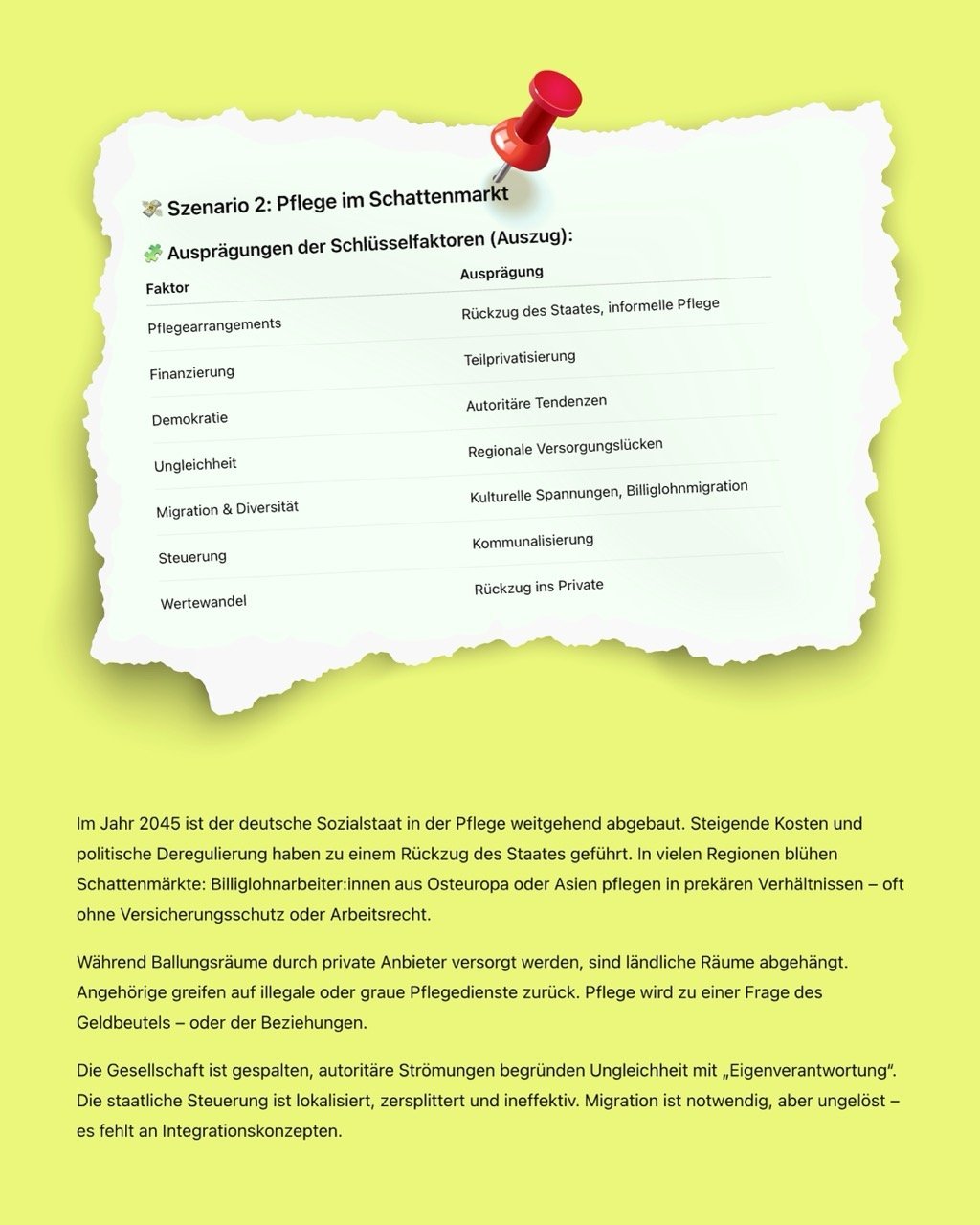
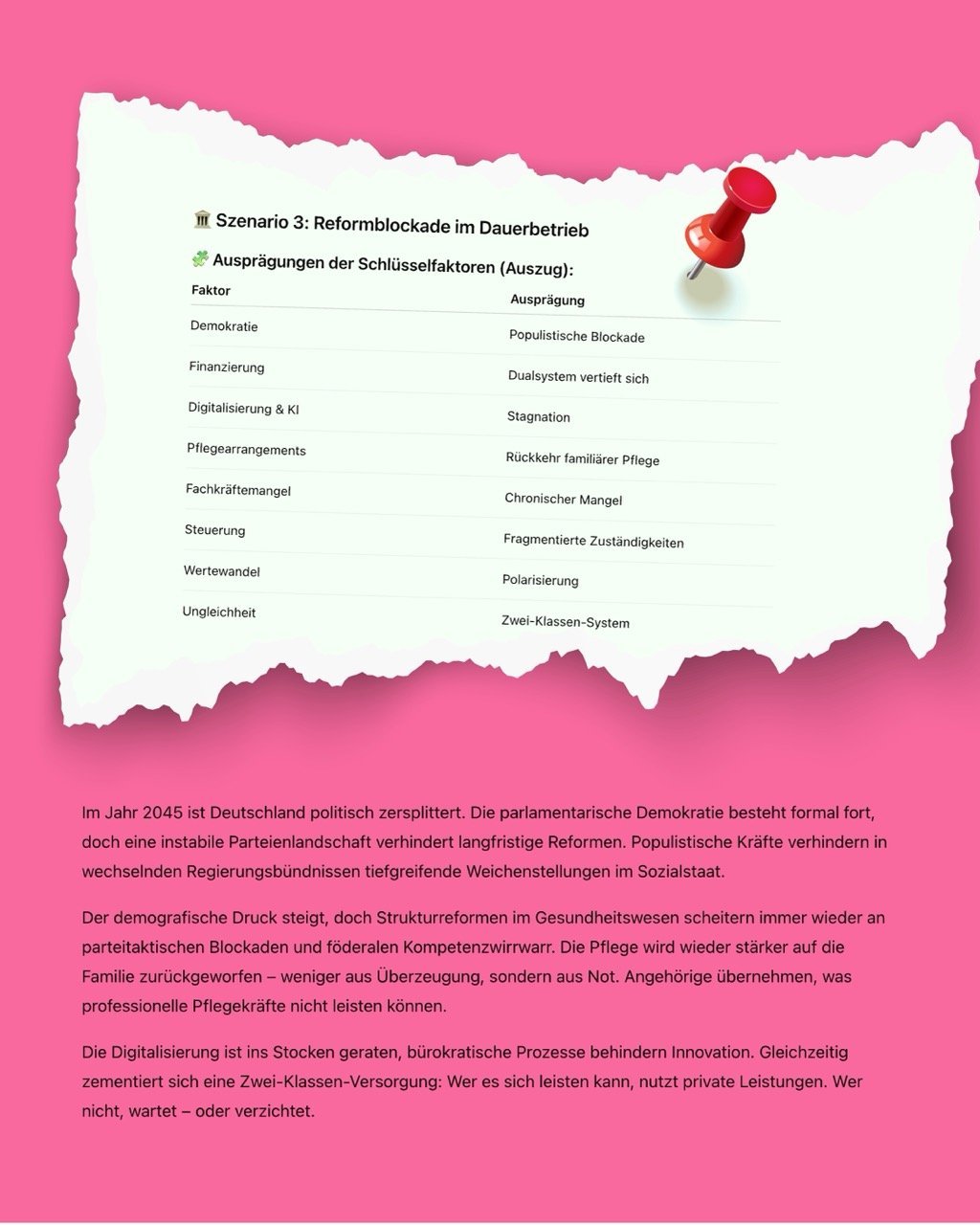
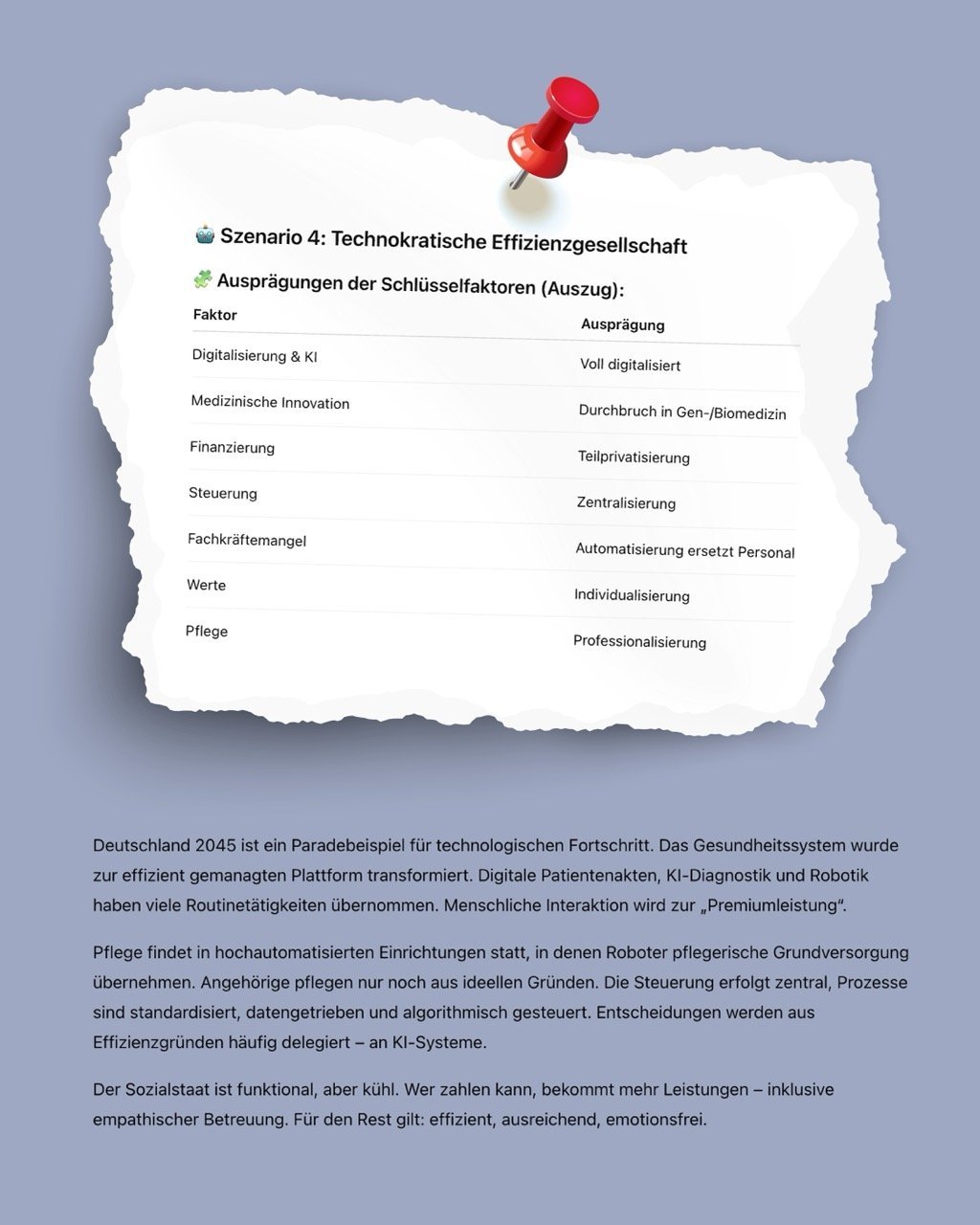
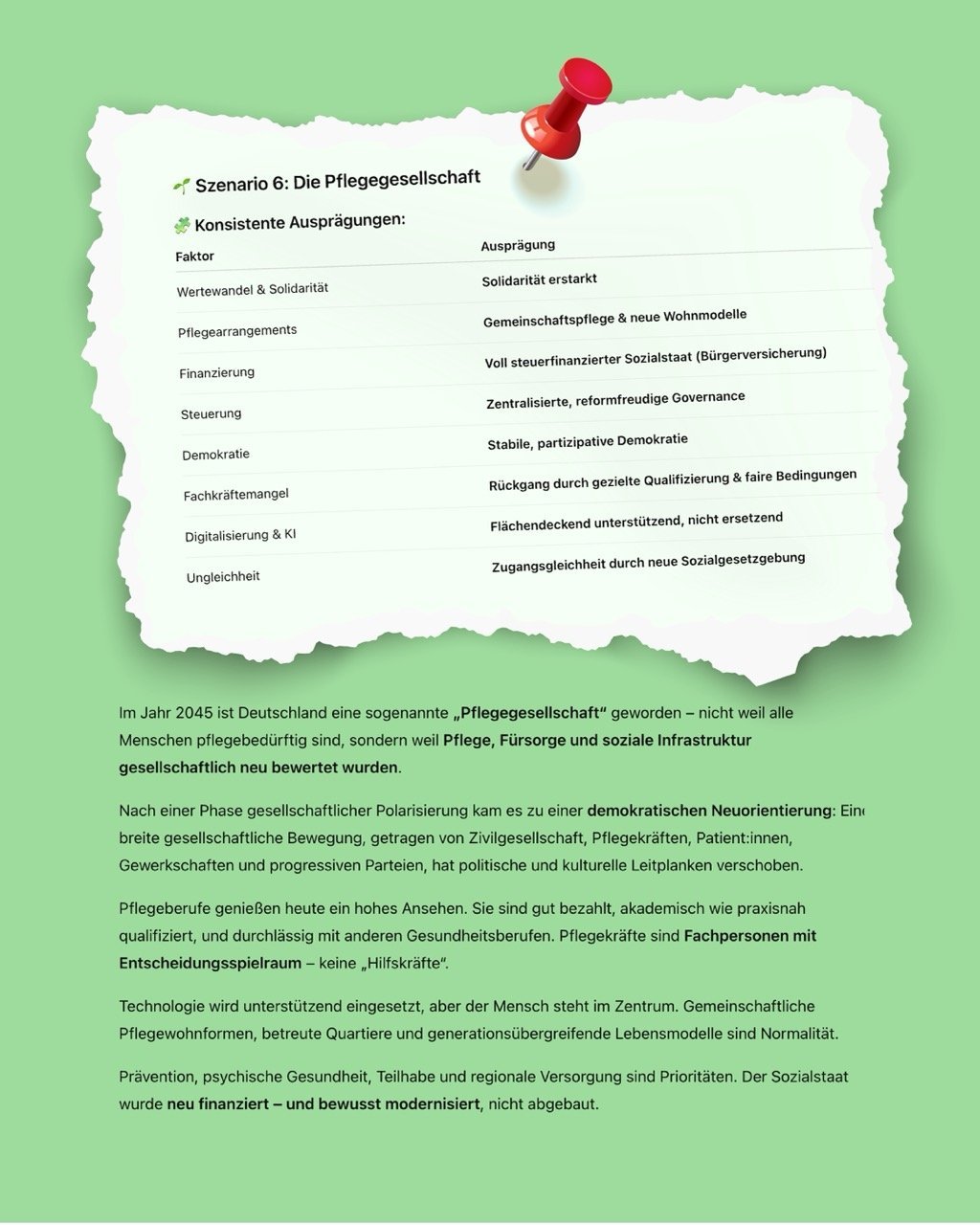
If you want to learn more about the scenario method or try out the GPT with us: come to our (also free) workshop on November 18, 2025 – we look forward to seeing you!
2 https://www.deutschlandfunk.de/albanien-ernennt-ki-zur-ministerin-100.html
3 https://www.tagesschau.de/ausland/ozeanien/neuseeland-wale-juristische-person-100.html
5 https://youtu.be/GrtG8bxRIb4?si=q9DYOe9EqK1mQYOU
6 https://www.tagesschau.de/multimedia/podcast/malangenommen-gefaengnis-101.html
7 https://www.tagesschau.de/ausland/europa/helsinki-keine-verkehrstoten-100.html
8 https://ijnet.org/en/story/how-media-taiwan-has-adapted-combat-electoral-disinformation
9 https://apnews.com/article/taiwan-china-disinformation-3f05dac36399bf672a702100147bf8fa