
Since we cannot predict “the one” future, futures studies deals not only with conceivable future developments but also with probable and desirable ones, and with the corresponding options for shaping them. Why are we interested in desirable futures, even if, from a futures studies perspective, they may be considered unlikely?
Futures conferences are a normative-participatory method of futures studies that serves to involve participants and identify desirable futures from their perspective
The futures conference is a participatory method in futures studies
How do we take people along on a shared journey, spark anticipation and playfully ignite a passion for shaping things – with hands, feet, head and heart? Participatory formats and methods are particularly well suited to developing desirable futures and involving those affected. The goal is to include those directly affected in the process of shaping the future, to take their expectations, concerns and hopes into account and to raise awareness of future changes. Participatory methods are the right choice whenever a shared consensus is fundamental to the future and to how it is shaped.
A futures conference and its participants ensure sustainability
First of all, it is important to clarify who needs to be represented at the futures conference and what minimum and maximum demands can be expected on the respective topic. Involving many people brings a broad spectrum of opinions into the process. Futures conferences should also leave room for friction. In the process, people with different attitudes, expectations, wishes, needs and concerns come into dialogue, which is what creates this friction. Only in this way can different perspectives and perceptions be layered on top of each other and discussed. Many people can take part in a futures conference, with 30–80 participants being a healthy size. In each phase, participants work together in newly mixed small groups. The mix of participants becomes a critical success factor. It also makes it possible to anticipate who will create friction and at which moments friction can be expected. It is important that after each sub-phase, the results of the group work are presented, discussed and recorded in the plenary.
A phase-based structure ensures the success of the futures conference
A futures conference is usually divided into 6 different phases:
1. Looking back at the past
2. Analyzing positive and negative external trends
3. Assessing the current situation
4. Developing the desired visions
5. Identifying common ground
6. Planning concrete measures
In the first sub-phase, the focus is on the past. Participants discuss their shared identity and history. Next, external influencing factors and current trends are collected and discussed in subgroups. In a third phase, the subgroups examine the internal present. Together, they brainstorm and collect what the community does well and less well, what they are proud of and what they regret. This phase raises awareness of shared values, often sparks an intense exchange of information and leads to aha moments. In the end, it becomes clear which things participants want to take with them into the future and which they would rather leave behind.
In the fourth phase, participants now turn their attention to the future. In the subgroups, they develop shared visions of the future and present them to all participants. The question to be answered is: “Where do we want to be within a certain period of time?” From this, shared goals, hopes and key wishes for the common future can be derived. In a fifth phase, the shared goals, hopes and wishes for the common future are collected centrally, as they form the basis for the sixth phase. In this phase, the subgroups work on concretely planning measures. It is important to assign clear responsibilities for the measures right away to ensure that the results and insights of the futures conference are actually implemented.
The results of a futures conference should be understood as a promise
The concrete results can vary widely and depend on the methods used during the conference.
Direct results of a futures conference can be:
- scenarios,
- input for developing a mission statement or strategy, or
- concrete action measures.
What matters, however, is that the jointly developed results are supported by many of those involved. In short, the results achieved through a futures conference are a shared promise by everyone involved to implement them.
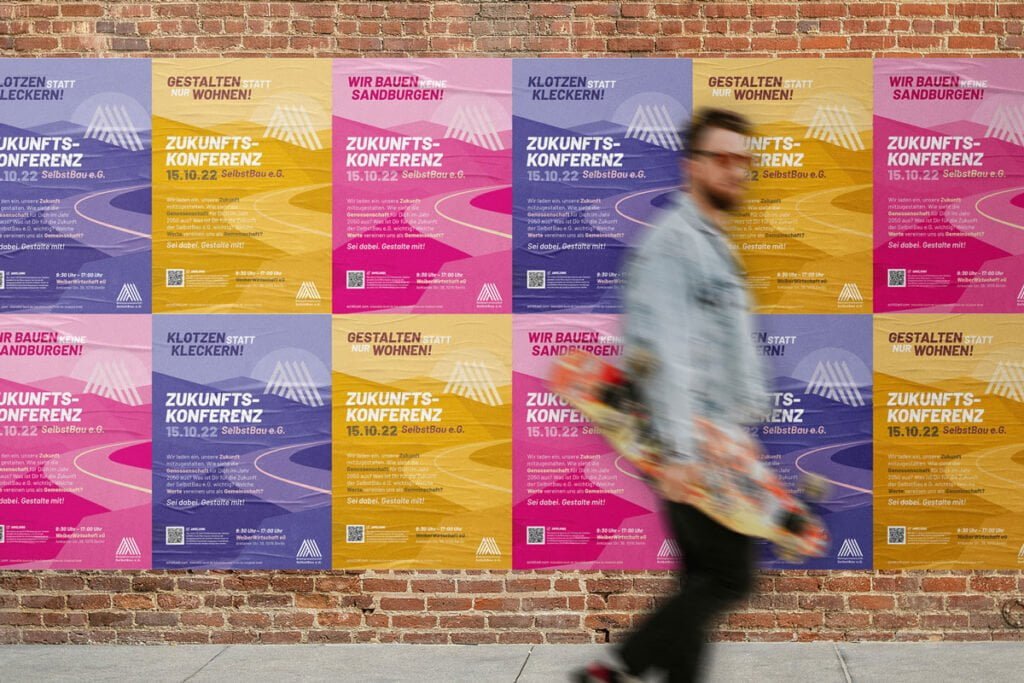
If we have sparked your interest in designing and hosting your own futures conference, we are happy to lend you our passion for shaping the future. We are your sparring partner when it comes to inspiring, energizing people, developing ideas and opening up solution spaces. Get in touch: zukunft@schaltzeit.com.