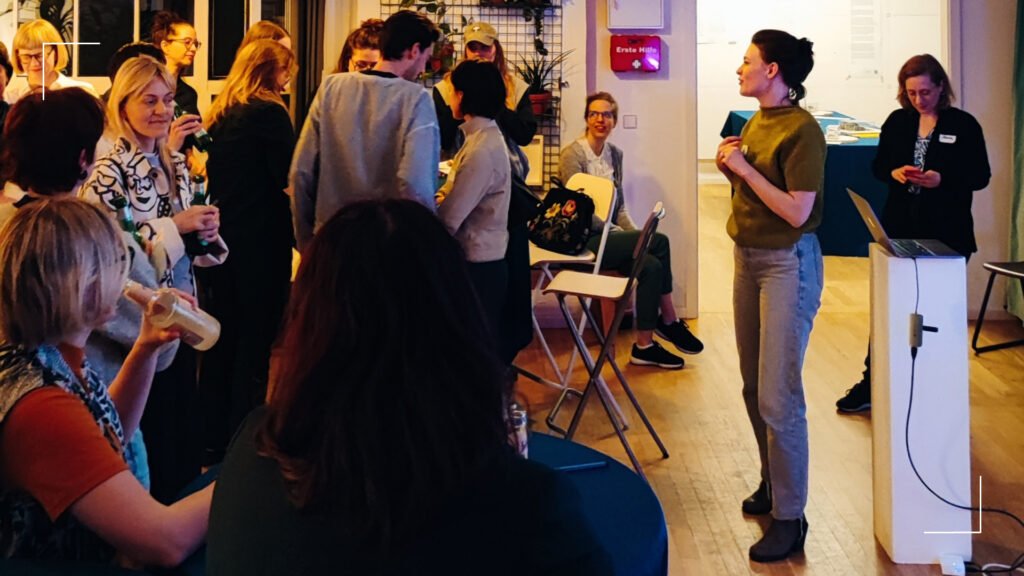

Under the motto “Future reloaded: Thinking further, moving forward, getting ahead together,” the Netzwerk Zukunftsforscherinnen (network of women futurists) hosted an evening of exchange at Ellery Studio.
- To bring a breath of fresh air to experimental and creative methods in futures studies, there was input on
- the question “Can crisis be fun?” (Jantje Meinzer, YOUSE – Crisis Utopia),
- a dice game that challenges futures thinking with random elements (Alu Kitzerow, Hoffnungstaler Stiftung Lobetal)
- the guiding principle “Change by Design not by Disaster” (Dodo Vögler & Emma Defty, Ellery Studio – Future Booth).
Design – not disaster
“Change by Design not by Disaster” stems from the idea of shaping the future not reactively, in response to crises that back us into a corner, but proactively, through developments motivated by desirable visions of the future. To give these visions a tangible visual form, Ellery Studio presented its Future Booth to the audience.


Future Booth
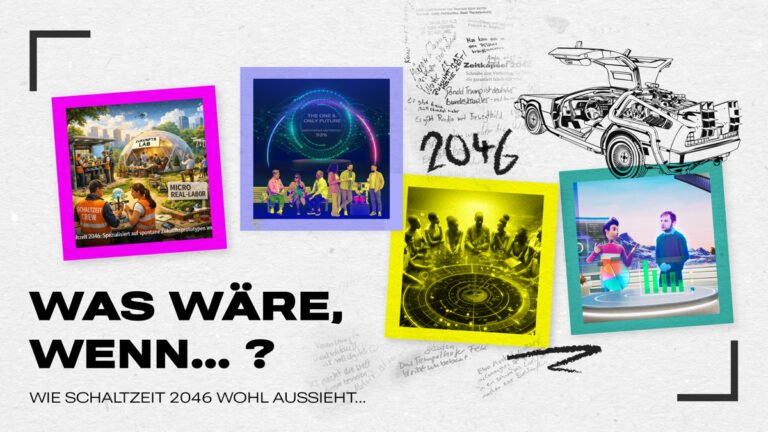
It helps participants imagine the future on different levels (from structural conditions to concrete, observable everyday situations with people, animals and actions) and talk about it with each other. The Future Booth generates a small Polaroid picture of a described future scene. While it can sometimes be hard to debate images of the future, it was astonishing how much easier it is to talk about a picture you hold in your hands and see in front of you together with your conversation partners. Right away, people debated the architecture of floating, amorphous building modules and gentrification, speculated about the socioeconomic backgrounds of the people depicted and tuned into the mood prevailing in the scenario. Interesting questions, food for thought and new impulses emerged almost by themselves.
This workshop made it clear that working directly with future impulses that are visually – and quite literally – tangible enriches discussions and unlocks new ideas.


Full creative power ahead!
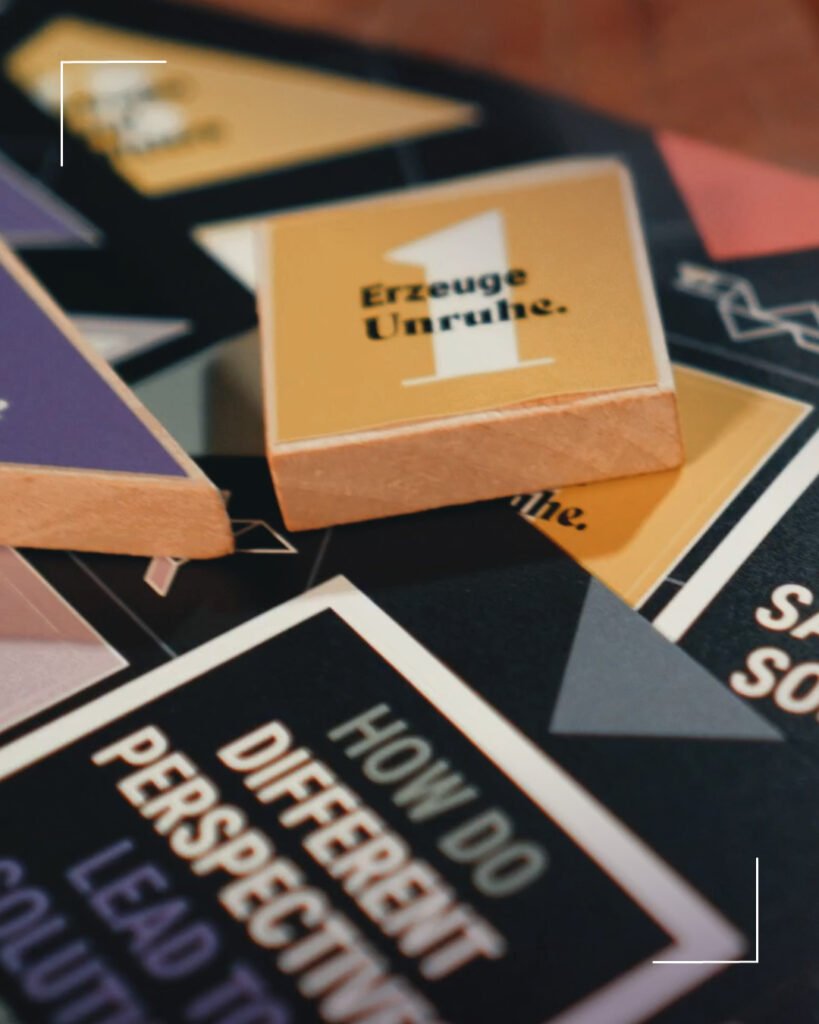
In various small and large design projects at Schaltzeit, we keep coming back to the question of how we can turn frustration, fear or criticism into creative power – and how visual or haptic elements can help. We experienced this again just recently while designing our Debate Tangram, a small walk-on wooden game with which we want to give debates about the future and the present a boost, with a slight wink. As part of an initiative by the Federal Agency for Civic Education, we provided a space for exactly this during the election campaign and observed how people deal with questions about the future in playful settings. Especially during an election campaign, the leap from criticism and dystopian narratives to discussing a desirable future isn’t always easy – but it’s always worth it!