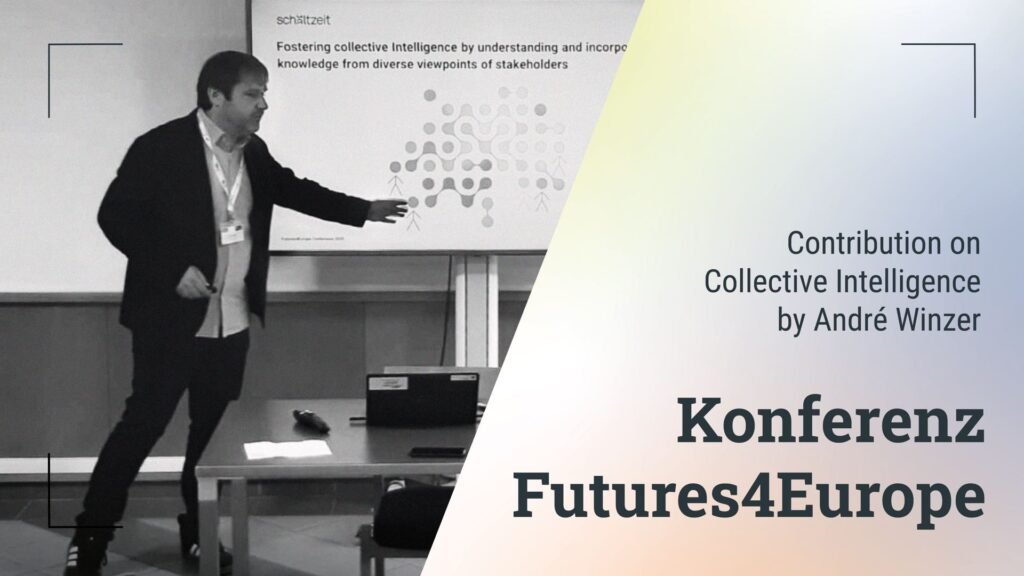

The conference, organized by the AIT Austrian Institute of Technology as part of the Eye of Europe project, brought together more than 150 participants from over 30 countries. The theme “Exploring Future-Oriented Collective Intelligence” was brought to life through a diverse and ambitious program.
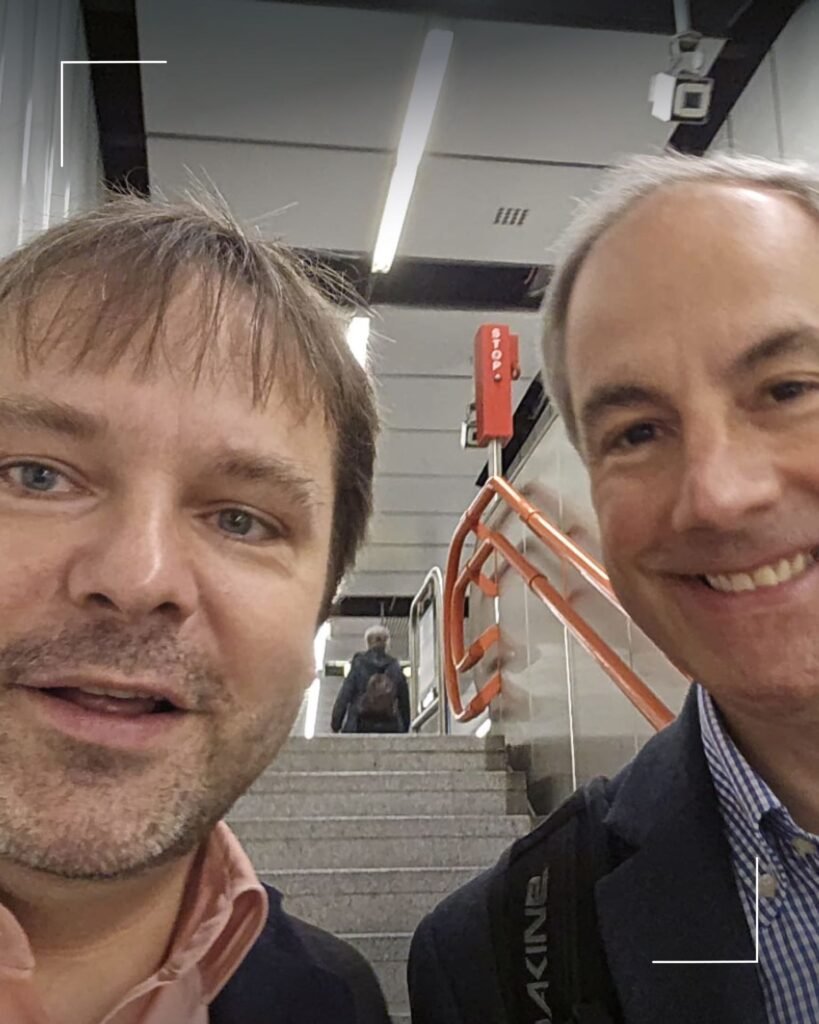
This time I didn’t travel alone: my colleague Stefan Niederhafner from Sudeco came along. Together, we are part of the Advanced Foresight Group – a network of foresight experts who collaborate across institutions to meet foresight needs with quality, agility, and a shared division of labor.
👉 You can find more information about the Advanced Foresight Group here.
Together, we presented two contributions:
- Stefan Niederhafner, Bernhard Albert: “Combining Collective and Artificial Intelligence to Unlock the Future of Holistic Strategic Foresight”
- André Winzer: “Enhancing Policy Innovation through AI-Powered Collective Intelligence Mapping”
Highlights included:
- Petranka Malcheva’s keynote on long-term thinking in the Welsh government
- a track on feminist futures, where intersectional perspectives and artistic strategies met policy critique
- Joe Ravetz’s co-futuring workshop, which combined system mapping with playful engagement
- Reconnecting with so many futures studies graduates – Wenzel Mehnert, Julia and many others – and seeing how our academic roots continue to shape practice.
As a member of the German network for Futures studies, of Kapitel 21, and of the Foresight Europe Network (FEN), I was thrilled to see colleagues from all over Europe again – and of course many friends from the Millennium Project’s Millennium Nodes, such as Ibon Zugasti.
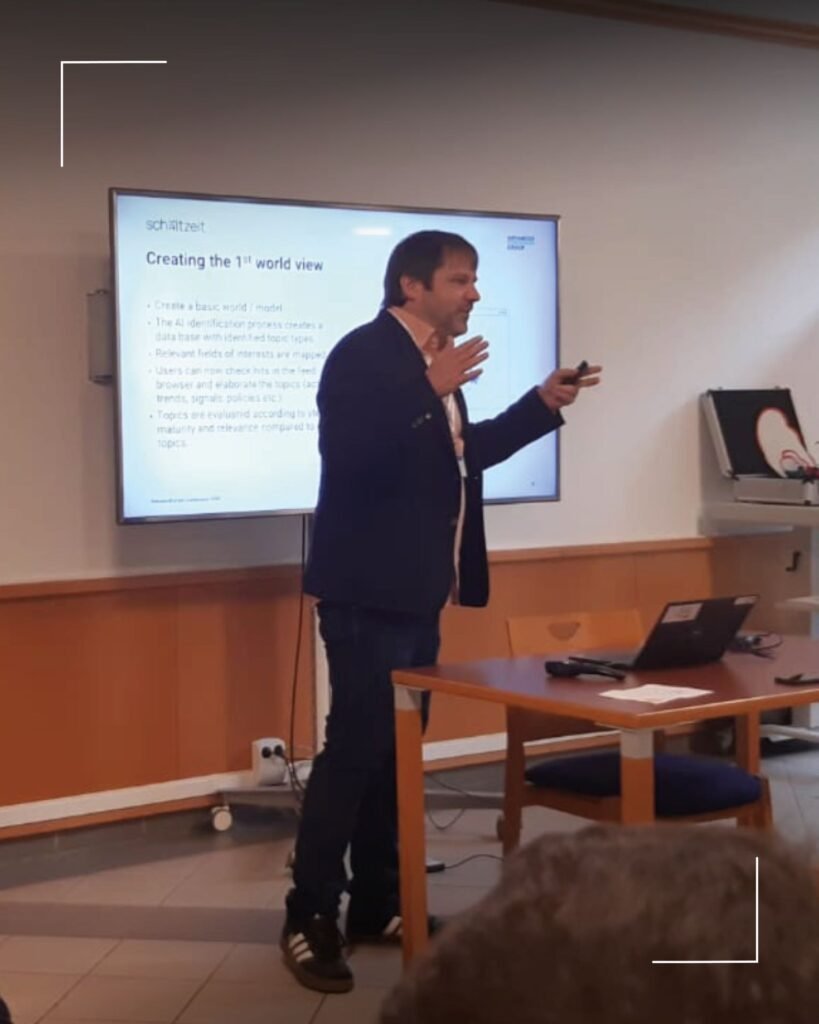
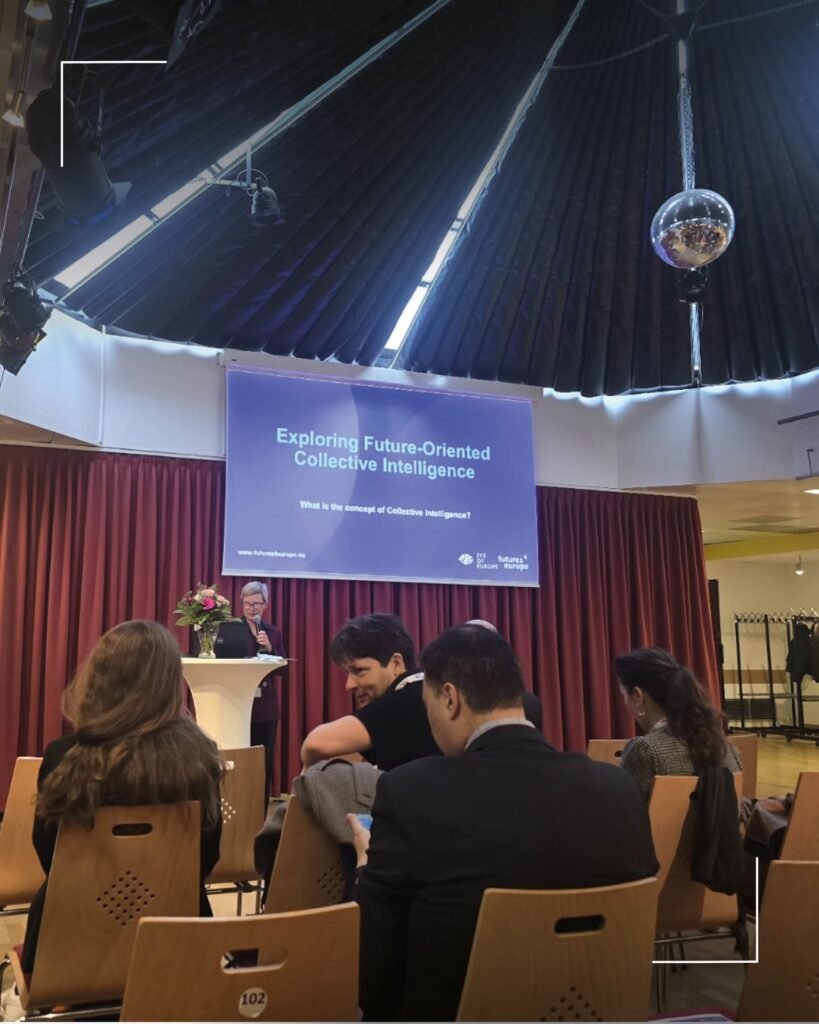
My talk – “Enhancing Policy Innovation through AI-Powered Collective Intelligence Mapping” – was part of the session “AI & Participation” (Session 3), moderated by Alexandra Csabi. Presenting in the “AI corner,” alongside exciting contributions from colleagues on participatory AI and global foresight, brought certain assumptions in the audience to the surface – perhaps partly driven by personal fears about jobs.
Unfortunately, my colleagues in the foresight bubble are also experiencing organizations that believe foresight can be fully automated by AI. In other words, strategic foresight is replaced by AI foresight, and experienced consultants are pitted against AI agents in pilot projects.
There is a bias that AI in foresight means pure automation rather than empowerment. I don’t share that view!
- Dialogue processes and reflective processes are where it makes the most sense to take a position. These processes absolutely must be strengthened and expanded.
- Our tool doesn’t replace human intuition – it enables broader access. Groups can reframe assumptions, explore causal relationships and engage creatively with complex futures. AI helps by breaking down language barriers and translating systems – so that even a child can take part in the discussion.
My message: AI is not here to replace foresight. It’s here to amplify us! Our prototype empowers diverse groups to modify assumptions, reframe causal connections and interpret impacts.
Strategic foresight must not exist only at the policy level or on paper. It has to move people, spark experiments and empower communities to imagine alternatives – and then make them real.
Sometimes I feel that in Europe we talk more than we act, while other regions (Asia, for example) act more than they talk. Maybe we could all shift a little – from strategy to action.
A huge thank-you to the AIT team for organizing this great conference Futures4Europe. A big personal thank-you to my Schaltzeit colleagues Magdalena Soetebeer and Lucas Buchauer, who helped me prepare.