Insights from the Futures Innovation Lab in Bratislava
The future as a challenge and a space to shape
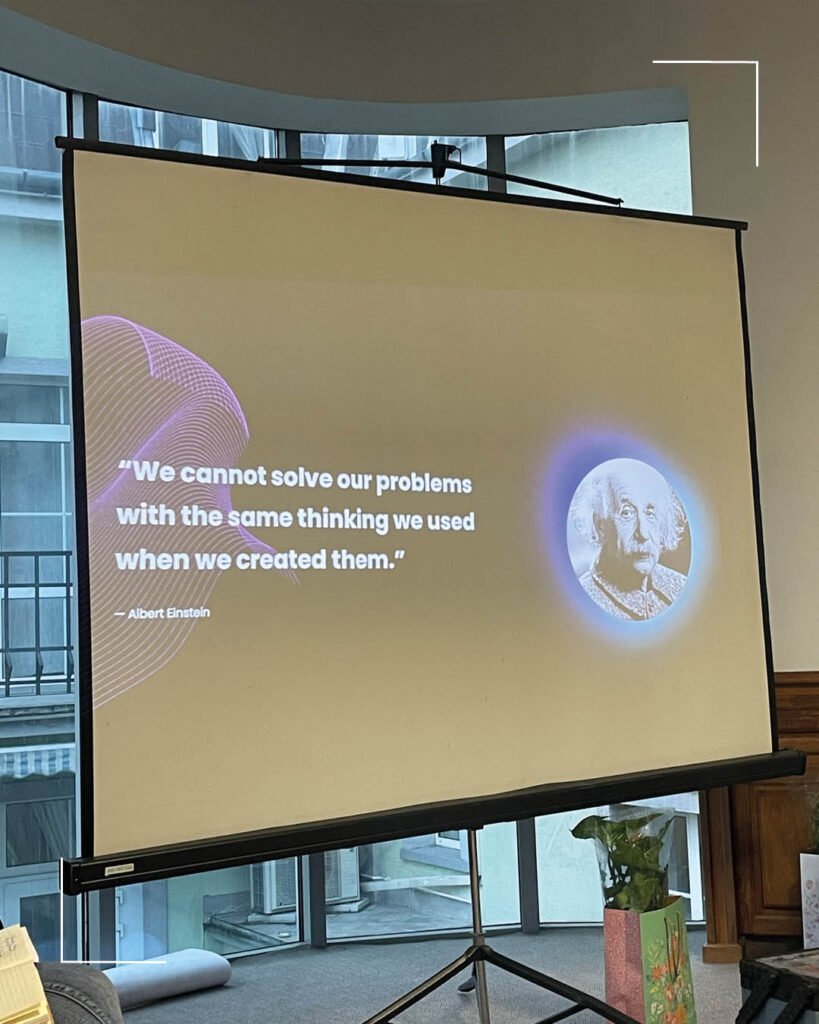
Many young people today experience the future less as a promise than as a burden. The climate crisis, social inequalities, political fragility: all of it generates a sense of uncertainty, sometimes of futurelessness, the feeling of having no real future ahead.
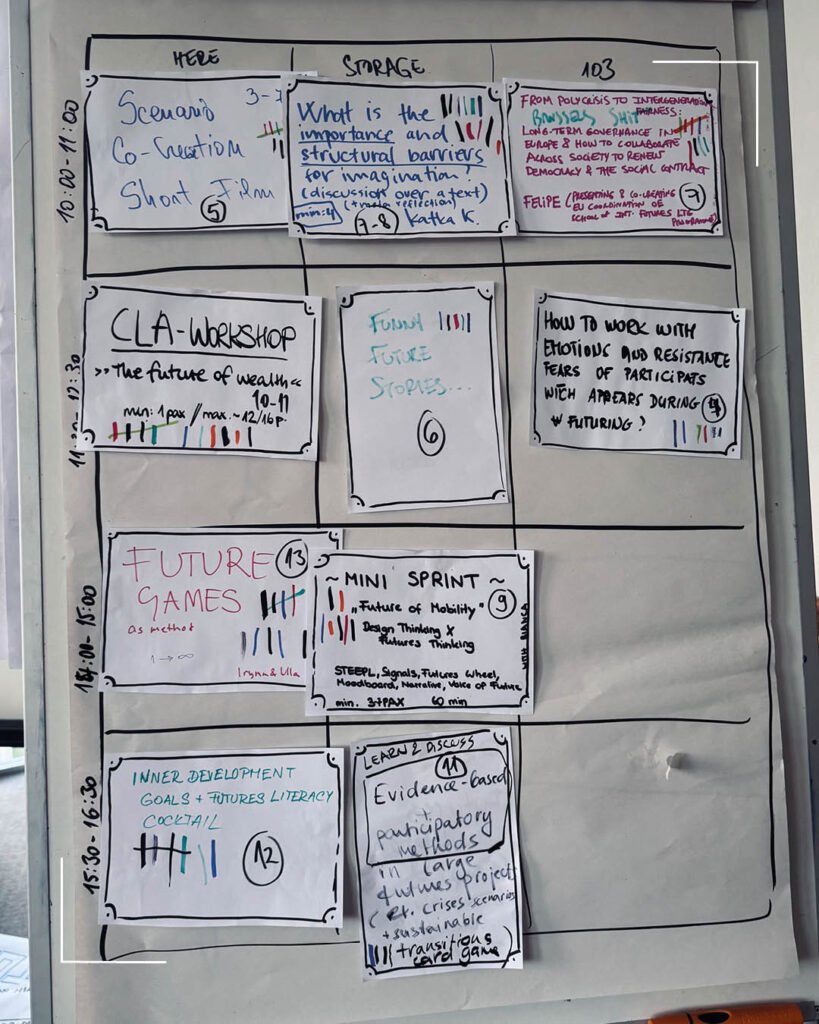
The Futures Innovation Lab, organised by YouthWatch and supported by Erasmus+, wasn't a classic training but an unconference. There was enough structure to feel secure, and enough openness for participants to shape the lab themselves. It made room to sit with uncertainty while still getting into shared action.
Three days of experiencing together
Day 1 was about opening up spaces for thinking and possibility. In formats like Futures Dating and the World Café, we discussed questions such as: What do we mean by a "good" future? Which images of futures shape how we relate to young people? And how can we help people deal with uncertainty?What impressed me was how quickly strangers become a thinking, feeling collective when the space is right. By the end of the day we'd found a shared language to go deeper.
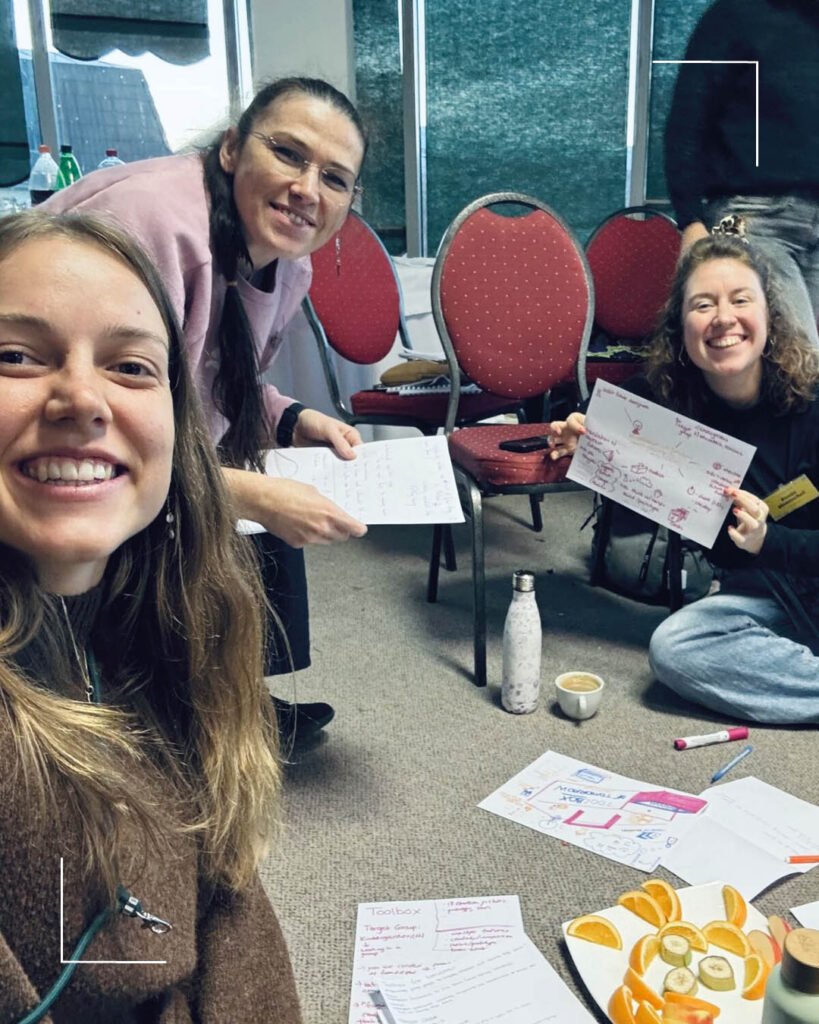
Day 2 was the heart of it: self-organised workshops and full co-creation. The aim was to bring in our own skills and get to know new methods.
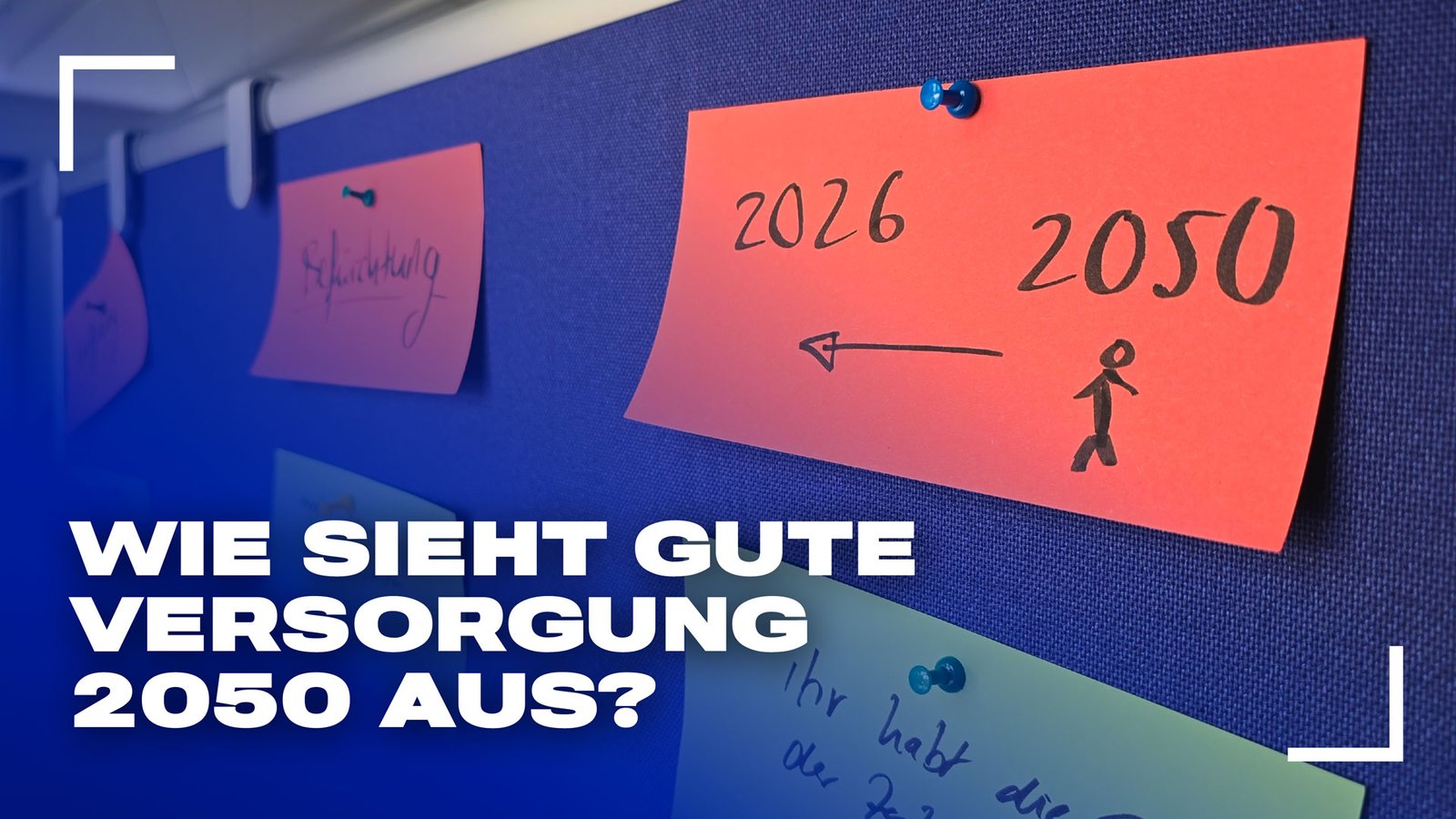
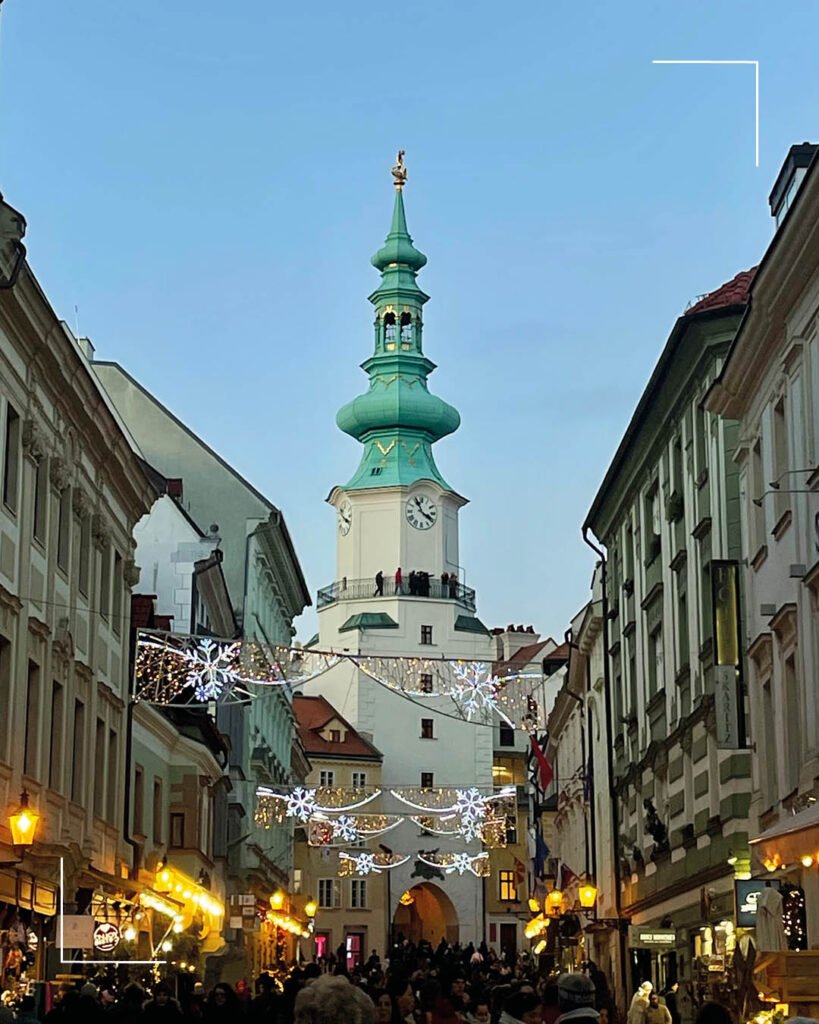
In Adina's scenario co-creation workshop, we became the makers of a future film. Using various AI tools, we developed a scenario for Bratislava 2050, complete with characters and concrete experiences. In the leading role: a future version of Dora the Explorer.
What I took away: scenarios are most powerful when they don't stay abstract but become emotionally and visually tangible.
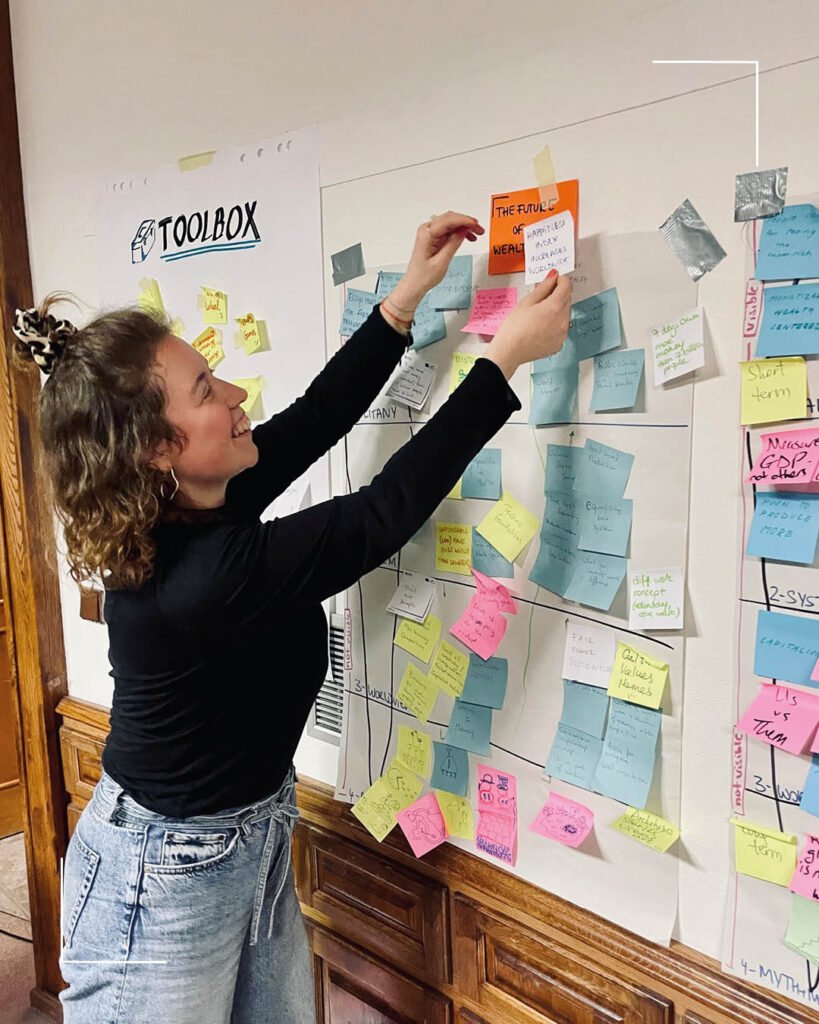
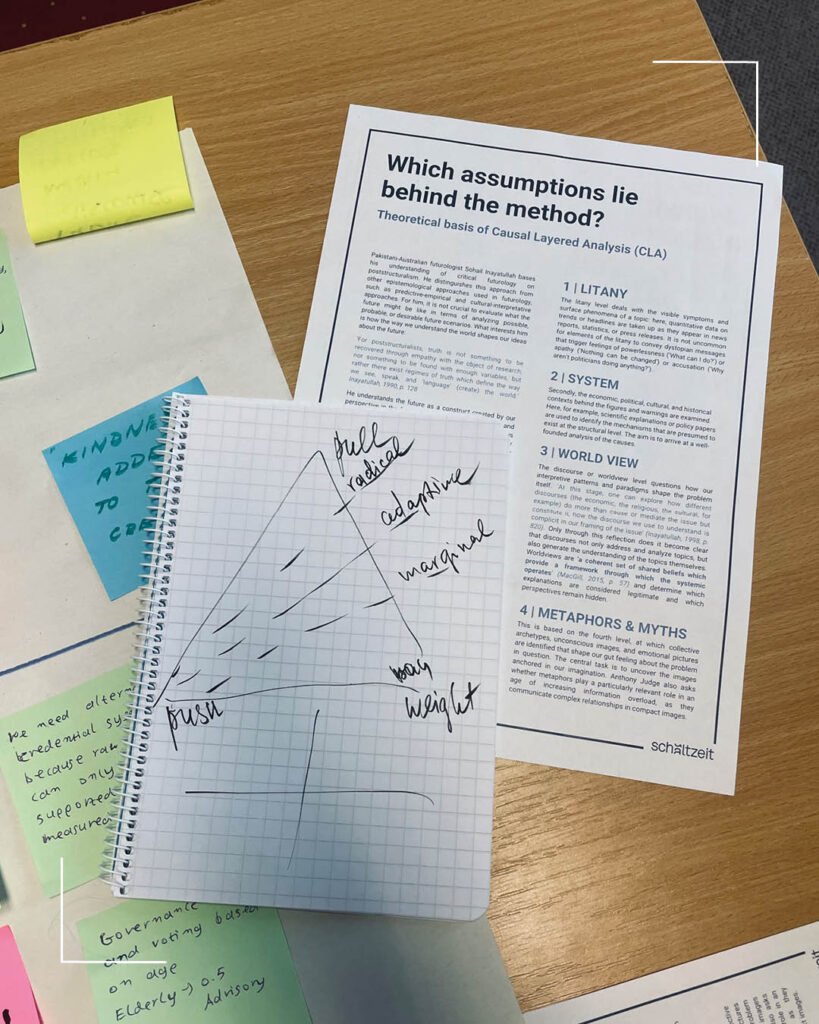
In my own CLA workshop on the future of prosperity we worked through the four levels of Causal Layered Analysis from critical futures research, after Sohail Inayatullah. We moved from visible symptoms like consumption and GDP, through systemic logics, to deep metaphors such as "having more = a good life.".
What moved me: several participants afterwards described a sense of renewed optimism. Not because CLA delivered easy solutions, but because the method opens up perspectives and room for action.
Other workshops ranged from Design Thinking on mobility in Bratislava 2045, to participatory versus expert-led futures processes, to Emotional Landscapes, gamification, degrowth and decolonial perspectives. It became clear that it isn't about the "right" method, but about the conscious choice within each context and the stance we bring to it.
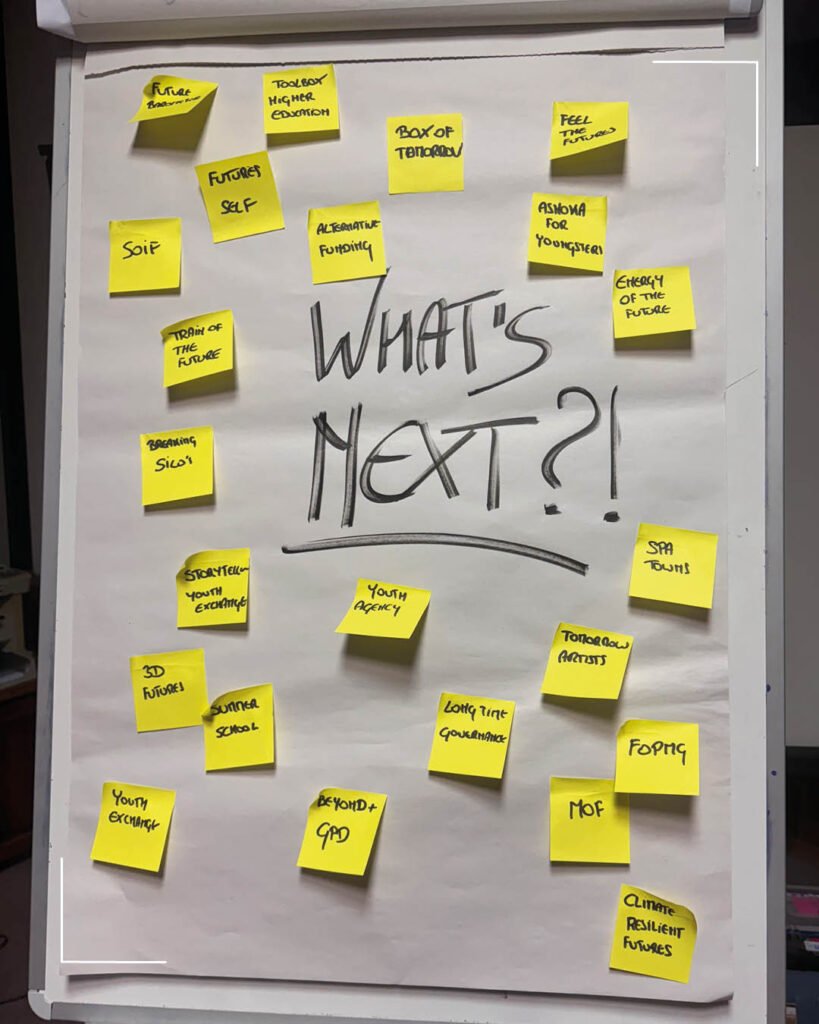
Day 3 felt less like a conclusion than like integration. First project ideas emerged and networks grew denser, less as finished concepts and more as seeds for future collaboration.
For me, this day was mostly a moment of piecing things together. The many impressions added up to a picture of how powerful futures work can be when it's carried collectively.
What remains, and what opens up
What I take from Bratislava is above all a set of experiences that keep resonating:- Futures work becomes more sustainable when it's thought of collectively.
- Complex problems don't have to be paralysing if we understand them as an invitation to explore together.
- The diversity of approaches was inspiring, as was learning from and with one another in the group, and through trying things out.
- Relationships and the spaces in between, conversations without an agenda, shared meals, laughter, aren't a by-product. They're part of effective futures work.
Perhaps this is exactly where an often underestimated quality of Futures Literacy lies: it makes the future less lonely.
An open question to close
How many futures do we actually allow ourselves to think in everyday life: in organisations, in projects, in decisions? Perhaps the answer today is different from yesterday's.
The days in Bratislava showed that when we create spaces where different perspectives can coexist, it changes not only our view of the future but also our action in the present.
I'm coming back to Berlin inspired and motivated, with a toolkit of new methods and approaches. Not as finished solutions, but as offers: to try out, think further, adapt. I'm taking this into my work at Schaltzeit too, where we open up spaces for collective future-making, for clients and as a public invitation.
If futures work interests you, come along to one of our next workshops or get in touch: our next workshops