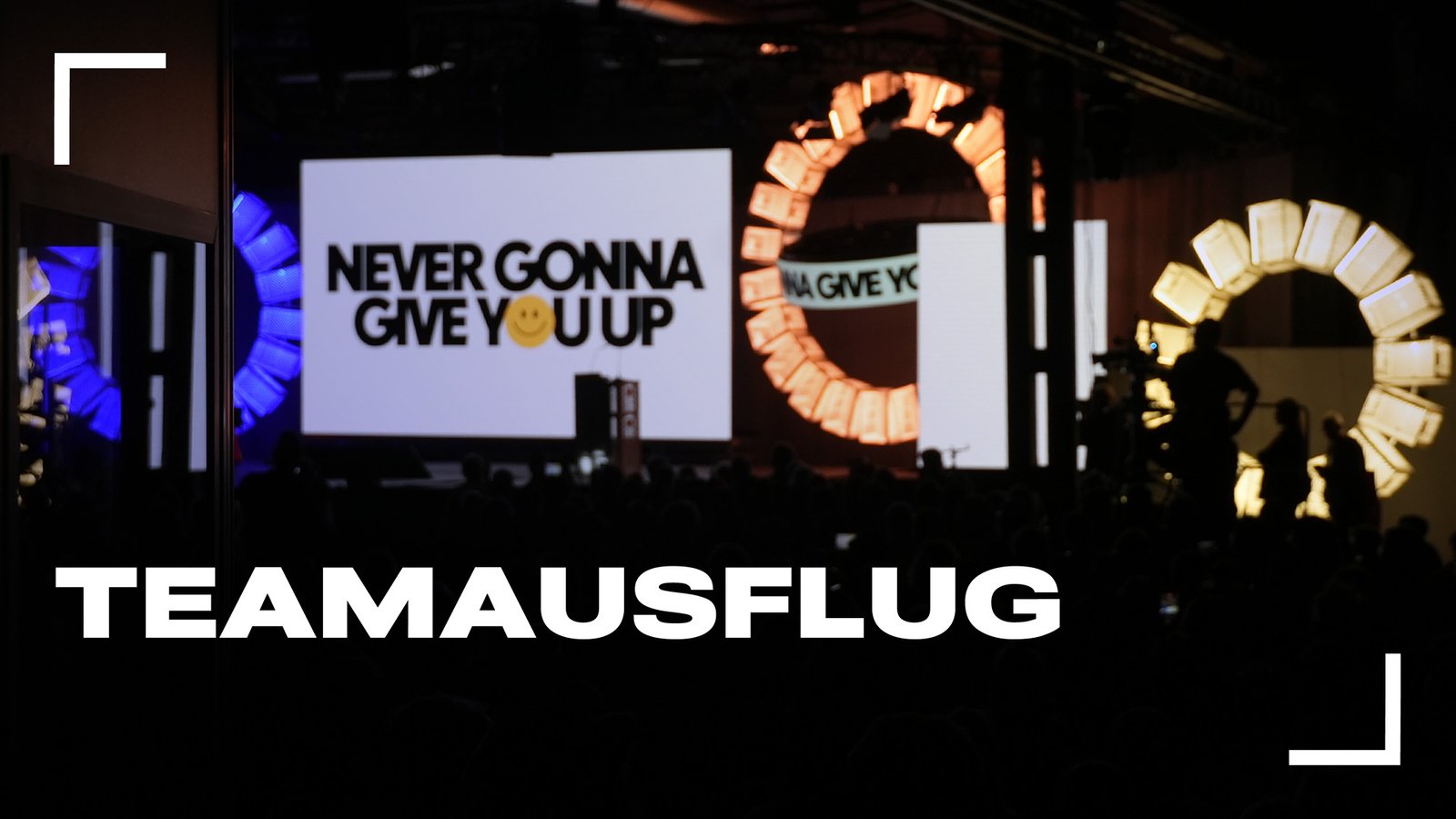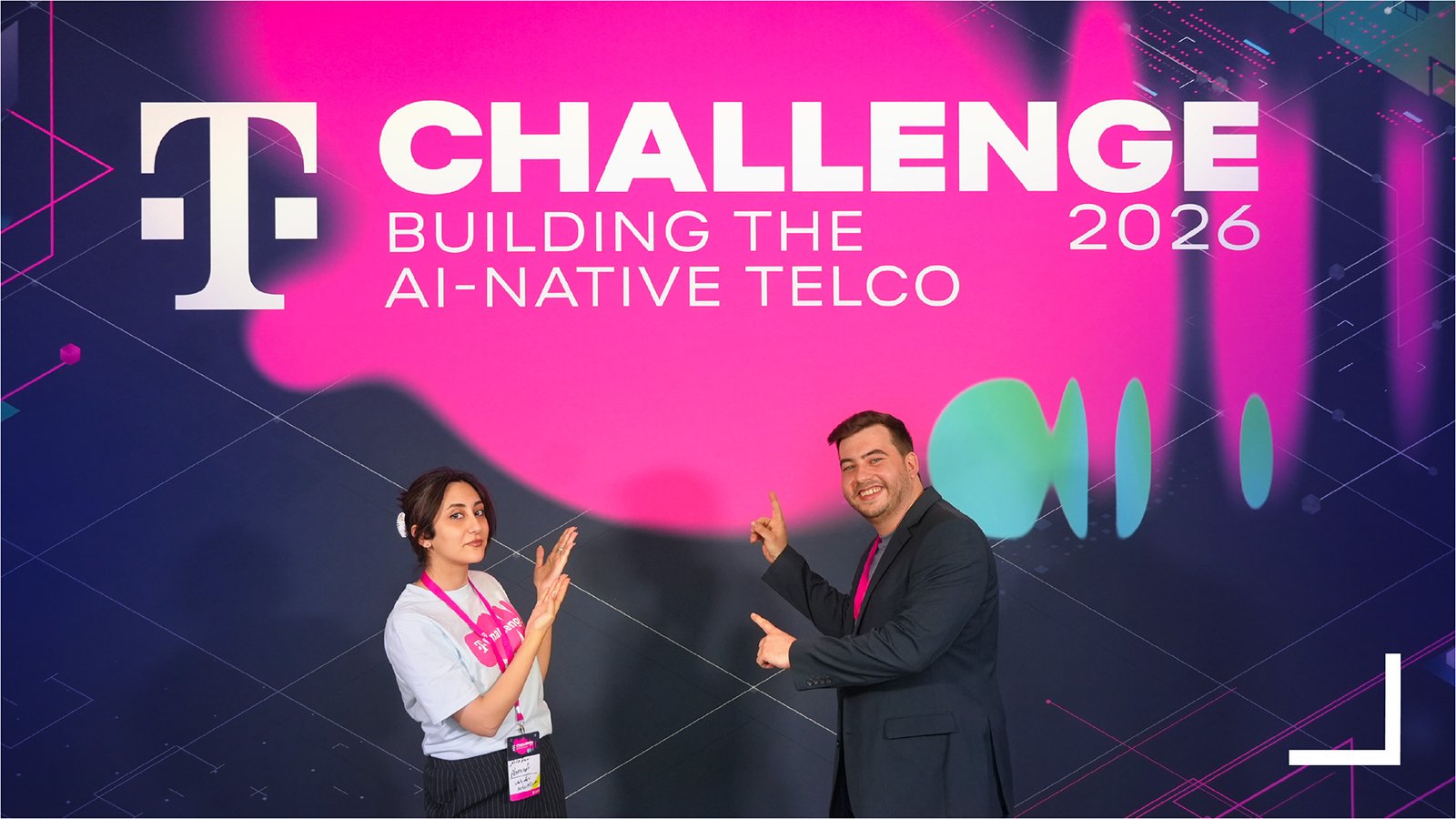


Methodologically, the T Challenge is a global innovation contest model with integrated matchmaking and coaching – one of the five types of competitions we distinguish at Schaltzeit. Nilofar Ahmadi and Lucas Buchauer were there as a team from Schaltzeit. What particularly stood out to us during our two days in Bonn can be summarized in three observations.
What the pitches showed
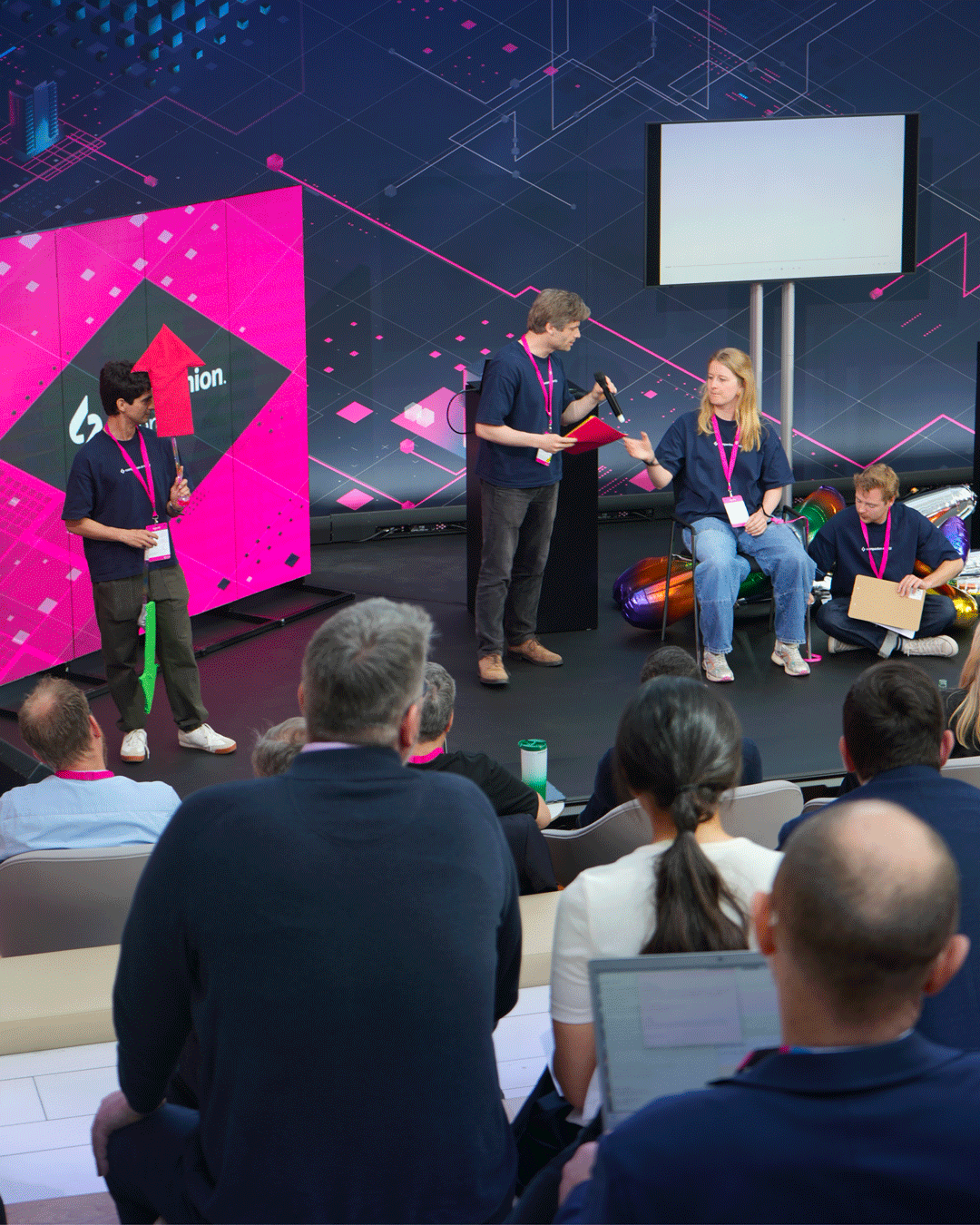
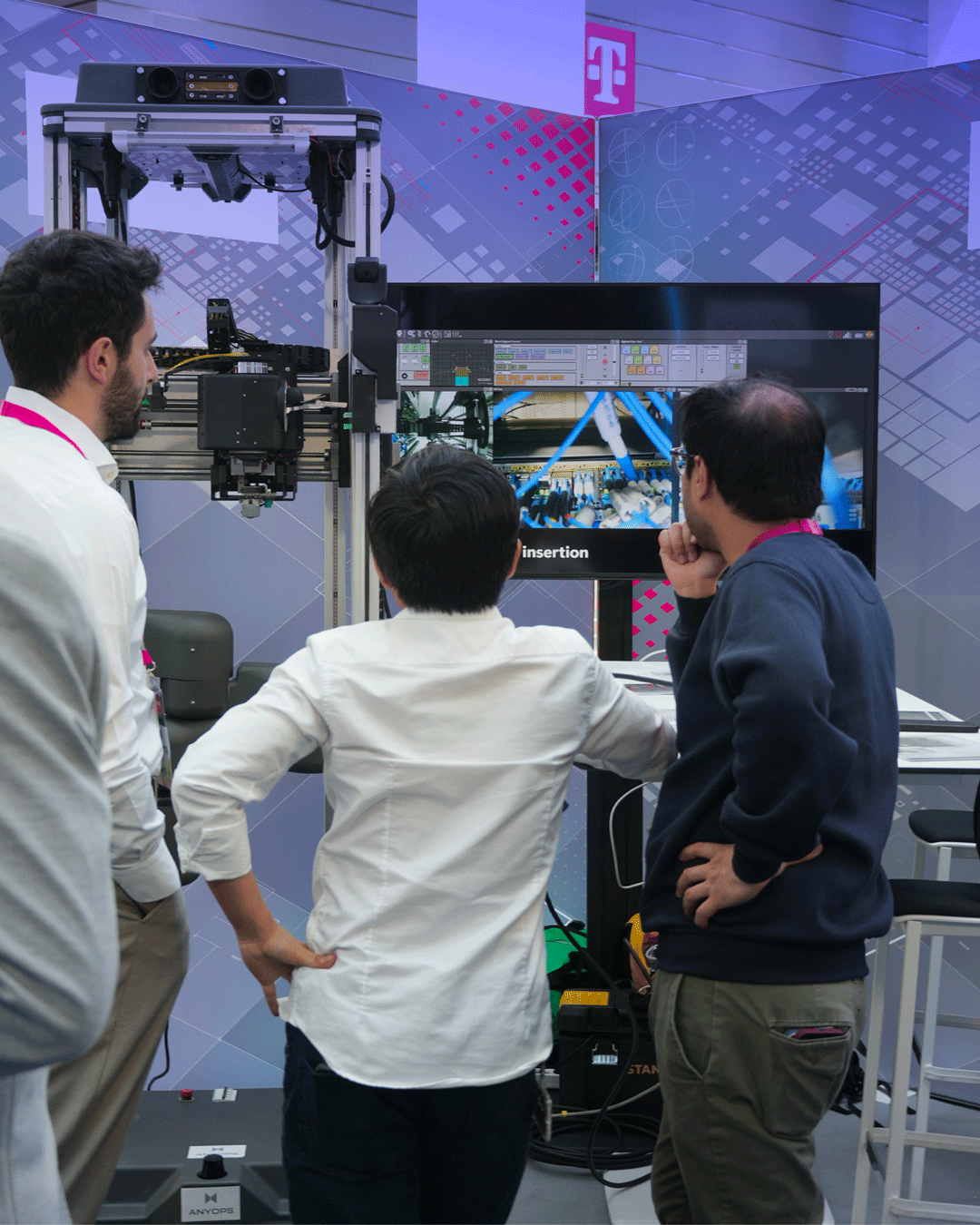
Across the field, a clear direction emerged: a move away from AI as an additional layer on top of existing network architectures, toward solutions that treat AI as a starting point. The top placements illustrate this well:
- Stanford University (1st) – Semantic compression to reduce data load in AI-native networks
- CUBIG (2nd) – LLM Capsule for secure AI usage
- Daisytuner (3rd) – AI workload optimization
- zTouch Networks (Special Award) – Intent-driven AI-RAN for dynamic resource allocation
Across the breadth of the pitches, the central question was rarely whether AI would be used, but rather how deeply it would be embedded in architecture, data flows, and energy profiles.
Why every finalist won
Four teams left Bonn with an award – but in a more substantial sense, all twelve finalists came out as winners. The real value of a format like this lies less in the prize money than in what it makes possible around it.
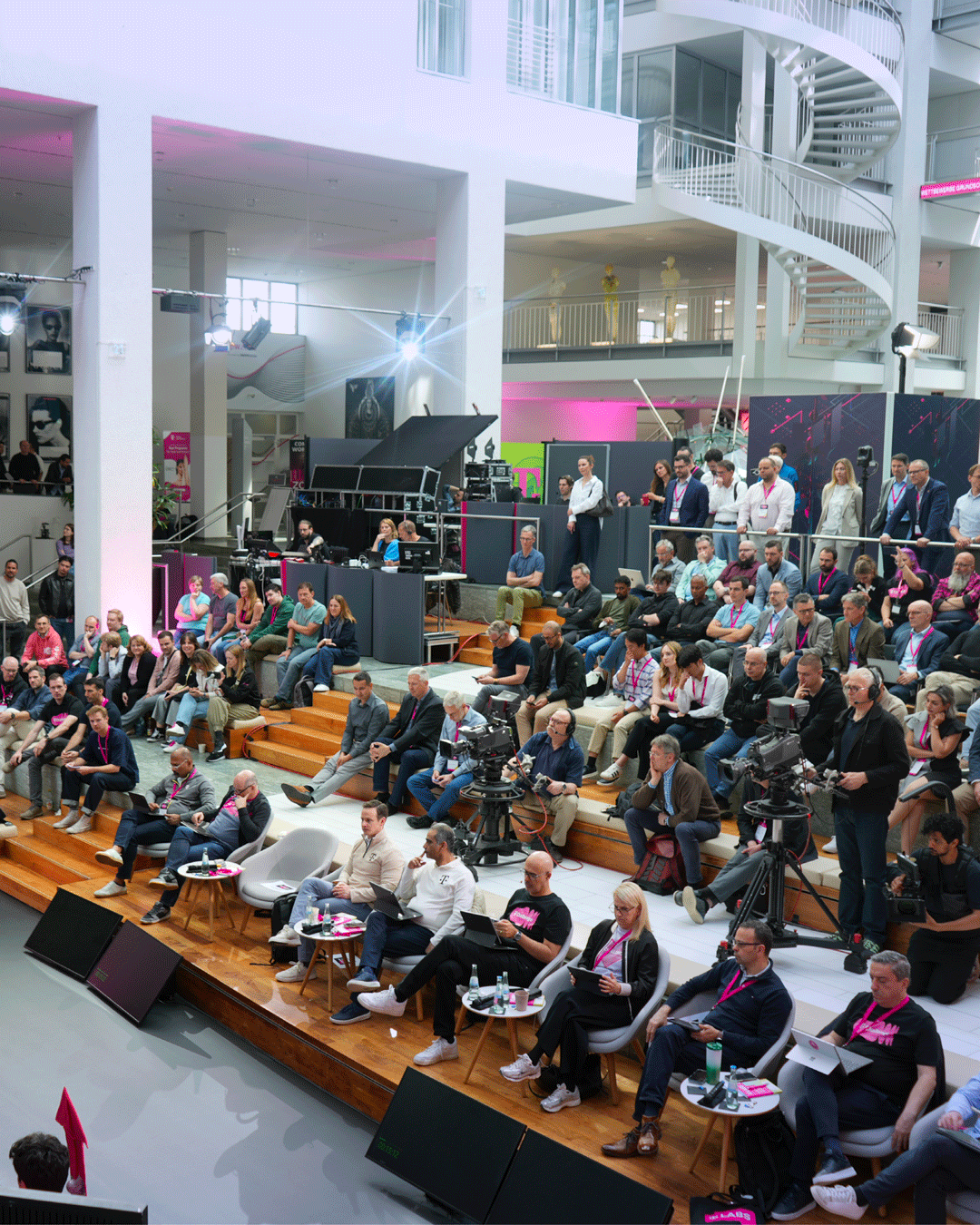
Two days at Telekom HQ mean direct access to decision-makers from both Deutsche Telekom and T-Mobile US, structured feedback from technical experts and mentors, and exchange with peer teams working on adjacent problems. For startups, research groups, and academic teams, this is a form of capital that is harder to acquire than funding: relationships, visibility within an industry ecosystem, and a realistic sense of how their solutions are read by potential partners.
This networking dimension is often underestimated in discussions of innovation challenges. Yet it is structurally decisive: a well-designed challenge connects in several directions at once – outside-in, inside-out, and across the field of participants.
At Schaltzeit, we’ve introduced two terms to describe this. The “sparring partner” model describes the structured development of relationships between top teams and clients—coaching that goes beyond pitches. The 95 Percent Thesis serves as a reminder that even the participants who didn’t win a prize have invested their time and, through their applications, have become stakeholders. Those who treat the 95 percent beyond the top 5 well will have 95 advocates instead of 95 skeptics in the next cycle.


Outside-In as a complement, not a replacement
Outside-in innovation is sometimes framed as the "new" way of doing things. We don't see it that way. Inside-out R&D – work that comes out of an organization's own labs, operational experience, and systems knowledge – cannot be replaced. It carries context, constraints, and an understanding of integration realities that no external team can fully reconstruct.
What outside-in adds is a different angle: different research traditions, unusual combinations, perspectives not yet shaped by an organization's own assumptions. In a VUCA environment – and especially at the current pace of AI development – that additional perspective becomes more valuable, because the space of relevant ideas is expanding faster than any internal unit can cover on its own.
The strategic question, then, is not "outside-in or inside-out." It is: how do we build structures in which both modes can inform each other?
In our methodology overview, we therefore explicitly describe innovation contests as two subtypes, each of which requires different recruitment strategies and evaluation mechanisms. The T Challenge is outside-in; however, any outside-in format becomes more effective when it uses inside-out preparatory work as a briefing anchor.
Innovation management as a core capability in the AI era
This is where the format becomes a methodological question. As the space of possible solutions widens and decision cycles shorten, organizations need structured environments in which diversity stays visible without becoming overwhelming. That, essentially, is what innovation management does: it organizes variety without flattening it.
Seen in this light, a challenge is not a one-off event but a recurring process. Search areas are defined – this year in the form of the four focus areas Autonomous Networks, Energy Efficiency, Supply Resilience, and Security. Submissions are captured in a comparable way, evaluation is organized across multiple dimensions, and outcomes are fed back: to teams, to juries, and into strategic roadmaps.
In the AI era, this discipline is gaining weight. AI accelerates both the production of ideas and the speed at which fields shift. Without robust innovation management, that speed turns into noise. With it, it becomes a navigable landscape.
How PEACOQ supports the process
PEACOQ is a white-label platform for collaborative innovation and evaluation processes. In the context of an innovation challenge like the T Challenge, that translates into several concrete capabilities:
Structured submission Teams submit their ideas through a clearly defined system that supports text, images, and video, with categorization and tagging. The result is a comparable data foundation across hundreds of entries – without flattening the specifics of individual approaches.
Multi-stage evaluation Experts, jury members, and technical evaluators work in the same environment – with fine-grained role assignments, customizable evaluation criteria, and configurable status values that reflect the current stage of the process.
Live voting and visualization During pitch phases, evaluations can be captured and visualized in real time – anonymously or openly, depending on the format. Detailed reports support the decision-making that follows.
Embedded AI functions At several points, PEACOQ integrates AI modules that support the process – for example in handling large volumes of information or structuring evaluation data. AI here is a tool that makes complexity manageable. Decisions remain in human hands.
Modular and extensible through support modules. PEACOQ is not an off-the-shelf product. It is a platform that grows with its requirements. Beyond its core functions, various support modules can be integrated to cover the broader lifecycle of a challenge – for example the targeted identification and invitation of suitable teams in the run-up, organized communication during the development phase, or structured follow-up afterwards. New modules often emerge from co-development with clients – out of real process situations, not theoretical roadmap planning.
What these features deliver technically is one side. What they enable strategically is another: decisions are not made in a gut-feel workshop, but on a foundation that makes diversity structurally available.
What we take with us
Three points stay with us:
- AI-native is a movement, not an endpoint. The most interesting approaches don't ask how AI fits into existing networks – they ask what networks look like when AI is the starting point.
- Outside-in and inside-out belong together. Neither is better than the other, but in the current AI dynamic, the combination has become a strategic necessity.
- Innovation management is becoming a key capability. Without structures to handle variety, organizations lose orientation in an expanding possibility space. Platforms like PEACOQ are less a tool here and more an infrastructure.
If you are building similar processes in your own organization or research network – or thinking about doing so – we'd be glad to exchange ideas.
If you're planning a specific contest: Book an Initial Conversation right away—45 minutes, with no sales pressure.