
The Futures Oracle
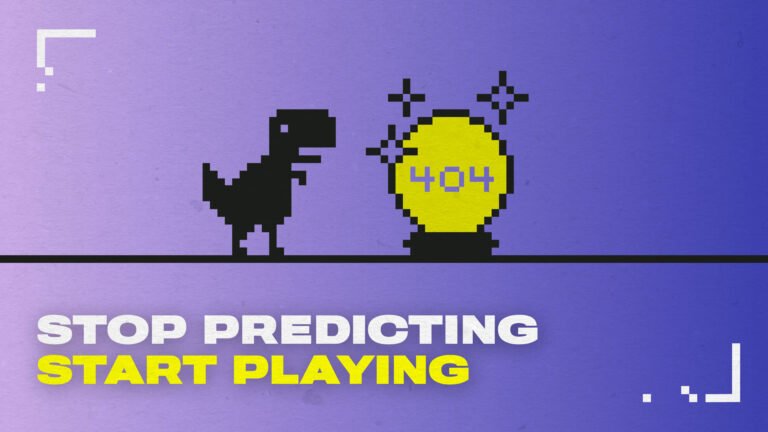
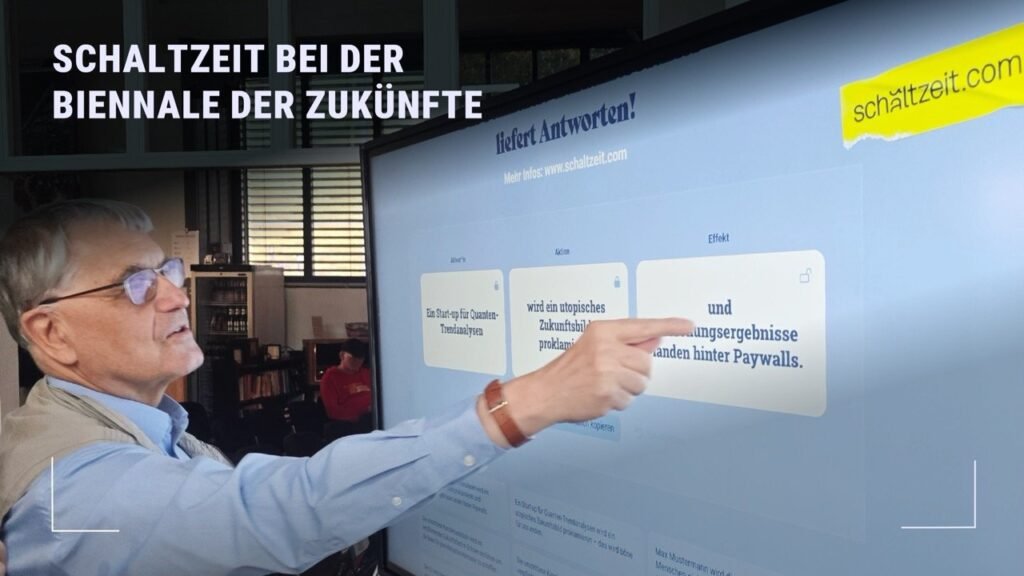
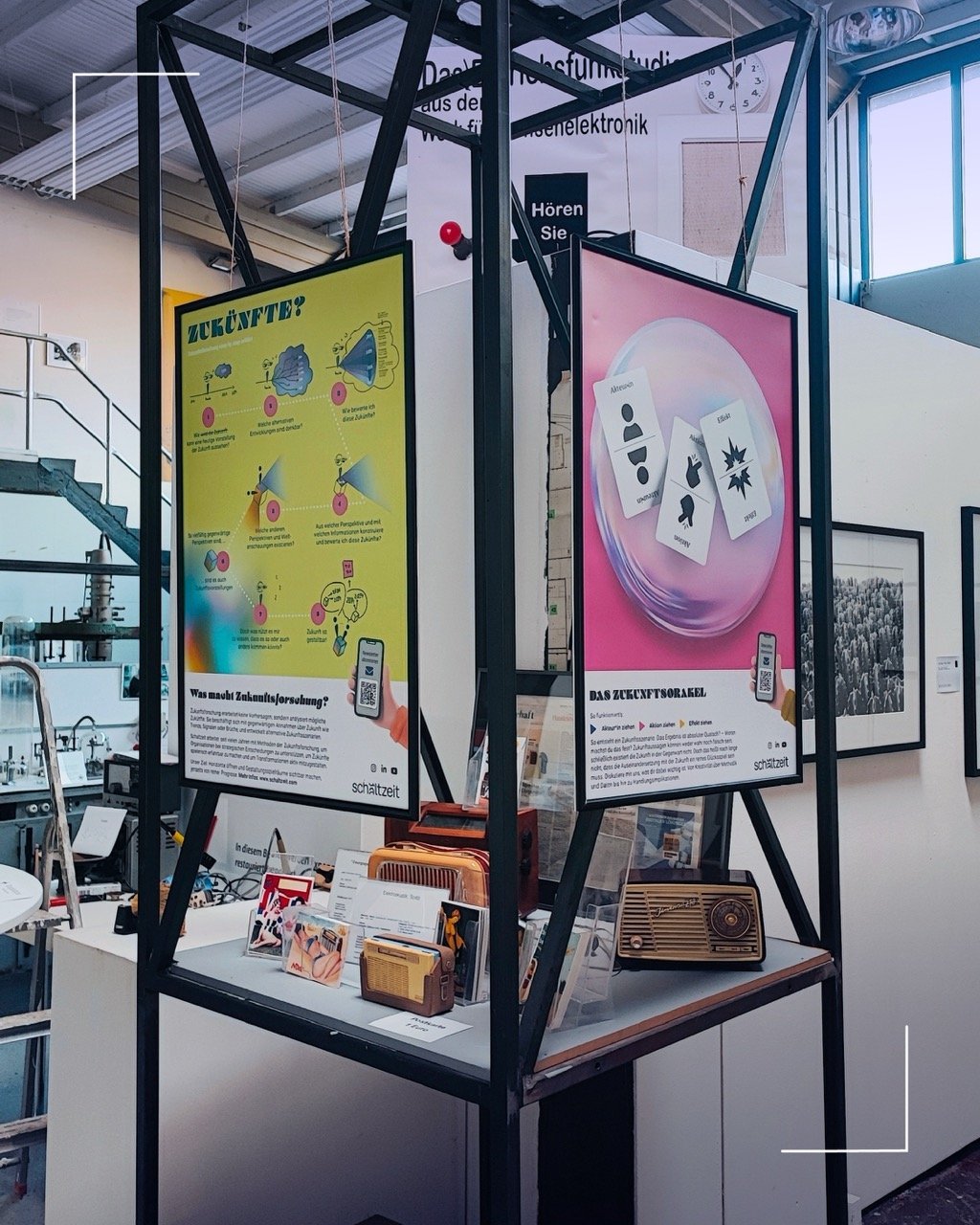
Ask our oracle about the future and you get a funny, absurd or even nonsensical answer that is obviously nonsense – the perfect conversation starter for discussing with people how they judge whether statements about the future make sense. After all, just because we can’t see into the future doesn’t mean that engaging with the future is nonsense per se. What matters is: when does a statement about the future become useful? What quality criteria does it have to meet? What methods and data is it based on? Is it meant as creative inspiration or as a rational aid to decision-making?
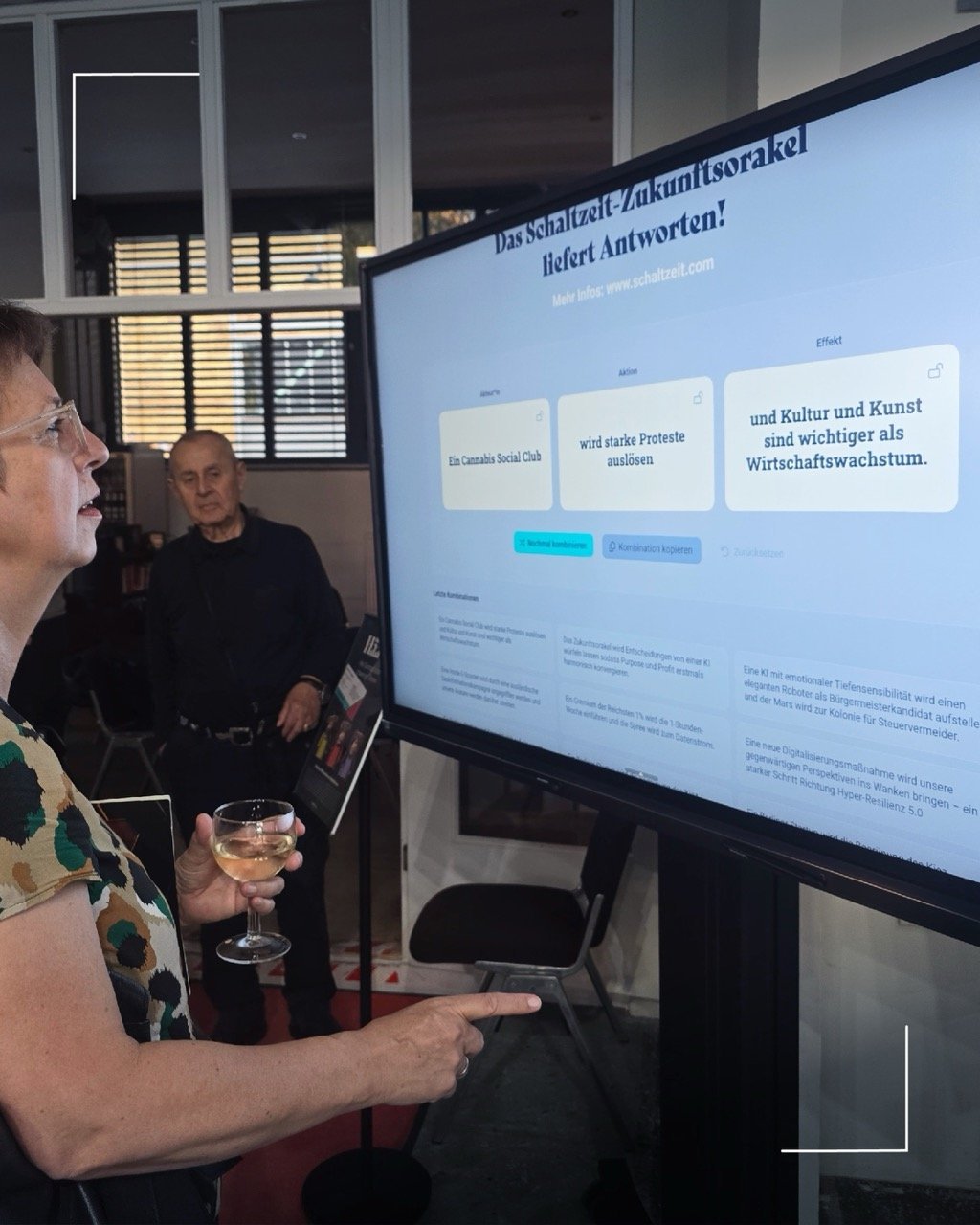
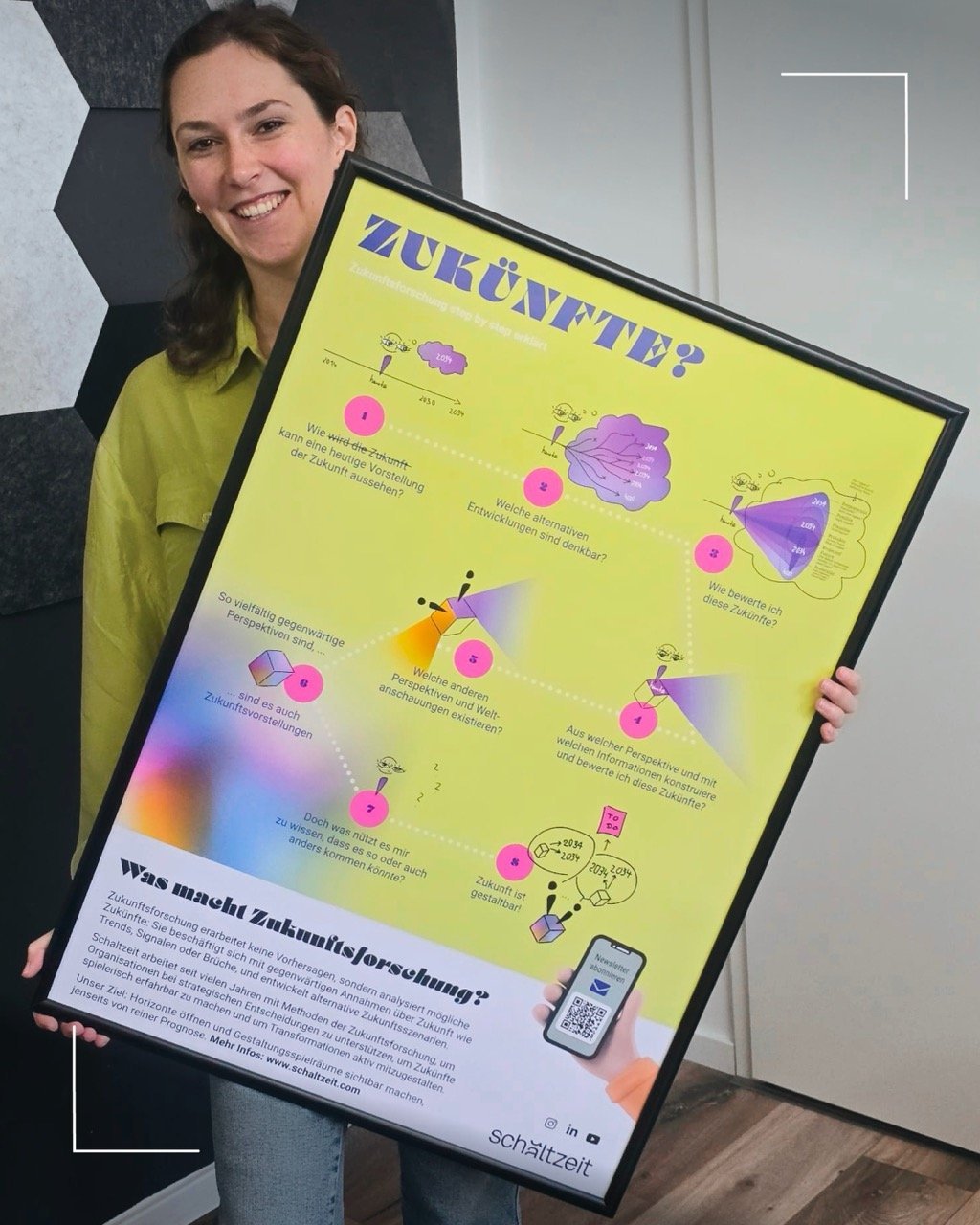
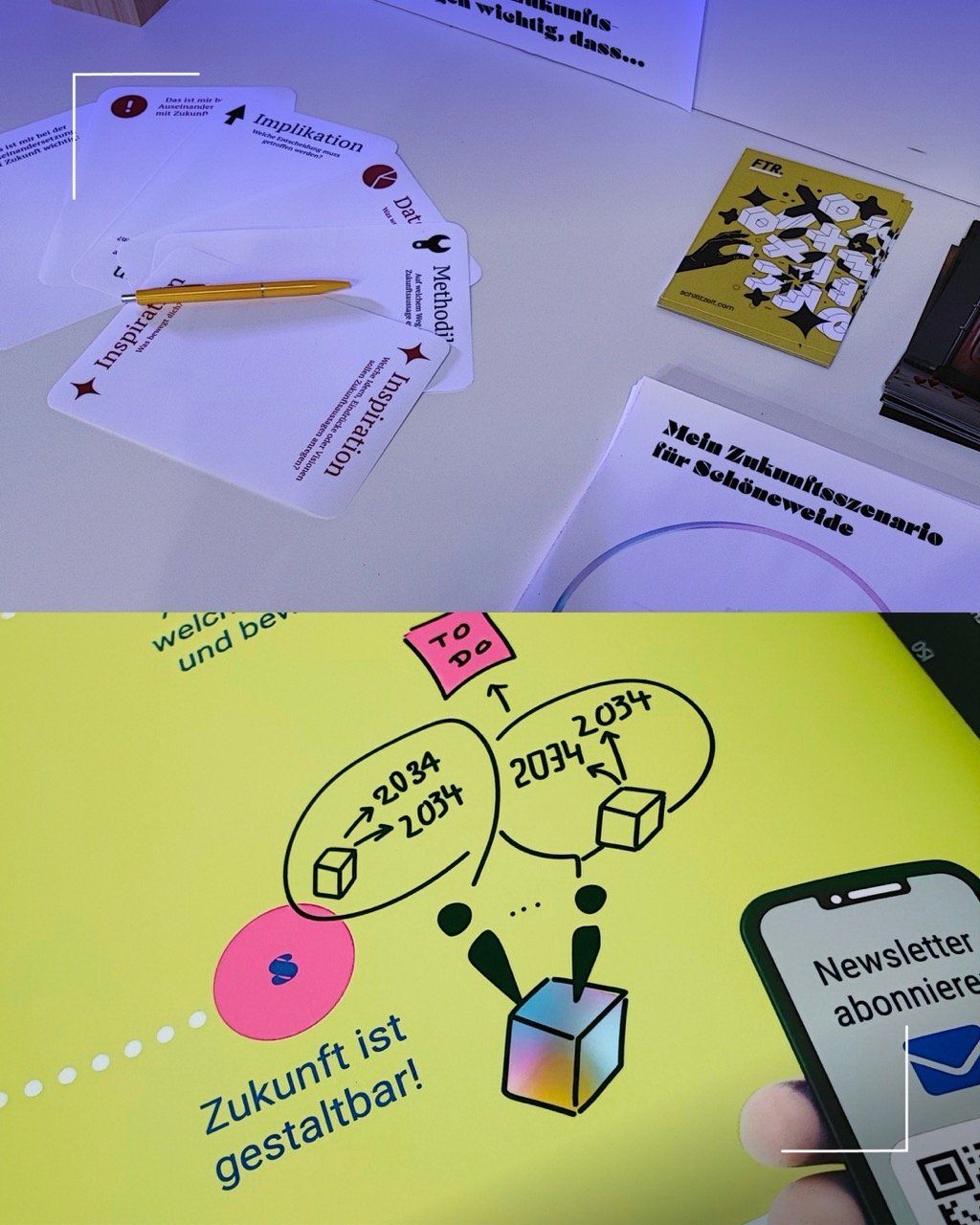
We are thrilled by the many different discussions that emerged at the Biennale – from humorous digressions about absurd oracle results on world domination 👑, the moon as a tax haven 🌚 or dogs as members of parliament 🐶 – to curious questions about futures studies and philosophical reflections on theories of knowledge.
The SMART FACTORY simulation game
“What could be more fitting for the backdrop of the Industriesalon than a serious game about the transformation of industries? Schöneweide was once the heart of Berlin’s industry; today, the site bears the marks of change.”
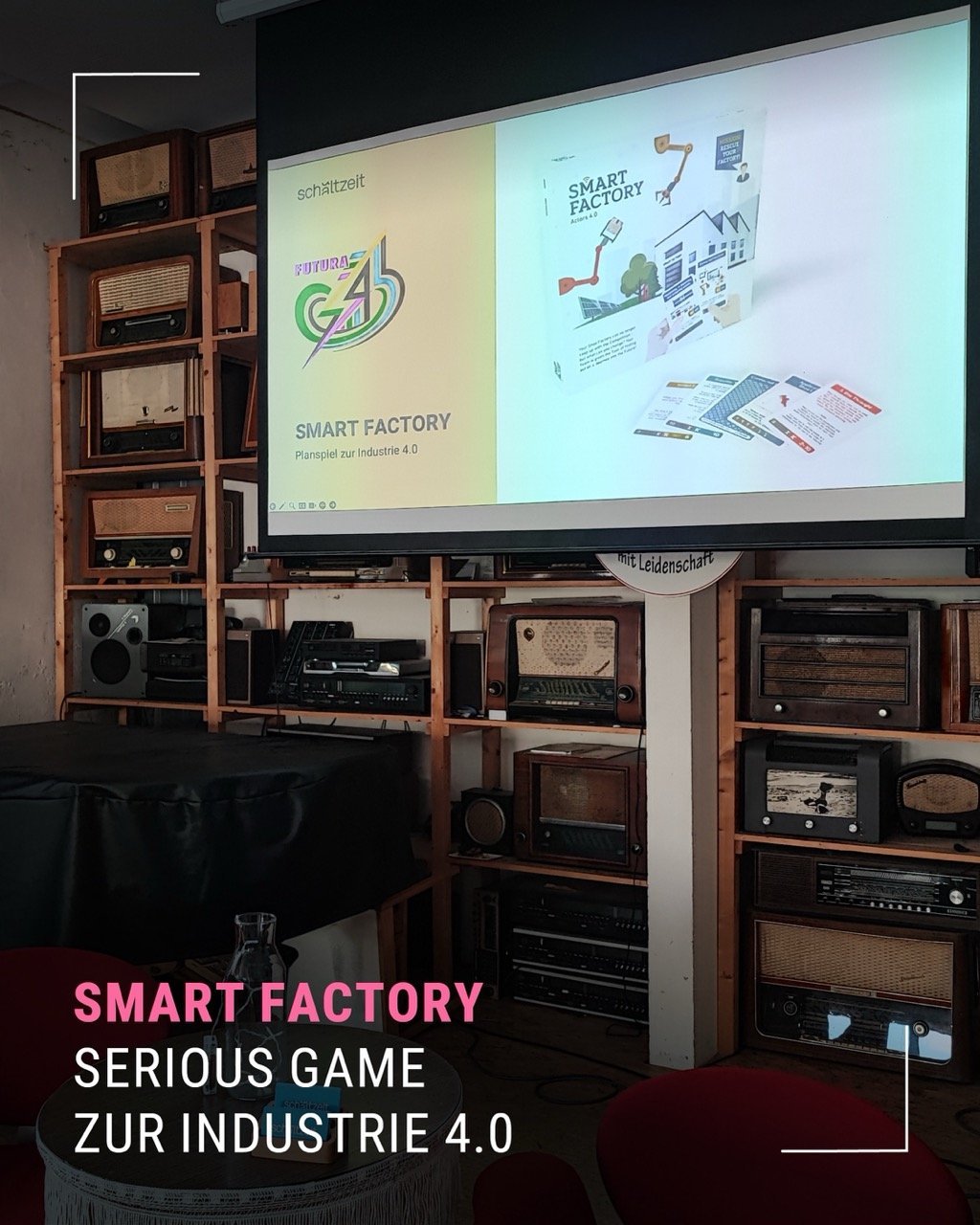
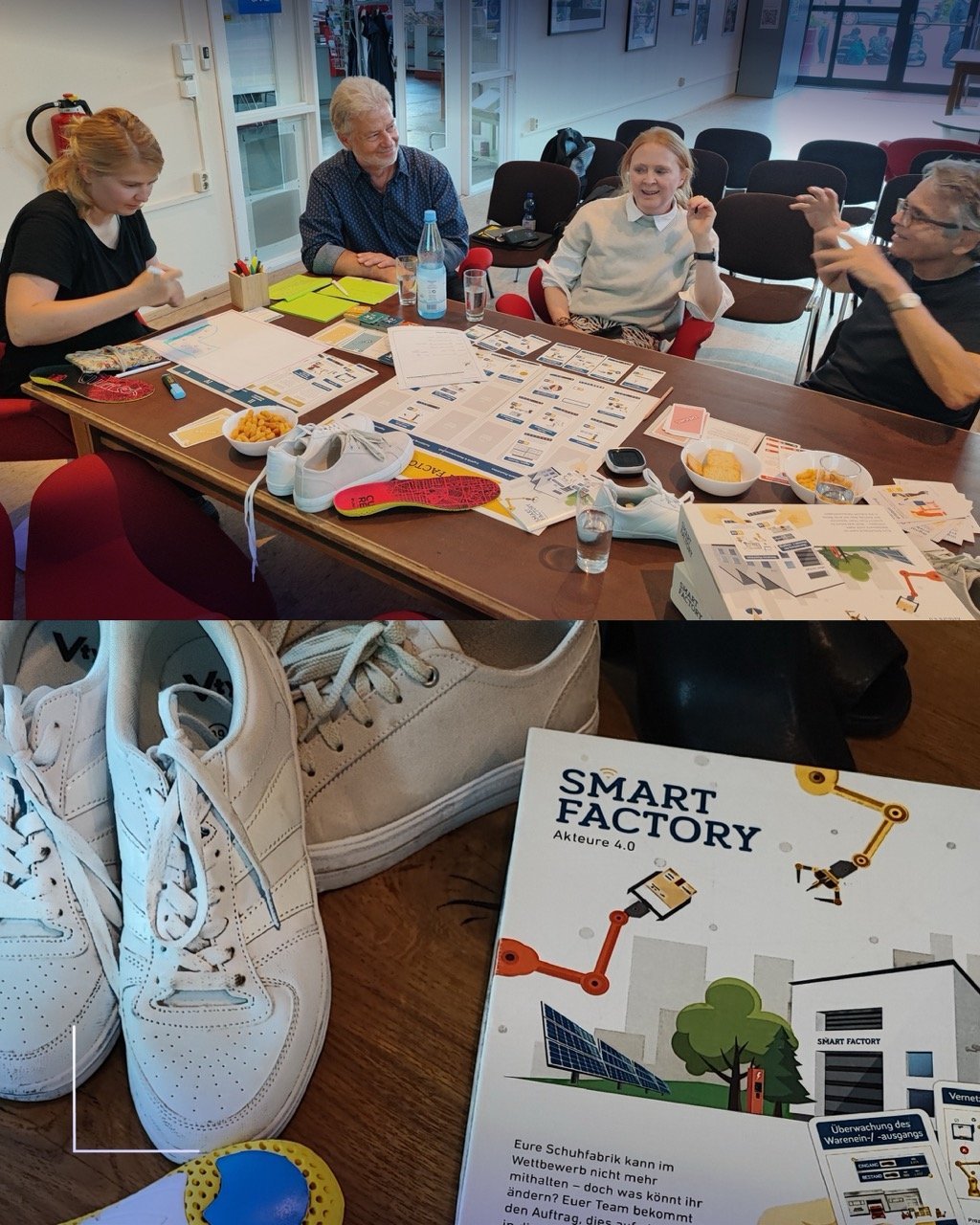
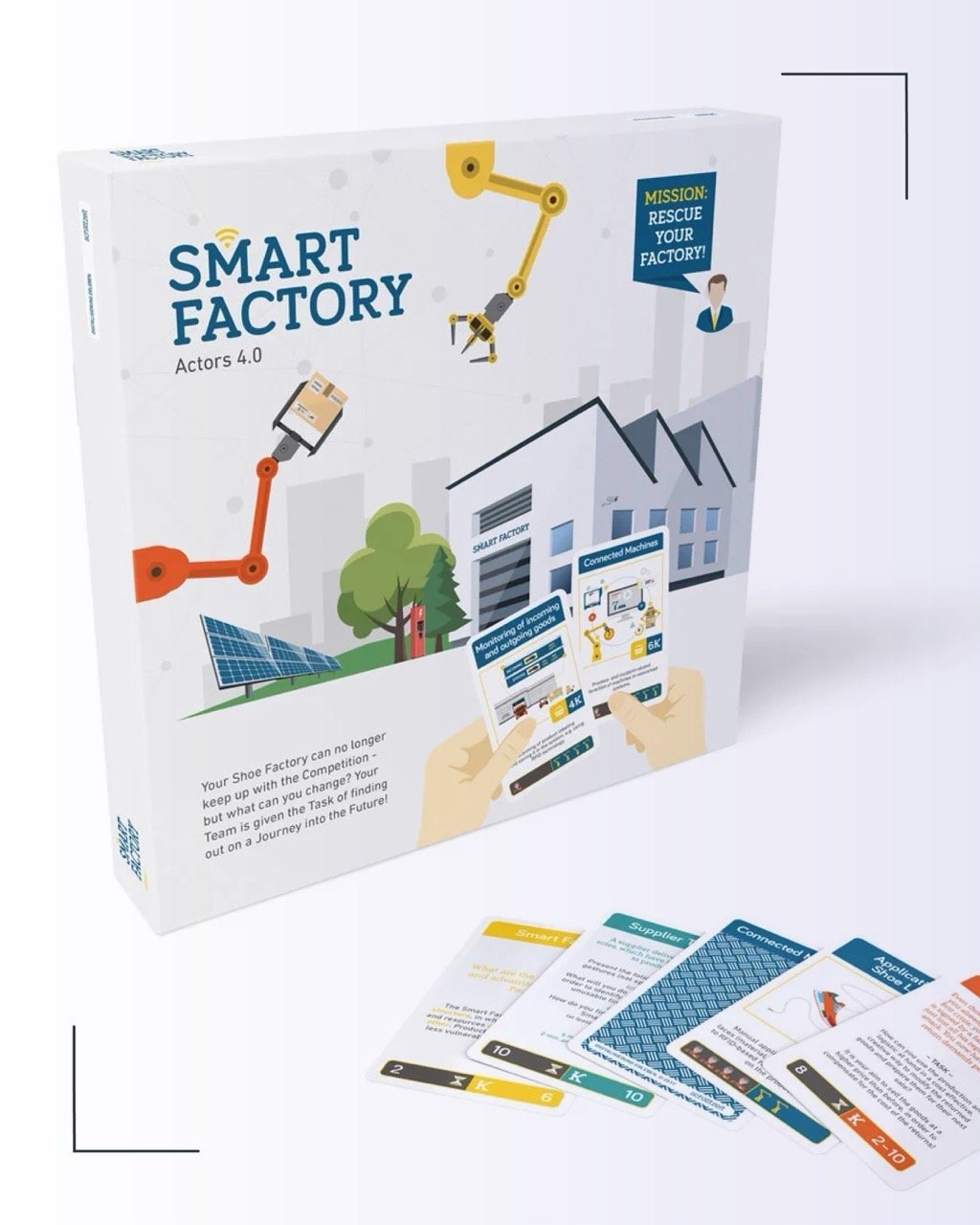
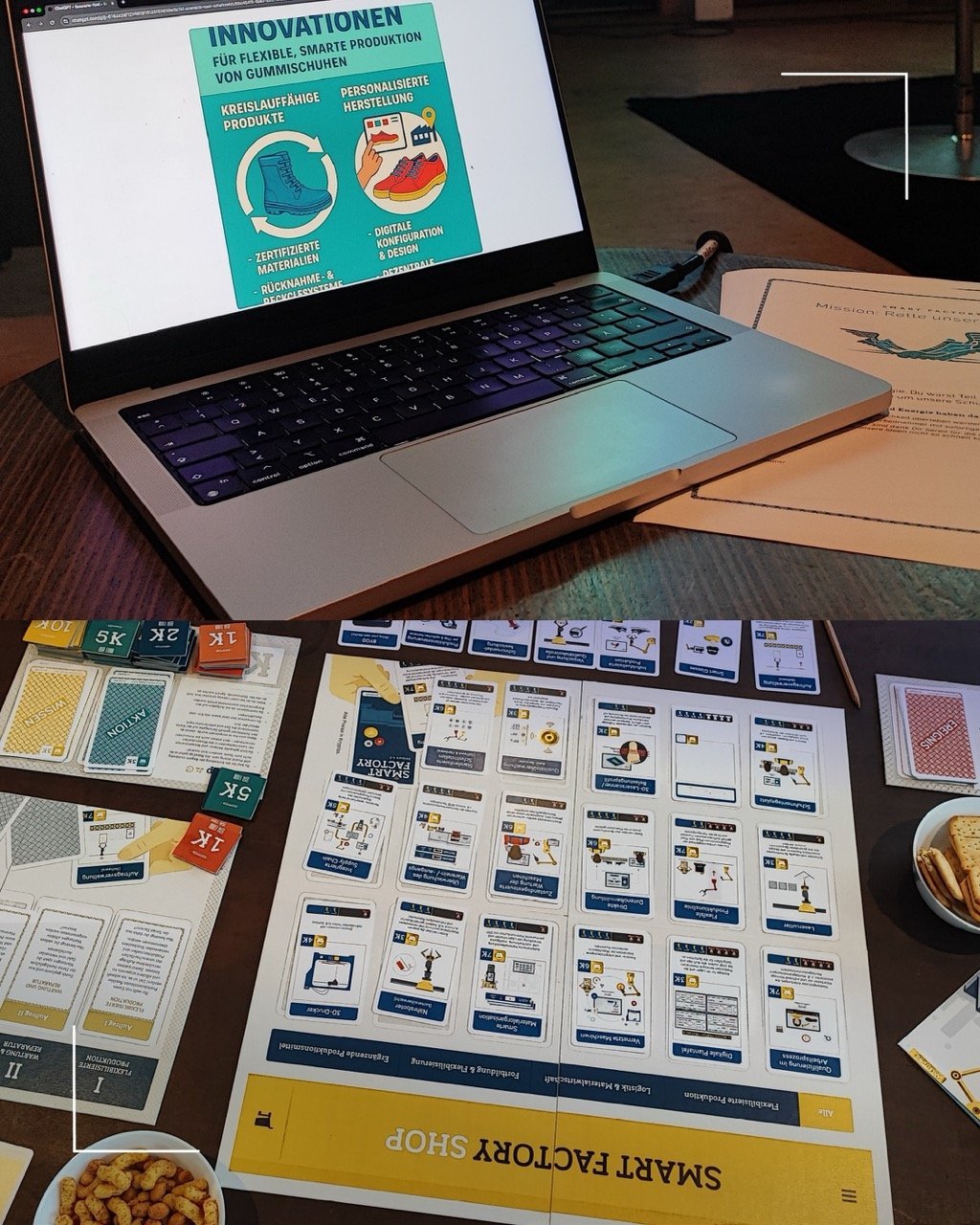
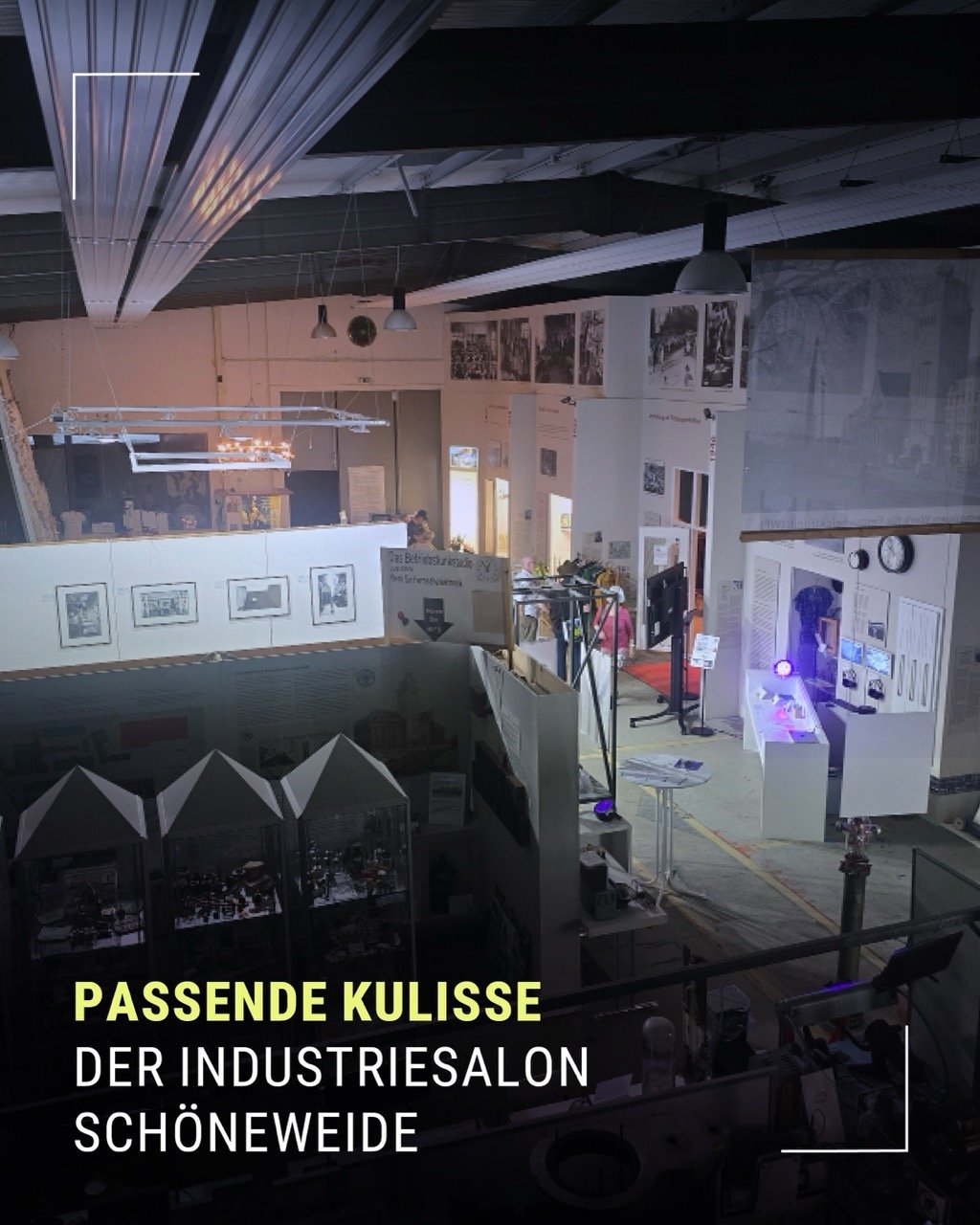
- Smart Factory
Various images of the future from our scenario tool
Scenario | Relevance for your rubber shoe factory | Opportunities | Risks | Recommended investment direction |
|---|---|---|---|---|
1. Consistency as compliance Strict EU requirements, synthetic raw materials, circular economy, regulated AI | High | + Early investment in circular design pays off + Regulatory advantages from early adaptation + Smart production is easy to integrate | − High investments in RegTech & certification − Freedom to innovate limited by bureaucracy | ✔️ Invest in technology, material innovations and automated, traceable production systems |
2. Gray zones of globalization Sustainability loses importance, global supply chains, AI for efficiency | Medium | + Rapid scaling at low cost + AI delivers efficiency | − Dependence on volatile commodity markets − Little differentiation through sustainability | ❌ Be cautious with long-term investments in sustainability marketing ✔️ Focus on low-cost production or alternative markets |
3. Decentralized & voluntary Industry initiatives, micro-fabs, heavily regulated AI | Very high | + Flexibility and freedom to innovate through decentralized production + Proximity to customers (mass customization) | − Coordination & scaling are complex − Fragmented standards | ✔️ Invest in modular production cells, regional markets & flexible IT infrastructure |
4. Back to Europe Reshoring, scarce natural rubber, voluntary sustainability | High | + Production security through proximity + Storytelling for local production possible | − Raw material risks (rubber prices, availability) − High labor costs in Europe | ✔️ Invest in substitute materials & a “Made in Europe” premium segment |
5. Greenwashed autonomy Synthetic materials, high regulation, sustainability not taken very seriously | Low to medium | + Inexpensive synthetic materials scale well + Manageable from a regulatory standpoint | − Loss of consumer trust − Risk of greenwashing accusations | ❌ Be cautious with marketing investments that lack real substance ✔️ Focus on efficiency and compliance certainty |
🧭 Scenario
🧩 Relevant characteristics
- Regulation: Strict EU requirements, high density of standards
- Raw materials: Synthetic, biocompatible alternatives dominate
- Sustainability: Circular economy is mandatory
- AI & data: Heavily regulated, but permitted with proof of ethical compliance
- Production: Automated, with take-back systems and a digital product passport
👣 Impact on your rubber shoe factory
- You need certified materials (e.g., biodegradable thermoplastics).
- Production must be modular, transparent and traceable.
- Design for disassembly is mandatory: shoes must be repairable and recyclable.
- Digital product passports including origin and recycling information are required.
- AI-supported processes (e.g., in demand forecasting) are permitted, but only when audited.
- Your competitive advantage lies in early compliance: those who invest late get pushed out of the market.
🧠 Recommended strategy
- Invest in materials research and recyclability
- Align your manufacturing with certified, auditable processes
- Develop as-a-service models, e.g., “rubber boots by subscription” or “trade-ins for discounts”
- Position yourself as a compliance leader with high product loyalty
Read moreCollapse
The Debate Tangram
“Discrediting, denouncing, demonizing – or rather deliberating, differentiating and debating? A game for discussing controversial questions about the future💥💥💥🗯️”
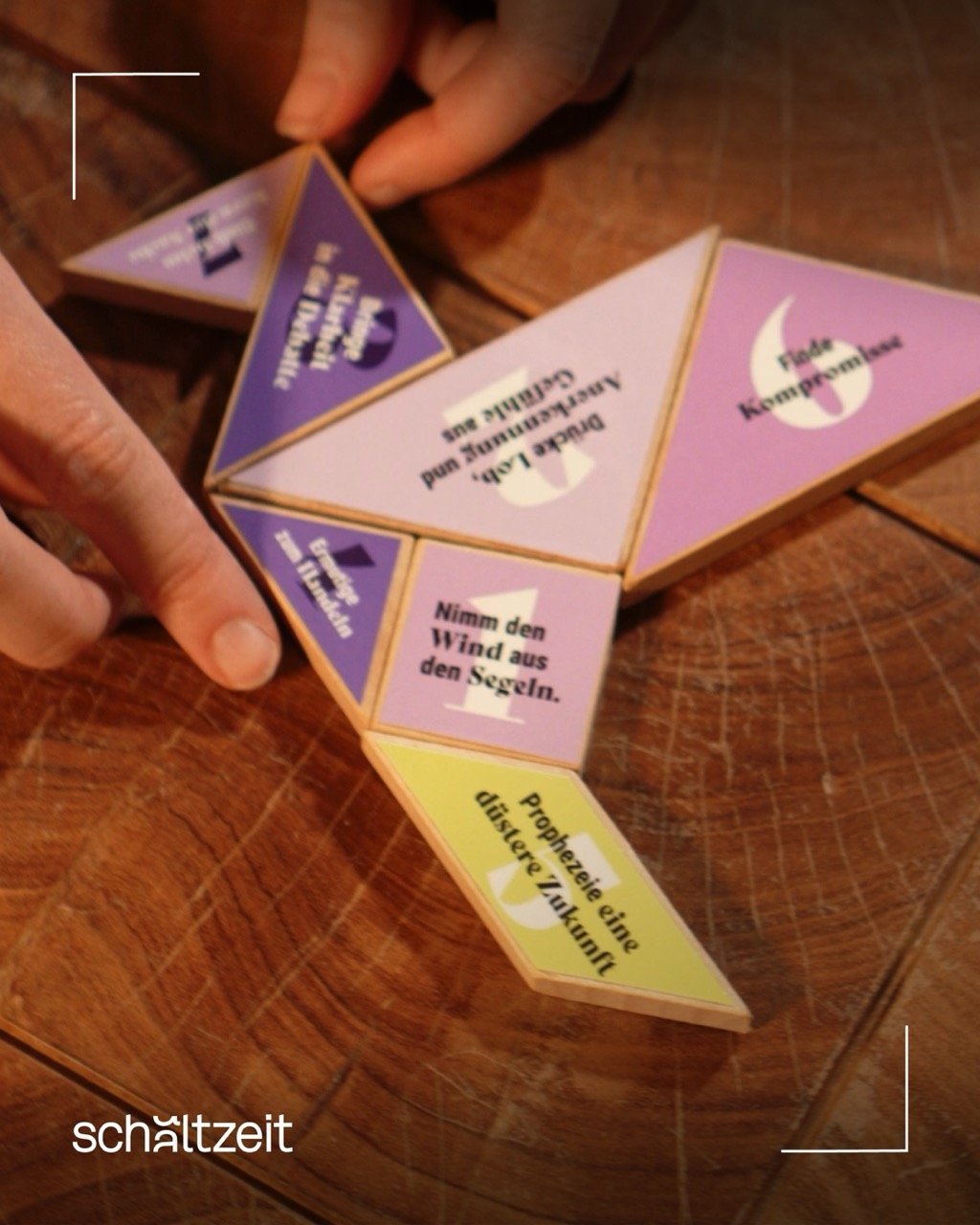
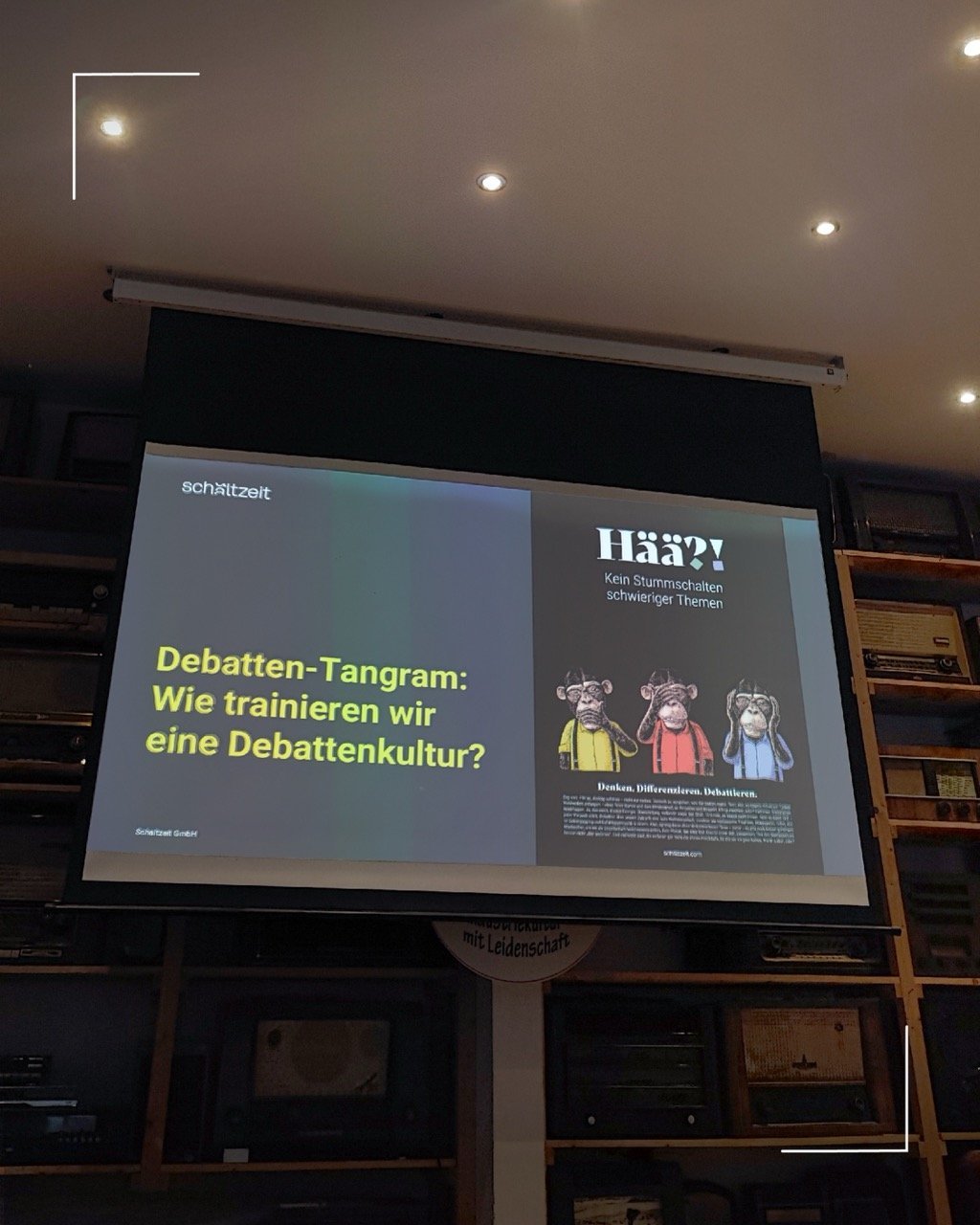
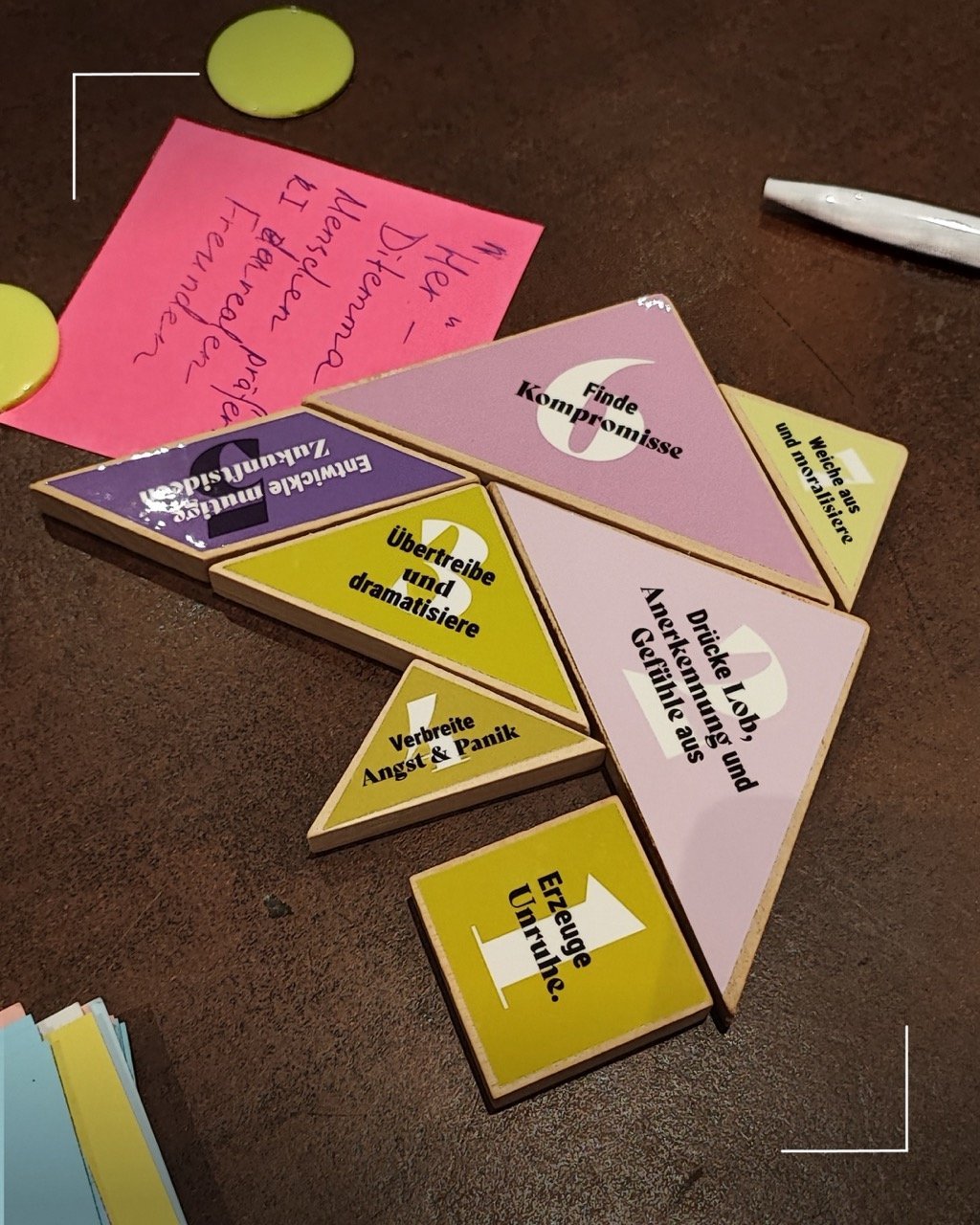
Shaping the future is a debate, an arena of standpoints and opportunities for influence. Disagreement is part of it, whether in small circles or at the larger levels of society. The great art in a democracy is simply this: how do we conduct debates constructively and with a focus on solutions? Bashing biceps or dialogue muscle – the way we argue is a matter of training and practice, and it is crucial for a shared and successful future.
We designed the Debate Tangram to practice constructive dialogue in a playful way. Every piece a standpoint. The goal is to reflect on the mood and discussion patterns of a debate while practicing how different standpoints can come together to form a holistic picture. Time was a bit short – as is probably the case in every heated debate about the future – but there was still plenty of lively discussion in Schöneweide.
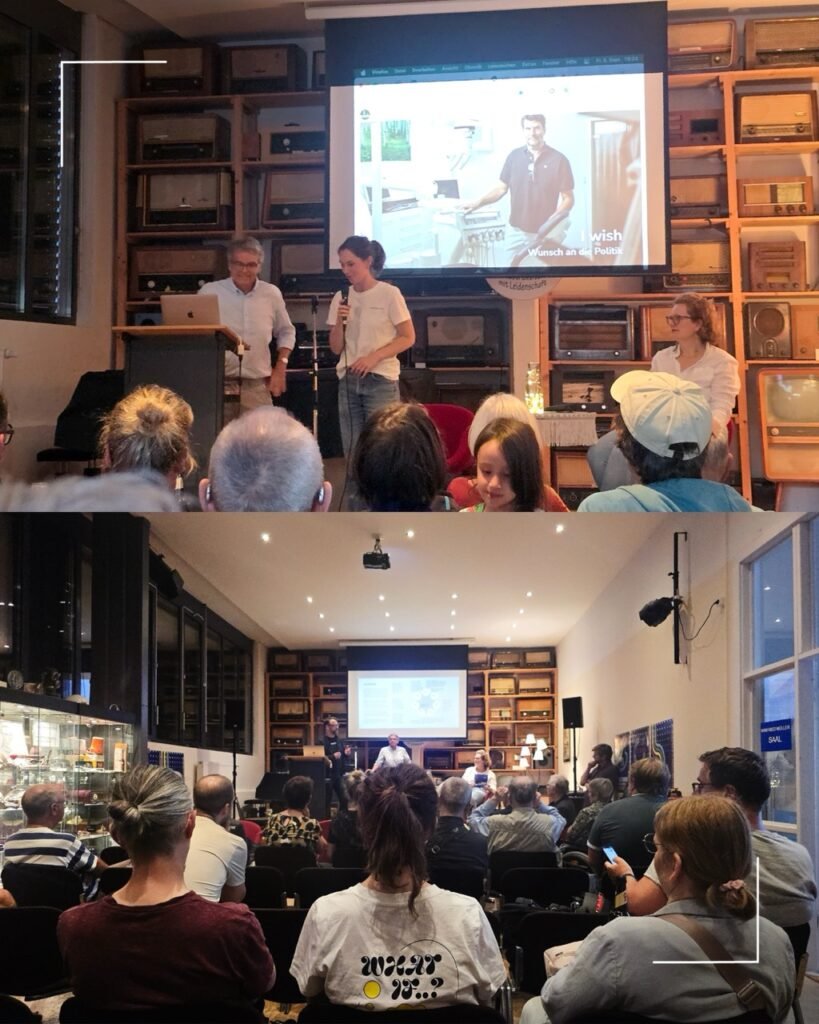
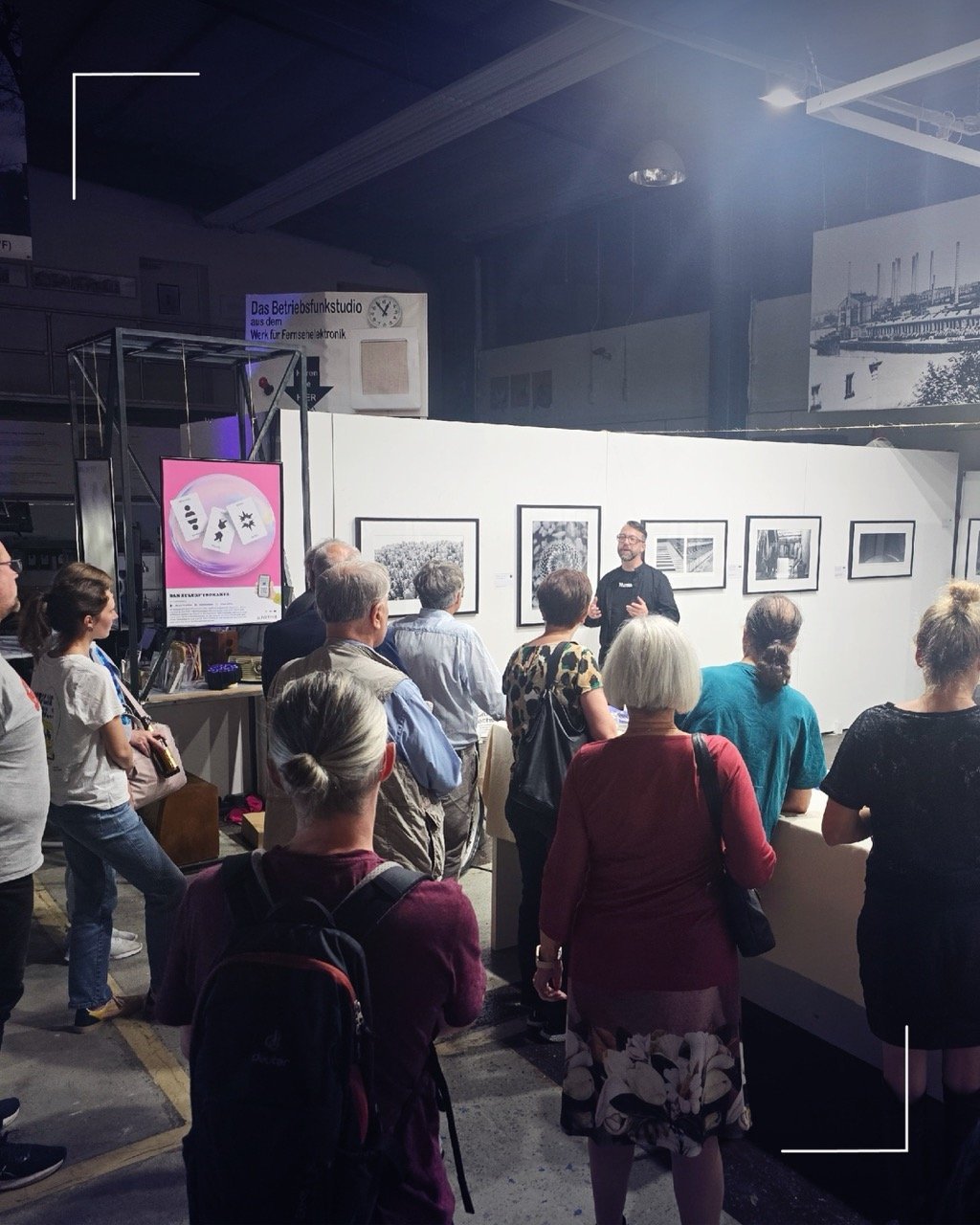
Our gold nuggets from the Biennale
Because there is no single perfect way of dealing with the future, the Biennale’s colorful program is a wonderful opportunity to dive into a whole spectrum of different approaches.
My personal highlights so far:
- Isabella Hermann’s science fiction futures lab, where we were encouraged not to bury our heads in the sand even in a dystopian future, but to look for options for action.
- The photographs by Gerhard Westrich in his project “I wish! Wunsch an die Politik” (I wish! A wish to politicians). He takes portraits of people from all over Germany, records their demands on politicians and wants to hand them over to the Bundestag. A great approach that turns the involvement of ordinary people who feel unseen by politics – something so often called for in the abstract on talk shows – into concrete perspectives.
- We also really liked Sven Bock’s statement: “My personal barometer for the future is water: the way its level rises or falls shows me how we treat our Earth. When we use water carefully, we show that we take the future seriously.”
Since the Biennale runs until October 5, there will surely be more to come – drop by: https://futura-biennale.de/programm/