How Veo 3 & Midjourney 7 are shaking the foundations of digital information
A similar pattern has shaped the image segment: DALL-E 3 was the big media “aha” moment. It was followed by providers such as Midjourney and Stable Diffusion, which offered finer controls and generated more convincing images. Midjourney is now available in version 7 and outpaces other models with its draft mode and visibly better anatomy.
Reality on demand
Anyone who watches Veo clips notices how thin the line between simulation and recording has become.
Even AI detection methods are increasingly failing – and so are humans: a recent study finds that not one but two large language models pass the classic Turing test; GPT-4.5 was judged to be human in 73% of cases.
Epistemic erosion
If texts can already deceive us, what does it mean that videos and images now make the same claim to reality? Classic forms of evidence – photos, film footage, original audio – are losing their probative power. Trust is shifting from sensory perception to metadata chains such as C2PA signatures or hash stamps, which are meant to make origin and editing traceable. Without such “content credentials,” we face information pollution in which the authentic and the synthetic sit side by side like two identical coins – only one of them is gold.
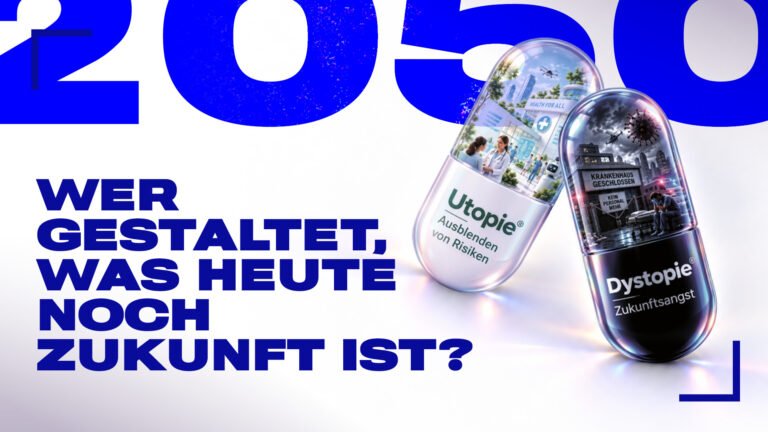
When any scene can be generated at will, the line between the real and the possible blurs. Will information in the future consist of nothing but probabilities? Will its value be measured more by usefulness than by factuality? And who actually owns a reality that is created by algorithms and merely curated by users? These questions are philosophical, but their echo has long since reached practice.
Implications for foresight & futures studies – an in-depth look with a focus on risks
With every new generation of language, image and video models, the bottleneck of futures analysis shifts: the core task is no longer finding information, but proving its authenticity. Security reports already speak of a “second pandemic of disinformation,” because deceptively real AI videos and voices make social engineering attacks possible at everyday speed. The growing quality of synthetic voice deepfakes in particular is seen as a gateway for fraud and identity theft – a scenario that Pindrop and other cybersecurity providers listed as a top risk in 2025.
Where weak signals are rare to begin with, synthetic noise dilutes them until they become indistinguishable. Without hash matching, C2PA signatures or cross-media verification, a viral video that supposedly shows new consumer behavior could always be a carefully staged fake. The paradoxical effect: the more spectacular the “evidence,” the lower its informational value – because it is precisely the most convincing images that are most attractive for disinformation.
Economic scarcity is shifting from production to verification. Reliable proof of origin is becoming an expensive resource: computing power for deepfake detection, expertise in source criticism, legal safeguards against false quotes. As a result, decision cycles grow longer – anyone who wants to assess future trends seriously needs more time and budget to ensure information hygiene. Small organizations risk being left behind in this “proof-of-reality economy.”
A fundamental problem of knowledge assessment
In practice, the question of whether a piece of information is “true” is losing priority to the question of what it does. This paradigm shift is not an academic sideshow but a societal tipping point:
- Trust becomes a commodity. According to a global KPMG study from May 2025, 62% of respondents already consider “verifiable proof of origin” more important than the original content itself – a radical finding that is accelerating the emergence of an entire verification industry.
- Epistemic inequality is growing. Citizens without access to expensive verification tools or trustworthy sources face an information vacuum. The Financial Times warns that deepfakes are causing an “education problem 2.0,” especially among young audiences, because disinformation is more emotionally engaging and therefore favored by algorithms. Those who can afford verification effectively live in a different reality from those who only take part in the open social stream.
- Segmented realities instead of a public sphere. The World Economic Forum Global Risks Report 2025 states that disinformation is the “top short-term risk” to the global order for the second year in a row. When every group draws on its own curated truths, democratic discourse frays into incompatible narratives.
- Education becomes a resilience strategy. Researchers are already comparing the handling of generative media to basic skills such as reading and arithmetic. Without broadly anchoring “simulation literacy” – the ability to tell artificial content from documentary content – an entire generation could lose its epistemic autonomy.
Impossible Challenges
Conclusion
When audiovisual evidence becomes cheap but verifying it becomes expensive, scarcity shifts from generating to justifying. Knowledge thus acquires a new price dynamic: it is no longer the “raw material of information” that creates value, but the seal of trust on its packaging. For society, this means a twofold task: it must roll out digital authenticity infrastructures (C2PA, watermarks, audit protocols) across the board while drastically improving its citizens’ critical media literacy. If both fail, we face a future in which truth is less common ground than a negotiable option – with all the consequences for politics, business, and everyday life together.