The term “Spaceship Earth”1,2 symbolizes our planet and its inhabitants as a finite system in the middle of space. In the 1960s, the metaphor shaped a shift in thinking from a wasteful economy toward resource-conserving sustainability in order to secure the long-term survival of the spaceship’s inhabitants. Canadian media theorist Marshall McLuhan highlighted the responsibility of each individual for the state and future of our planet with the quote “There are no passengers on Spaceship Earth. We are all crew.”
A spaceship on which everyone ultimately has to work together somehow in order to have a future – perhaps also a fitting metaphor for our democracy in Germany? After all, for all the diversity of our opinions, we need to be capable of consensus at least to the point where we can tackle the central challenges of our time together in a meaningful way.
So how capable of consensus is our crew of democrats? Looking at our current debates, it sometimes seems as if the most attractive strategy for some vocal crew members is to win approval for emotional finger-pointing rather than to address the problem areas of our spaceship in a nuanced way – not exactly the safest course through a chaotic, opaque multi-crisis galaxy.
Camps: which hostile camps are dividing the crew?
Is German society breaking apart under the overwhelming, polarizing challenges of an age of polycrises? Concerns about social cohesion are widespread among the population3 and increasingly one hears the diagnosis that our society is divided4. But which camps exactly are facing each other so bitterly? Where do the front lines run? Are there even clearly identifiable large social groups that are at daggers drawn over key issues of conflict and are tearing our society apart?
Over time, social research has developed various models to examine such questions. In the 1990s, for example, the GAL-TAN model was discussed as a more nuanced alternative to “left vs. right.” According to this model, society’s lines of conflict could be analyzed along two poles: “TAN” (traditionalist-authoritarian-nationalist) and “GAL” (green-alternative-libertarian).5
 However, this rests on the question of whether attitudes toward different conflict issues always come as a “package” and thus unite large socio-structural groups – along the lines of: anyone who is open to migration and uses gender-inclusive language is probably also committed to sustainability and questions of distribution. And vice versa: anyone who has a problem with gender-inclusive language is surely also a welfare chauvinist obsessed with resentment toward migrants. There are many everyday clichés describing groups with such bundles of opinions, from the “out-of-touch big-city hipster” to the “conservative country bumpkin.” Yet such schematic camp formations can hardly be demonstrated in studies, as the book “Triggerpunkte”6 by the sociologist trio Steffen Mau, Thomas Lux, and Linus Westheuser explains: “Earlier studies have already exposed as exaggerated the thesis that we are dealing with such classes of conviction, found not only at the margins but cutting across society as a whole. Individual opinions are far more loosely connected than the two-worlds theory suggests.” For example, there are hardly any signs of actual urban-rural conflicts or of generations pitted against each other.
A study by the Konrad Adenauer Foundation makes clear that moderate positions still predominate in our society and that the formation of camps, as often claimed in polarization theses, cannot be empirically proven7. Of course, conflicts exist, but they are not reflected in a clear ideological division between sharply delineated groups.
Inequalities: which conflict galaxies are we traveling through?
Analyzing the conflict landscape of our society is therefore far more complicated than simply pitting idealized camps against each other. Instead of clustering groups of people, Mau and his colleagues look for clusters of topics that trigger disputes: “The decisive theoretical twist is not to break conflicts down methodologically from the outset into a society-wide antagonism between two supposed large groups. Instead, we reconstruct attitude patterns, social anchoring and temporal tendencies of movement in different conflict arenas.”6
They focus on contentious issues in which changes to inequalities are negotiated – be it material conditions, legal frameworks or cultural inequalities through appreciation or disregard.
What is interesting here is which inequalities turn into conflicts. After all, by no means do all existing inequalities become conflicts; many are simply perceived as “normal” and hardly discussed. Inequalities can be addressed in the form of legitimation or critique. And a conflict arises when critique and legitimation of inequality collide.
The following arenas of inequality were analyzed:
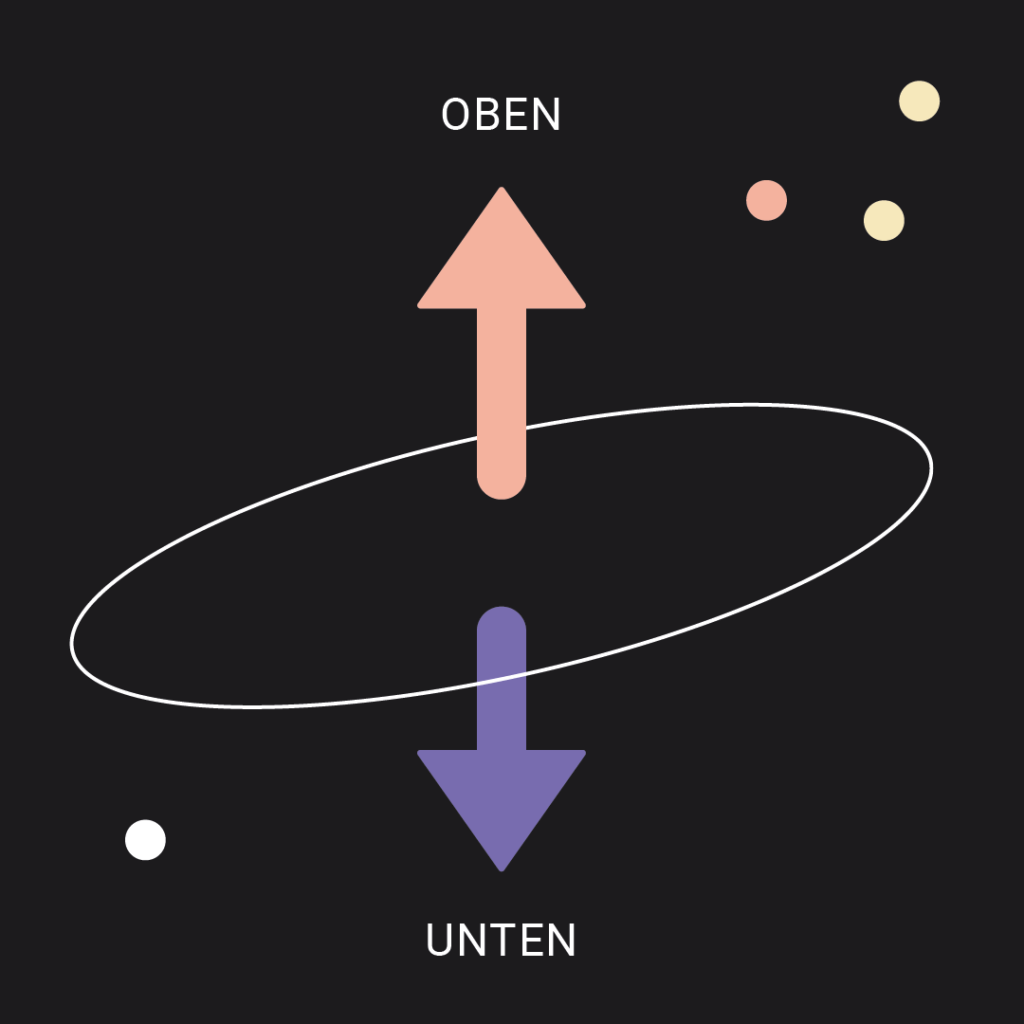
Above – below inequality: Socioeconomic distribution conflicts
Inside – outside inequality: Migration, territorial access, integration
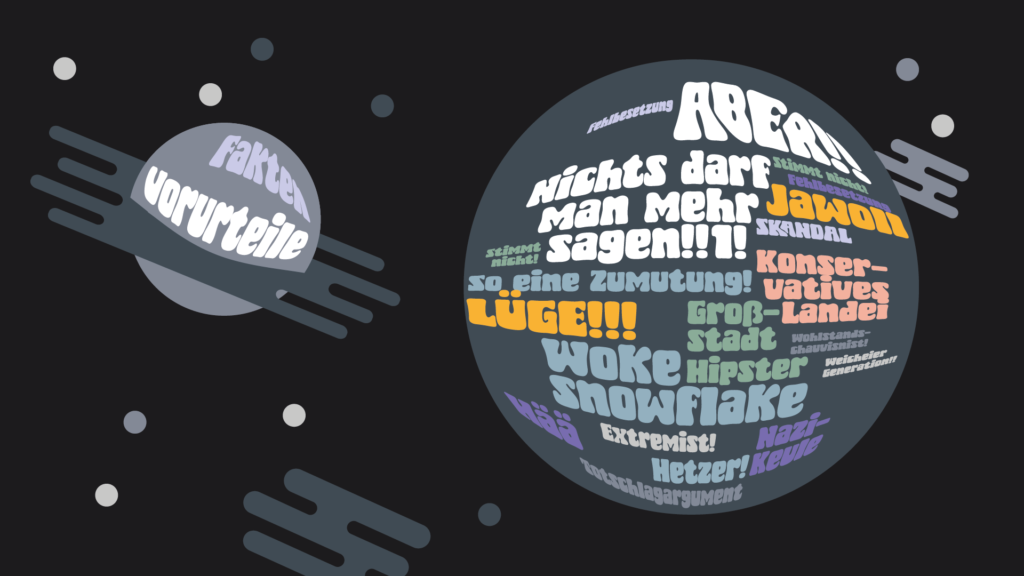
Us – them inequalities: Identity-political conflicts over recognition
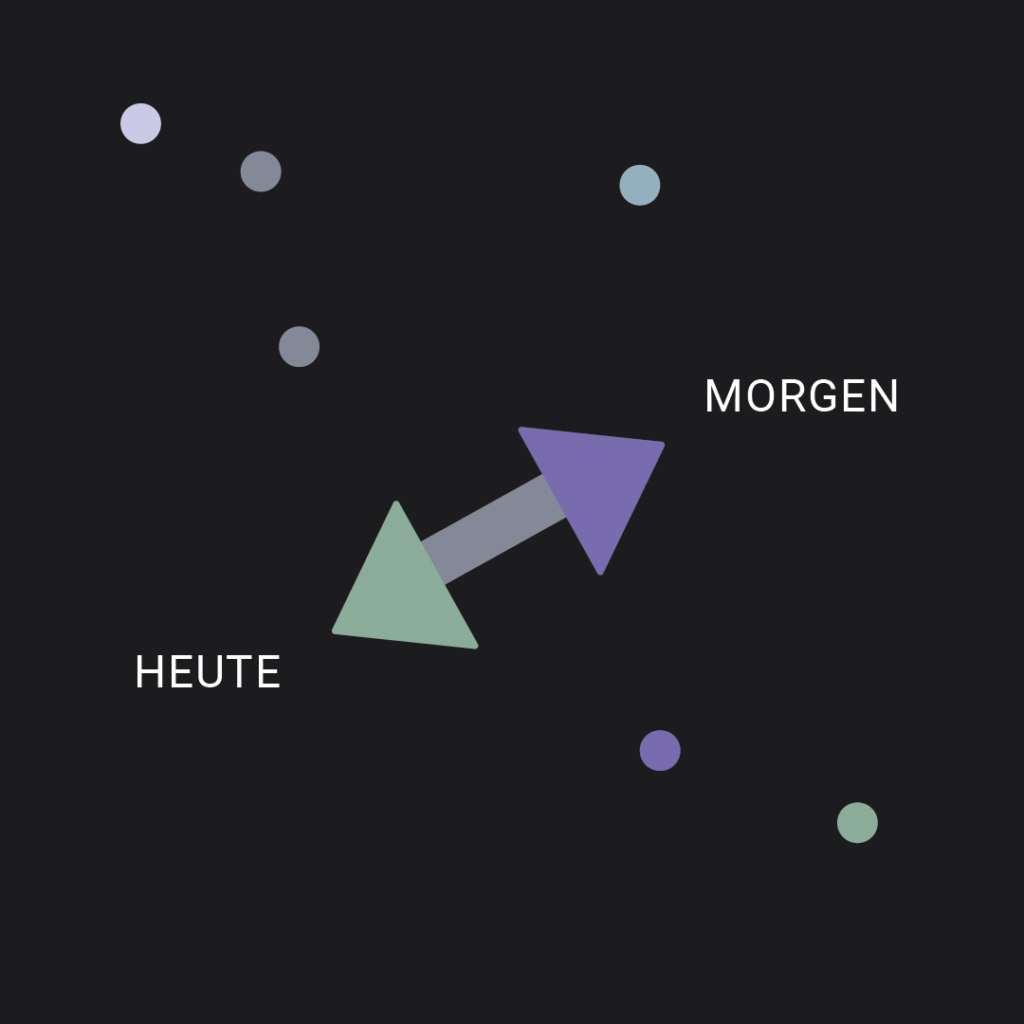
Today – tomorrow inequalities: Environmental policy disputes
Inside – outside inequality
Today – tomorrow inequalities
The surprising thing is: the image of a divided society doesn’t hold. On many fundamental questions about these inequalities, we actually agree to a remarkable degree.
The Konrad Adenauer Foundation study shows that even on hotly debated questions of inequality in social, climate and migration policy, the majority of the population takes middle-ground positions; only a minority holds consistently extreme positions. The political views of party supporters also overlap considerably, so no clearly delineated camps between the parties are visible. Positions do shift over time, but opinions tend to shift in the same direction, without the gaps between the positions of party supporters widening in the long term7.
Who would have expected that? So where does all the commotion on the spaceship come from if the majority of the crew isn’t actually all that divided?
Trigger topics: which meteorites are causing turbulence?
 Where does the heated, never-ending dispute come from? When and where does our consensus turn into dissent? One explanation lies in so-called “trigger points.” These are emotionally charged individual aspects, “detailed questions on which an otherwise existing basic consensus breaks down.” So within the arenas of inequality, there are small topics with such a high potential for outrage that their loud dispute obscures the basic consensus that actually exists. The sociologist trio concludes that the actual lines of conflict in our society do not run along fundamental questions, but rather along questions of detail – which, however, are negotiated all the more loudly and emotionally6. At times so loudly and emotionally that the never-ending dispute gives us the impression that everything is falling apart.
 This is where the so-called “polarization entrepreneurs”6 come into play. The term describes actors who deliberately blow up trigger topics in (actually consensus-capable) debates with the intention of dividing. Through polarizing narratives, they consciously encourage thinking in opposites – with the aim of making political capital out of the uproar they provoke. So perhaps the problem for our democracy is less the complex issues themselves and much more the way we talk about them?
Culture of debate: a plea for seeking consensus on board
The culture of debate is decisive for the success or decline of a democracy. If democratic processes are increasingly associated with endless quarrels that lead nowhere, our spaceship risks crashing into a wall. In their book “Defekte Debatten – Warum wir als Gesellschaft besser streiten müssen” [in German], Julia Reuschenbach and Korbinian Frenzel also warn of the dangers to our democracy that result from a desolate culture of debate. They observe that some people’s attitude toward discourse is best described as “the raised middle finger”: instead of engaging in a nuanced way with complex challenges, it is more attractive to adopt a fundamental “against-it” stance. In some places, the spirit of Political Ash Wednesday – Germany’s annual day of rowdy party speeches – has spread across the entire year, with fatal consequences for all of us4. Because this form of communication and cooperation doesn’t solve problems – it creates new ones.
Back to our spaceship metaphor: if we don’t want our democracy to be swallowed by a black hole of destructive polarization, it is worth practicing healthy debate again. We can demand this of key actors on the one hand and take it to heart ourselves on the other: when we encounter triggering political opinions in our own circles – that is, if we even still keep in touch with crew members whose political views we are skeptical of?
The good news: our crew is not (yet) as divided into hostile camps as it may seem on board. The bad news: unfortunately, this insight isn’t enough to sit back and switch to autopilot. The communicative division stoked by a few loud would-be captains risks leading to an actual division of the entire crew, which would result in a crash landing of our spaceship. Without a better culture of debate, even a basic consensus that may exist won’t get us any further.
 Seeking consensus within the crew on complex questions may be more strenuous than giving in to simple, blame-laden narratives of division. Yet it is by far the more promising course through the chaotic galaxies of our time. So why not use the quietly existing basic consensus as a launchpad for constructive debates instead of only looking at what divides us – real dialogue begins where we focus on what we have in common and approach difficult topics with a cool head and a warm heart.
Break a leg!
PS: The metaphor may not be perfect, since Germany is of course not floating alone in a vacuum. Still, it perhaps illustrates quite well how much we depend on functioning together and that we must accept that in a democracy we can only get through crises together as a society – however strenuous & uncomfortable that may be.
- Boulding, K. E. (1966). The economics of the coming spaceship earth. In H. Jarrett (Ed.), Environmental quality in a growing economy (pp. 3–14). Baltimore, MD: Johns Hopkins University Press.
- Fuller, R. B. (1969). Operating manual for spaceship earth. New York, NY: Simon and Schuster.
- Boehnke, K., Dragolov, G., Arant, R., & Unzicker, K. (2024). Gesellschaftlicher Zusammenhalt 2023: Studie und Ergebnisse. Gütersloh, Germany: Bertelsmann Stiftung. Retrieved from https://www.bertelsmann-stiftung.de/fileadmin/files/Projekte/Gesellschaftlicher_Zusammenhalt/Gesellschaftlicher_Zusammenhalt_2023/2024_Studie_Gesellschaftlicher-Zusammenhalt-2023.pdf
- Reuschenbach, J., & Frenzel, K. (2024). Defekte Debatten: Warum wir als Gesellschaft besser streiten müssen. Berlin, Germany: Suhrkamp Verlag.
- Wurthmann, L. C. (n.d.). Werte und Wertewandel. Bundeszentrale für politische Bildung. Retrieved December 1, 2024, from https://www.bpb.de/kurz-knapp/lexika/handwoerterbuch-politisches-system/202212/werte-und-wertewandel/
- Mau, S., Lux, T., & Westheuser, L. (2023). Triggerpunkte: Konsens und Konflikt in der Gegenwartsgesellschaf: Warum Gendersternchen und Lastenfahrräder so viele Menschen triggern. Berlin, Germany: Suhrkamp Verlag.
- Roose, J. (2021). Politische Polarisierung: Gesellschaftliche Trennlinien und ihre Auswirkungen auf Demokratie und Zusammenhalt in Deutschland. Berlin, Germany: Konrad-Adenauer-Stiftung. Retrieved from https://www.kas.de/documents/252038/11055681/Studie+Politische+Polarisierung.pdf/a36c964d-1d6a-66d1-288b-b22629110fd7