
“Climate change is an existential threat to humanity, and a lack of political will and vested corporate interests are preventing us from tackling it. I worry about the future my children will inherit.”
- Lorraine Whitmarsh, University of Bath
When need becomes necessity
Need describes a particularly dire situation in which someone urgently requires help. In this case, that someone is us as a society. The Lancet Planetary Health study surveyed 10,000 children and young people between the ages of 16 and 25 in 10 countries. 75% of them are afraid of the future; 83% said that we as humans have failed to take care of our blue planet. 45% of these young people struggle with this climate anxiety in their everyday lives. These phenomena are described extensively under the terms climate anxiety, climate grief, and eco-distress.
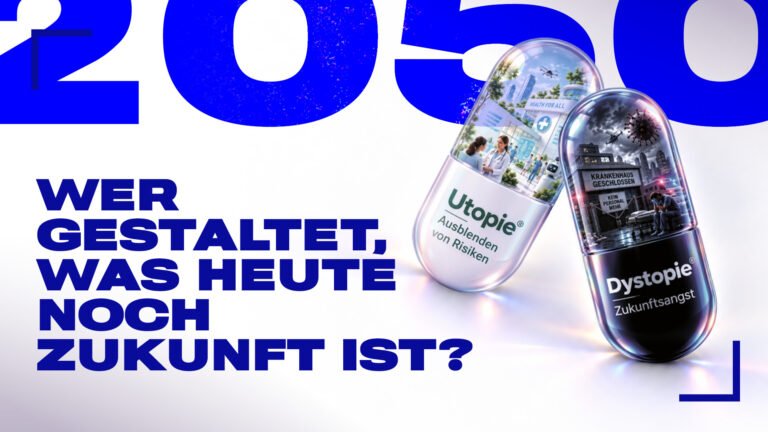
When researchers are glad not to have any more children because they have dystopias on their minds, then it is high time to act. The images of the future they describe include famine, mass migration, conflict, war, and struggles over resources (e.g., water).
Distress leads to self-defense
You all know organizations like Extinction Rebellion, Fridays for Future or Letzte Generation. Under the banner “Aufstand der Letzten Generation” (Uprising of the Last Generation), Berlin and many other German cities have been brought to a standstill regularly since 2022. What unites the members is the concern that we as humans, and especially political decision-makers, are gambling away our blue planet by doing nothing.
So that we can all go on doing nothing, we warn each other about the other side. A classic intervention/manipulation.
We are torn, misunderstood, and not united in our actions. Whether it's fear of old-age poverty, of our professional future, economic crises, climate change, or war. Do we just need to treat these “someones,” or shouldn't we as a society face the future with confidence in general? Not resist the self-defense, but let ourselves be shaken up. So that the planet and society win.
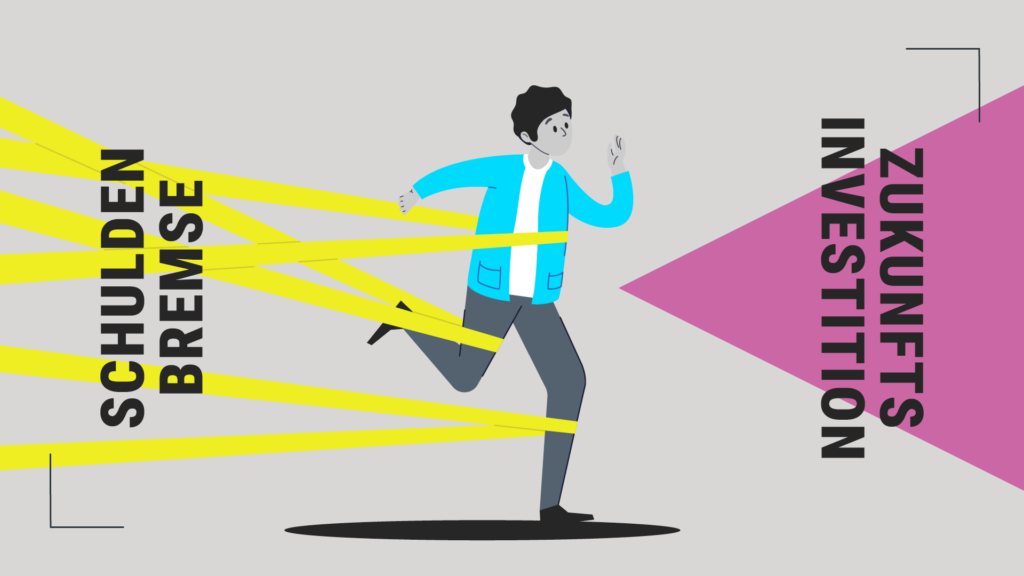
So that we don't have to stand up, we hide behind barriers like the debt brake. We'd love to do more for the climate, but unfortunately it's not possible right now. It can't be financed, some murmur. According to science, it's not about the money (only 22% see finances as a bottleneck). After all, even Extinction Rebellion (XR) was founded by the company Compassionate Revolution Ltd in the first place. The logo symbolizes how time is running out for the Earth and biodiversity. And time is ticking. How much Schaltzeit (literally: switching time) will humanity need, and how much time is left to change things?
Some of you may think that ship has sailed. The game is over; we can't win. Let's just colonize another planet. But as of today, there simply isn't one. So should we let a term like the debt brake stop us? The whole point is wanting to achieve something!
Need must lead to necessity
What unites the two is certainly not climate anxiety, but rather concern about the economy and strengthening Germany as a business location.
When it comes to consumption, it's easy to get citizens excited. Buy today, because it's Singles' Day, Black Friday, Black Week, or Cyber Monday. We know that bringing purchasing decisions forward can pay off. So why don't we understand this when it comes to investments? Why don't we collectively take away our climate anxiety by turning need into necessity?
- On November 28, 2019, the European Parliament declared a climate emergency for Europe.
- On December 10, 2019, Berlin declared a climate emergency.
- On December 12, 2020, the UN Secretary-General called on all countries of the world to declare a climate emergency.
- More than 38 countries have done so since then.
- Unfortunately, Germany is not among them!
At 66% of GDP, Germany's debt is relatively low. Our trading partners such as the UK (102%), France (112%), Japan (260%), and the USA (121%) have less financial leeway. We can afford to invest now. The EU plans to spend €1.8 trillion on the European Green Deal from 2021 to 2027. Germany accounts for about 23% of EU GDP. If the EU can invest €257 billion per year, then Germany, in line with its economic output, can invest around €60 billion of its own on top.
Let's become climate and Earth investors. Use your labor, your resources, and inspire others. Instead of luxury consumption, long-term climate investments wherever possible. Bring forward whatever you can. Learn about climate change. Plant, cultivate, and use resources carefully.
- We debate.
- We communicate about our actions
- We act consciously.
No one should have to identify with “I’m feeling blue.” With its emergency clause, the debt brake may be particularly well suited to setting up the Climate and Transformation Fund (KTF) right now and allowing citizens to participate in it.
In times of need, society comes together; we build our own emergency relief instruments to tackle the climate emergency together. True to the motto: “Release the brakes, take responsibility yourself, and draw energy from taking action.”
I'm in. Are you?
- Hickman, C., Marks, E., Pihkala, P., Clayton, S., Lewandowski, R. E., Mayall, E. E., Wray, B., Mellor, C. & Van Susteren, L. (2021). Climate anxiety in children and young people and their beliefs about government responses to climate change: a global survey. The Lancet Planetary Health, 5(12), e863–e873. https://doi.org/10.1016/s2542-5196(21)00278-3; Link: Climate anxiety in children and young people and their beliefs about government responses to climate change: a global survey – The Lancet Planetary Health
- ‘Hopeless and broken’: why the world’s top climate scientists are in despair | Climate crisis | The Guardian