Skip to content
Schaltzeit newsletter “Neues aus der Schaltzentrale”
Subscribe now

Neues aus der Schaltzentrale

Sign up now to receive regular updates directly to your inbox. All at an appropriate delivery interval that respects your time and attention.
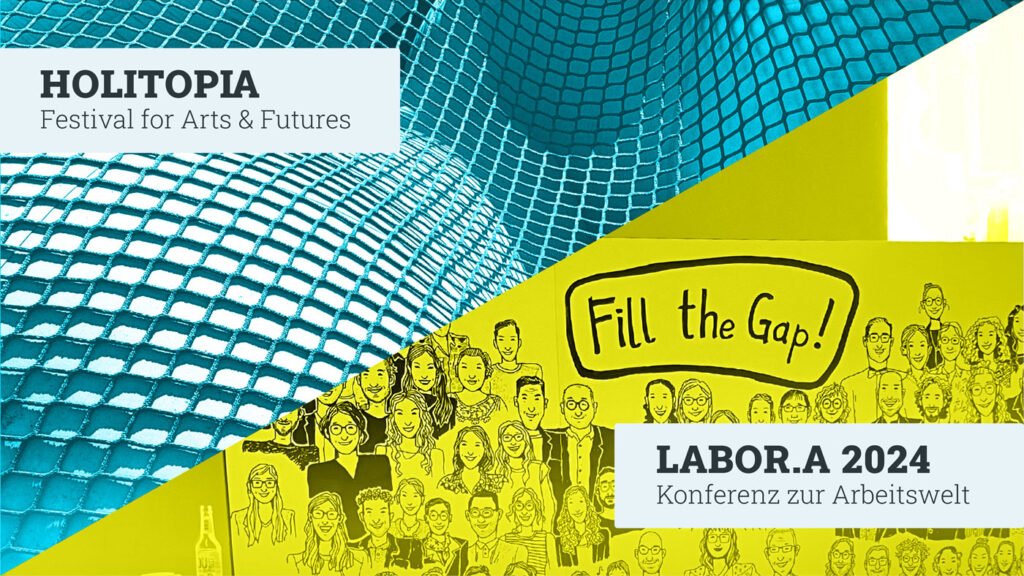
Cover image for the post: Input for our team: #schaltzeit_unterwegs

Input for our team: #schaltzeit_unterwegs

Last week, we were out and about at two events to gather some input for our daily work. Julia visited LABOR.A, while Ashley spent time at the HOLITOPIA Festival. Here are a few notes on our impressions.
LABOR.A – conference on the future of work​
Intro Julia
Julia Gnatzy
Project Coordinator, Futures Literacy

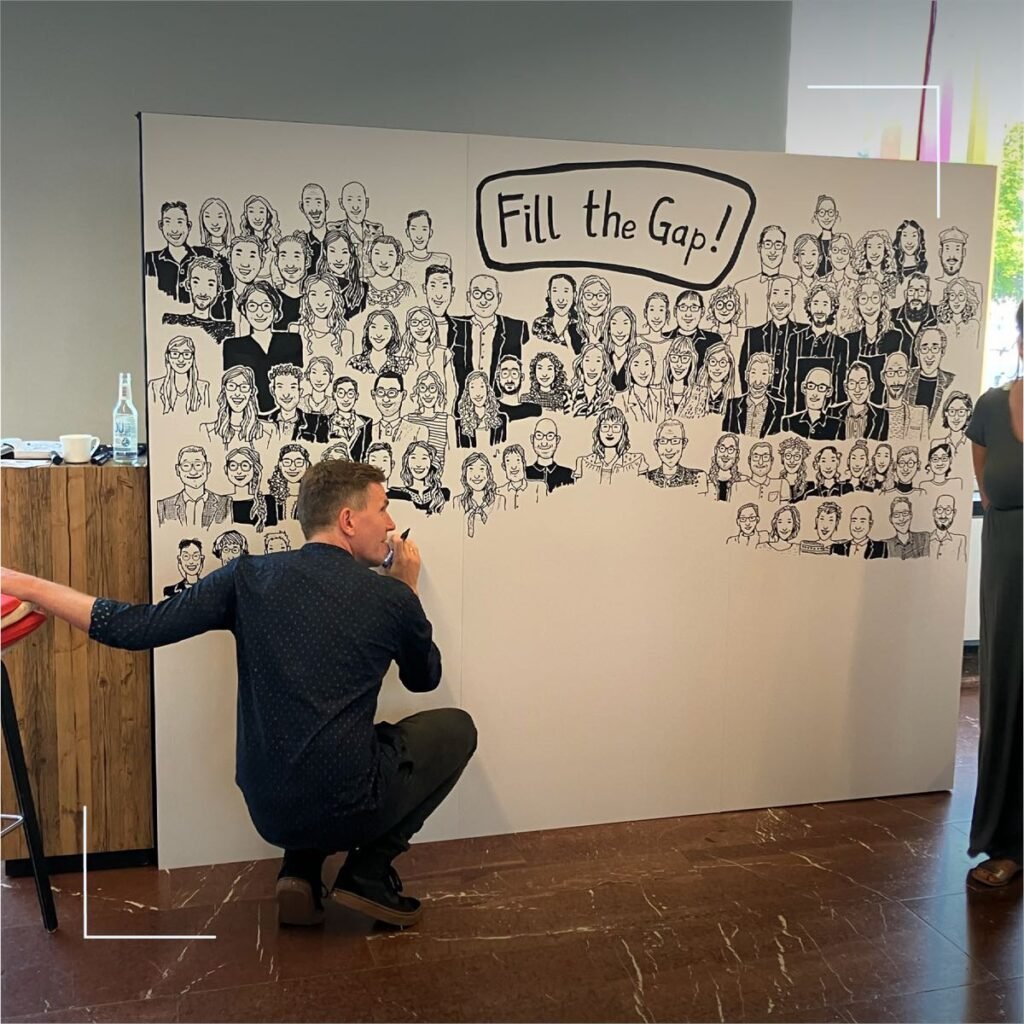
Fill the gap – gaps as a starting point for change

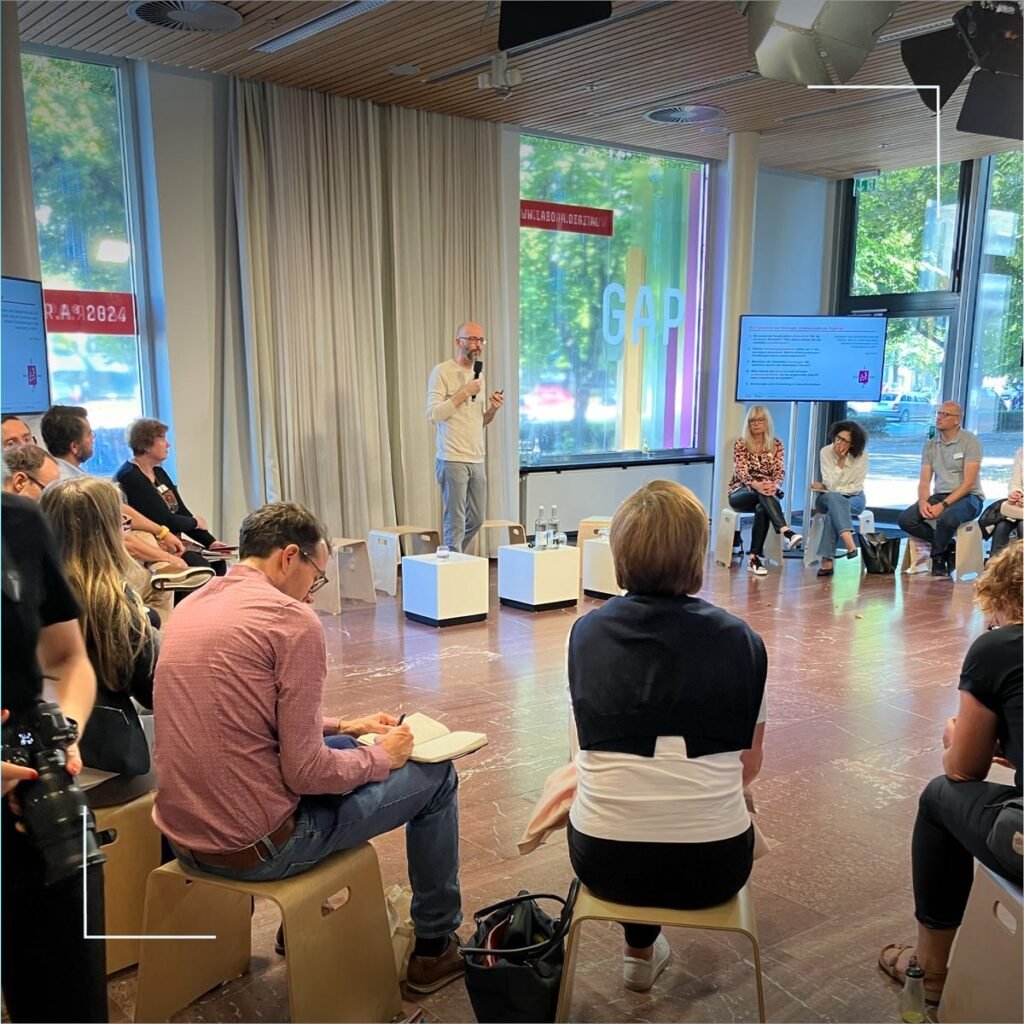
LABOR.A 2024, organized by the Hans Böckler Foundation, was held under the motto “Fill the Gap – Which gaps should and must be filled?” This title left no doubt that it was about more than just the status quo. The opening by the managing director of the HBS emphasized that contradictions do not have to be resolved in isolation. Rather, we should endure them together and find common ground that way. But what does it mean to find solutions together? And where exactly are these gaps that need to be filled?

Transformation instead of change: the path to a social-ecological future

The talk “Future or Backlash? Social-Ecological Transformation Processes” impressively showed how the term “transformation” offers society a greater incentive for change than the often weaker-sounding term “change.” This makes clear that people prefer clear, comprehensible and gradual processes for tackling climate change and economic challenges. It was particularly emphasized that all generations – especially younger people – must be included in this process. New perspectives not only offer solutions to existing problems but also open up paths we haven’t seen before.

Job crafting and algorithms: opportunities and challenges for the world of work
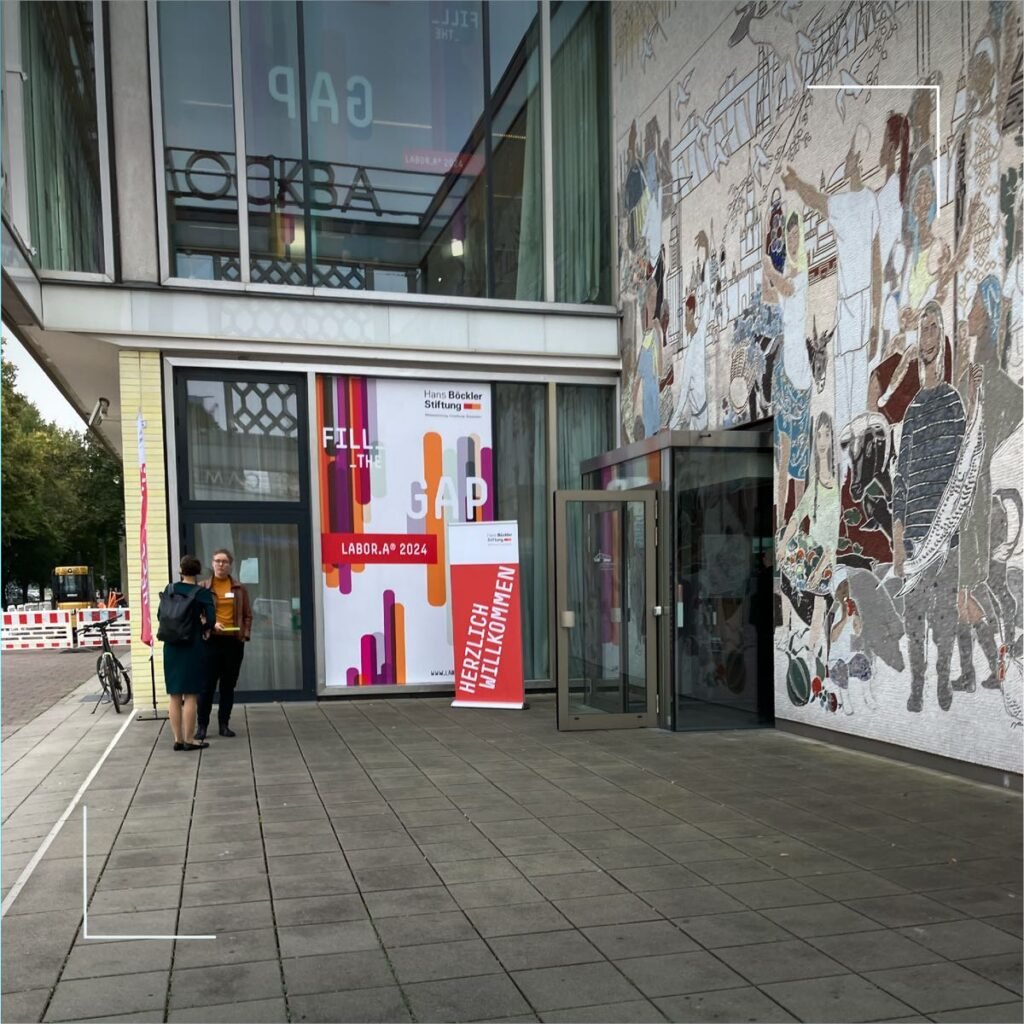
Another highlight was the talk “Job Crafting in the era of algorithmic management,” which showed the possibilities of data-driven technologies. They can help make workplaces more flexible and people-friendly. But here, too, important questions arise: how can we ensure that algorithms serve people instead of overwhelming them? And how can we maintain the balance between work demands, mental health and fair pay in a technology-driven world of work?
SZ unterwegs Labora Holitopia 2
SZ unterwegs Labora Holitopia 1
SZ unterwegs Labora Holitopia 5

Transforming economic models: shrink or grow?

The closing discussion “(R)ausgewachsen? Auf der Suche nach ökonomischen Modellen, die Gute Arbeit erhalten” (“Outgrown? In search of economic models that preserve good work”) featured an intense debate on the future of the economy. Particularly exciting was a solution based on the folding theory, in which Anders Levermann made clear that conventional growth models are reaching their limits. A reorganization of economic forms based on the circular economy and the economy for the common good was discussed as a possible way to master the balancing act between economic shrinkage and sustainability.

Conclusions: transformation as a shared process

For us at Schaltzeit, this means we need to focus our work on designing participatory, long-term transformation processes. Strategic foresight serves as an important link between societal challenges and scientifically grounded solutions. To shape a truly sustainable future, we must bring all relevant stakeholders into the dialogue – from the young generation to established decision-makers.

Next steps: what can we actually do?

  1. Strengthen participation: We should focus on establishing genuinely participatory processes that include all parts of society. Token participation undermines trust in change processes.
  2. Understand transformation as a process: Transformation must not be seen as a static measure. It is an ongoing process that all stakeholders must actively help shape.
  3. Promote new economic models: It is time to think beyond conventional growth logic and establish economic models that put sustainability and the common good at their core.
  4. Use technology wisely: Algorithms and data analysis must always be used with the goal of promoting mental health and job satisfaction without increasing workloads.
  5. Broaden perspectives: Different viewpoints and cross-generational approaches must be encouraged more strongly in order to develop innovative solutions to complex challenges.

Conclusion: finding the courage to transform

LABOR.A 2024 was an inspiring wake-up call that made clear that transformation is more than a buzzword. It is a continuous, shared process that challenges us to break new ground and fill the gaps that have so far gone unnoticed. By redistributing responsibility and strengthening everyone’s participation, we lay the foundation for a sustainable and just future.

For everyone interested who couldn’t attend LABOR.A this year:
We can look forward to this year’s recordings in the LABOR.A media library. Recorded talks from previous years are already available at the following link.

HOLITOPIA – Festival for Arts & Futures​
profile ashley
Ashley Grunwaldt​
Orientation Intern​
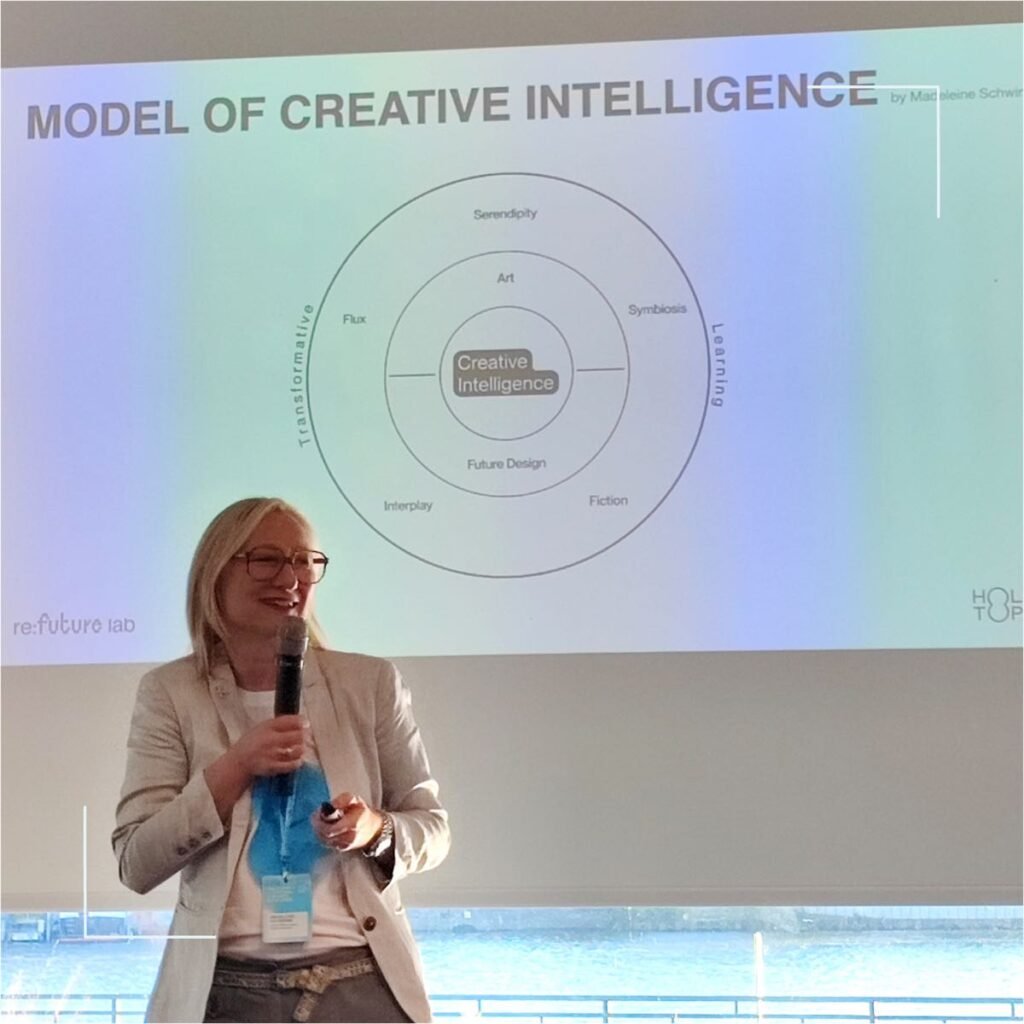
The Holitopia Festival for Arts and Future in Berlin is an event that connects art, design and architecture with the big questions of our time. It sees itself as an interdisciplinary lab where participants from fields such as art, science and business come together to develop creative visions of the future. Under the direction of Madeleine Schwinge, the festival offered visitors a platform to actively take part in workshops, explore new materials and exchange ideas on topics such as sustainability, climate change and technological developments.

What do design and democracy have to do with each other?

The connection between design and democracy runs deeper than it first appears. Design influences how we perceive information and interact with one another. Projects like the Demokratiedeckel (“democracy coasters”) show that design can be used as a means of fostering political dialogue. These beer coasters, printed with questions, are meant to get people talking to each other and to strengthen democratic principles.

Frankfurt, the current World Design Capital, also underlines the importance of design for societal transformation. Through innovative design, cities like Frankfurt can foster cohesion and make democratic processes more inclusive. For me, this shows that design is a key tool for strengthening both participation and public dialogue. You can find more information at the following links:

The positive impact of design: innovation and dialogue

Design, storytelling & creative practice make complex topics tangible. Ways of thinking are actively stimulated as I experience installations with all my senses and confront the questions about the future they raise. A workshop in which fungal cultures were grown vividly showed how sustainable materials could be used in architecture as facade insulation.

The downside: quick fixes and the risk of superficiality
As inspiring as design can be, it also carries the risk of superficiality. In our fast-paced world, there is often pressure to find quick solutions to complex problems. A central point of the Holitopia Festival was its critique of the tendency to see design as a quick fix, without considering the depth of the questions at hand. Design that only satisfies short-term needs loses its transformative power. Design doesn’t always have to deliver answers; rather, it should allow for uncertainty in order to lead to new questions. So take more deliberate “Schaltzeiten” – moments to switch gears. Think in slower intervals and take time for deconstruction and depth.
SZ unterwegs Labora Holitopia 6
SZ unterwegs Labora Holitopia 3
SZ unterwegs Labora Holitopia 7

Design is a bridge between disciplines, far more than a purely aesthetic tool.

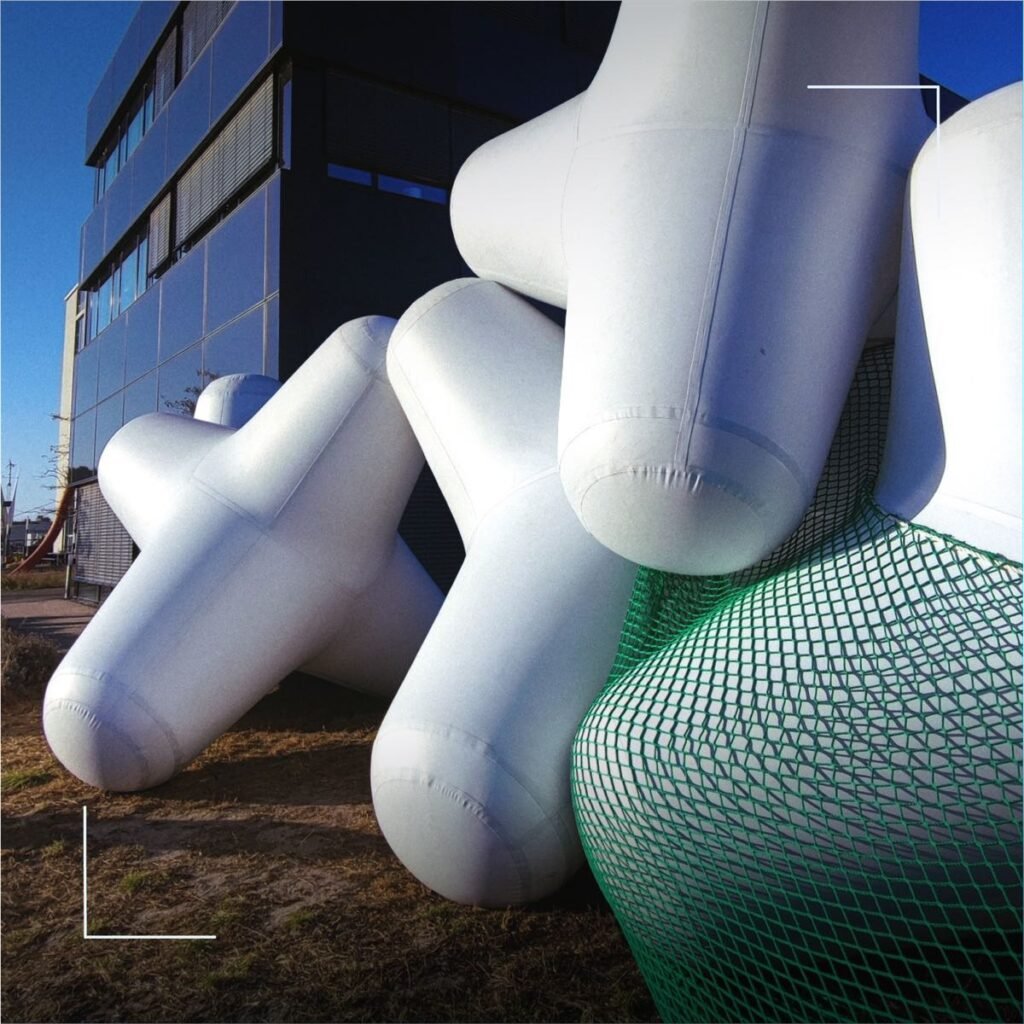
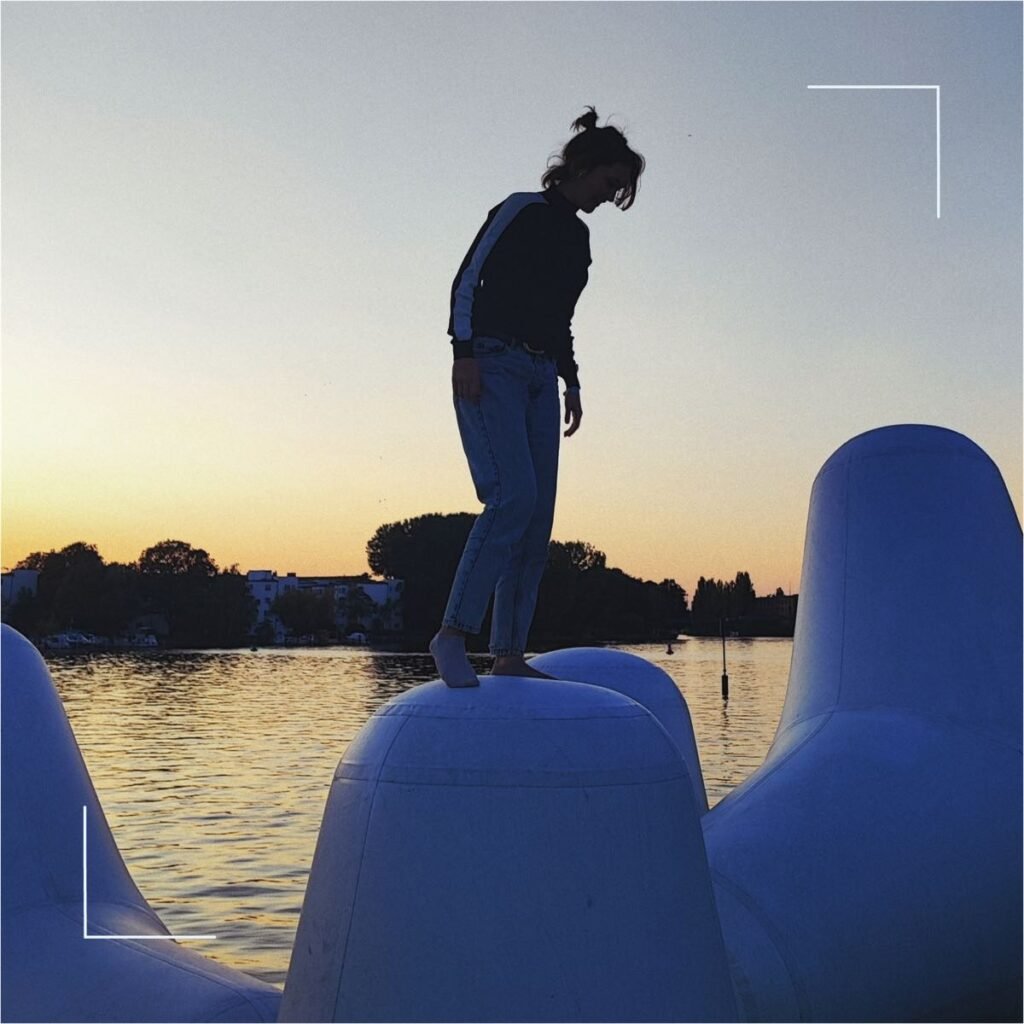
Design fosters communication. It acts as a catalyst for interdisciplinary dialogue. Artists, scientists, designers and architects come together and devote themselves to the process of making an impact. This exchange leads to new constructs of thought that move people. Take the artwork of the tetrapods, the four-legged creatures that came ashore from the water. Holitopia combines design, communication and art into futures you can experience. It makes them walkable, climbable and tangible. You can even sit on the work Biket by the two artists Daniel Hölzl and AB Franklin while you philosophize.

This bridging function can also be seen very concretely in the Gay Bomb. How do you transform a military weapon and create a symbol for social change?

Queer Technologies showed us how. The “Gay Bomb” was originally a controversial military idea of the US Air Force from the 1990s, aimed at confusing enemy troops by releasing pheromones. This idea of weaponizing human sexuality shows how far removed society was from being queer-friendly.
Queer Technologies takes up this questionable concept and turns it into a powerful symbolic tool for questioning power relations and social norms. In their project, the “Gay Bomb” stands metaphorically for an “explosion” of change – it shows how queer identities can make existing structures “explode” in order to create new spaces for inclusion, freedom and self-determination. By understanding queerness as a transformative force, the concept offers a critical examination of the instrumentalization of sexuality while opening up new perspectives for social change.

Future rhythms

Dr. Derek Woodgate presented Future Rhythms. This work explores progressive culture in hidden spaces and DIY science that are radically shaping our future. It builds on earlier works such as Future Frequencies and Future Flow, which developed innovative techniques like “think like a DJ” and “rhizomatic thinking.” It focuses on the transformation of concepts such as identity and aesthetics and explores hybrid species, cyborg technologies and visions of the future such as levitation and teleportation. This research identifies radical “weak signals” that foster new paradigms for the future and for creative thinking.

Conclusion

The Holitopia Festival made clear that art and design can have both positive and negative effects on the future. The festival is a potpourri of the understood and the not-understood. It sees itself as an invitation to pause and think. A facilitator for futures, as Madeleine Schwinge also describes it. Let’s stay curious, resonate with one another, simply get started and, through doing, develop an attitude that in turn sets others in motion. The last thing we need in times of AI-ification is to standardize our thoughts. Then we lose our aura and our transformative power as individuals. We need a creative intelligence that drives us.

You can learn more about the Holitopia Festival in the interview with Madeleine Schwinge on Deutschlandfunk Kultur [in German]:
More interesting articles

Fast geschafft

Please confirm

To confirm your registration, please click the link in the confirmation email from us!