In 1969, the United Nations (UN) proclaimed “World Telecommunication Day” for the first time. It is held every year on May 17. In 2006, it was expanded to “World Telecommunication and Information Society Day” to reflect the importance of new media such as the internet.
The name “Telecommunication Day” sounds very technology-focused. But what can information and communication technologies actually achieve? How do they help meet the UN Sustainable Development Goals? How can technology help
Better access to knowledge
A central goal of telecommunications is to give people better access to knowledge and to foster independent opinion-forming. In just a few decades, access to information has grown so enormously that we can tap into an unprecedented global knowledge base. Today we can count ourselves lucky to be able to retrieve information at the push of a button in all kinds of places around the world – well prepared and fully written out. And this is exactly where the challenge begins.
The bubble phenomenon is widely known. It describes how people on social networks and online platforms mainly encounter information and opinions that confirm their own views, because algorithms filter content based on past user behavior. This leads to isolated information bubbles in which users mostly see like-minded content, which reinforces their existing views, narrows the diversity of perspectives and makes dialogue across different opinions harder.
On a technical level, echo chambers and social media algorithms that are often tuned for outrage prevent people from finding relevant and nuanced information. But perhaps the problem lies not only in the technically caused “not finding the information,” but also in a human “not wanting to find it” – a kind of FOFO (Fear Of Finding Out)? After all, who likes to overturn their settled worldview just because it’s disrupted by inconvenient facts?
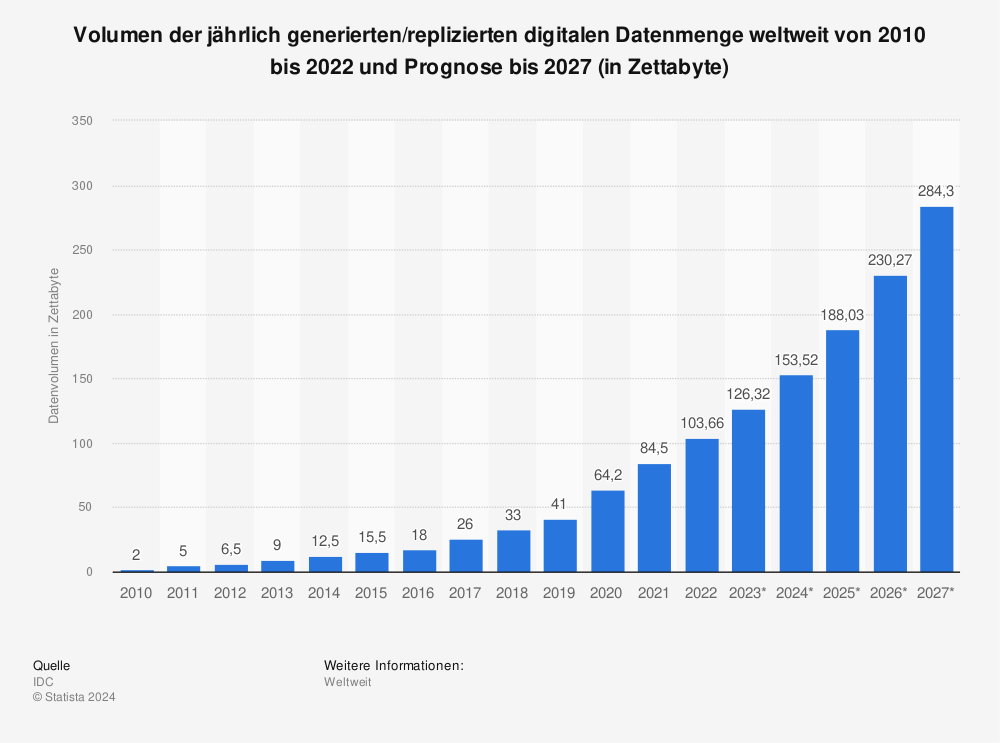
Besides bubbles and echo chambers, the sheer volume of information is another well-known challenge. Even with the ambitious goal of getting a nuanced picture, we have to cope with a sheer flood of information.
Content
Right now, we also have to ask ourselves how to deal with communication based on generative AI. What do we do when the amount of content grows exponentially through generated content?
Communication created with generative AI will certainly change the telecommunications landscape. On the one hand, we rely on AI to cope with the flood of information, for example through automated scanning. On the other hand, we rely on AI to automatically create our own content and push interaction with our network. Content is created in a fraction of the time, and we share it right away. We interact with accounts via bots to scale our reach. My bot gets along brilliantly with your bot in the comment sections – a perfect match, perfect for my ranking in the algorithm.
For some time now, there have also been fears that the rapidly growing amount of generated content could become AI’s undoing. This phenomenon (known as model collapse) occurs when AI models are trained on too much AI-generated content, which introduces distortions.
At our Schaltzeit evening on leap day 2024, the term “Great Content Garbage Patch” also came up in the context of ‘generative AI.’ The “Great Content Garbage Patch” describes the huge amount of low-quality or useless content flooding the internet. The metaphor criticizes the tendency to mass-produce content that is often neither informative nor of high quality – much like the plastic waste in the “Great Pacific Garbage Patch” pollutes the oceans. This leads to information pollution that makes valuable information harder to find and contributes to users’ cognitive overload.
Are we littering our communication universe? Are we humans at risk of falling under the spell of the algorithm?
Transformation begins in our minds rather than in technology
You might get the impression that telecommunications is both the root of and the solution to many social problems. As suggested above, the mantra “more technology, better technology, safer technology” doesn’t seem to be the whole solution.
Perhaps the transformation of communication begins less with technological progress and more in our minds. How far does human reach really need to go? Is it merely a means of influencing algorithms and communities? Or do we communicate because we have meaningful content and need visibility?
One example is how we use social media: do we post to create real connections and share valuable information, or just to gain likes and followers? Another example is companies that increasingly base their communication on data analytics and audience targeting – are they forgetting about genuine dialogue with their customers in the process?
Let’s avoid quantifying human relationships technically. Let’s only communicate when we really have something to say. Instead, we should foster authentic and meaningful conversations based on real substance.
To put it bluntly, sound creates counter-sound. On a social network, a single tone quickly turns into background noise or a bang. A quote from Nate Silver describes exactly this problem, the loss of clarity: “The noise is increasing faster than the signal.”1
Let’s look out for each other! For a more mindful approach to communication – one that pays attention to our human well-being and to the messages. For communication hygiene that turns FOMO (Fear Of Missing Out) into JOMO (Joy Of Missing Out). For a mindful approach to our minds, whose attention should not be a plaything or fair game for an attention economy. Do we want to serve the algorithm, or would we rather try
Hopefully not just on this day of communication. I believe we can do it. What do you think? We humans are not chained to technology; we have access to our awareness and our intuition. Let’s use them!
1 (Silver, N. (2012). The signal and the noise: Why so many predictions fail-but some don’t. Penguin.)