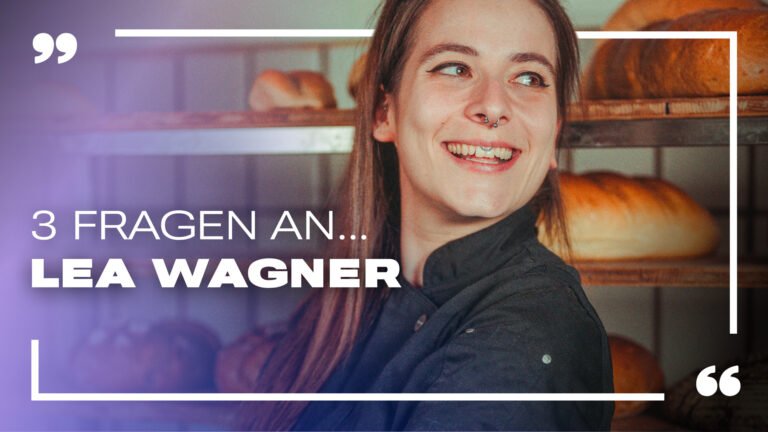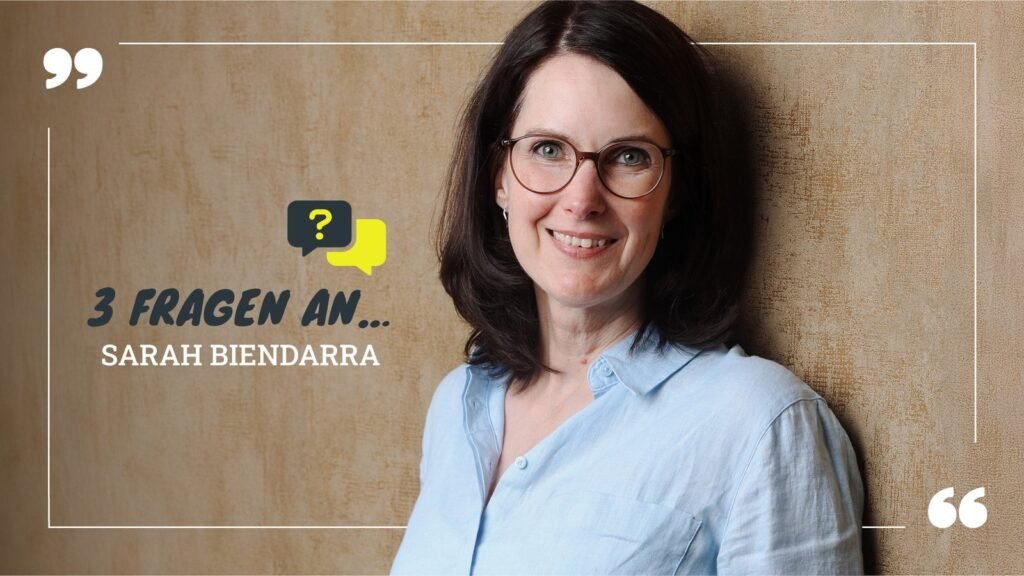

Why does your blog utopiegestalten.de exist, and how do you shape utopias yourself, for example for the work culture of tomorrow?
Sarah: The idea of bringing my thoughts together in a blog originally grew out of a frustration that had been building for months: news fatigue, polarizing, dystopian social debates, one-sided faith in technology, few constructive narratives – I wanted to do something about that. The book “Zukunft: Eine Bedienungsanleitung” by Florence Gaub led me to futures studies. My goal with this blog project is to document my personal learning journey into futures and utopias and, in doing so, to inspire other people to engage with the topic, convey confidence, and put our own agency back in the foreground.
For me, “utopias” are desirable futures that we can give shape to. When it comes to work, for example, that means enabling flexibility. When people can arrange their weekly working hours and their workday flexibly, work can be better adapted to different phases of life – whether for family, hobbies, or volunteering and civic engagement. At my employer, comspace, we put this into practice with our ‘Work from Anywhere’ concept: our employees can work anywhere in Germany and, through workations, across Europe or around the world.
Another example is self-efficacy. Work goes well when we can use and build on our strengths. When we feel appreciated and can act autonomously. This striving for autonomy and personal or professional growth is an important component of the future of work. At our company, we make this possible, for example, through a high degree of self-organization in how work is designed.
For me, a desirable work culture also means that companies take responsibility for society. We do this, among other things, with our initiative #WirFürDemokratie, through which we have been standing up for democratic values in everyday working life for two years.
What does a contemporary work culture mean to you, and how do we shape it together?
Sarah: By a contemporary work culture, I mean conditions that allow work to adapt to life as well as possible, enable self-efficacy, and value social responsibility.
For me, “together” is the key word when it comes to shaping it. Companies and their employees are diverse – and the approaches to good, contemporary work should be just as diverse. Input from outside helps, for example through best practices or inspiration from other organizations. But the real magic happens in dialogue: when needs are heard, expectations can be voiced, and business conditions are taken into account. Then it becomes possible to develop and test solutions together.
In concrete terms, this means, for example, creating spaces for exchange so that relevant topics can come up and be addressed. We do this, for example, by regularly holding internal Open Spaces whose agenda is set by the colleagues themselves.
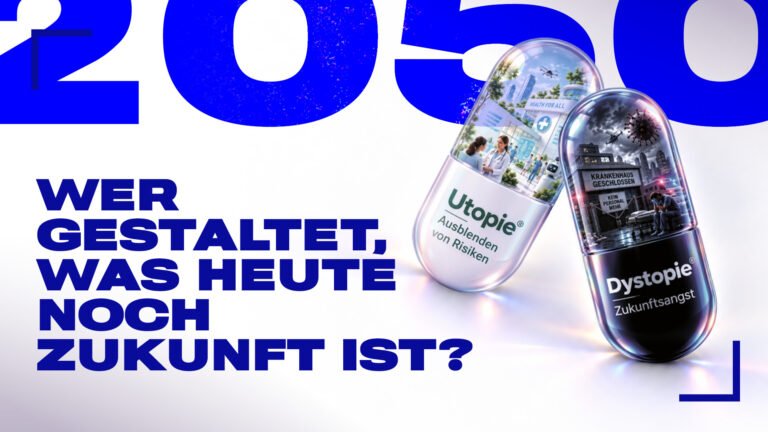
Why must utopias not contain dystopias for other people?
Sarah:“Utopias should acknowledge the complexity of our world and include as many different perspectives as possible. That's why an important question for me is: Who am I overlooking in my vision of the future right now? Who would be disadvantaged by this idea?
Utopias are always a mirror of their time – you can see that as far back as Thomas More: in his famous Utopia, slavery was taken for granted, which is unthinkable from today's perspective.
When we shape futures, we should therefore try to have as few blind spots as possible. The best way to achieve this is to democratize the discourse about futures.
Work that strengthens us – not exhausts us. But for whom, exactly?
An example: in a desirable version of the future – let's call it the Effective Work Society 2040 – we reinvent work as something that fits into life. Flexible, strengths-based, healthy. People work where they flourish – sometimes by the sea, in the mountains, or in the cultural hub of their choice. They take time off when body or soul needs it. What they do builds on their strengths and is valuable to society – visible, recognized, fairly paid. I really like this vision. But I also know: this utopia has blind spots that we need to shed light on along the way!
- Who are the privileged in this vision? Probably well-educated knowledge workers with access to remote work.
- Who does this vision leave out? For example, people in the low-wage sector or in care professions (education, nursing).
An important question now is: What could a desirable future of work look like for these people, and how do we shape it so that the knowledge-work utopia doesn't cast the shadow of a dystopia that excludes or disadvantages them?
For example:
- Make the debate about futures of work more inclusive – through low-threshold information, internal forms of co-determination, and opportunities for participation across as many professions and industries as possible.
- Let as many professions as possible, especially essential ones, participate fairly – with structural access to fair pay, flexibility, development opportunities, and co-determination – and safeguard flexibility collectively through employee representation, internal participation formats, citizens' assemblies, and flexible working-time arrangements and accounts.
The future must not be an elite project – it should be conceived as inclusive, diverse, and accessible to all. Our central concern should therefore be to shape the future of work so that it dominates no one and renders no one invisible, but instead enables participation and good work for as many people as possible.
We thank Sarah for her time and her thoughts on desirable futures!
Sarah's reading recommendations for anyone who wants to shape the future:
“Zukunft: Eine Bedienungsanleitung” by Florence Gaub [in German]. A comprehensive introduction to futures studies and its significance for our everyday actions.
“Zurück zur Zukunft” by Marcel Aberle and Markus Iofcea [in German]. This specialist book offers a combined approach of foresight and possibility-space analysis for organizations.
“Pantopia” by Theresa Hannig. A refreshing counter-vision to the many tech-driven dystopian scenarios, in which a general fintech AI works for the good of humanity.