
In our “3 questions for…” section, we regularly interview experts on topics that will have a lasting impact on the future of organizations and society. From software development and artificial intelligence to strategic foresight and attitudes toward the future, sustainability, and dealing with fears about the future — we shed light on the trends and developments that help us think and act in a future-oriented way.
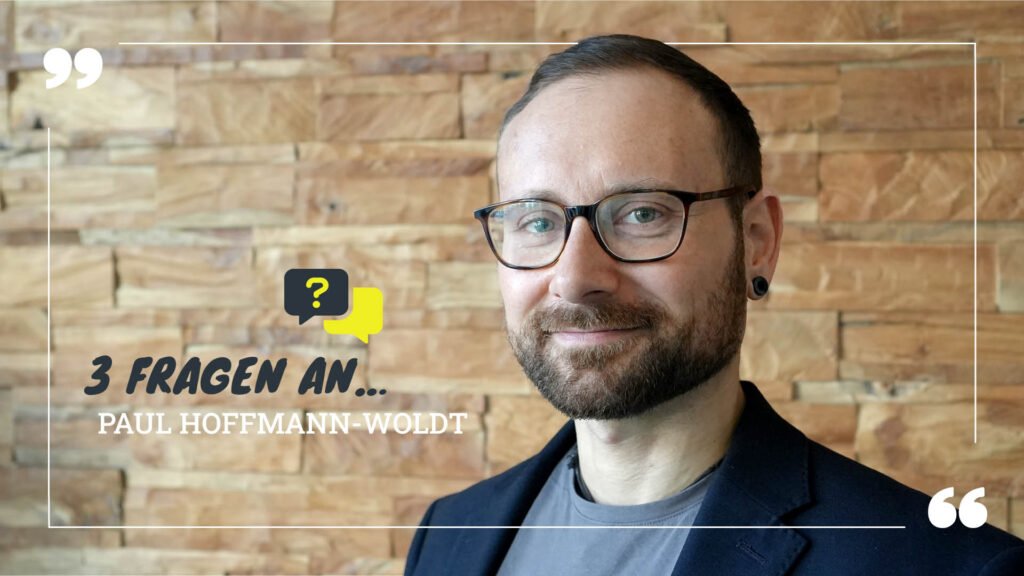
This time we're talking to Paul. He is a self-employed coach and life advisor and part of our shared office. Lately, Paul has been focusing on how we can empower people to make better-informed decisions and shape their future more actively.
Life is full of decisions – some are easy, others difficult. As a coach, Paul spends a lot of time on how people arrive at decisions and how they can develop a positive attitude toward deciding. This topic matters so much because decisions allow us to influence our own path and actively shape our future ourselves. The difficult decisions in particular can feel paralyzing and unsettling at first, yet it is precisely these challenges that are essential for personal growth and change.
By making decisions, we consciously shape our future and strengthen our self-efficacy.
Why is it important to listen to our gut feeling when making decisions?
Paul: Each of us carries an inner compass of values and an intuition that we can't always access consciously. This intuition is based on our life experience and the feelings we have about a particular decision. This inner compass, our gut feeling, is just as important as the rational, conscious level of a decision. So my tip is to engage deeply with your own inner values, feelings, and intuition, to perceive them consciously, and then to bring them into the decision-making process in a reflective way.
How do decisions affect our self-efficacy?
Paul: Every person has an inner need to be able to make a difference for themselves and others – we strive for efficacy. Decisions are a central element in experiencing this efficacy, because they always involve a degree of uncertainty about their outcomes. Through decisions, we see immediately what impact our actions have on ourselves and on others around us. This is how we experience self-efficacy and realize that we ourselves have the power to actively change things in our own lives and the lives of others.
How does fear of the future keep us from making decisions, and how can we overcome it?
Paul: Decisions always involve uncertainty – no matter how much information we gather, we will never have absolute certainty about the future outcome. This is exactly where our fear of the unknown often kicks in. This fear of the future paralyzes us, consciously or unconsciously, and keeps us from making decisions in the first place. Often this is because we don't engage enough with the possible future scenarios.
My advice, then, is to deliberately engage with the various possible future scenarios during the decision-making process and make them tangible and relatable. That takes away the fear's power. Once you see that you can handle various possible outcomes and aren't stepping helplessly into the future but shaping it actively and consciously, the fear of the future shrinks and decisions become easier.
Thank you, Paul, for sharing your insights!
- To book a personal appointment with Paul, take a look at his website:
Paul Hoffmann-Woldt – Coach/Life Advisor - Interested in workshops on the topic? Then take a look here as well: Workshop: Reflecting on Decisions – Which Pitfalls Influence Your Judgments?