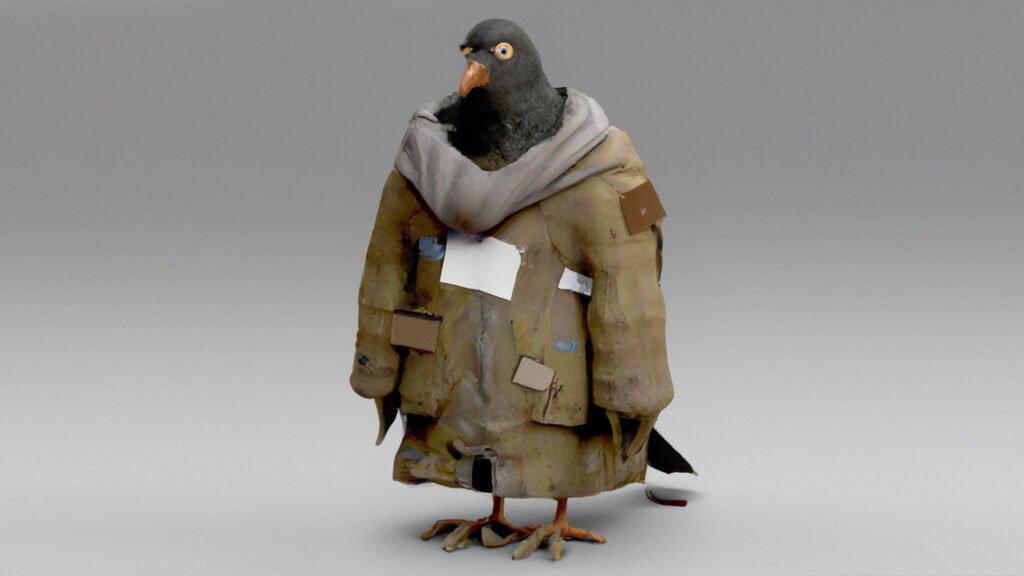

Few people are probably aware that city pigeons were once domesticated animals kept by humans. So they are the descendants of our pets, dependent on us, and we see them every day in our cities and suburbs. Why do we get upset about them when we ourselves “caused” them, and why do we try to drive them out of our spaces by preventing them from nesting and settling?
People like to avoid what they don’t want to see. Whether it’s pigeons or the homeless, who seek shelter in shopping arcades, under bridges, or in side streets and want to carry on with lives into which systemic hurdles have often forced them. “Hostile architecture” – also known as “defensive architecture” – is a way of driving these “symptoms” out of public space. At first glance, this happens inconspicuously and is often perceived as a decorative element, which is what makes it so dangerous. Elements of urban design are used in such a way that the behavior of the homeless is restricted and steered to the point where they cannot make certain places their “home” either. Design is used to restrict physical behavior. And it prevents anyone from resting or setting up a place to sleep on a park bench. Other examples include sloped windowsills, benches with armrests, water sprinklers, and trash cans with extra-small openings.
Our war on wildlife: now birds are not allowed in trees...?! Pigeon spikes spotted in Clifton, Bristol above a car park. Has anyone seen this before? How is it allowed?!
— Jennifer Garrett (@JMAGarrett) December 18, 2017
📷: thanks to Anna Francis pic.twitter.com/NuG9WvYBMj

Decoratively curved bench that makes lying down difficult. 20 examples of how cities have “solved” the problem of homeless people sleeping rough, at Curioctopus (image: Curioctopus.de)

Park bench with armrests that makes lying down impossible (image: The Ludlow Group)
What should happen in the future so that we do more than just alleviate the symptoms?
First of all, the homeless must be seen as part of society, whose needs are guaranteed to be met. They should be given protection instead of just protecting everyone else from being bothered. It is also morally questionable to drive the homeless away without giving them sufficient alternatives. Practical options include expanding social housing, simplifying applications for social benefits, expanding social work, and providing free public toilets. Existing overnight shelters also often make things even harder for the homeless, for example by requiring a bank account, proof of insurance, or excessive fees, which under certain circumstances is impossible to manage.
“Nicht mal das Mindeste” (“Not even the bare minimum”) – Disarstar has published a political video statement on homelessness and inequality of opportunity in Germany

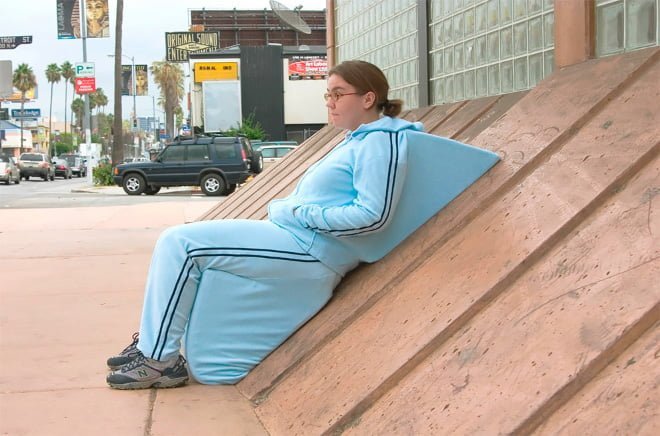
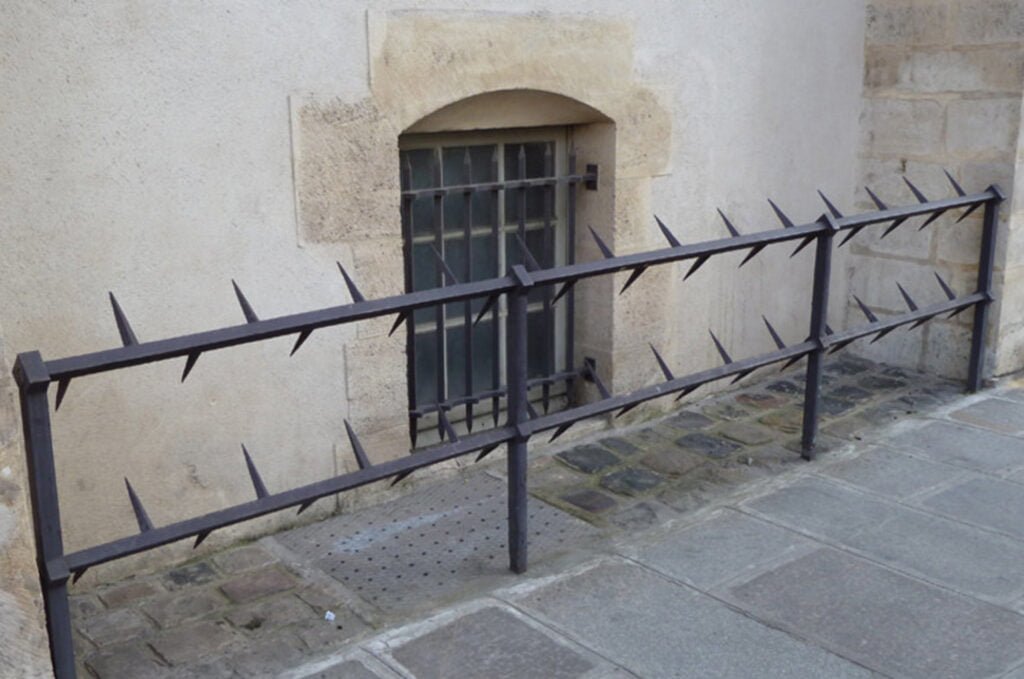
Did you notice that the words “people” and “humans” were used in this article for everyone except the homeless? And if not, why do you think you didn’t notice? Perhaps the first step toward seeing everyone as part of society and guaranteeing them their human needs happens in each individual’s mind. We should strive for architecture and urban planning in our cities that not only protect privileged people but also don’t deny less privileged people entry into society like an inverted prison.
Further links on hostile architecture
- Woher kommt die Stadttaube – Ruhrpottmöwen e.V. (ruhrpottmoewen.de)
- NICHT MAL DAS MINDESTE – YouTube
- Disarstar: Dieser Rapper flext obdachlosenfeindliche Architektur weg | Zündfunk | Bayern 2 | Radio | BR.de
- The great debate: Is hostile architecture designing people out of cities? – CNN Style
- Armlehnen und Metallstacheln: Wenn Architektur feindlich wird – Kurt
- Obdachlosigkeit in Deutschland: Einfach kurz mal sein dürfen – Kolumne – DER SPIEGEL
- The great debate: Is hostile architecture designing people out of cities? – CNN Style
- Hostile architecture – Wikipedia
- Gitter, Dornen, Stacheln: Architektur, die sich gegen Obdachlose richtet – Architektur & Stadt – derStandard.at › Immobilien
- The Discussion On Hostile Architecture: A Public Service Or Infringement On Human Rights? (theludlowgroup.com)
- Feindselige Architektur: 20 Beispiele dafür, wie Städte das Problem des Biwakierens von Obdachlosen „gelöst“ haben – Curioctopus.de
- Briten installieren Anti-Vogel-Spikes auf Bäumen | nw.de
- Fotostrecke Anti-Obdachlosen-Architektur (fluter.de)
- Artist Creates Wearable Workarounds For “Hostile Architecture” (sadanduseless.com)