
Co-Creation Between Strategy, Design, and Collective Futures Work
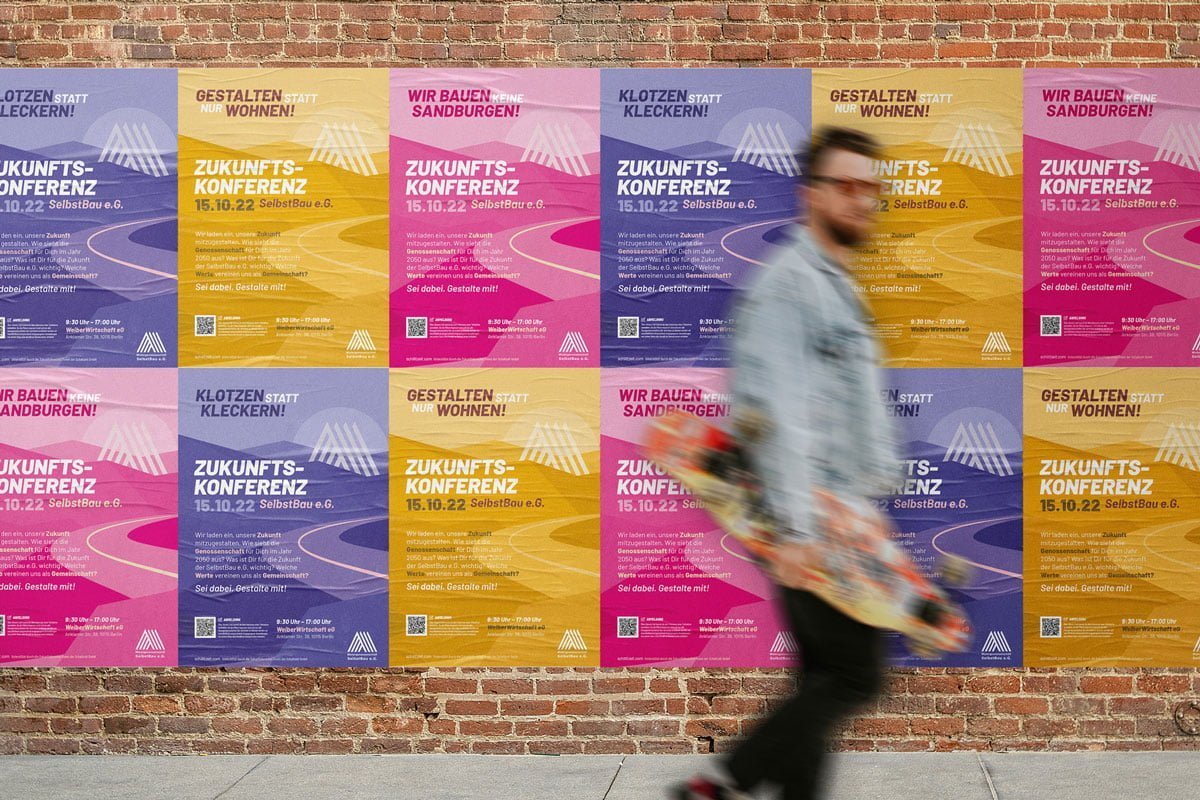
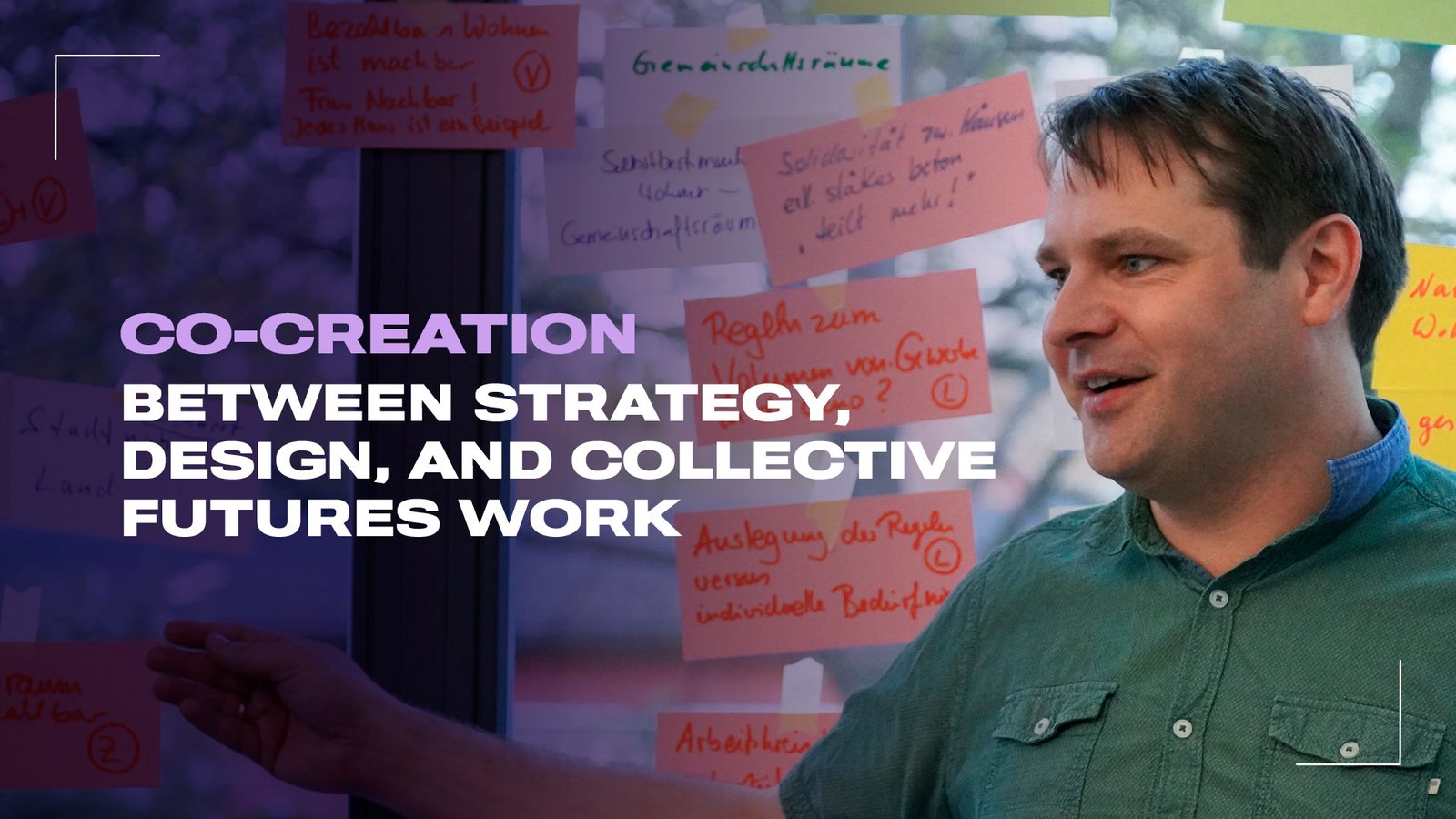
This is precisely where the mission statement process that we at Schaltzeit designed and facilitated together with Ellery Studio came in – as a co-creation architecture that interweaves strategic organizational development, design, and participatory futures work.
Why Mission Statements Are More Than Texts
A mission statement is not an internal position paper. It is a central communication instrument that creates identification, shapes collective self-understanding, and sets strategic guardrails for an organization. For it to fulfill this function, it must simultaneously be connectable to different perspectives, reflect complex fields of tension, and yet be clearly, concisely, and future-oriented in its formulation.
Especially in organizations with high technical, regulatory, and social complexity, mere text production is not sufficient for this.
Mission Statement Work as a Structured Discovery Process
From our experience at Schaltzeit, robust mission statements do not emerge in the short term, but as the result of a longer-term, methodologically guided process.
This begins with participation: first, the existing self-understanding of an organization is gathered – through conversations, workshops, interviews, and iterative feedback loops. This is then deliberately enriched with future perspectives, external requirements, and strategic ambitions.
A central working step is deconstruction: roles, values, narratives, and implicit assumptions are taken apart, examined, and reassembled. Only from this combination of collective self-inquiry, analytical decoding, and joint reconstruction does a mission statement emerge that does not merely describe who you want to be, but robustly captures who you are and how you can evolve.
From Text to Visual Language: Mission Statements as Designed Orientation
A decisive step in this project was understanding the mission statement not exclusively as text, but as a designed orientation instrument.
Together with Ellery Studio, the mission statement was deliberately translated on two levels:
- linguistically – into clearly formulated values, attitudes, and action premises
- visually-narratively – into a visual language that structures complexity, condenses meanings, and makes collective identity tangible
This dual translation is not an aesthetic addition but a strategic lever: visual language functions as a cognitive anchor that creates orientation, frames discussions, and remains effective in the long term.
Strategy deliberately follows this process only afterward. The mission statement forms the normative and cultural framework within which strategic decisions can be developed coherently, connectably, and sustainably.
Co-Creation: When Design and Foresight Interlock
A central element of this project was the close collaboration with Ellery Studio, whose approach understands design not as visualization but as a strategic thinking tool.
A current example is the book “Heat Pumps, Renewables & Other Hot Stuff,” an infographic novel that makes the European heating transition accessible through visual narratives and designed metaphors.
Exactly this logic was also applied in the mission statement work: design as a cognitive interface that connects different perspectives and structures strategic thinking.
Mission Statements Live – and Must Be Maintained
A mission statement does not unfold its impact through its mere existence, but through its continuous use within the organization.
This means: mission statements must be worked with. Organizations must clarify at which intervals they are reviewed, reflected upon, and – if necessary – adapted. Every change must go through the same participatory process through which it was created.
It must permeate decision-making processes, communication, leadership, and conflict resolution.
The deconstruction built into the process creates additional clarity: it makes visible what was included – and what was deliberately left out. This reasoned non-adoption is not a shortcoming but a central element of good positioning.
What Organizations Can Learn from This
For transformation leaders, executives, and strategic planners, three central lessons can be derived:
- Good mission statements emerge from discovery processes, not from copywriting.
- Participation is not an add-on but a quality criterion.
- Narrative and visual design are part of strategy – not its accessory.
Mission statements developed in this way become operational resources for an organization: they create stability, orientation, and capacity for action in times of deep transformation.