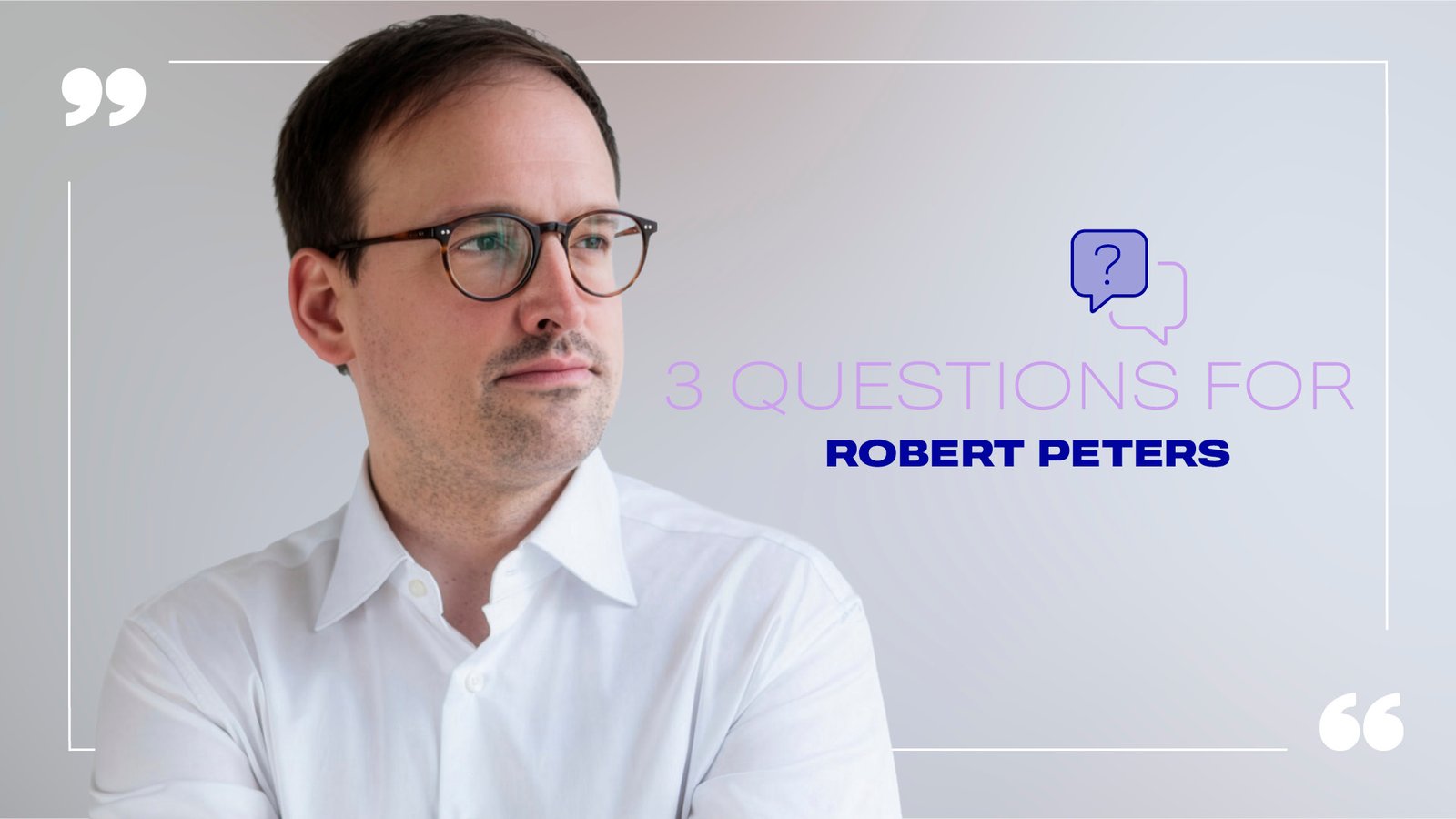
In our “3 Questions for...” section, we regularly interview experts on topics that will have a lasting impact on the future of organizations and society. From software development and artificial intelligence to strategic foresight and attitudes toward the future, sustainability, and dealing with fears about the future — we shed light on the trends and developments that help us think and act in a future-oriented way.
On Powerlessness, Permanent Crises, and Radical Imagination
In his new book “Land der Ohnmacht?” (Land of Powerlessness?), futurist and policy advisor Dr. Robert Peters analyzes why this imbalance is dangerous for democracy, innovation, and social cohesion.
Peters writes this book from years of practice in policy, business, and futures consulting. His central motif: making self-efficacy tangible again. Problems are not disruptions, but the actual fuel for innovation – if we learn not merely to manage them reactively, but to use them proactively for shaping the future.
Mr. Peters, why are you writing this book right now?
Robert Peters: Because we live in a time when, as a society, we are permanently stuck in crisis and alarm mode. Pandemic, geopolitical conflicts, climate change, technological disruption – much of it overlaps.
My book is an attempt to show: this powerlessness is not a law of nature. It arises wherever we lose sight of how much we can achieve even under seemingly adverse conditions. We are increasingly losing faith in being able to reach a good tomorrow from our present-day world. And that is precisely where we must start if democracy and future-building are to work.
In your book, you speak of “Problem First.” What do you mean by that?
Robert Peters: We often treat problems like disturbances that should disappear as quickly as possible. That is humanly understandable but strategically wrong. Problems are the fuel for innovation. They show us where change is needed. If we learn to use problems productively, frustration becomes creative energy.
You write that we can only confront permanent crises with “radical imagination.” What does that mean concretely?
Robert Peters: Ongoing crises cannot be resolved using approaches from the past. We tend to view the future in linear terms and often in a negative light. This paralyzes our ability to act.
Radical imagination means having the courage to concretely envision a good future – beyond crisis rhetoric and short-term crisis management. Imagination becomes radical when it transcends existing boundaries of thought and makes not only risks but also possibilities visible.
For these new visions of the future to be heard, they must be connectable: they need language, images, and narratives that provide orientation without denying complexity. And they need spaces in which politics, business, and society can negotiate together about the future — not just about problems. Only in this way can what we urgently need come about: trust in our collective capacity to shape the world.
To develop these radical imaginative capacities, we should …
- ask ourselves the question: “What does a Germany look like in which I personally would like to live in ten or fifteen years?”
- on this basis, enter together into a process of negotiation about what kind of Germany we want to build together
- and create spaces specifically for these questions — spaces in which such fundamental questions can be raised and discussed at all.
Closing words: I hope that everyone in our society regains faith in their own and in our shared power to shape things as democrats.
Photo: © Annette Koroll
 Schaltzeit
The book “Land der Ohnmacht?” (Land of Powerlessness?) is now available and can be borrowed from the Schaltzeit library.
ISBN 978-3-9879009-8-3, Bonifatius GmbH
In addition, we at Schaltzeit are planning a workshop on the topic of “radical imagination,” in which we want to explore together how new visions of the future emerge, how they provide orientation—and how, despite their radical nature, they can have a social impact.
Anyone interested in helping to shape this process is welcome to contact us.
Transparency note:
Schaltzeit GmbH has been collaborating with Dr. Robert Peters on various projects for several years. In his role as Head of Foresight and Labour Research Section at VDI/VDE Innovation + Technik GmbH, he manages significant foresight projects in the field of public strategic foresight. This interview is based on professional collaboration and substantive exchange, not on financial compensation.