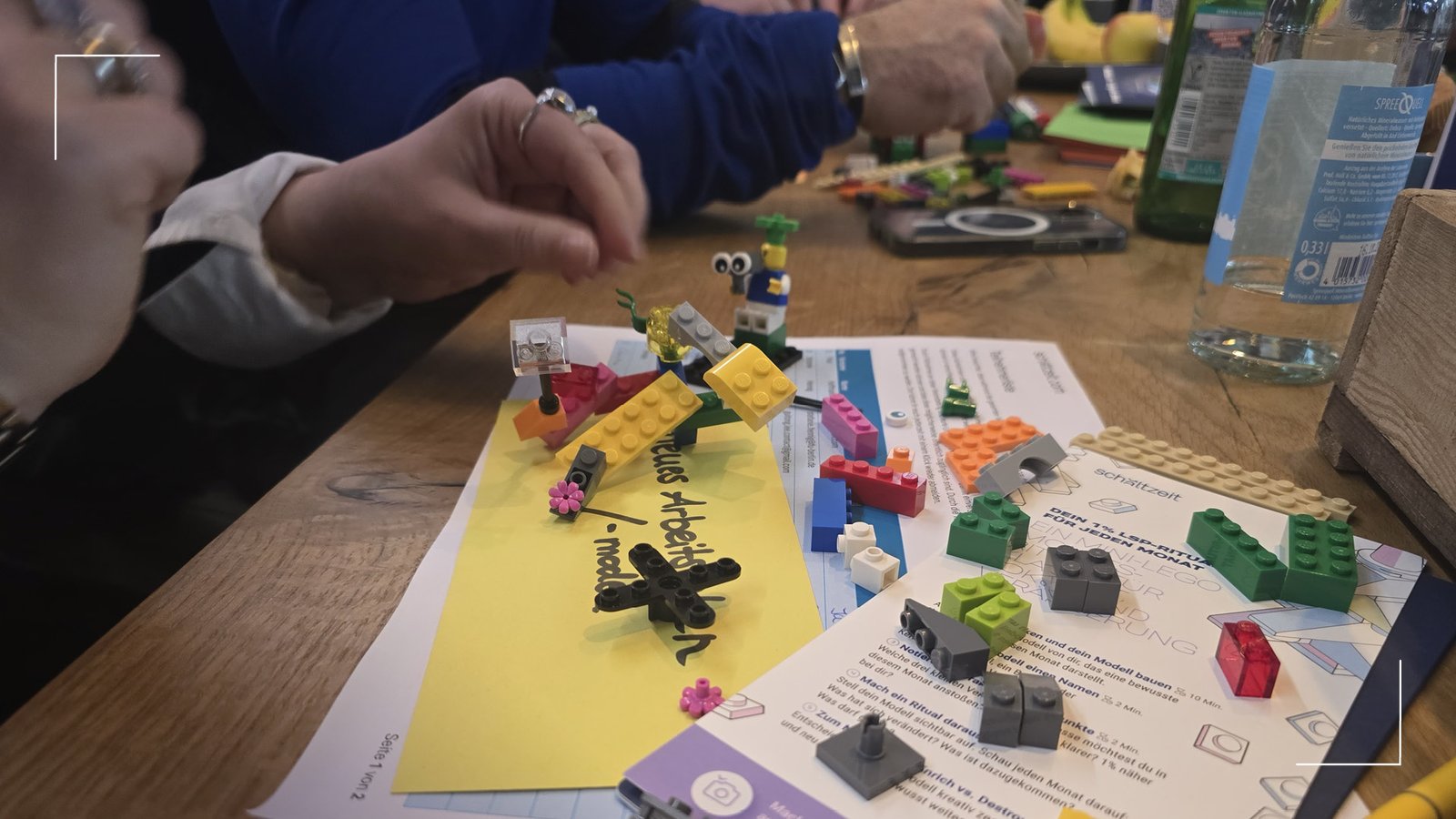

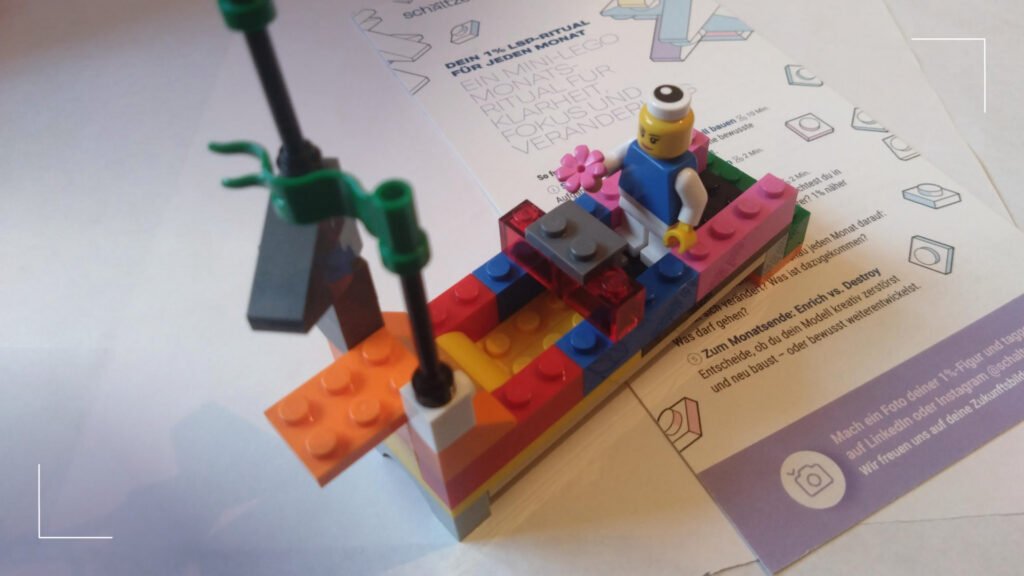
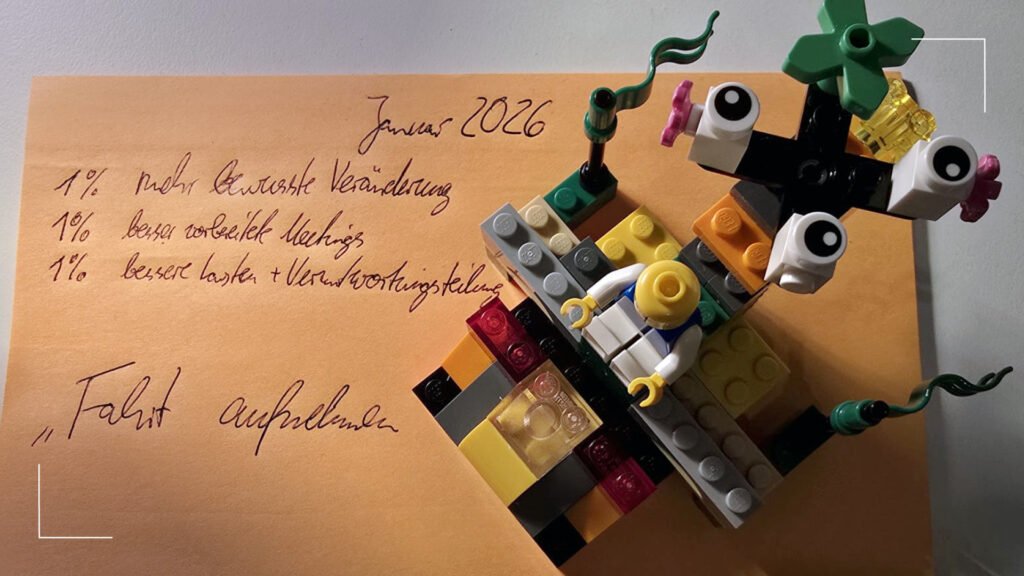
Each of us developed a small model. Not perfect plans, but visible impulses: where we want to go, what matters to us, and where we want to grow. Small interventions in our own daily lives. 1% that is doable.
Our software developer Annemarie named her model A Bachelor Thesis in LEGO: “My 1% model shows the 13 weeks of my bachelor thesis: a clearly bounded time that I consciously invested and integrated into my everyday life. The degree is in itself a small step, but it gives me more personal independence and enables me to free up resources in my environment and support others.”
Picking up speed with the Schaltinaut 5001 – for CEO André, the focus at the start of the year is on several small changes: 1% more conscious change, 1% better prepared meetings, 1% better distribution of workload and responsibility.
Over the course of the year, we will share these models as a mini-series with you. Each team member will tell what their own 1% model means – and how it feels in everyday life.
1% Sounds Like Very Little. But What If That Is Exactly the Point?
Transformation research shows: change does not only arise top-down – through politics, laws, or large institutions. It grows equally bottom-up: in participatory processes, future workshops, and everyday decisions. And above all, it needs one thing: the feeling of self-efficacy.
Bottom-Up Meets Top-Down: Where Change Really Starts
When we talk about societal transformation, we often think first of the big levers: funding programs, infrastructure projects, new regulations. These top-down approaches are important – no question. But they are not the whole story. Because change also happens at kitchen tables, in neighborhood initiatives, in workshops and labs for future-building. Where people start acting themselves rather than waiting.
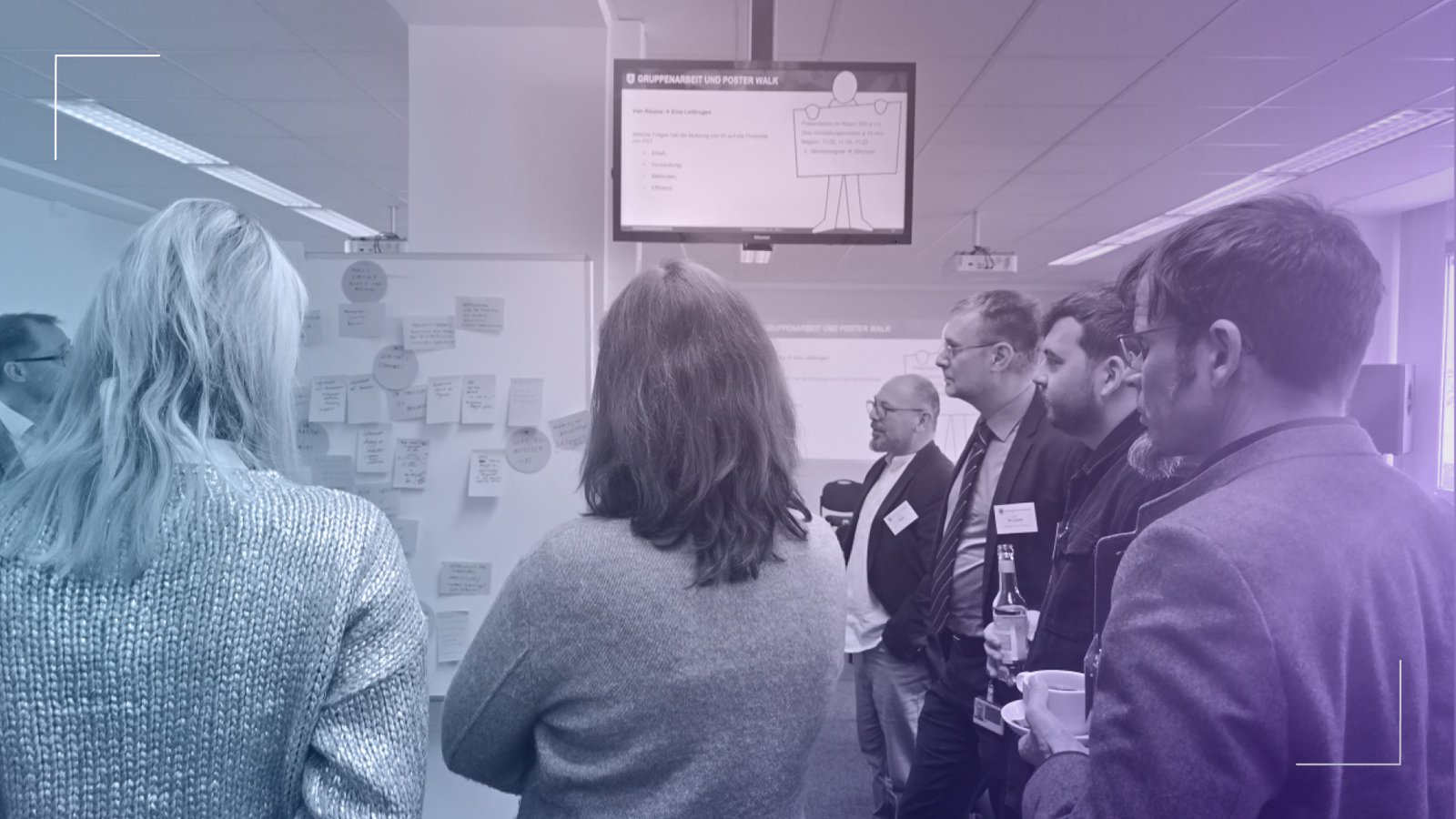
Participatory methods such as future workshops or Future Literacy Labs show: when people are allowed to think and build their own futures, something decisive happens. They develop agency. They feel: I can do something. This is not naive optimism but political practice.
Self-Efficacy in Times of Uncertainty
What bottom-up processes achieve at the societal level manifests at the individual level as self-efficacy. In times of crises and complexity, uncertainty can paralyze. This is where the concept of self-efficacy comes in: the belief that one can make a difference through one’s own actions. Psychology shows that self-efficacy does not arise from grand promises but from concrete experiences. From moments when we realize: this works. I have influence. That is precisely why small, tangible successes are often more effective than utopian mega-projects. They return control, build courage, and generate momentum.
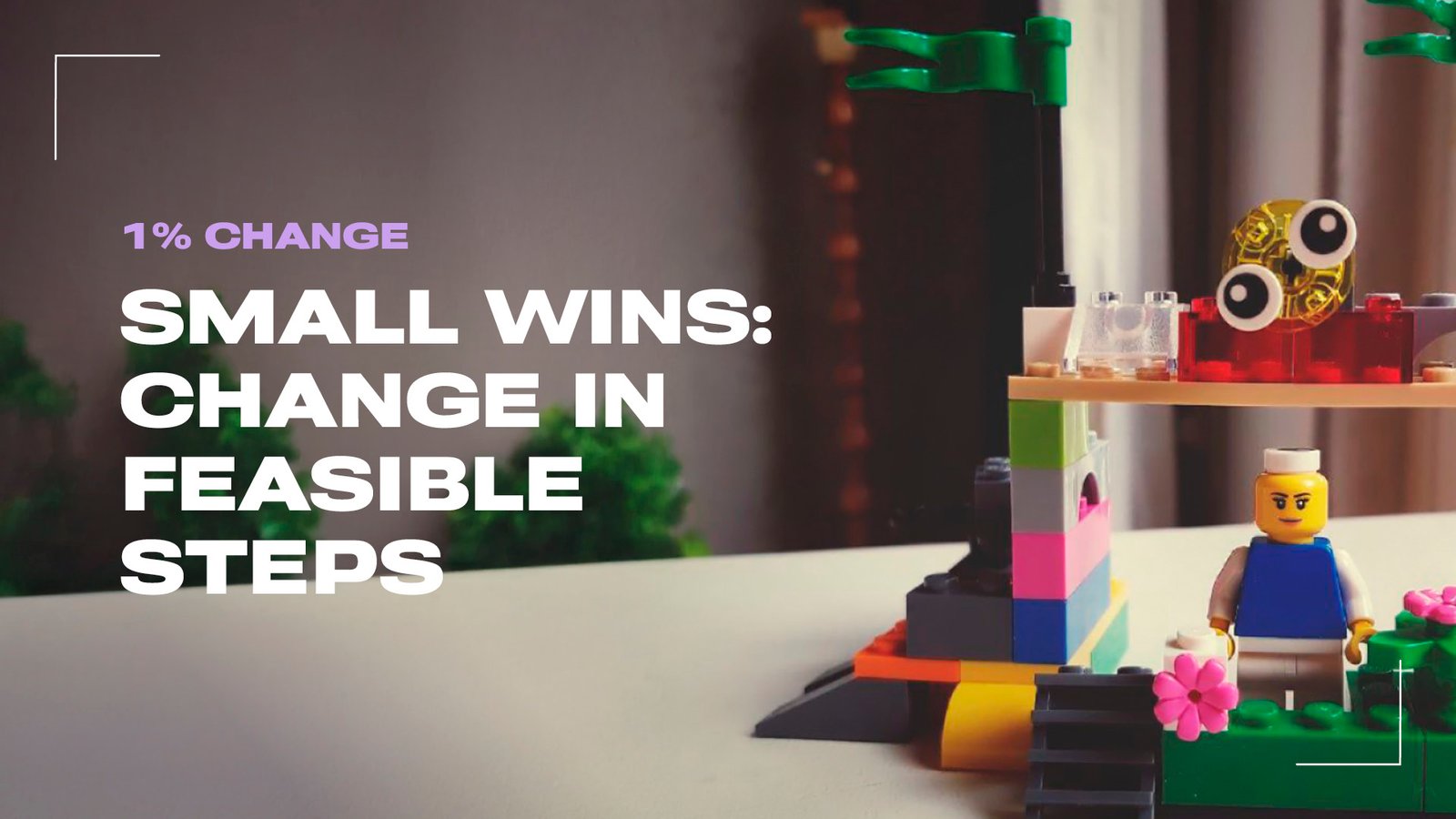
Small Wins: Change in Manageable Steps
Organizational psychologist Karl Weick described this principle as early as the 1980s. His concept of Small Wins shows why large social problems often render us unable to act.
„The massive scale on which social problems are conceived often precludes innovative action because the limits of bounded rationality are exceeded.“ (Weick, 1984)
A small win is manageable, doable, and visible. The difference is felt – and that is exactly what makes it effective. Small wins do not overwhelm; they invite. They motivate continued action.
Shaping the Future in Everyday Life
The future does not only emerge in strategy papers but in everyday routines, rituals, and small decisions. The research field of Experiential Futures goes even further: it combines futures research with experience design and creates “real memories of virtual events.” Instead of reading abstract scenarios, people experience the future. Instead of striving for big changes all at once, it is about continuous improvement. Here is where the 1% method comes in, known from Atomic Habits by James Clear. The idea is simple: instead of striving for big changes, you continuously improve by 1%. That sounds unspectacular – and it is. But the impact is enormous because it takes our psychology seriously: big goals overwhelm. Small steps open room for action.
Change does not need perfection. It needs people who start. Who experiment. Who realize: 1% is enough. Bottom-up transformation, Small Wins, and Future Experiences show: the future emerges in everyday life – in decisions, routines, and experiments. And that is precisely why it can be shaped.
Further readings
- Clear, J. (2020). Die 1%-Methode – Minimale Veränderung, maximale Wirkung: Mit kleinen Gewohnheiten jedes Ziel erreichen. Piper Verlag.
- Garduño García, C., & Gaziulusoy, İ. (2021). Designing future experiences of the everyday: Pointers for methodical expansion of sustainability transitions research. Futures, 127, Article 102702. https://doi.org/10.1016/j.futures.2021.102702
- Holzinger, H. (2018). Zukunftswerkstatt – Betroffene zu Beteiligten machen. https://jungk-bibliothek.org/wp-content/uploads/2015/02/hansholzinger_betroffene-zu-beteiligten-machen_zukunftswerkstatt_praxisbc3bcrgerbeteiligung.pdf
- Weick, K. E. (1984). Small wins: Redefining the scale of social problems. American Psychologist, 39(1), 40–49.