
A Personal Event Review from a Trainer’s Perspective
What It Was About
The topic of the evening was 1% thinking: how can we take big goals seriously without overwhelming ourselves? And how can mini-steps be designed so that they actually change something – in everyday life, not just in our heads?
It was important to us, especially at the beginning of the year, to create a light entry point. Many come from Decembers with open to-do lists, half-finished projects, and the feeling of needing to catch up first. This is exactly where 1% thinking starts: big ambitions provide direction – small steps create movement.
The (Conversation) Space Makes the Difference
The evening did not thrive on the method alone. The real added value emerged from the exchange. Different people, different life realities, different themes of change – and yet similar patterns kept appearing: too many goals at once, saying yes too often, too little recognition of what is already working.
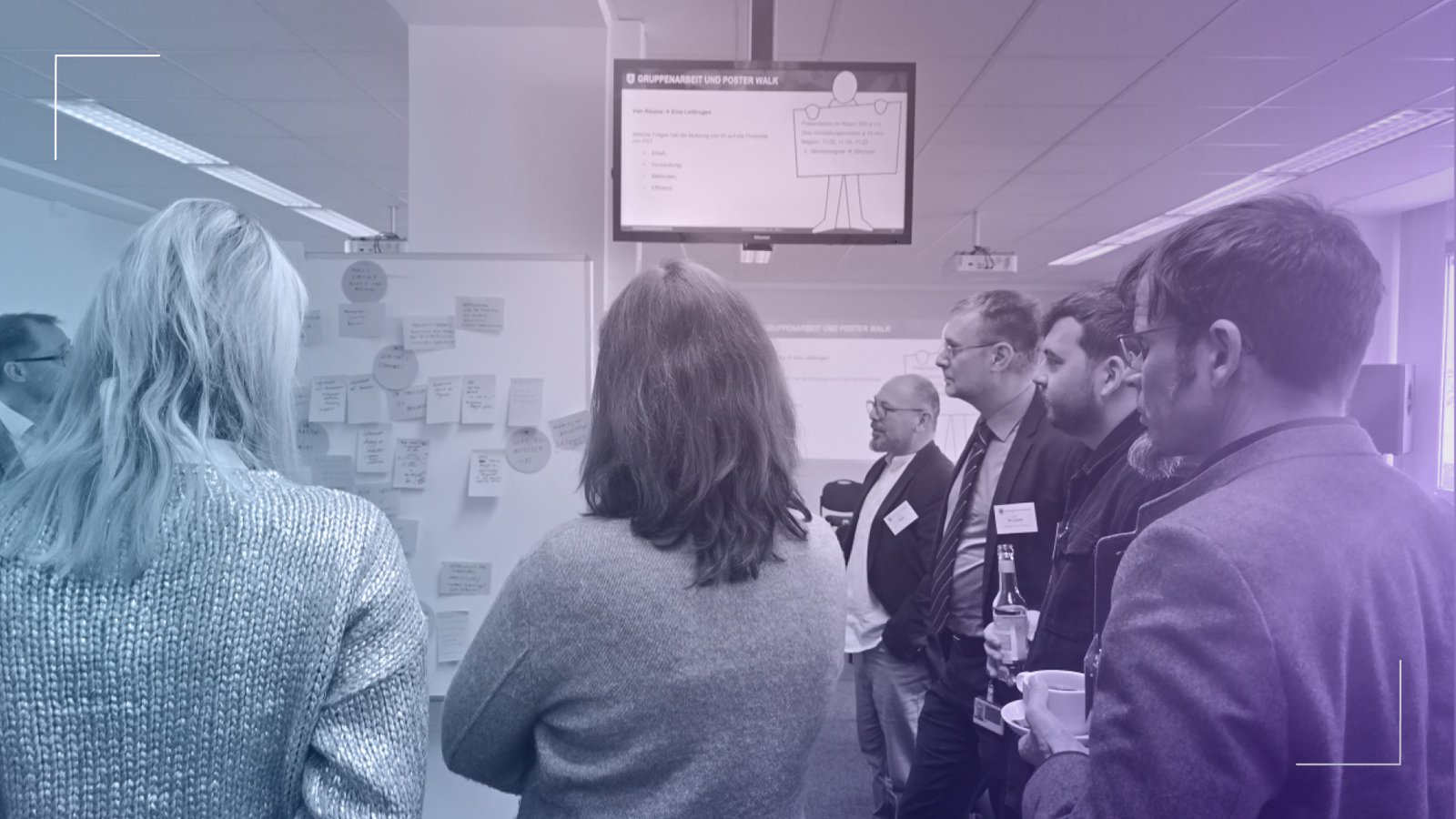
Even in the opening ritual – the Dialog Walk – it became clear how much clarity emerges when you speak your thoughts out loud. The question was simple: which changes do you want to tackle this year – and why these in particular?
Small Steps Are Not Trivial
In the collective gathering, it quickly became clear what mini-steps are made of:
- They are feasible and can be implemented quickly.
- They generate visible feedback — otherwise we don't take them seriously at all.
- They are motivating because they enable action rather than just formulating intentions.
- Small steps are easy to forget if they aren't appreciated. That's why goals and directions need to be roughly defined. A vision board is sufficient for this.
One participant captured it with an image: a ladder with enormous rungs is intimidating. A ladder with small, irregular rungs may look less “perfect,” but it actually gets you to the top.
I found the discussion particularly fascinating about how change often arises not from doing more, but from leaving things out. An example from the group: someone who wants to drive less could deliberately not put on winter tires – forcing themselves to use alternatives. Provocative, but effective.
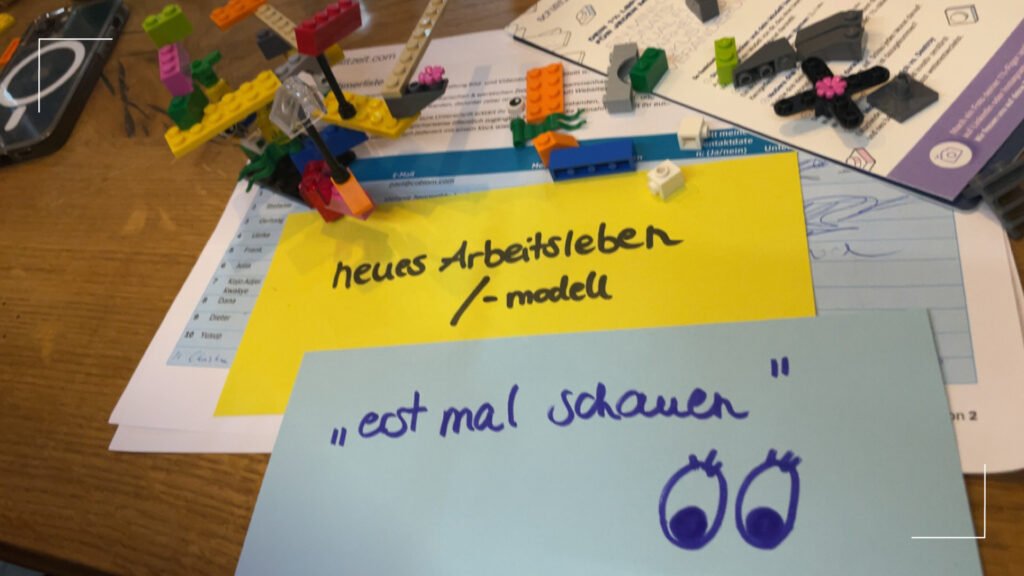
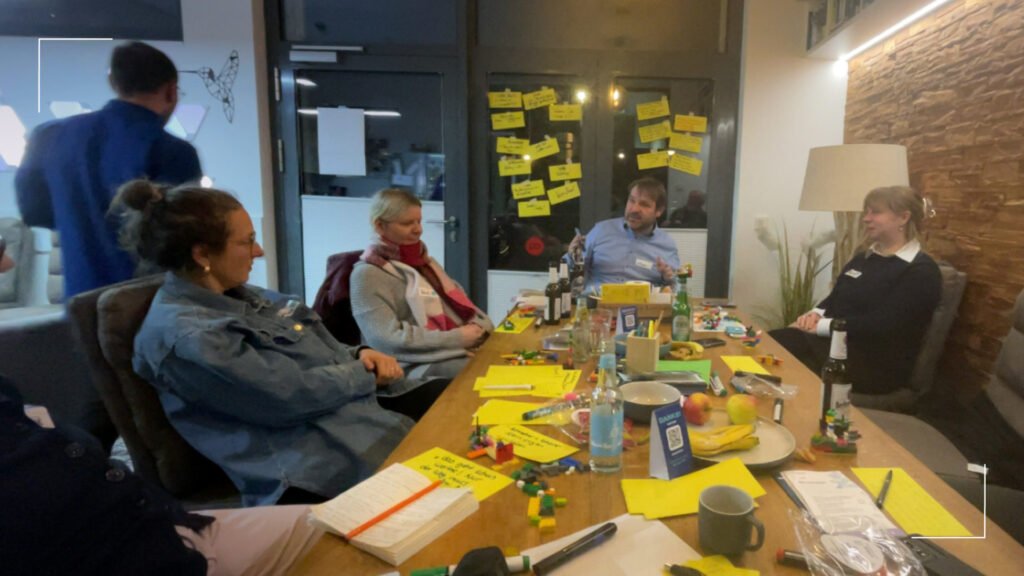
Thinking with Your Hands: LEGO® Serious Play®
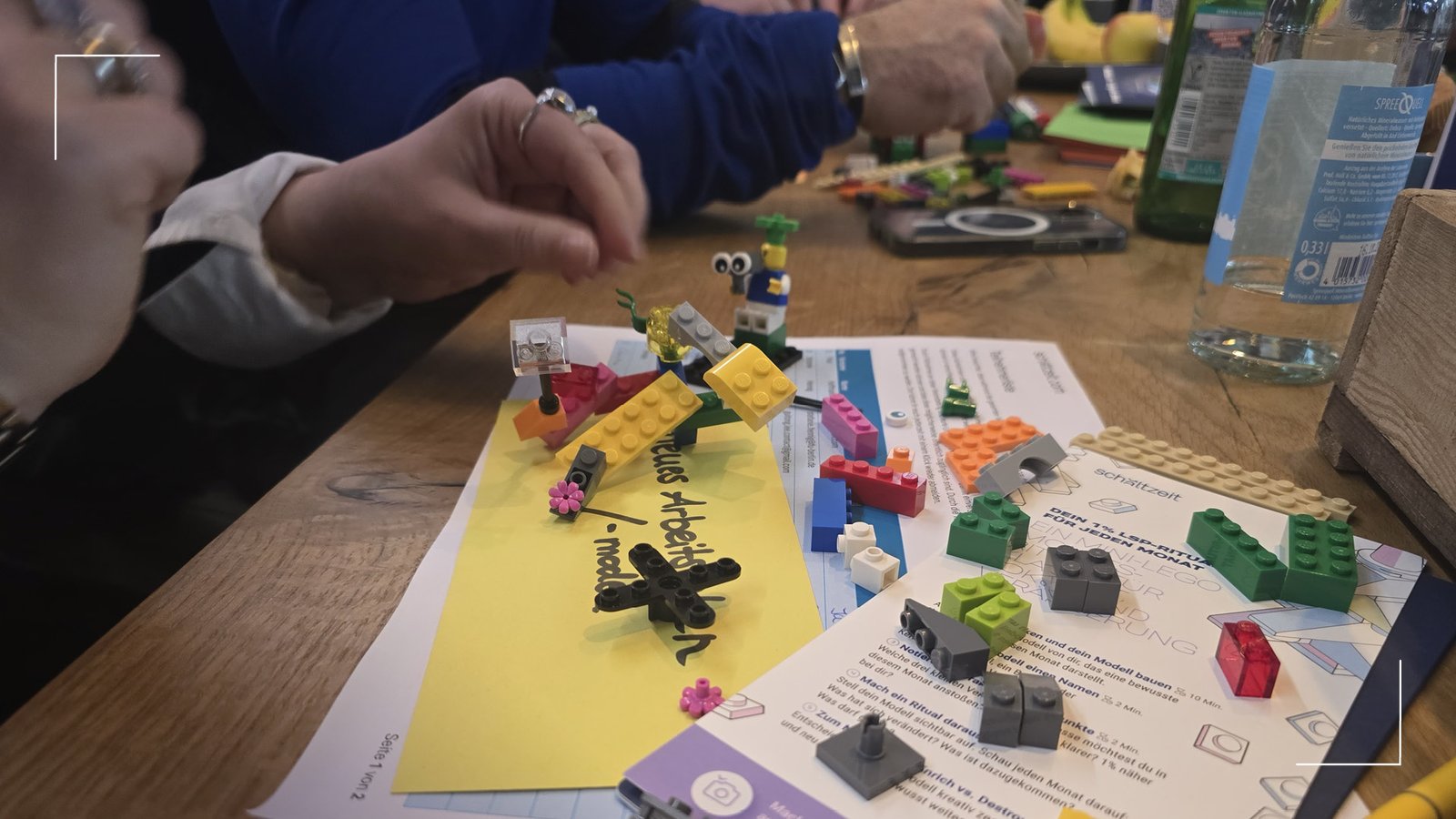
With LEGO® Serious Play®, we created the transition from talking to grasping. The assignment was clear: build a model that shows a small but real step that brings you closer to a change.
No end state, no ideal image – just the next step. The models that emerged told very different stories: letting go of baggage, conscious pauses, clear boundaries, small rituals for focus or relaxation.
Some celebrated their start into the year, others showed how much legacy still resonates. Both had space.
How Do You Sustain Small Changes?
In the large sharing round, similar questions kept coming up:
- How do I do a self check-in?
- How do I track progress without controlling myself?
- Why do I give a trusted person the mandate to ask me uncomfortable questions?
- How do I keep the big goal visible while taking small steps?
- How do I prevent new tasks from steamrolling old intentions?
The answers were varied: journaling, visual tracking, random rewards, accountability partners, filler phrases to buy time ("I need to think about that some more"). What mattered wasn't the perfect method, but the conscious shaping of one's own change process. This also includes manifestation: I imagine the desired end state. What does it feel like when I've reached my goal?
The Real Added Value
In the end, it was clear to me again: the greatest effect of such evenings comes not from input, but from collective thinking. People throw their topics into the room, others think along, mirror, supplement.
Everyone goes home with something different – but nobody leaves empty-handed.
"Two thoughts from yesterday evening that have stayed with me: 1) The bigger the goal, the smaller and more deliberate the steps I should take. 2) Dealing with and overcoming human inertia takes energy. How much energy do I have right now — how many goals or changes can I tackle at once? What has priority — and what can wait until later?"
Christine Bräunig – www.olea.training
My conclusion: Mini-steps are not a retreat from ambition. They are its operating system. And sometimes 1% is enough to start moving again.