What does it take to build a human-centric internet?
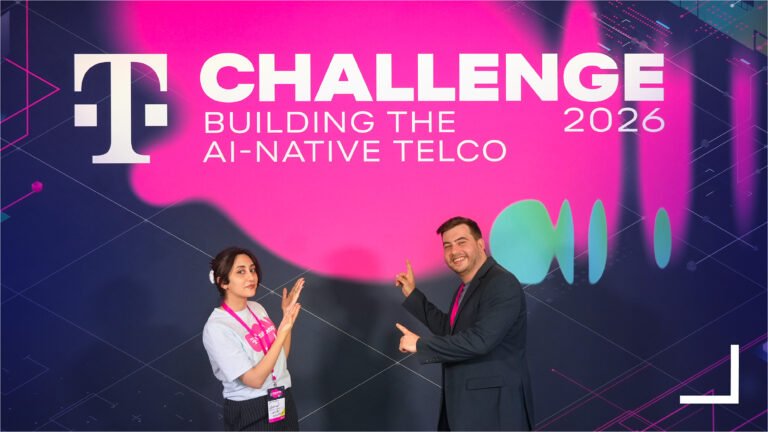
This week we attended the award ceremony of this year’s T Challenge in Bonn. This is already the third edition of the T Challenge, the global competition run by Telekom and T-Mobile US, which brought together visionaries, idea tinkerers and promising startups from all over the world to present, discuss and further develop ideas for a human-centric internet.
From submissions from 53 countries, 20 ideas for a human-centric internet were nominated, all aiming to use blockchain and other innovative technologies to tackle current challenges in areas such as environmental protection, data privacy, sustainability and customer experience.
As in previous years, Schaltzeit provided the software for the T Challenge competition and was there on site. We congratulate all the winners and are happy to share a few impressions with you – some of them deeply impressed, some with a slight wink.
How do we bring people along toward Web3?
As a communication designer, I was personally delighted that conversations kept coming back to the point that it is not only future technologies themselves, but also how the related concepts are communicated, that matter more than ever. And every concept for the future raises the question of how we can get there from where we stand today. What does it take for the added value of these concepts to be understood and for the technologies to be used?
Clearly, it is not enough to conceive ideas only in the future; above all, the bridge from our present to that future plays a decisive role. Or rather, the many different bridges – just think of how uneven the state of digitalization is today across different target groups and entire industries.
When it comes to Web3, this quickly raises the question: how long will Web2 and Web3 run in parallel until, in a few years, we might have fully arrived in a Web3 world? Which concepts let Web3 and Web2 go hand in hand? And how do we reach target groups beyond the so-called digital natives – customers to whom Web3 concepts still seem abstract? Not to mention people to whom even Web2 is foreign and who still keep a fax machine at the ready.
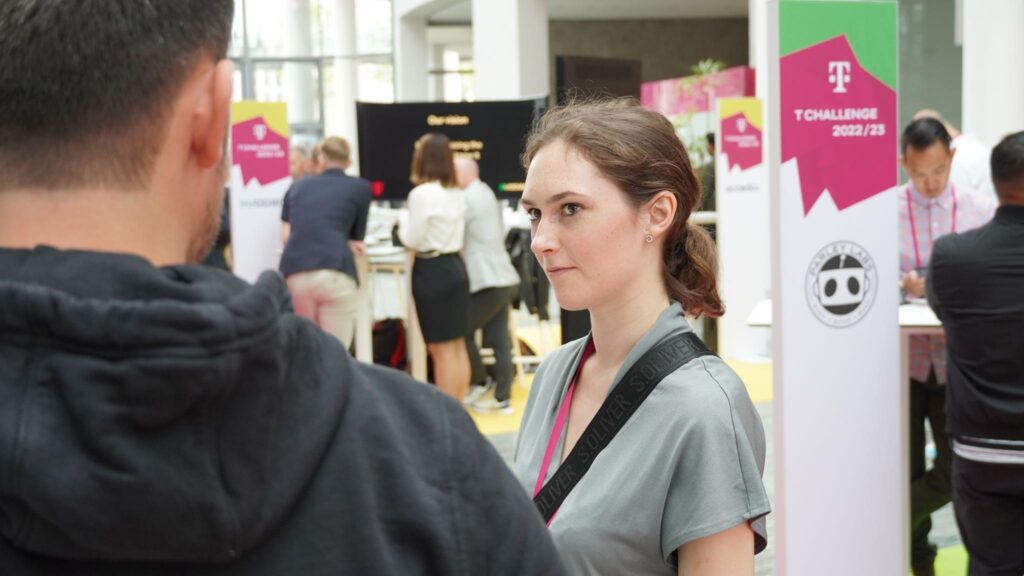
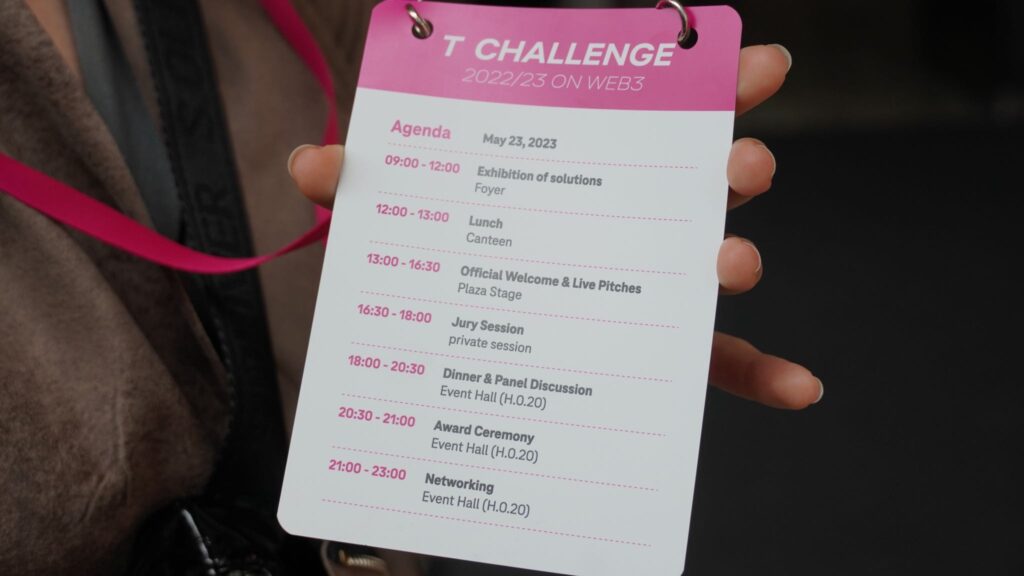
Exhibition of the nominated ideas in the lobby of Telekom HQ in Bonn
In Bonn, I came across a charming approach to communication that could surely win over quite a few people: the “free beer” reward scheme. Joking aside – what do beer, Web3 and crypto have in common? Not much at first. Or do they? Here are a few words on the success story of the MetaBrewSociety, founded a good year ago. MetaBrew is an NFT project that set out to acquire a historic brewery in Bavaria. The purchase of the brewery was financed through the sale of NFTs, and in return the NFT holders receive co-ownership rights. As proud owners of an NFT, buyers can now also look forward to an annual dividend in kind: 240 (free) cans of beer. Events in the metaverse are also planned to share knowledge about the art of brewing – the beer is then drunk in the real world 😉.
This shows that the often abstract-sounding world of Web3, with the metaverse and all, is not detached from the real world but is rather conceived as a connected extension of it.
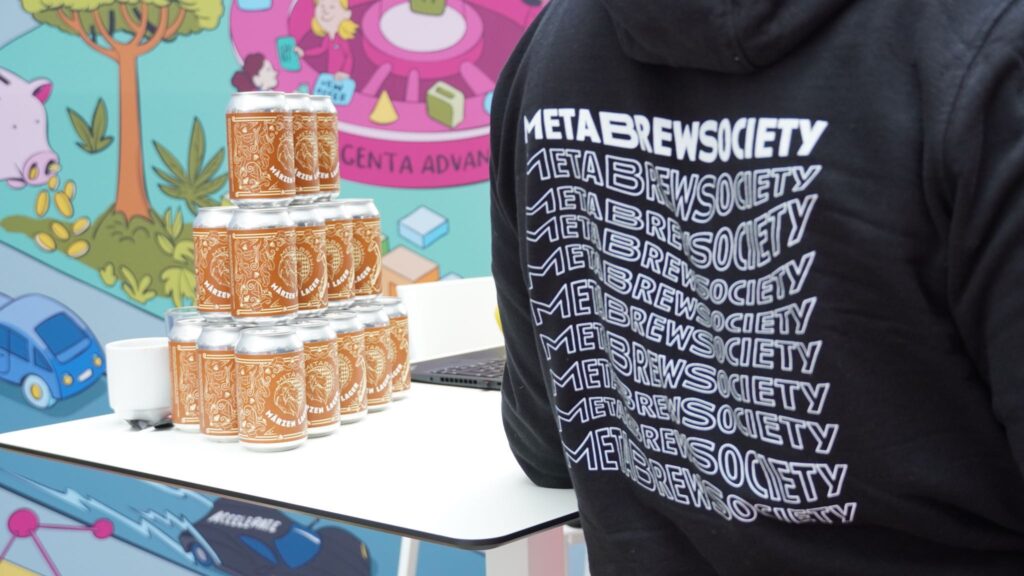
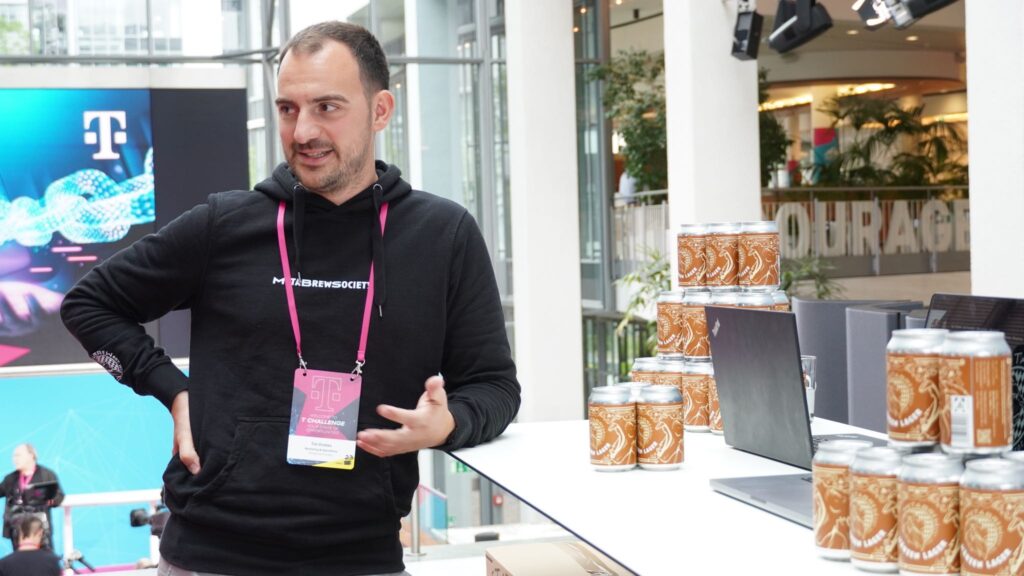
Tim Drebes, Marketing & Operations at MetaBrewSociety – an entrepreneur and marketer who wants to bring beer innovation and delicious non-alcoholic beer to Web3 and the rest of the world. (Website: MetaBrewSociety)
But now back to the ideas of the nominated startups. Above all, the ideas were characterized by addressing the following questions:
How do we create traceability and transparency?
Some ideas aim to make information and data transparent, whether in carbon offsetting, data privacy, product tracking or the recycling process. Blockchain technology is used to ensure the integrity and traceability of information.
How do we promote decentralization and consumer self-determination when it comes to data privacy?
Several ideas also seek to give consumers back control over their personal data and digital sovereignty. The goal is an internet-based environment that offers users more privacy, rewards and transparency.
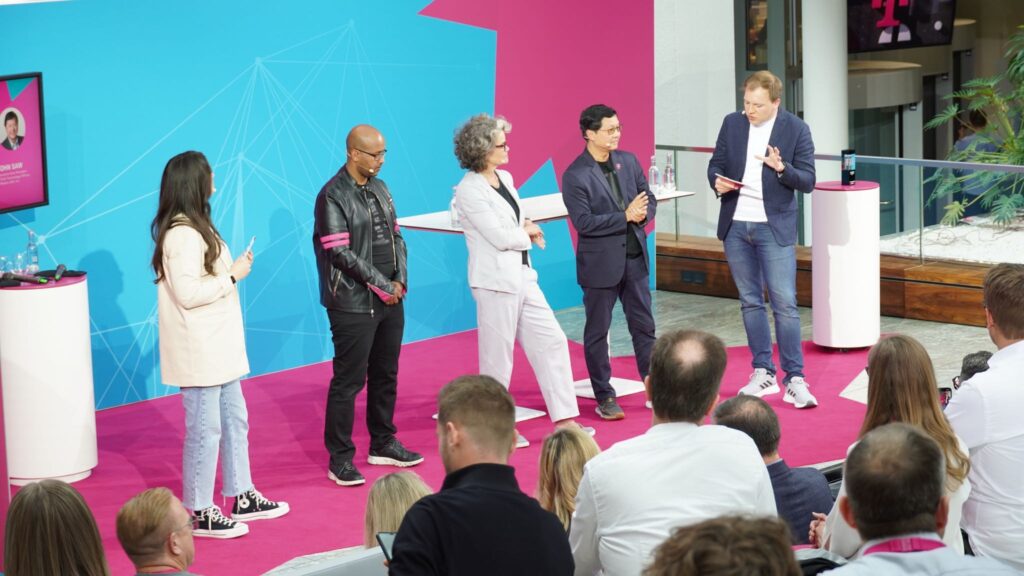
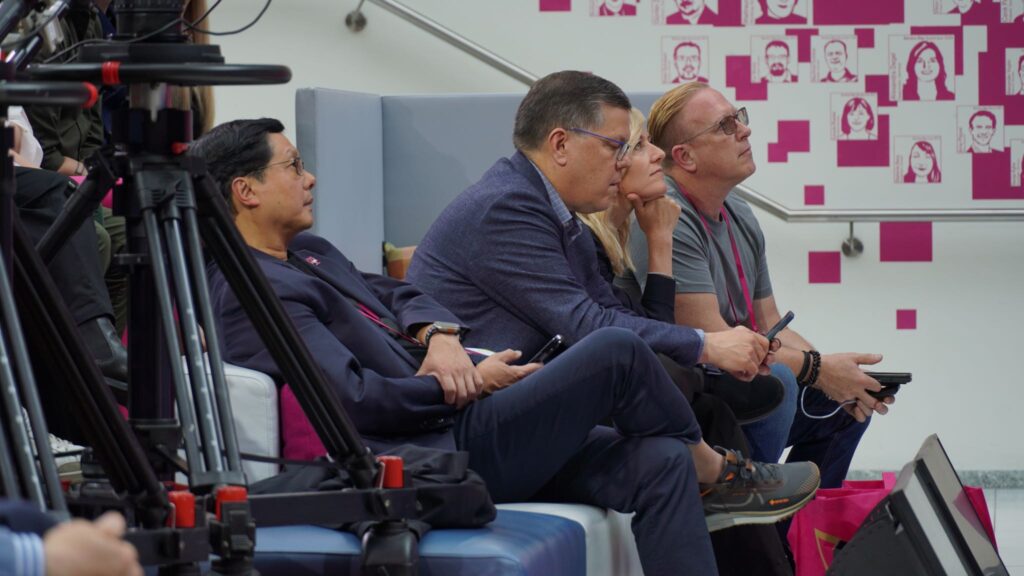
Members of the Grand Jury, made up of top executives from T-Mobile US and Deutsche Telekom AG
How can we promote a circular economy?
Others focus on promoting the circular economy by creating digital twins or NFTs (non-fungible tokens) of physical products. This allows products to be used longer and extends their life cycle, reducing waste and the squandering of resources.
Which reward models foster customer loyalty?
One idea also relies on Web3-based loyalty and engagement models to drive customer acquisition and retention. Rewards in the form of tokens or discounts create incentives to win customers and retain them over the long term.
Can blockchain support sustainable recycling?
Another idea addressed a phenomenon we can probably all relate to: how many unused (old, broken) cell phones do we have lying around in a drawer at home? This idea focused on the sustainable recycling of mobile phones and uses blockchain to ensure that the recycling process is tracked and certified. This promotes responsible recycling and minimizes environmental impact.
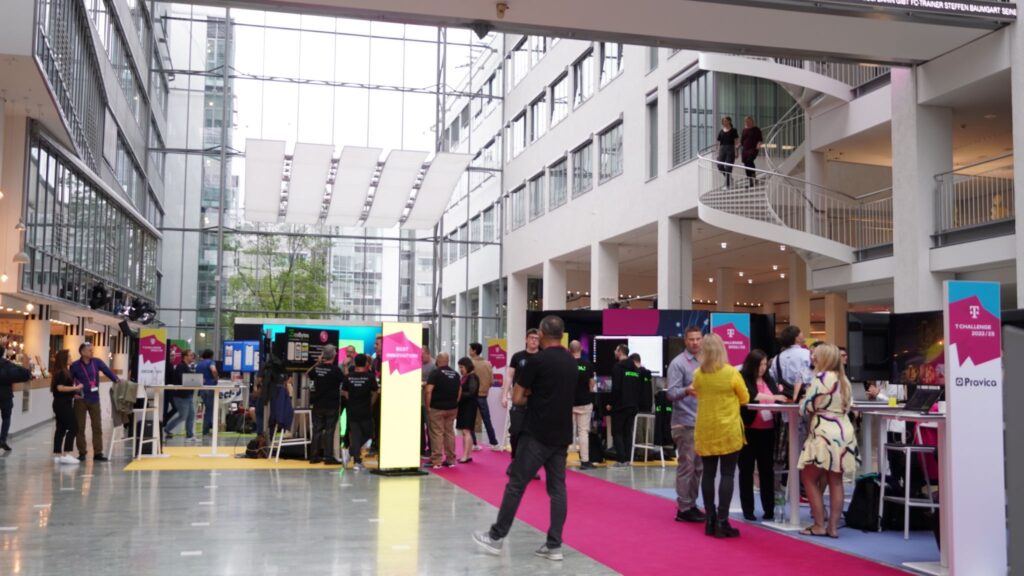
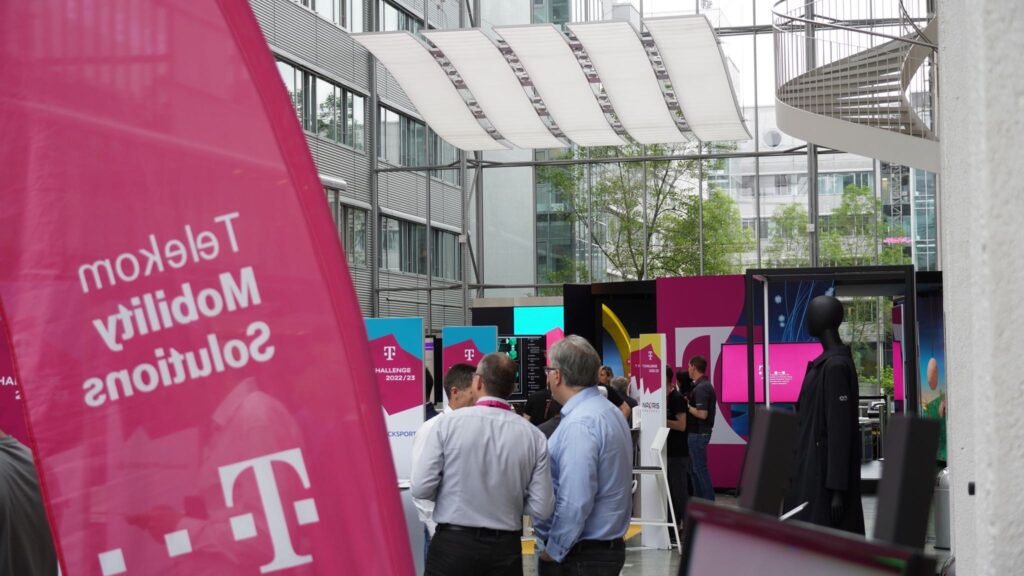
Exhibition of the nominated ideas in the lobby of Telekom HQ in Bonn
Further reading on the topic
If Web3 doesn’t mean much to you yet and you’d like to learn more about the nominated participants of the T Challenge, you can find information on the various ideas on the websites of the T Challenge and Deutsche Telekom AG:
And to go with it, a podcast tip that explains the topic in simple terms: