
How can standardized CO₂e labeling on food help?
The event was hosted by the initiative “Together for Carbon Labelling” (TCL), an alliance of food companies that are themselves researching what information consumers need to make conscious choices about their consumption. The TCL initiative builds on a petition for mandatory CO₂e labeling of food, signed by 57,067 citizens and debated in 2020 by the Petitions Committee of the German Bundestag. More information at Together for Carbon Labelling – Die Initiative für CO₂e-Transparenz in der Lebensmittelindustrie. Alongside Paul Hoffman-Woldt, head of the TCL initiative, expert input came from consumer researcher Dr. Anke Zühlsdorf and life cycle assessment expert Dr. Ulrike Eberle.
Credible labels can provide a reliable basis for decisions
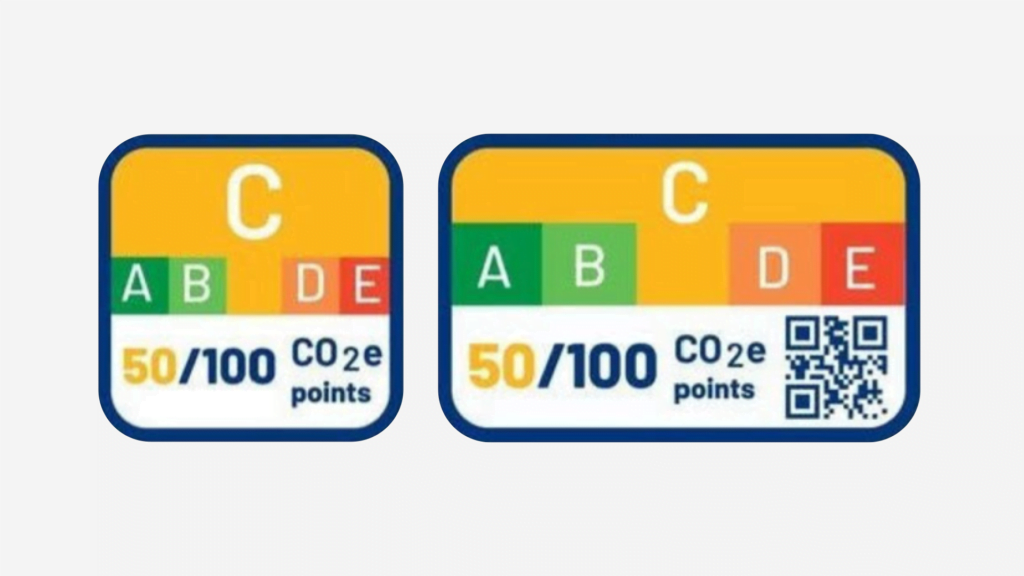
That is why Paul Hoffman-Woldt presented the prototype of the CO₂e label on July 6, 2023. The goal is not just to work with a traffic light, but also to display a CO₂e score. This lets consumers see at a glance who produces in a more climate-friendly way. They would find products in the same categories and could also compare different values for summer tomatoes vs. winter tomatoes.
- The CO₂e score should be clearly displayed on food packaging.
- A colored five-level traffic light from A to E is meant to make CO₂e footprints easy to compare.
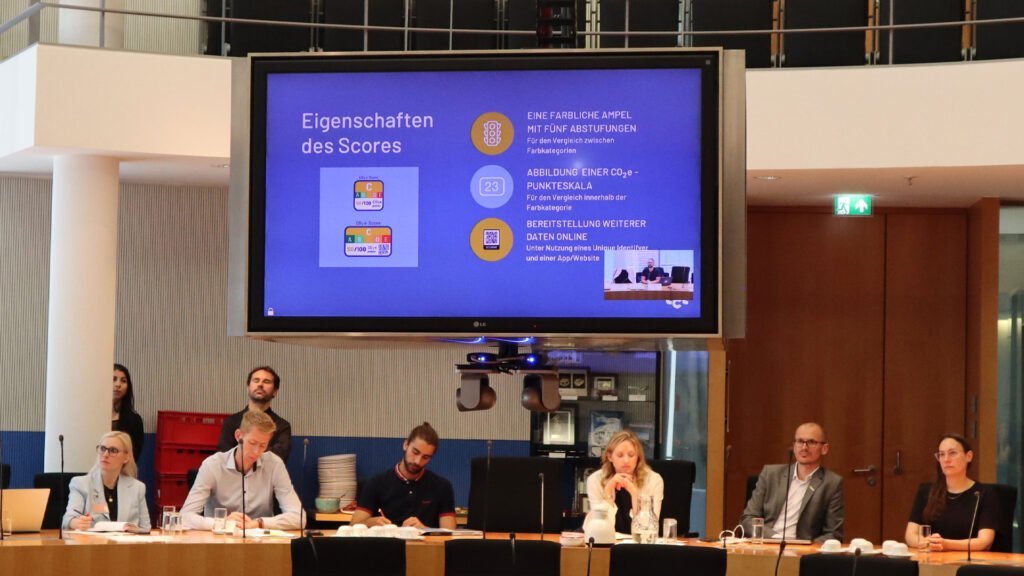
Consumer researcher Dr. Anke Zühlsdorf explained that consumers make purchasing decisions in less than one second. This means they need labels they trust and can grasp quickly.
- It is important to learn from pioneers such as the Agribalyse database in France, and from Denmark.
- Uniform calculation models are needed to enable targeted action.
- Trust in labels is crucial, so we must fight greenwashing.
- A level playing field, transparency and traceability are needed to create an industry-wide standard in the food industry.
- Publicly accessible databases should be available free of charge to all companies, including small businesses.
- A European solution would be ideal, but a German standard would be desirable at the very least.
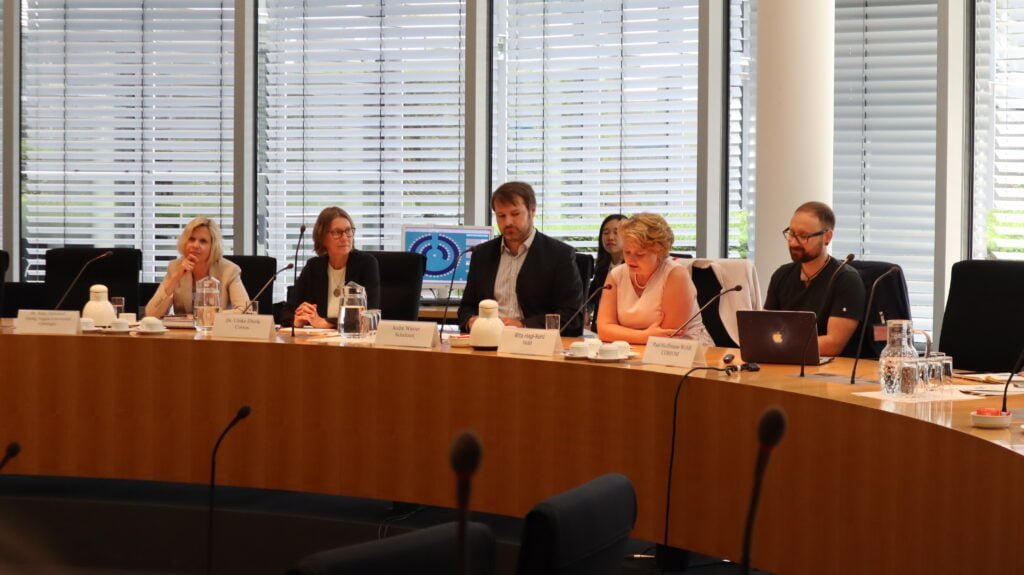

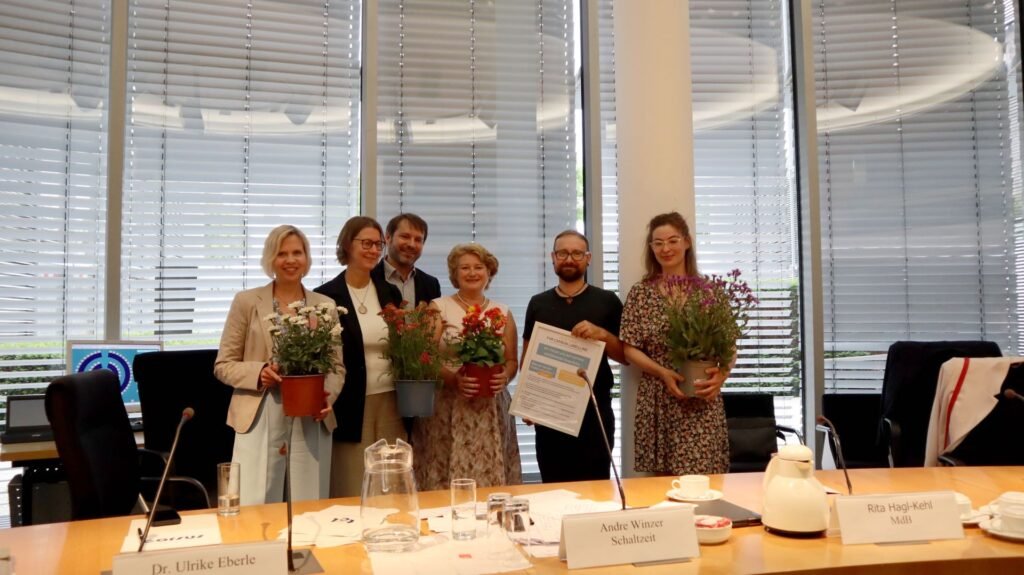
Consumer researcher Dr. Anke Zühlsdorf (University of Göttingen), life cycle assessment expert Dr. Ulrike Eberle (Corsus), Schaltzeit CEO André Winzer, patron Rita Hagl-Kehl (member of the Bundestag, SPD) and Paul Hoffmann-Woldt (project lead of Together for Carbon Labelling and managing director of COBIOM)
A label would ensure conscious steering here.
Further reading on the topic